Rabbi Trust Benefits
Description





Get your form ready online
Our built-in tools help you complete, sign, share, and store your documents in one place.
Make edits, fill in missing information, and update formatting in US Legal Forms—just like you would in MS Word.
Download a copy, print it, send it by email, or mail it via USPS—whatever works best for your next step.
Sign and collect signatures with our SignNow integration. Send to multiple recipients, set reminders, and more. Go Premium to unlock E-Sign.
If this form requires notarization, complete it online through a secure video call—no need to meet a notary in person or wait for an appointment.
We protect your documents and personal data by following strict security and privacy standards.

Make edits, fill in missing information, and update formatting in US Legal Forms—just like you would in MS Word.

Download a copy, print it, send it by email, or mail it via USPS—whatever works best for your next step.

Sign and collect signatures with our SignNow integration. Send to multiple recipients, set reminders, and more. Go Premium to unlock E-Sign.

If this form requires notarization, complete it online through a secure video call—no need to meet a notary in person or wait for an appointment.

We protect your documents and personal data by following strict security and privacy standards.
Looking for another form?










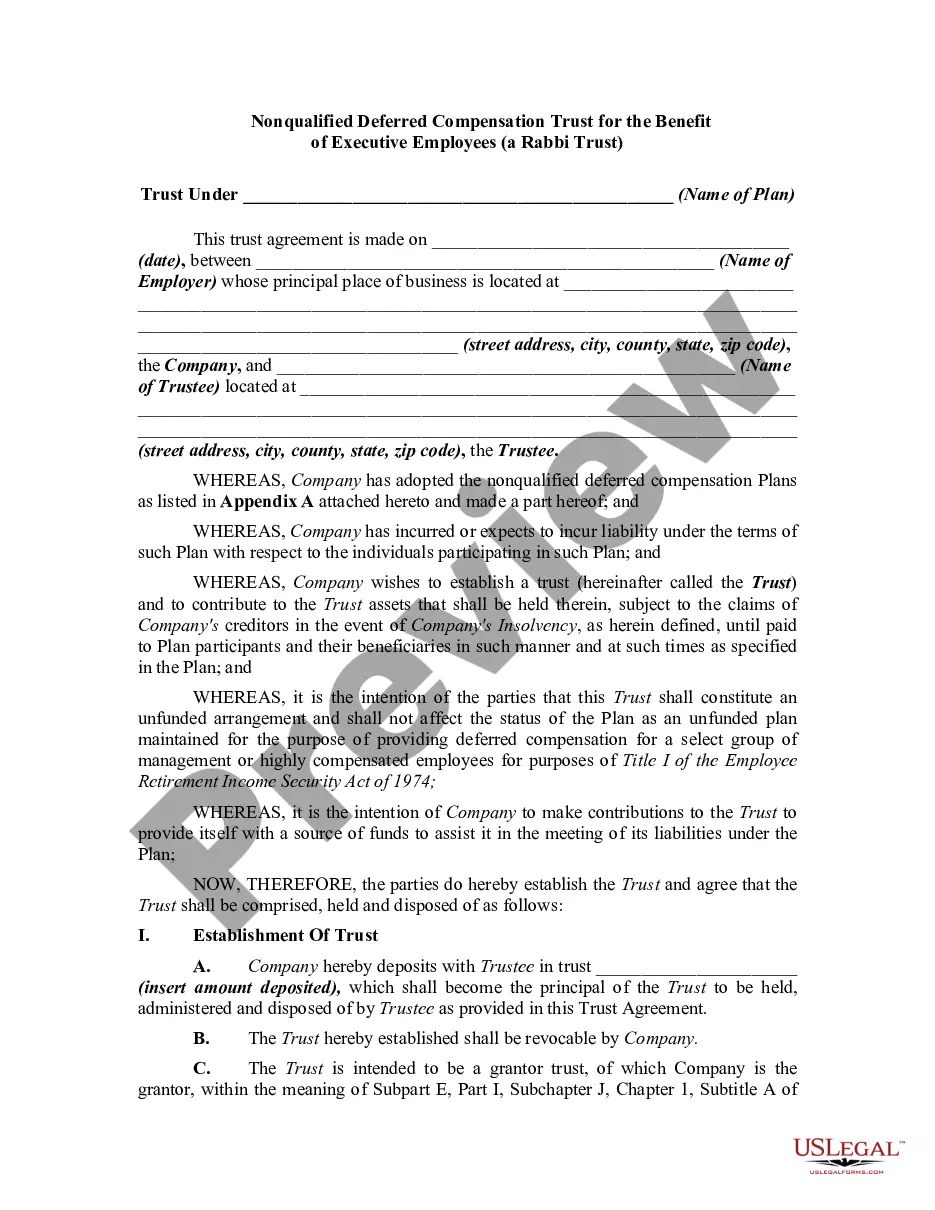
How to fill out Nonqualified Deferred Compensation Trust For The Benefit Of Executive Employees - A Rabbi Trust?
Managing legal documents and processes can be a lengthy addition to your schedule.
Rabbi Trust Benefits and similar forms usually require you to locate them and grasp how to fill them out correctly.
Therefore, if you are handling financial, legal, or personal issues, having a thorough and efficient online resource of forms readily available will be incredibly beneficial.
US Legal Forms is the leading online platform for legal templates, providing over 85,000 state-specific documents and various resources to help you complete your paperwork with ease.
Simply Log Into your account, locate Rabbi Trust Benefits, and download it immediately from the My documents section. Previously downloaded forms can also be accessed.
- Browse the collection of relevant documents available to you with just a single click.
- US Legal Forms offers you state- and county-specific forms that you can download at any time.
- Protect your document management processes with high-quality services that enable you to prepare any form in minutes without additional or hidden fees.
Form popularity
FAQ
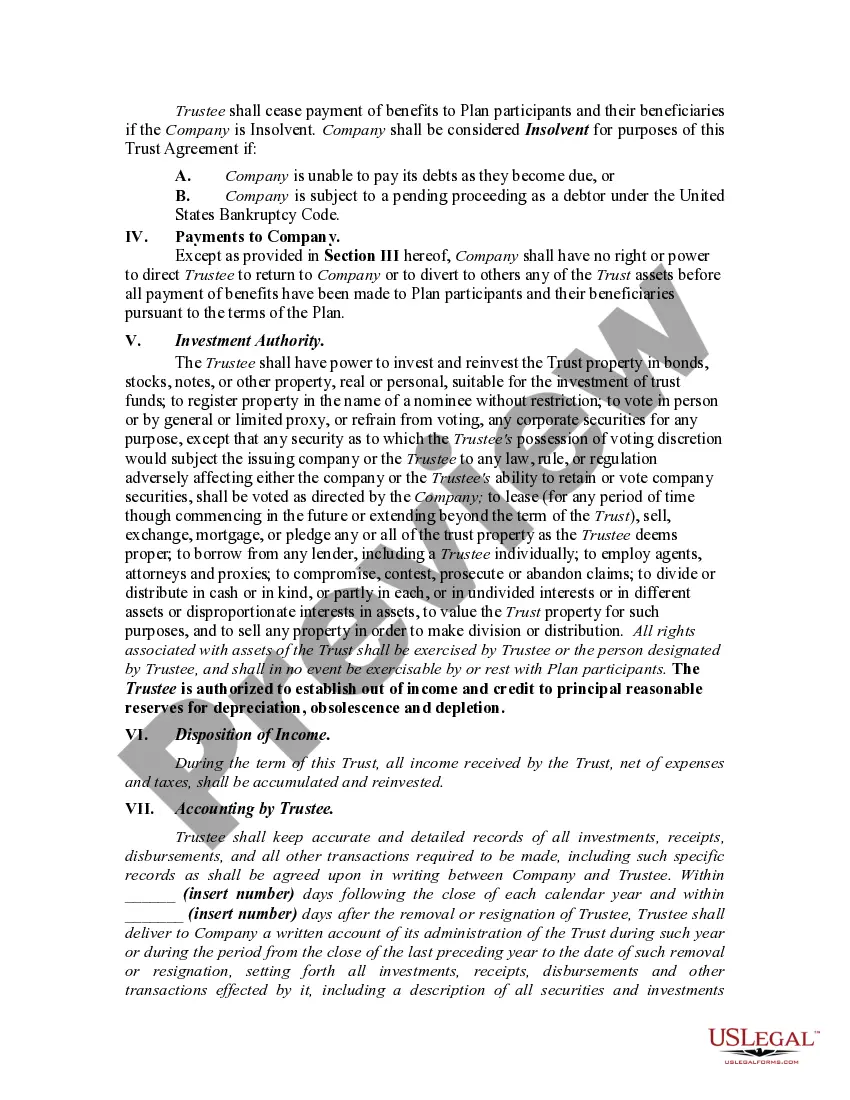
Key Takeaways A significant drawback of rabbi trusts is that they don't protect against creditors. If a company becomes insolvent or goes bankrupt, both the beneficiaries and the company's creditors have access to the trust's assets.
The Disadvantage of Rabbi Trusts If the founding company declares bankruptcy or otherwise becomes insolvent, its creditors will have unbridled access to the rabbi trust's funds?potentially depriving employees of their own earnings.
Because the Rabbi Trust is a non-qualified deferred compensation plan, the distribution is classified as supplemental wages and reported on a Form W-2 Wage and Tax Statement rather than on the Form 1099-R used for retirement income from your 403(b) account.
The first IRS letter approving this sort of trust involved a Rabbi, hence the name Rabbi Trust. The employer's contribution to the trust is tax-deductible, and the employee does not have to pay tax on that sum until he/she receives it from the trust.
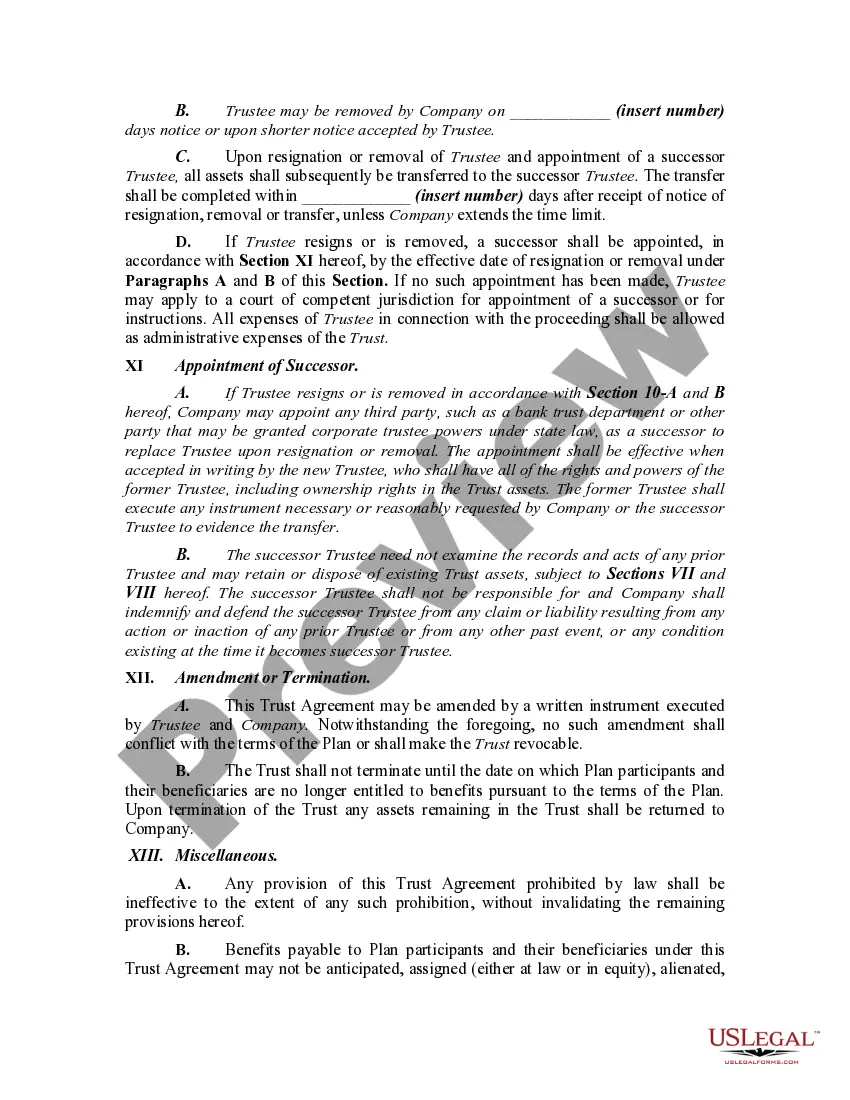
How Do You Establish a Rabbi Trust? You as settler or grantor establish a rabbi trust by entering into a trust agreement with a trustee (usually a bank or trust company). The trustee then holds the NQDC plan contributions and investment earnings. A single rabbi trust can benefit more than one employee.