Unjustly Enrichment
Description
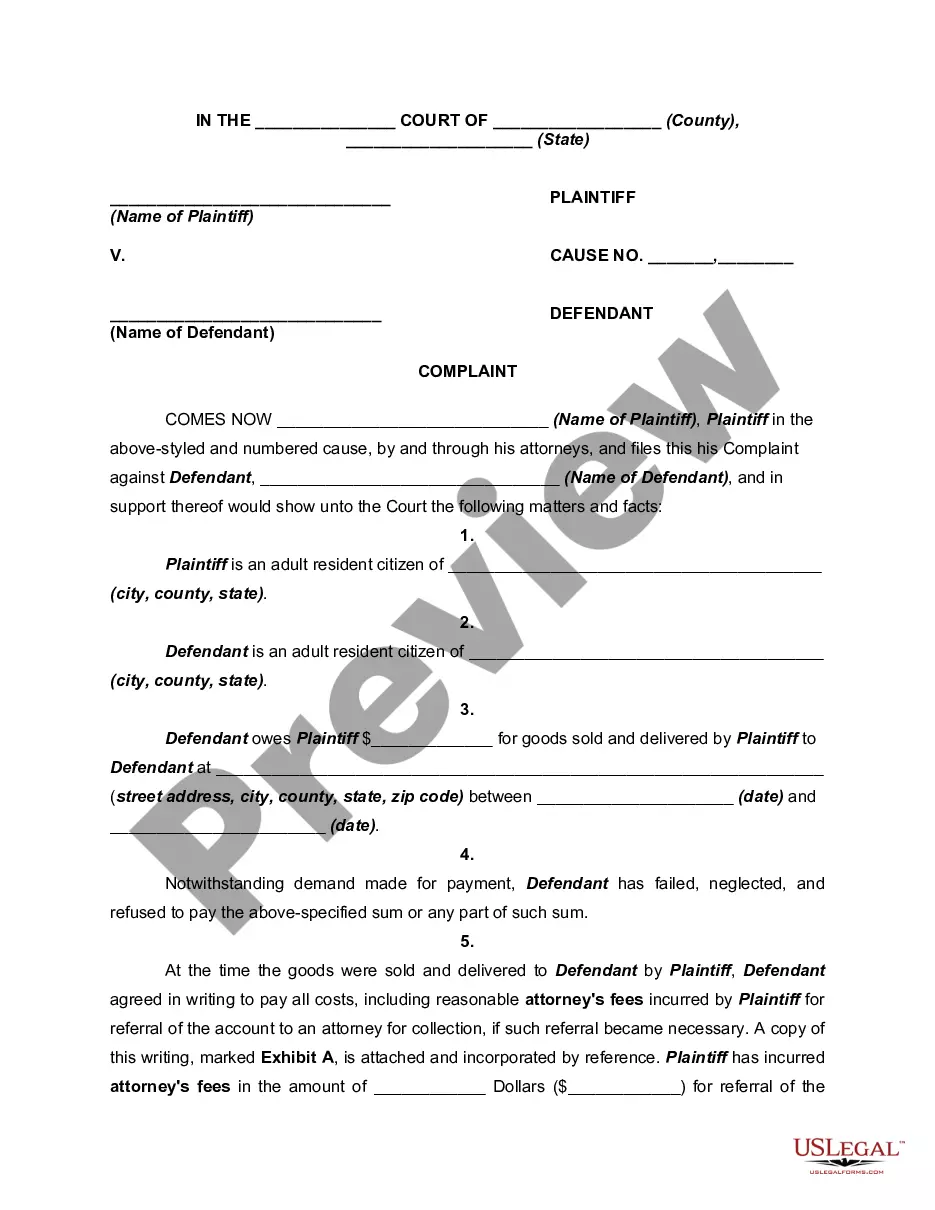
Get your form ready online
Our built-in tools help you complete, sign, share, and store your documents in one place.
Make edits, fill in missing information, and update formatting in US Legal Forms—just like you would in MS Word.
Download a copy, print it, send it by email, or mail it via USPS—whatever works best for your next step.
Sign and collect signatures with our SignNow integration. Send to multiple recipients, set reminders, and more. Go Premium to unlock E-Sign.
If this form requires notarization, complete it online through a secure video call—no need to meet a notary in person or wait for an appointment.
We protect your documents and personal data by following strict security and privacy standards.

Make edits, fill in missing information, and update formatting in US Legal Forms—just like you would in MS Word.

Download a copy, print it, send it by email, or mail it via USPS—whatever works best for your next step.

Sign and collect signatures with our SignNow integration. Send to multiple recipients, set reminders, and more. Go Premium to unlock E-Sign.

If this form requires notarization, complete it online through a secure video call—no need to meet a notary in person or wait for an appointment.

We protect your documents and personal data by following strict security and privacy standards.
Looking for another form?

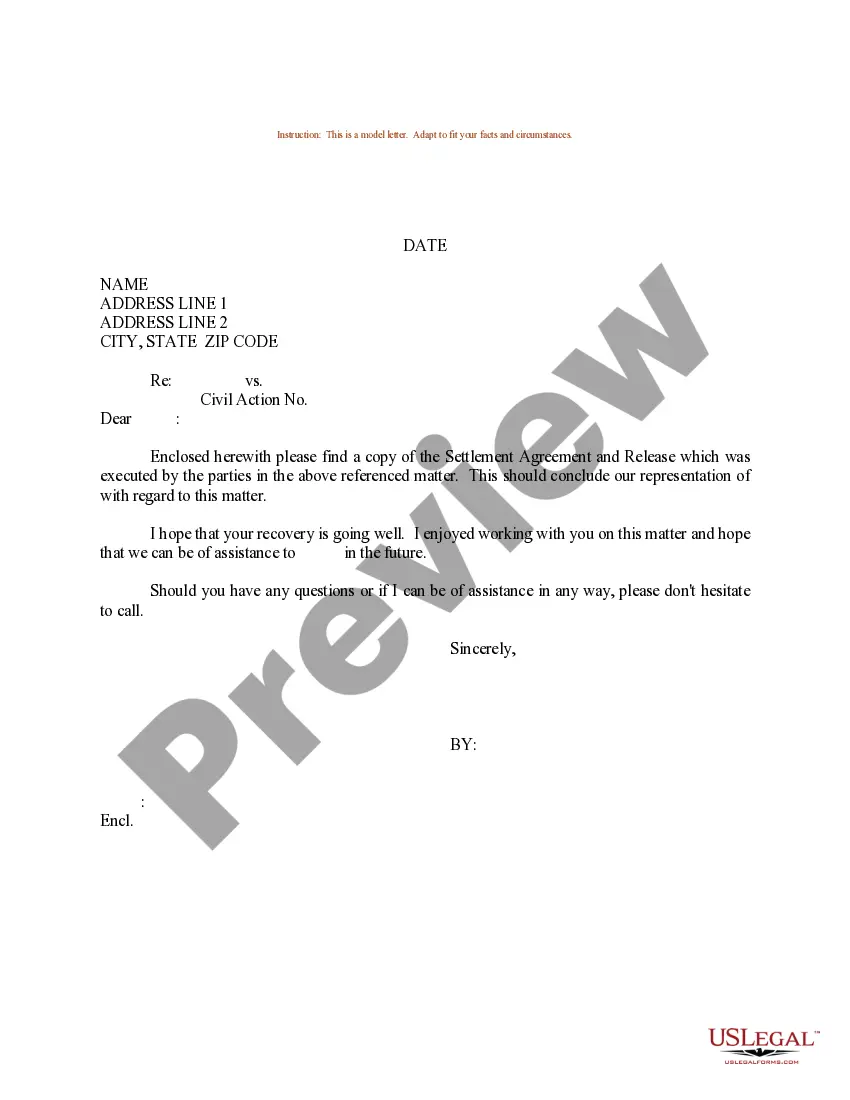


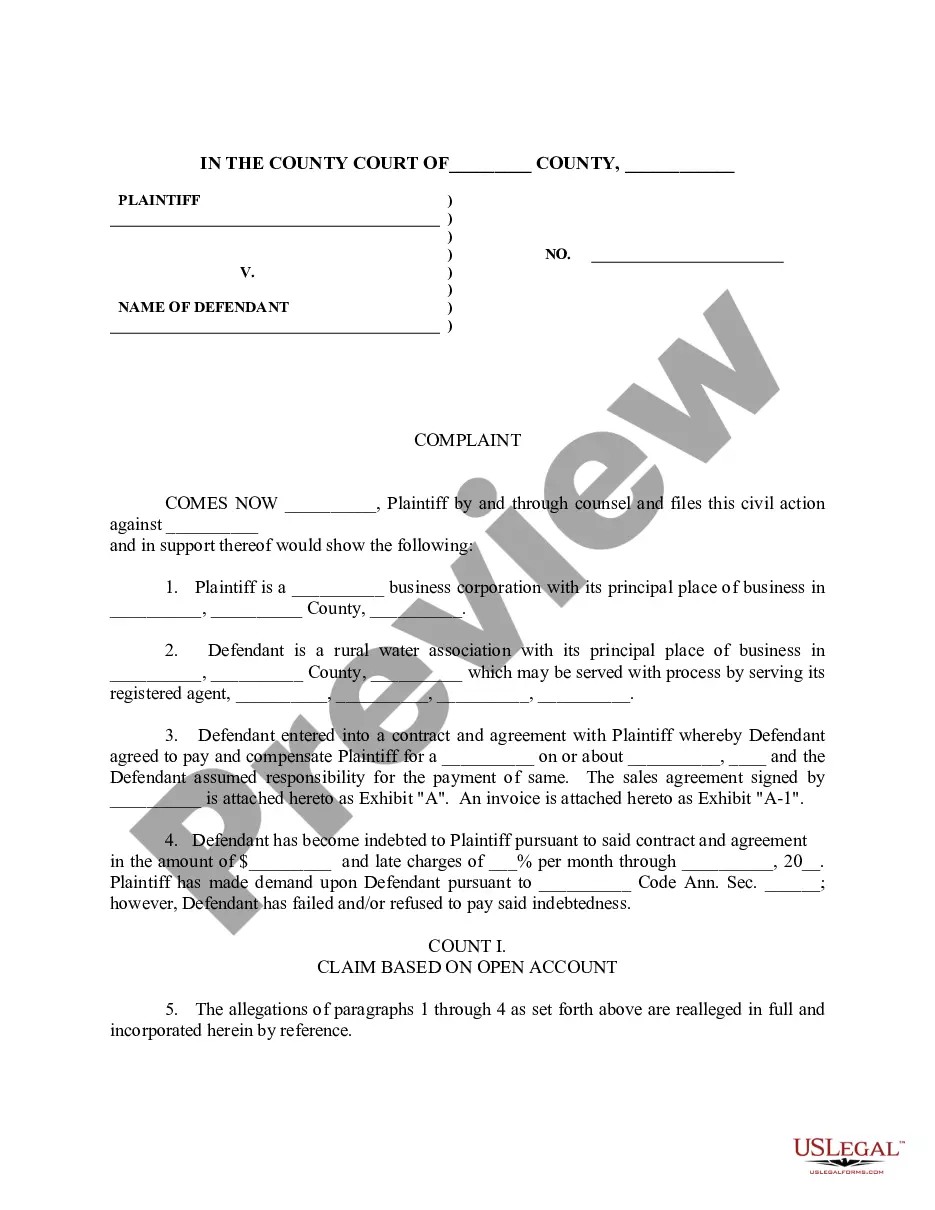
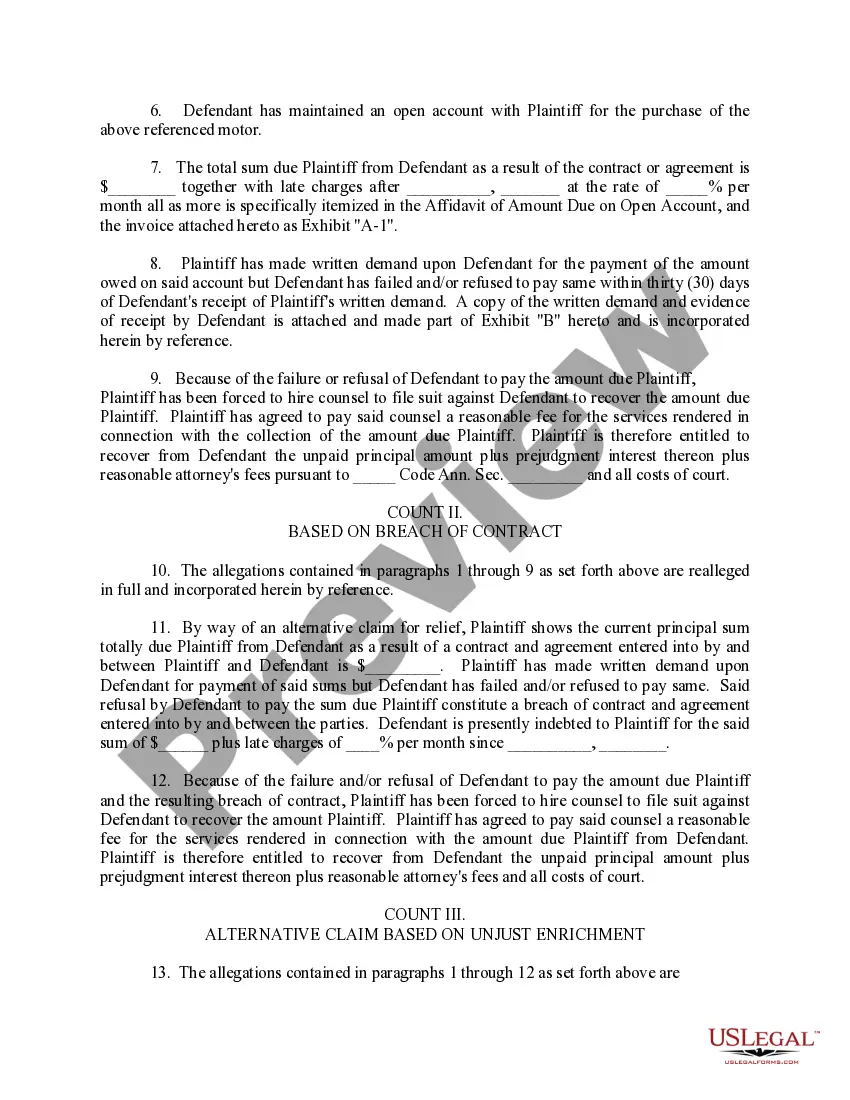
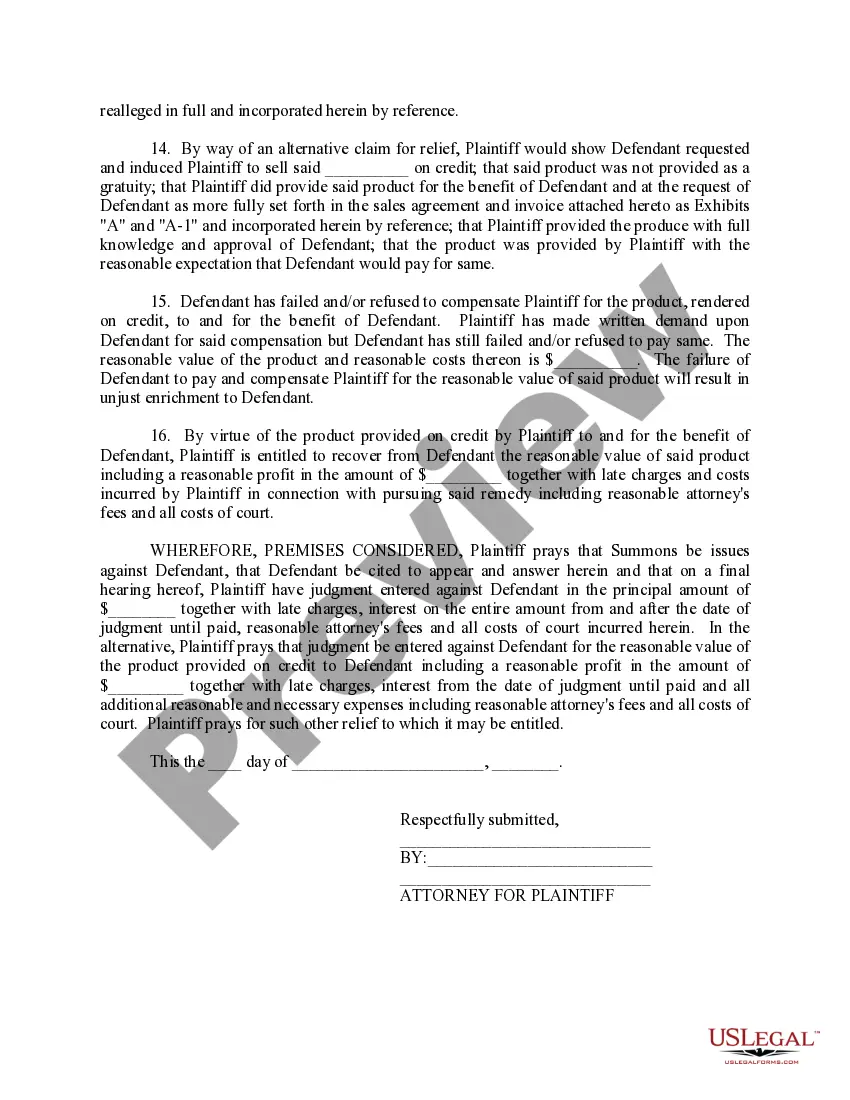
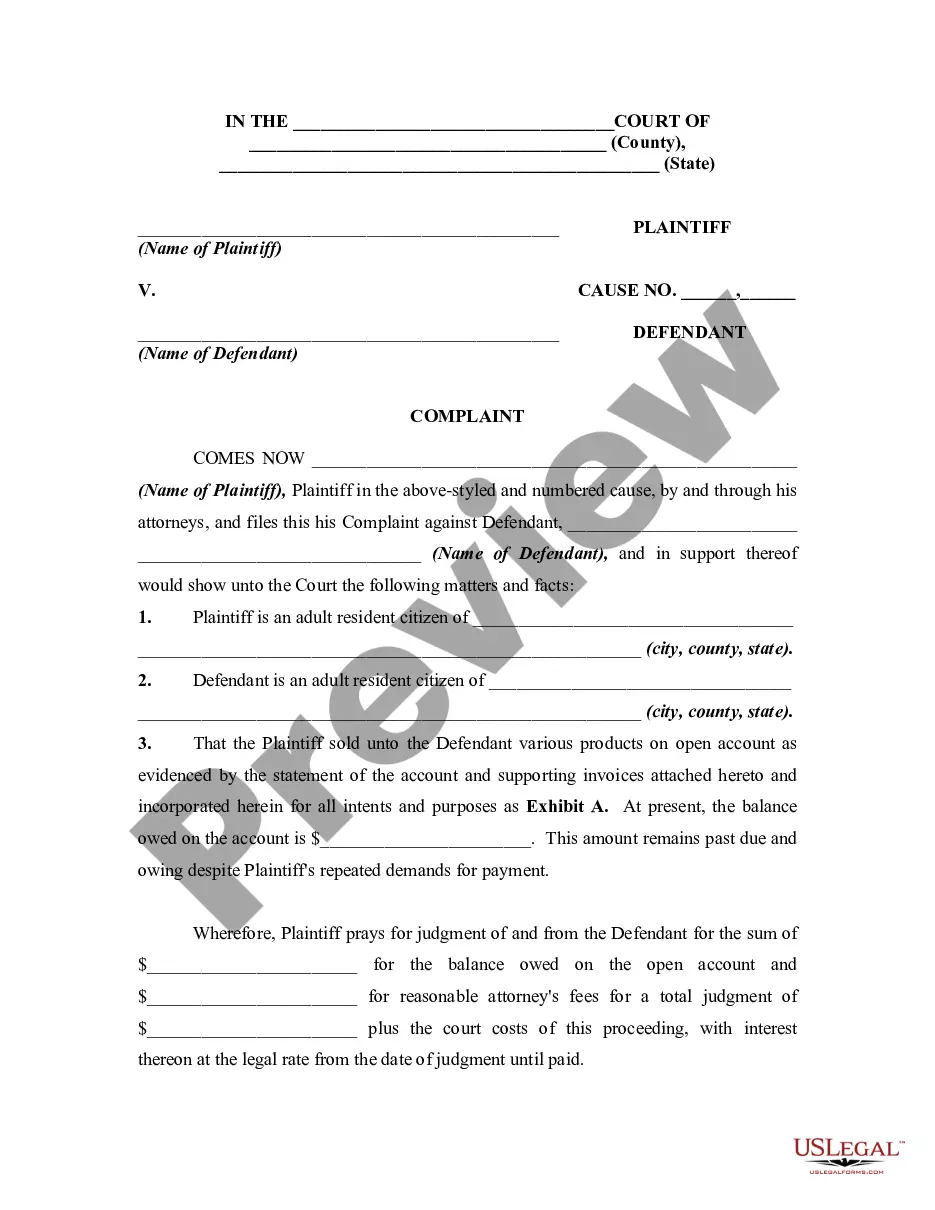
How to fill out Complaint Based On Open Account, Breach Of Contract, Unjust Enrichment?
- Log in to your existing US Legal Forms account to access your purchased templates by selecting the Download button. Ensure your subscription is up to date before proceeding.
- In case you are new to US Legal Forms, begin by reviewing the template preview to confirm it aligns with your requirements and local legal standards.
- If the first template doesn’t meet your needs, utilize the search function to find a more suitable option. Feel free to explore multiple templates as needed.
- Once you find the correct document, click on the Buy Now button and select your preferred subscription plan, which may require account registration for full access.
- Finalize your purchase by entering your payment details or using your PayPal account to complete the transaction.
- After payment, download your chosen form to your device, ensuring easy access for completion. You can also revisit the My Forms section of your profile for future reference.
In conclusion, US Legal Forms empowers users with a straightforward process for acquiring essential legal documents, especially in cases involving unjust enrichment. With an extensive library and expert assistance, completing your legal forms has never been easier.
Start streamlining your legal documentation today by visiting US Legal Forms!
Form popularity
FAQ
The standard of proof for unjust enrichment typically requires a 'preponderance of the evidence.' This means that it must be more likely than not that unjust enrichment occurred. Ensuring that your evidence meets this standard is crucial, as it lays the foundation for a successful claim in court.
In unjust enrichment cases, the burden of proof lies with the plaintiff. This means that the claimant must provide enough evidence to support their allegations. Typically, this requirement involves showing the existence of unjust benefit and loss, which may necessitate thorough documentation and legal support.
To prove unjust enrichment, you must demonstrate that one party received a benefit that was not entitled to it, and that this resulted in a loss for another party. Collect documentation, such as contracts, invoices, and correspondence, that can substantiate your claims. Legal professionals often utilize these materials to build a strong case for unjust enrichment.
Proving unjust enrichment can be challenging, but it mainly involves establishing specific legal elements. You must show that one party gained a benefit, another incurred a loss, and that there is no legal justification for the benefit. The complexity often arises in substantiating these elements, but with proper guidance, you can effectively navigate these challenges.
To sue for unjust enrichment, you need to establish a legal claim demonstrating that one party has unfairly benefited at another party's expense. Begin by gathering evidence that illustrates the relationship and transactions between the involved parties. You may want to consult with an attorney who specializes in unjust enrichment cases to guide you through the legal process and ensure your case is properly presented.
To succeed in a claim of unjust enrichment, you must demonstrate three key elements. First, you need to show that one party received a benefit. Second, you have to establish that this benefit was conferred at the expense of another party. Lastly, it must be proven that it would be unjust for the benefitting party to retain this benefit without compensating the other party. Understanding these elements is crucial, and utilizing resources from USLegalForms can provide you with valuable guidance in navigating your unjust enrichment claim.
The term unjustly enriched refers to a situation where one person gains a benefit at the expense of another without offering fair compensation. It indicates that the enriched person's benefits arise from unfair practices or circumstances. In many cases, the law provides a mechanism for the affected party to recover their losses. Explore the options available through USLegalForms to understand your rights related to unjustly enrichment.
The four elements of unjust enrichment are: a benefit conferred to the unjustly enriched party, a corresponding detriment to the other party, no legal justification for the benefit received, and an overall lack of fair compensation. Recognizing these components is essential for anyone involved in a potential legal dispute over benefits received. If you seek further information about these elements, USLegalForms provides valuable resources.
To prove unjust enrichment, start by documenting the benefit received by the enriched party and the loss incurred by the other party. Provide clear evidence showing the lack of a legal contract or obligation for payment. Keeping thorough records, such as invoices or correspondence, can bolster your claim. USLegalForms can assist in organizing your documentation effectively.
To prove unjustly enrichment, you must demonstrate that one party received benefits at the expense of another without a legal justification. Generally, you need to show that the enriched party was aware of the situation but failed to compensate the other party. Gathering evidence, such as contracts or communications, can strengthen your case. The platform USLegalForms offers essential resources to help you navigate the legal requirements.