Garnishment Notice Order With A Debit Card
Description
Get your form ready online
Our built-in tools help you complete, sign, share, and store your documents in one place.
Make edits, fill in missing information, and update formatting in US Legal Forms—just like you would in MS Word.
Download a copy, print it, send it by email, or mail it via USPS—whatever works best for your next step.
Sign and collect signatures with our SignNow integration. Send to multiple recipients, set reminders, and more. Go Premium to unlock E-Sign.
If this form requires notarization, complete it online through a secure video call—no need to meet a notary in person or wait for an appointment.
We protect your documents and personal data by following strict security and privacy standards.

Make edits, fill in missing information, and update formatting in US Legal Forms—just like you would in MS Word.

Download a copy, print it, send it by email, or mail it via USPS—whatever works best for your next step.

Sign and collect signatures with our SignNow integration. Send to multiple recipients, set reminders, and more. Go Premium to unlock E-Sign.

If this form requires notarization, complete it online through a secure video call—no need to meet a notary in person or wait for an appointment.

We protect your documents and personal data by following strict security and privacy standards.
Looking for another form?


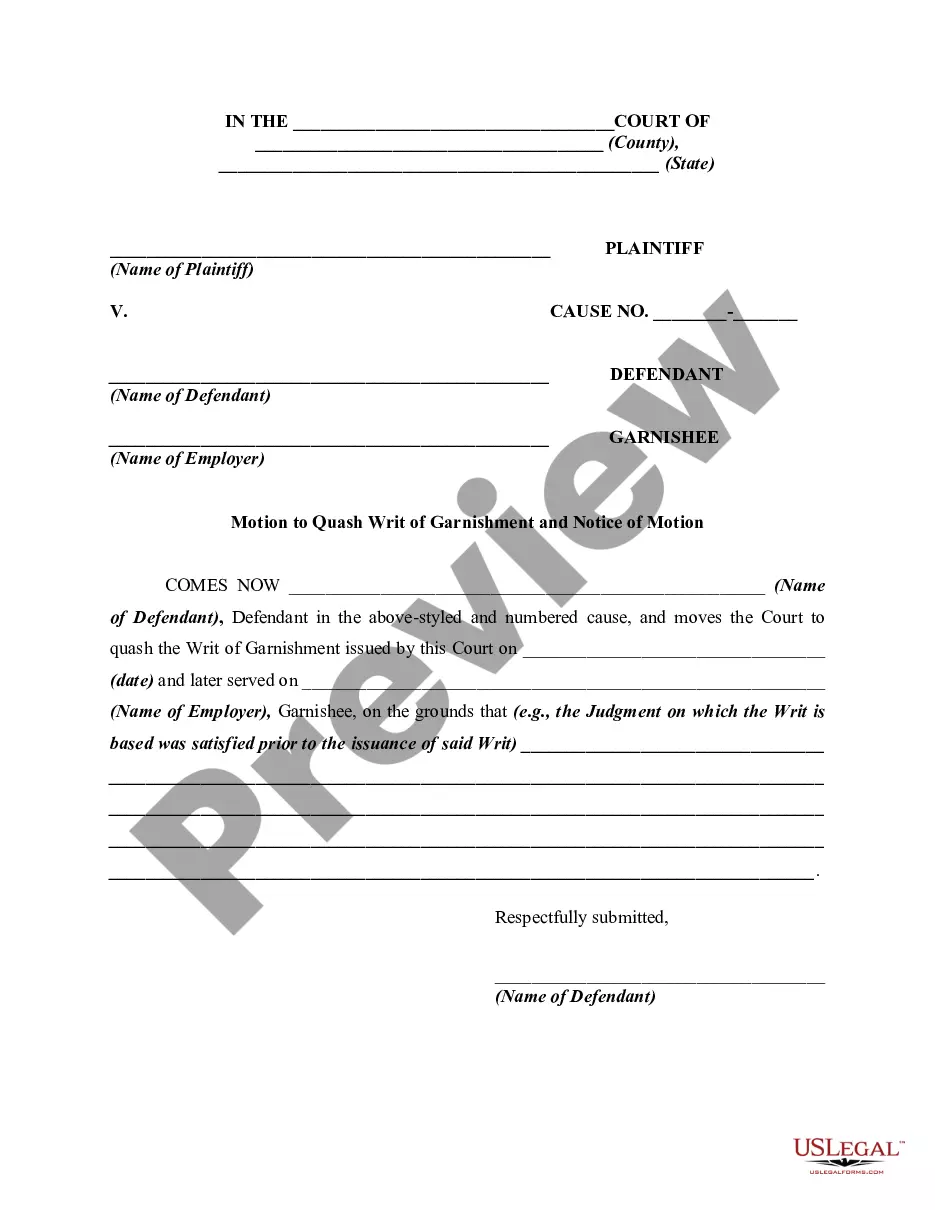
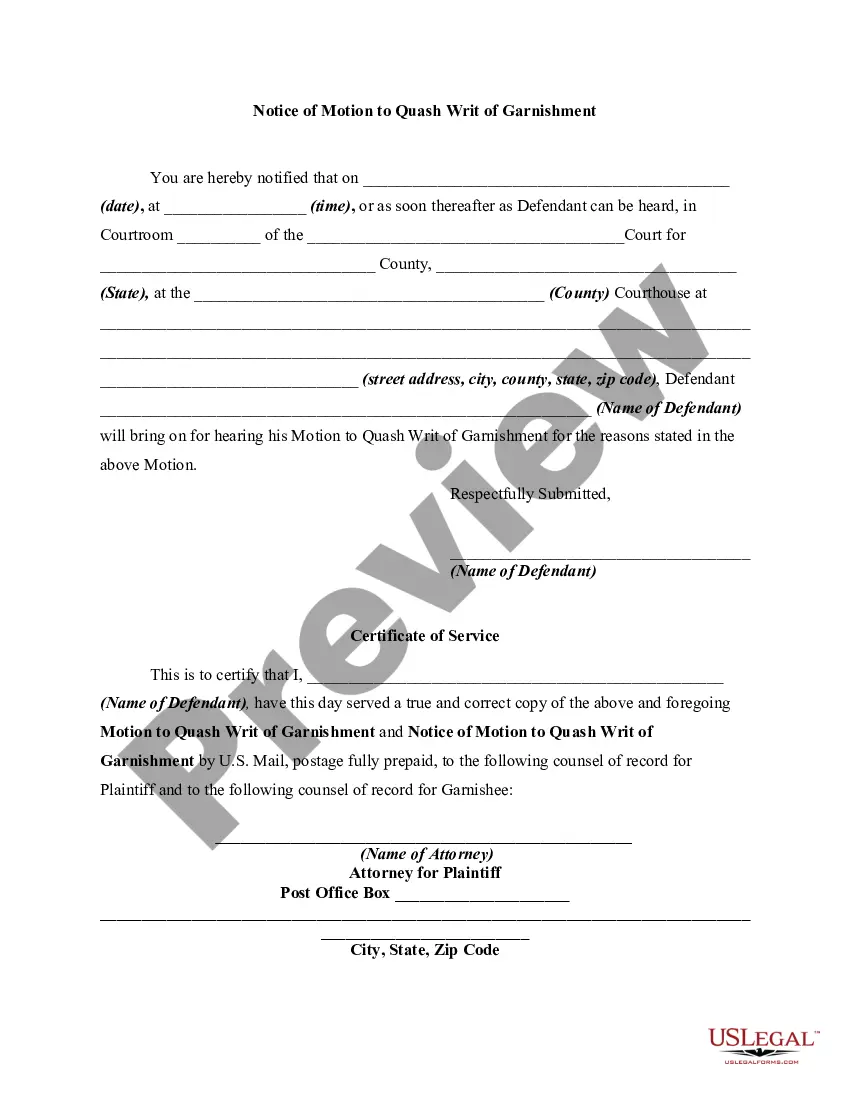
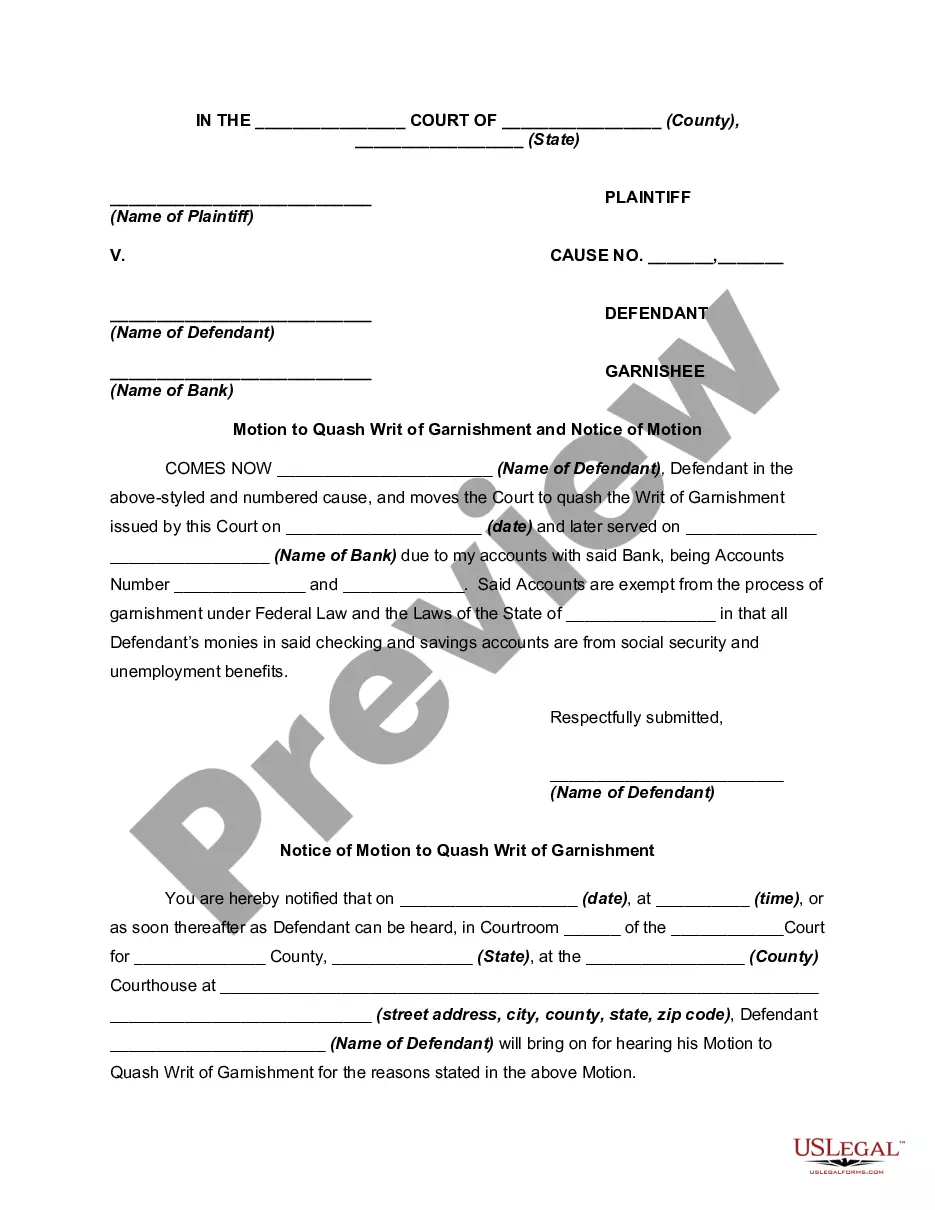
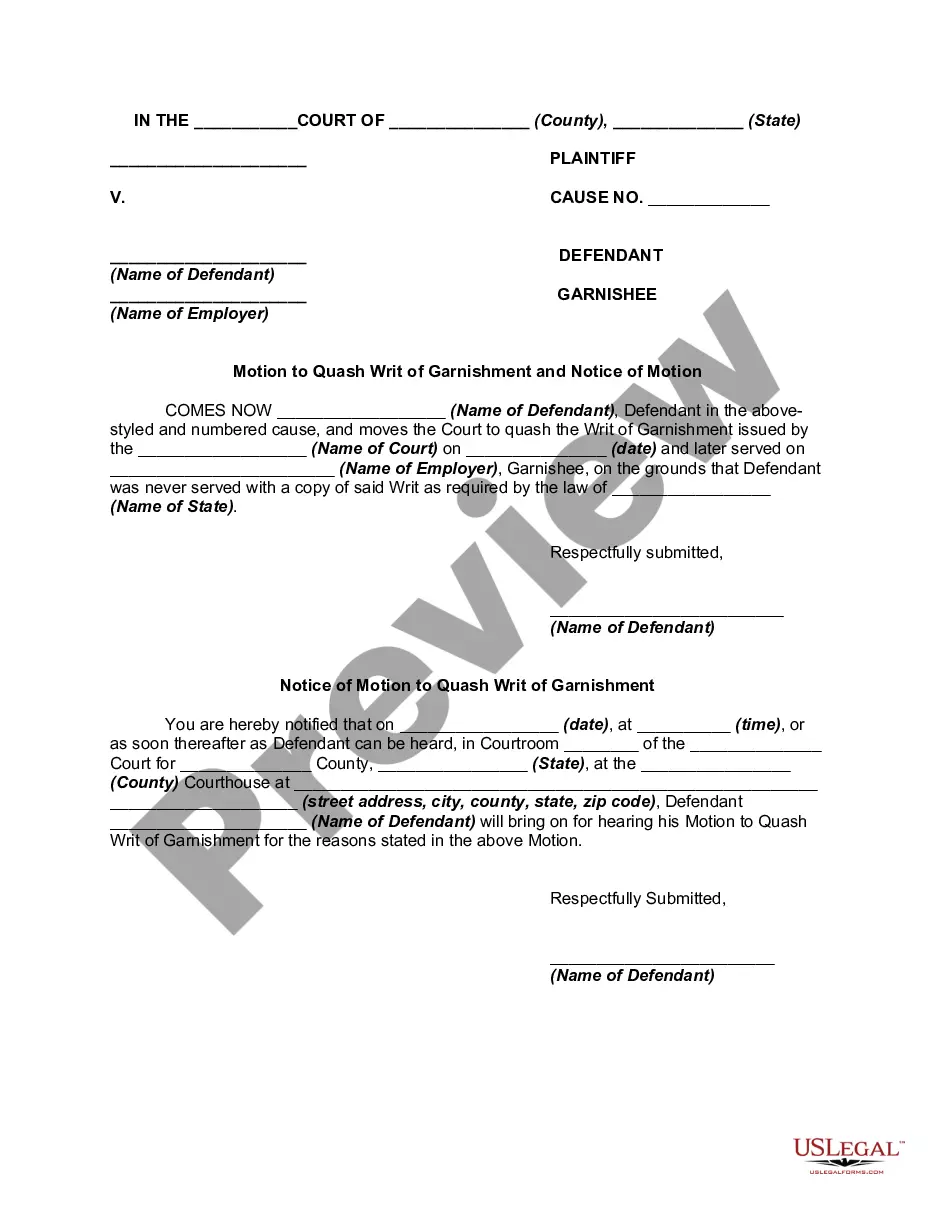
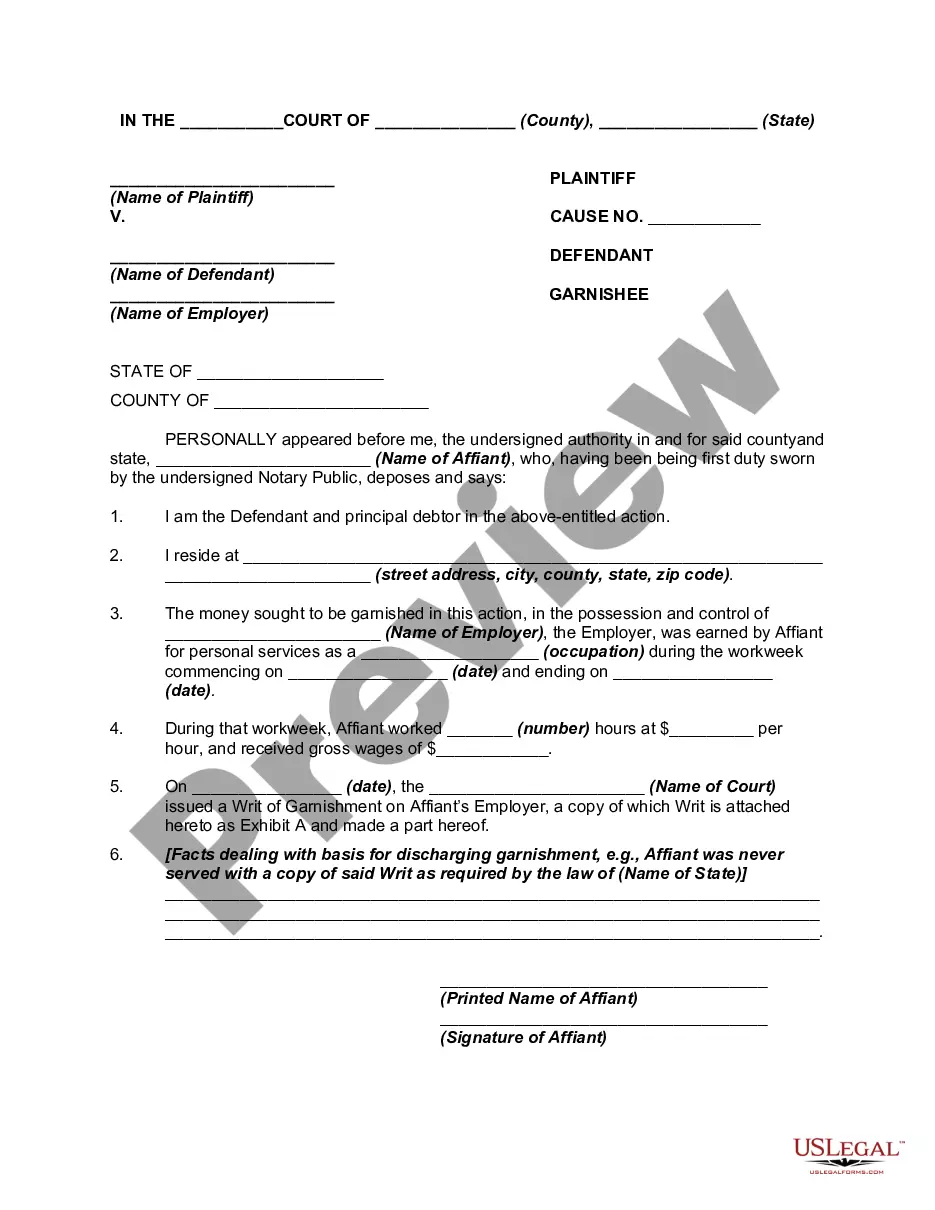
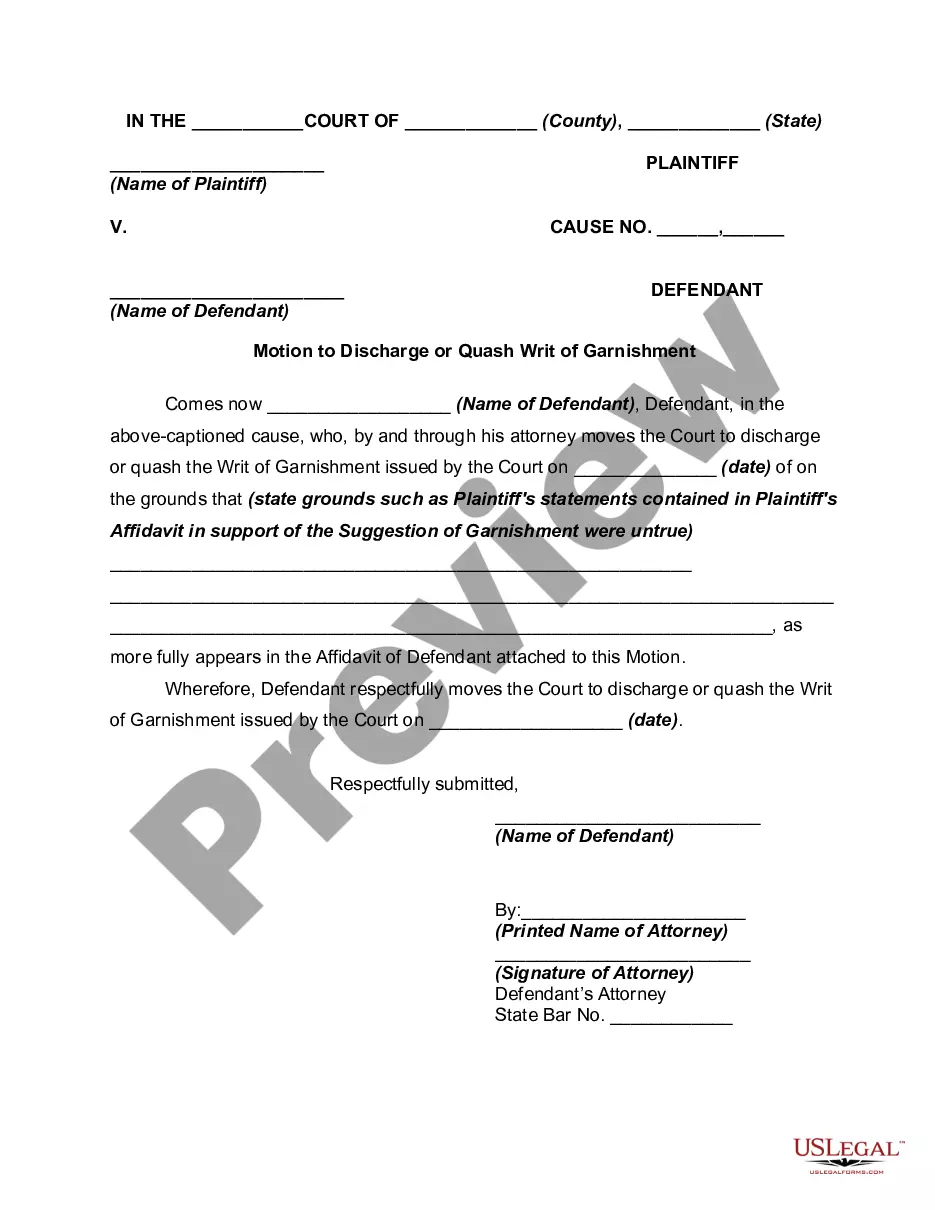
How to fill out Motion Of Defendant To Discharge Or Quash Writ Of Garnishment And Notice Of Motion?
Whether for corporate objectives or personal matters, everyone must confront legal circumstances at some stage in their lives. Filling out legal documents requires meticulous care, starting with choosing the appropriate form template.
For instance, if you select an incorrect version of the Garnishment Notice Order With A Debit Card, it will be rejected once submitted. Thus, it is crucial to have a reliable source of legal paperwork such as US Legal Forms.
- Locate the sample you require by using the search bar or browsing the catalog.
- Review the form’s description to ensure it aligns with your needs, state, and county.
- Click on the form’s preview to inspect it.
- If it is the incorrect form, return to the search tool to find the Garnishment Notice Order With A Debit Card sample you need.
- Download the document if it satisfies your criteria.
- If you already possess a US Legal Forms account, click Log in to access previously saved documents in My documents.
- If you do not have an account yet, you may download the form by clicking Buy now.
- Choose the appropriate pricing option.
- Fill out the account registration form.
- Select your payment method: you may use a credit card or PayPal account.
- Choose the document format you desire and download the Garnishment Notice Order With A Debit Card.
- Once saved, you can complete the form using editing software or print it out and fill it in manually.
- With a vast US Legal Forms catalog available, you do not need to waste time searching for the correct sample online. Use the library’s user-friendly navigation to find the right template for any situation.
Form popularity
FAQ
A garnishee order made on your bank accounts Garnishee orders can be made on banks and financial institutions, compelling them to put a freeze on your accounts. If this happens, your creditor can typically take the full amount owing from your account, if you have the funds available.
A Garnishee Order is an order issued by court under provisions of Order 21, Rule 46 of the Code of Civil Procedure, 1908. The concept of 'Garnishment' has been introduced in civil procedure code by the amendment Act, 1976 and is a remarkable piece of legislation.
A garnishee order is issued by the court of law to the third party in a suit, compelling him to pay a certain amount directly to the creditor instead of paying it to the debtor.
Two types of orders: Order Nisi and Order Absolute. Order Nisi ? bank recovers its over dues if any from the judgement debtor's account and informs the balance in the account to the court. Also informs the judgement debtor ie its customer.
A garnishee order is an order passed by an executing court directing or ordering a garnishee not to pay money to judgment debtor since the latter is indebted to the Garnisher (decree-holder). It is an order of court to attach money or goods belonging to the judgment debtor in the hands of a third person.