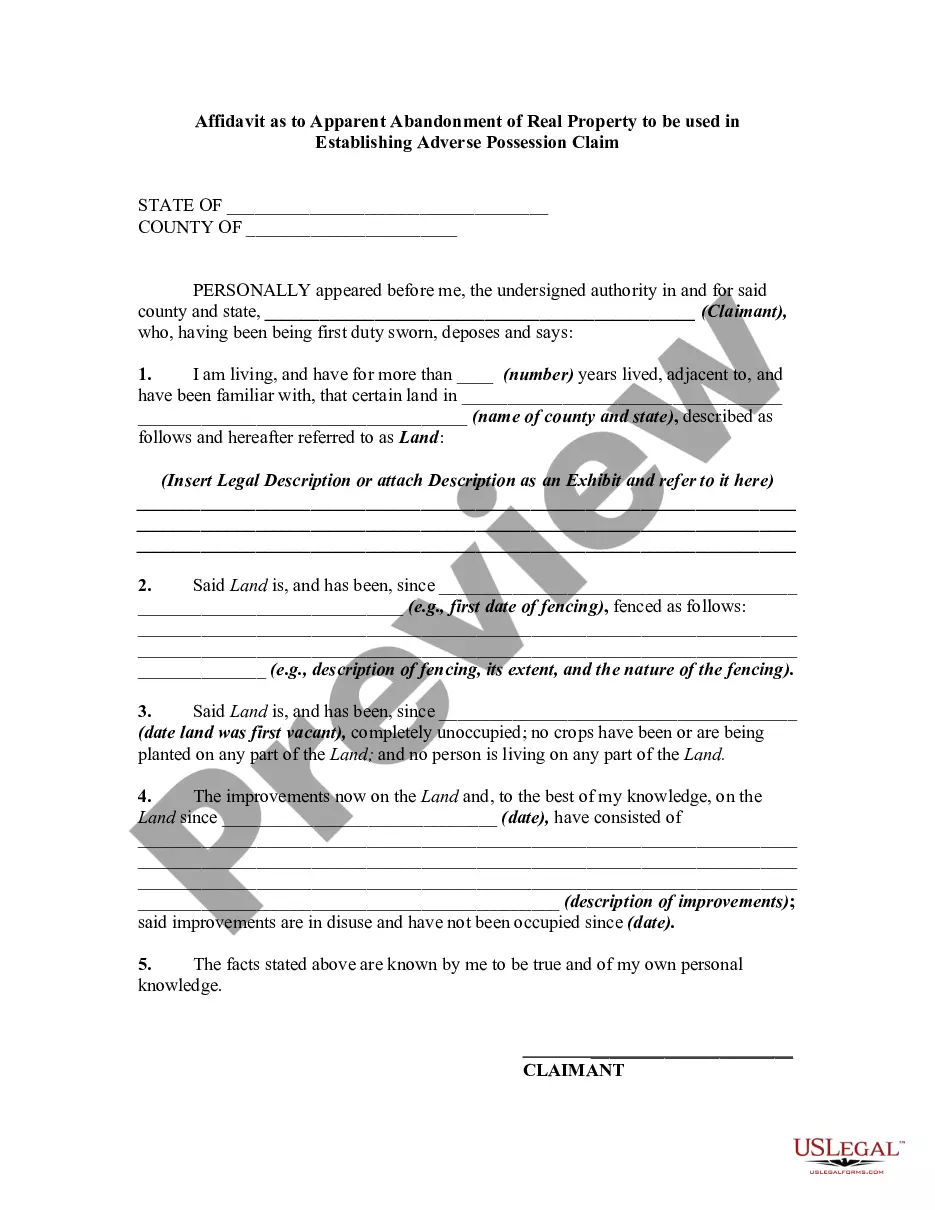
Affidavit Of Adverse Possession Form For Mississippi
Description
Get your form ready online
Our built-in tools help you complete, sign, share, and store your documents in one place.
Make edits, fill in missing information, and update formatting in US Legal Forms—just like you would in MS Word.
Download a copy, print it, send it by email, or mail it via USPS—whatever works best for your next step.
Sign and collect signatures with our SignNow integration. Send to multiple recipients, set reminders, and more. Go Premium to unlock E-Sign.
If this form requires notarization, complete it online through a secure video call—no need to meet a notary in person or wait for an appointment.
We protect your documents and personal data by following strict security and privacy standards.

Make edits, fill in missing information, and update formatting in US Legal Forms—just like you would in MS Word.

Download a copy, print it, send it by email, or mail it via USPS—whatever works best for your next step.

Sign and collect signatures with our SignNow integration. Send to multiple recipients, set reminders, and more. Go Premium to unlock E-Sign.

If this form requires notarization, complete it online through a secure video call—no need to meet a notary in person or wait for an appointment.

We protect your documents and personal data by following strict security and privacy standards.
Looking for another form?
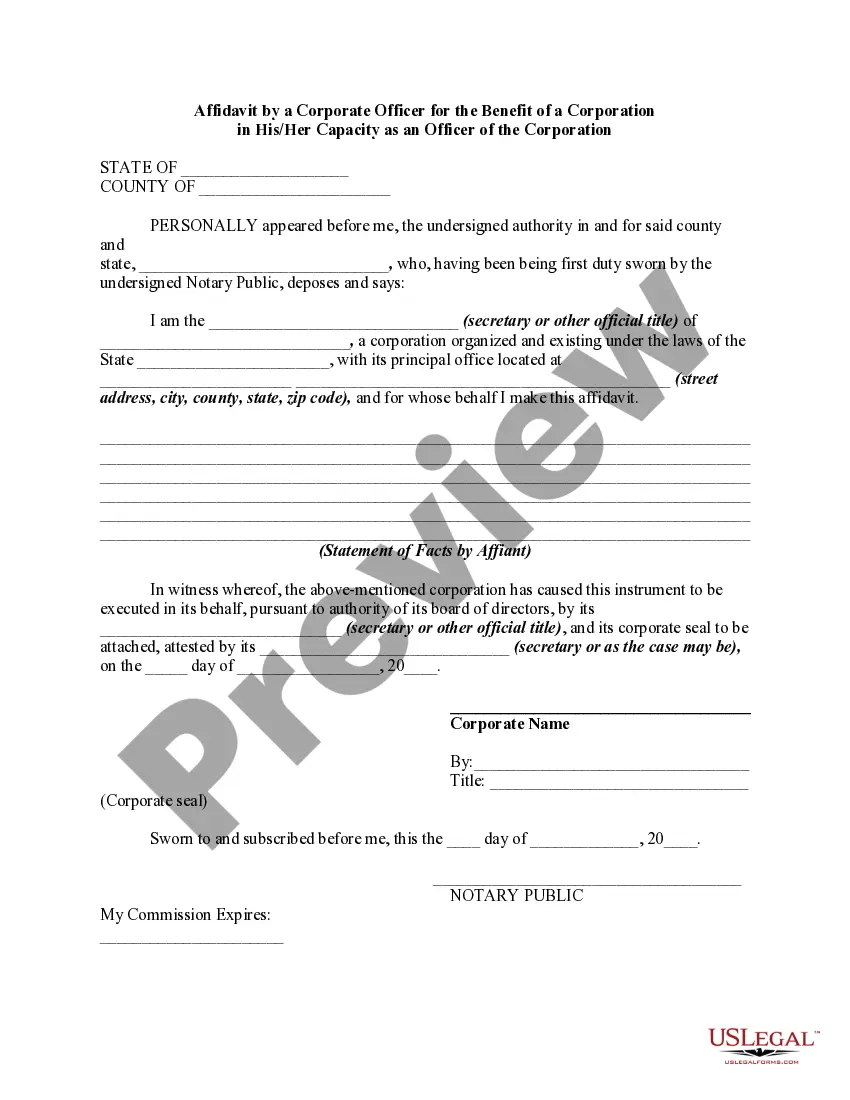
How to fill out Affidavit As To Apparent Abandonment Of Real Property To Be Used In Establishing Adverse Possession Claim - Squatters Rights?
Whether for professional objectives or for personal matters, everyone must navigate legal issues at some stage in their life.
Filling out legal forms requires diligent attention, starting with choosing the right form template.
With an extensive US Legal Forms catalog available, you will never have to waste time searching for the right template across the internet. Utilize the library’s convenient navigation to find the correct template for any situation.
- For example, if you select an incorrect version of the Affidavit Of Adverse Possession Form For Mississippi, it will be denied upon submission.
- Thus, it is crucial to secure a reliable source of legal documents such as US Legal Forms.
- If you need to procure an Affidavit Of Adverse Possession Form For Mississippi sample, adhere to these straightforward steps.
- Obtain the template you require by utilizing the search box or catalog navigation.
- Review the form’s description to ensure it aligns with your case, state, and county.
- Click on the form’s preview to examine it.
- If it is the wrong document, return to the search function to locate the Affidavit Of Adverse Possession Form For Mississippi sample you need.
- Download the template once it fulfills your criteria.
- If you possess a US Legal Forms account, simply click Log in to access previously saved templates in My documents.
- In case you do not have an account yet, you can acquire the form by clicking Buy now.
- Select the appropriate pricing option.
- Complete the account registration form.
- Choose your payment method: you can utilize a credit card or PayPal account.
- Select the file format you prefer and download the Affidavit Of Adverse Possession Form For Mississippi.
- Once saved, you can complete the form using editing software or print it out and fill it in manually.
Form popularity
FAQ
To defeat an adverse possession claim, you can provide evidence that the claimant did not occupy the property lawfully. This may include showing that you did not give consent, or that the claimant did not meet the necessary requirements of occupancy. You can also disprove a claim by filing necessary documents with the court, such as an Affidavit of adverse possession form for Mississippi, which can counter the claimant's assertion of ownership. It’s advisable to consult with a legal expert to navigate this complex issue.
In Minnesota, the period for adverse possession is typically 15 years. During this time, the claimant must continuously occupy and utilize the property without the owner's consent. It's important to understand that the laws can vary by state, so if you're dealing with adverse possession in Mississippi, ensure you utilize the accurate Affidavit of adverse possession form for Mississippi. This form can assist in asserting your claim effectively.
An example of adverse possession occurs when someone occupies a piece of land owned by another person without permission. Over time, if the occupier maintains the property, pays taxes, and demonstrates continuous and open use, they may claim ownership. In Mississippi, you would use an Affidavit of adverse possession form for Mississippi to formally present your case. This legal document helps establish your right to claim the property.
To successfully claim land through adverse possession, you must establish a number of criteria. These include actual and exclusive possession, possession that is open and notorious, and continuous use for the statutory timeframe, which in Mississippi can be significant. Additionally, your possession needs to be adverse to the claims of the original owner, and submitting an affidavit of adverse possession form for Mississippi may be necessary to formalize your claim in court.
To acquire property by adverse possession, certain requirements must be met, which include actual possession of the land, the possession being open and notorious, and continuous use over a designated period. Additionally, your use must be adverse to the interests of the true owner, meaning you claim the property as your own. Using an affidavit of adverse possession form for Mississippi can help clarify and support your claim in legal terms.
The form of adverse possession typically involves using the land in a way that is inconsistent with the rights of the true owner. This can include living on the property, maintaining it, or making substantial improvements. To formalize your claim, you will usually need an affidavit of adverse possession form for Mississippi, which serves as a legal record of your assertion of ownership.
Adverse possession is a legal doctrine that allows a person to claim ownership of land under certain conditions. Essentially, if you occupy a property without the owner's permission for a specified period, you might obtain legal title. The occupancy must be exclusive, continuous, and demonstrable to the original owner. Utilizing an affidavit of adverse possession form for Mississippi can aid in solidifying your claim.
To acquire ownership through adverse possession, you must demonstrate actual possession, which means using the property as a true owner would. Additionally, your possession must be open and notorious, meaning it is visible and obvious to others. Furthermore, your possession should be continuous for the required statutory period. To complete this process, you may need an affidavit of adverse possession form for Mississippi.
An example of an adverse possession claim could involve a person who has lived on a vacant lot for over ten years, maintaining the land and updating its features without the owner’s knowledge. They may decide to file the Affidavit of adverse possession form for Mississippi to formalize their claim. Such cases demonstrate how long-term, uninterrupted use of the property can lead to ownership rights. Each claim is unique, so it’s wise to document your situation thoroughly.
Hostile evidence for adverse possession refers to the manner in which the property is occupied without the consent of the original owner. Essentially, it means that you must possess the property under a claim of right, treating it as your own despite it belonging to someone else. This concept is important when filing the Affidavit of adverse possession form for Mississippi, as it helps establish your rightful claim. The court will consider this factor when reviewing your case.