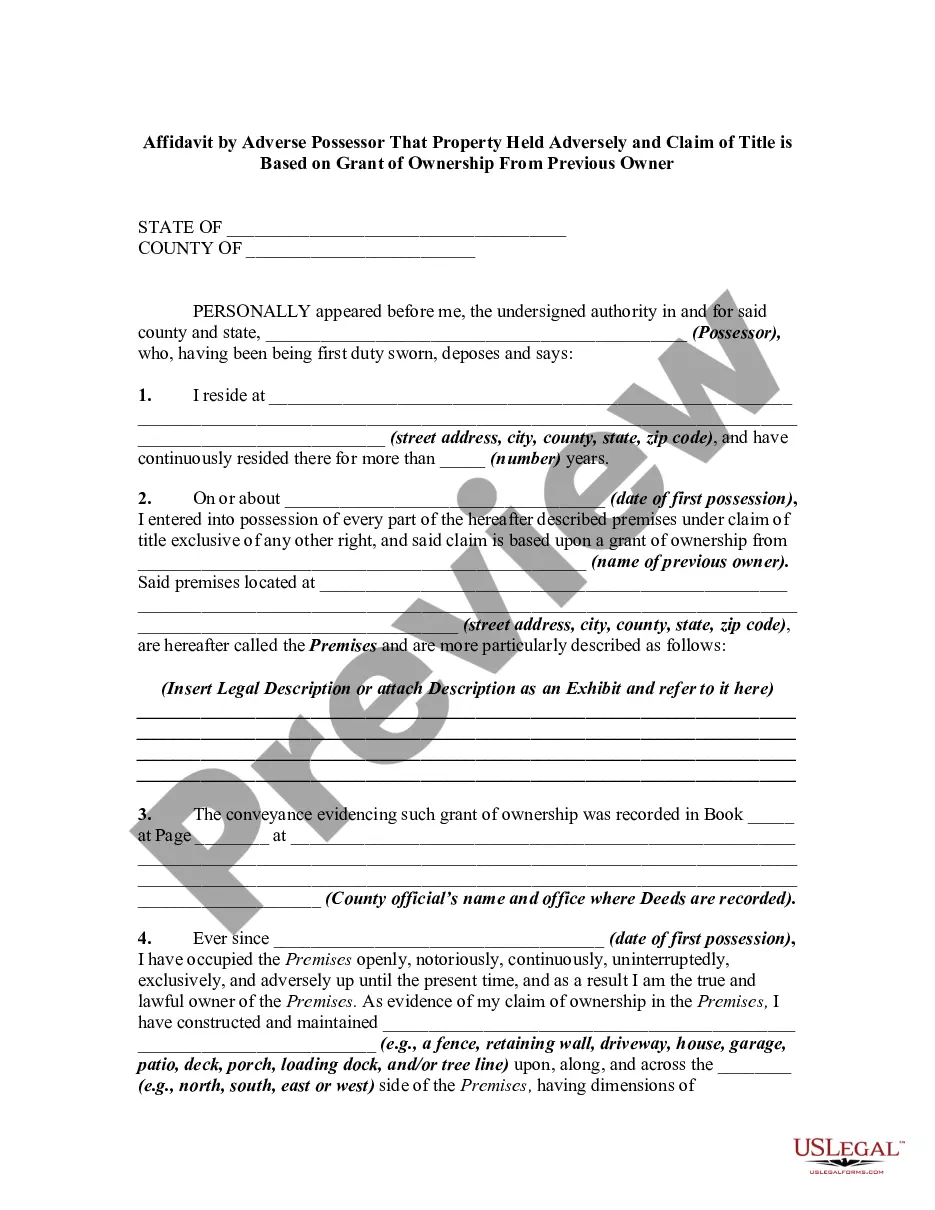
Adverse Possessor For Sale
Description
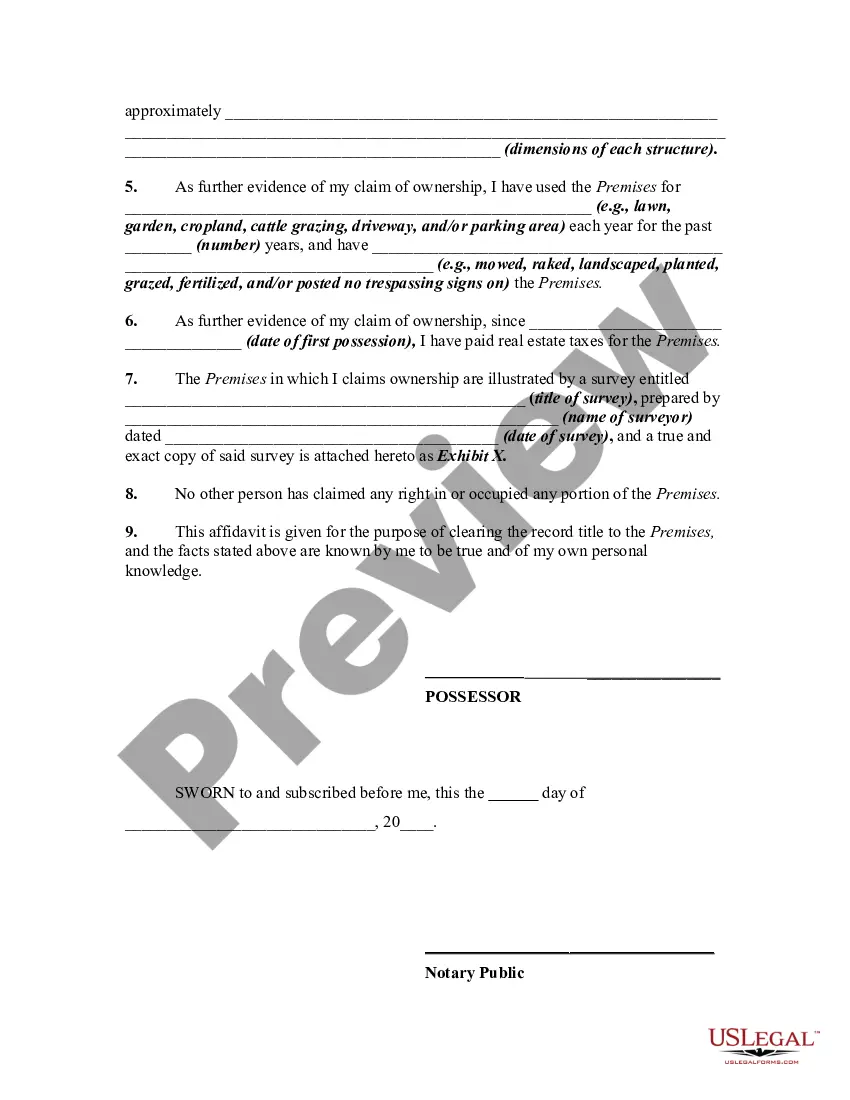

Get your form ready online
Our built-in tools help you complete, sign, share, and store your documents in one place.
Make edits, fill in missing information, and update formatting in US Legal Forms—just like you would in MS Word.
Download a copy, print it, send it by email, or mail it via USPS—whatever works best for your next step.
Sign and collect signatures with our SignNow integration. Send to multiple recipients, set reminders, and more. Go Premium to unlock E-Sign.
If this form requires notarization, complete it online through a secure video call—no need to meet a notary in person or wait for an appointment.
We protect your documents and personal data by following strict security and privacy standards.

Make edits, fill in missing information, and update formatting in US Legal Forms—just like you would in MS Word.

Download a copy, print it, send it by email, or mail it via USPS—whatever works best for your next step.

Sign and collect signatures with our SignNow integration. Send to multiple recipients, set reminders, and more. Go Premium to unlock E-Sign.

If this form requires notarization, complete it online through a secure video call—no need to meet a notary in person or wait for an appointment.

We protect your documents and personal data by following strict security and privacy standards.
Looking for another form?
How to fill out Affidavit By Adverse Possessor That Property Held Adversely And Claim Of Title Is Based On Grant Of Ownership From Previous Owner - Squatters Rights?
- If you're a returning user, log in to your account and click the Download button for your desired form template. Ensure your subscription is current; if not, renew as needed.
- For first-time users, preview the form description to confirm that it aligns with your requirements and complies with local jurisdictional standards.
- Use the Search feature if you need to check for alternative templates, ensuring that what you choose meets your needs perfectly.
- Proceed to purchase your document by selecting the Buy Now button and choose your preferred subscription plan; account registration is necessary to access the document library.
- Complete your payment using credit card details or PayPal and download the form to your device. You can always revisit it in the My Forms section of your profile for future needs.
US Legal Forms empowers individuals and attorneys alike to navigate the complexities of legal documentation with ease. With a robust collection surpassing many competitors, accessing over 85,000 fillable forms is a breeze.
Need assistance? Consult our premium experts for help in completing your forms accurately. Start your journey today and take advantage of our resources!
Form popularity
FAQ
Yes, when a valid claim of adverse possession is established, the new owner holds the title just like the previous possessor. This means that once the legal requirements are met, the adverse possessor for sale can effectively transfer ownership status. It's vital for buyers to verify the legitimacy of such claims to avoid future disputes. Consider utilizing the US Legal Forms platform to understand the implications of adverse possession transfers.
To defeat a claim of adverse possession, property owners can present evidence that disproves the adverse possessor's continuous and exclusive use of the land. Establishing that the land was not occupied for the required time frame or showing that the use was not open and notorious can be critical. Engaging with legal professionals or resources from US Legal Forms can further help you protect your property rights from adverse possessors for sale.
In New York, an individual must meet several criteria for a successful adverse possession claim. This includes open and notorious possession, exclusive use, continuous occupation for at least 10 years, and a claim of right. Understanding these requirements can help you navigate your interests as an adverse possessor for sale. For detailed guidance, consider accessing resources on the US Legal Forms platform.
In Connecticut, the rules for adverse possession require that a person occupy a property openly, continuously, and exclusively for at least 15 years. The adverse possessor must use the land in a way that is actual and visible, putting others on notice of their claim. It's important to understand these rules if you are interested in becoming an adverse possessor for sale. Consulting legal resources, such as US Legal Forms, can help clarify the process.
An example of an adverse possession claim can occur when someone builds a fence or a structure that encroaches on another person's property boundary. Over time, if the original owner does not dispute the encroachment, the encroaching party may claim ownership of that section of land. This process highlights the importance of being aware of property lines. US Legal Forms offers guidance if you find yourself facing such claims or considering an adverse possessor for sale.
One aspect that is not a requirement for adverse possession is that the possessor must reside on the property. While continuous use is necessary, it does not strictly need to be by living there. Instead, any form of possession that is visible and uninterrupted can qualify. Understanding these nuances helps clarify misconceptions about adverse possessors for sale.
A common example of adverse possession could be when a neighbor consistently maintains and uses a portion of land that technically belongs to someone else. If this usage continues openly for the legal timeframe without objection from the actual owner, the possessor may be able to claim that land. Such stories are not uncommon in property disputes. If you encounter a potential adverse possessor for sale, understanding these scenarios can provide clarity.
Recording an adverse possession requires filing a claim with the local land registry or recorder's office. You’ll typically need to provide evidence of your continuous use and how it satisfies the legal requirements. Engaging with professionals who understand this process can be beneficial. Resources from US Legal Forms can guide you step-by-step in documenting your claim effectively.
To defeat an adverse possession claim, you can provide evidence of your ownership and show that the possessor's use was not exclusive or continuous. Keeping your property well-documented and clearly defined can help in challenging such claims. Additionally, you may want to consult with experts or services like US Legal Forms that provide resources to protect your property rights. Being proactive can effectively safeguard your interests.
In Michigan, the required duration for claiming adverse possession is 15 years. This means that if a person has openly and continuously used a property without permission for that time span, they might be able to claim title. It's important to maintain consistent use of the property during this period to strengthen the claim. For those considering an adverse possessor for sale, understanding Michigan's laws is crucial.