Adverse Possession Requirements With High Court
Description
Get your form ready online
Our built-in tools help you complete, sign, share, and store your documents in one place.
Make edits, fill in missing information, and update formatting in US Legal Forms—just like you would in MS Word.
Download a copy, print it, send it by email, or mail it via USPS—whatever works best for your next step.
Sign and collect signatures with our SignNow integration. Send to multiple recipients, set reminders, and more. Go Premium to unlock E-Sign.
If this form requires notarization, complete it online through a secure video call—no need to meet a notary in person or wait for an appointment.
We protect your documents and personal data by following strict security and privacy standards.

Make edits, fill in missing information, and update formatting in US Legal Forms—just like you would in MS Word.

Download a copy, print it, send it by email, or mail it via USPS—whatever works best for your next step.

Sign and collect signatures with our SignNow integration. Send to multiple recipients, set reminders, and more. Go Premium to unlock E-Sign.

If this form requires notarization, complete it online through a secure video call—no need to meet a notary in person or wait for an appointment.

We protect your documents and personal data by following strict security and privacy standards.
Looking for another form?

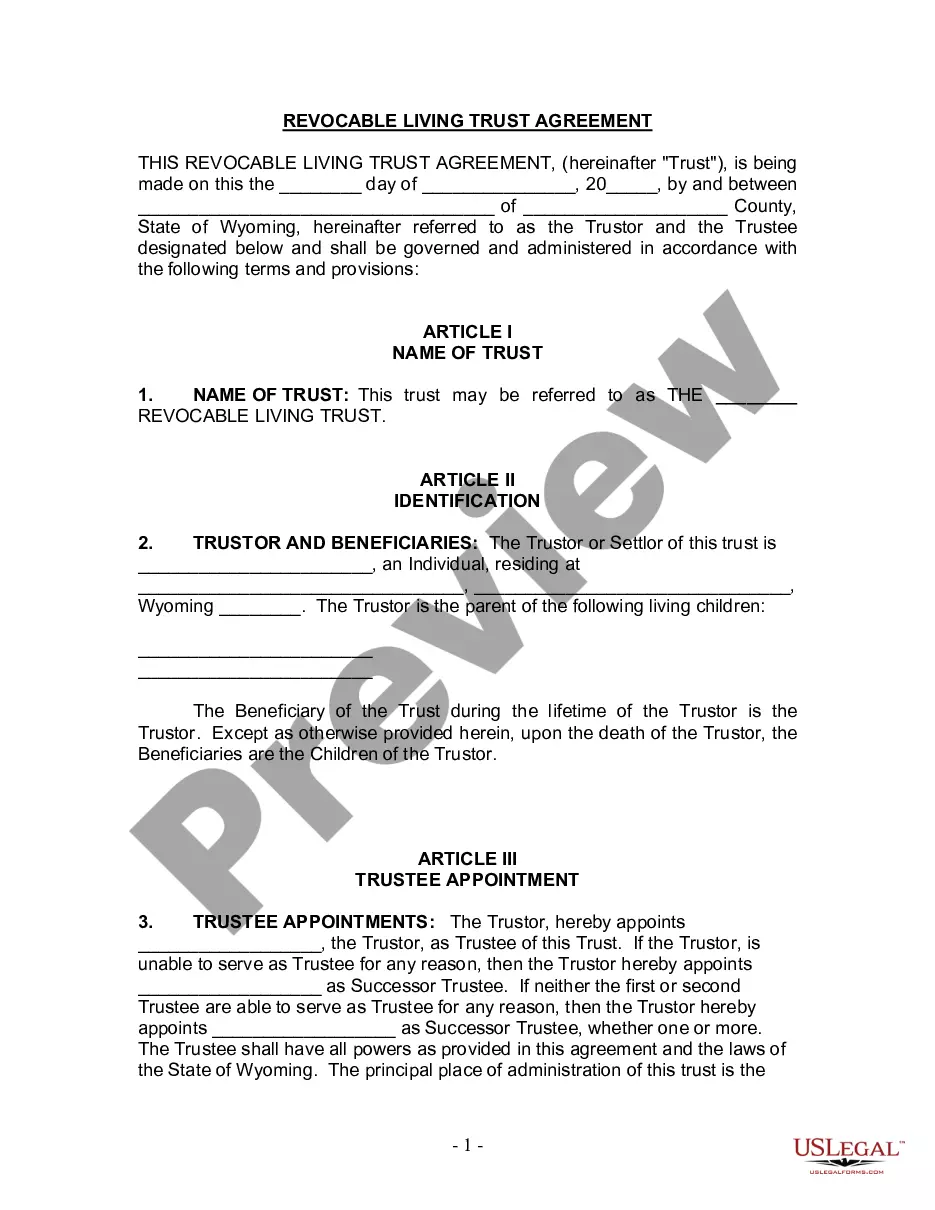






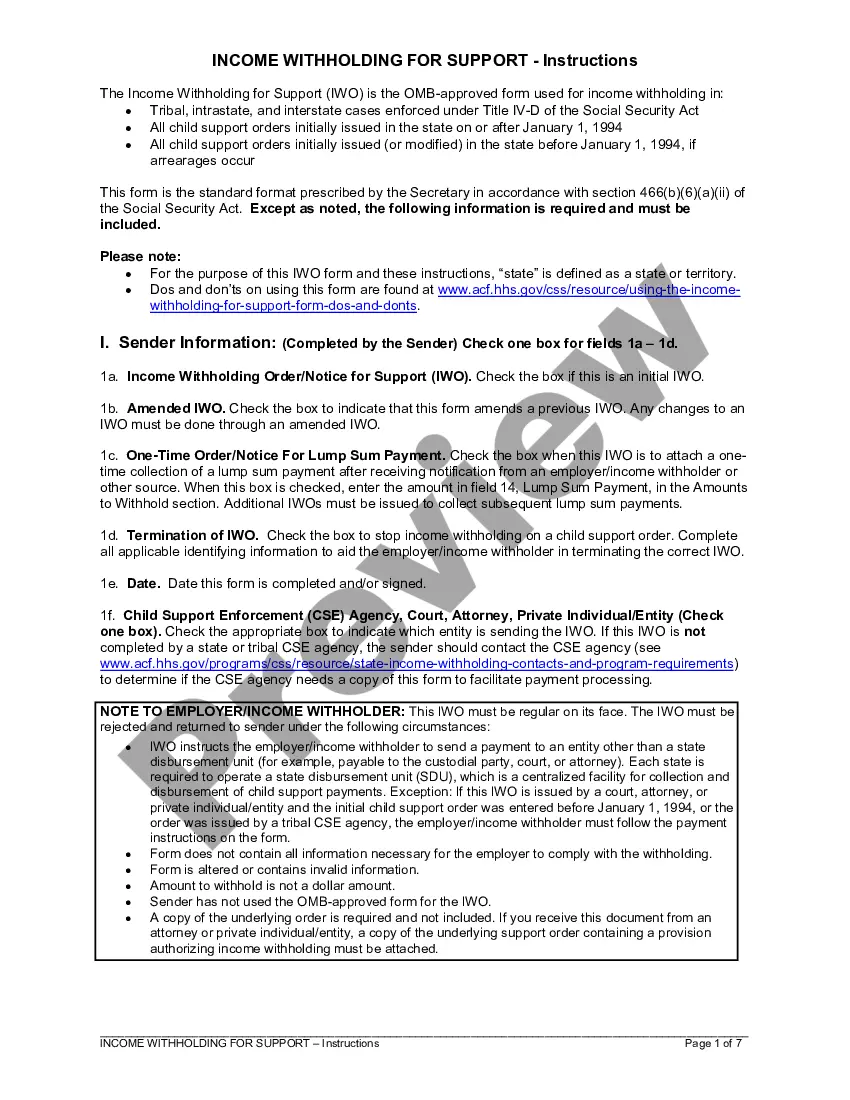
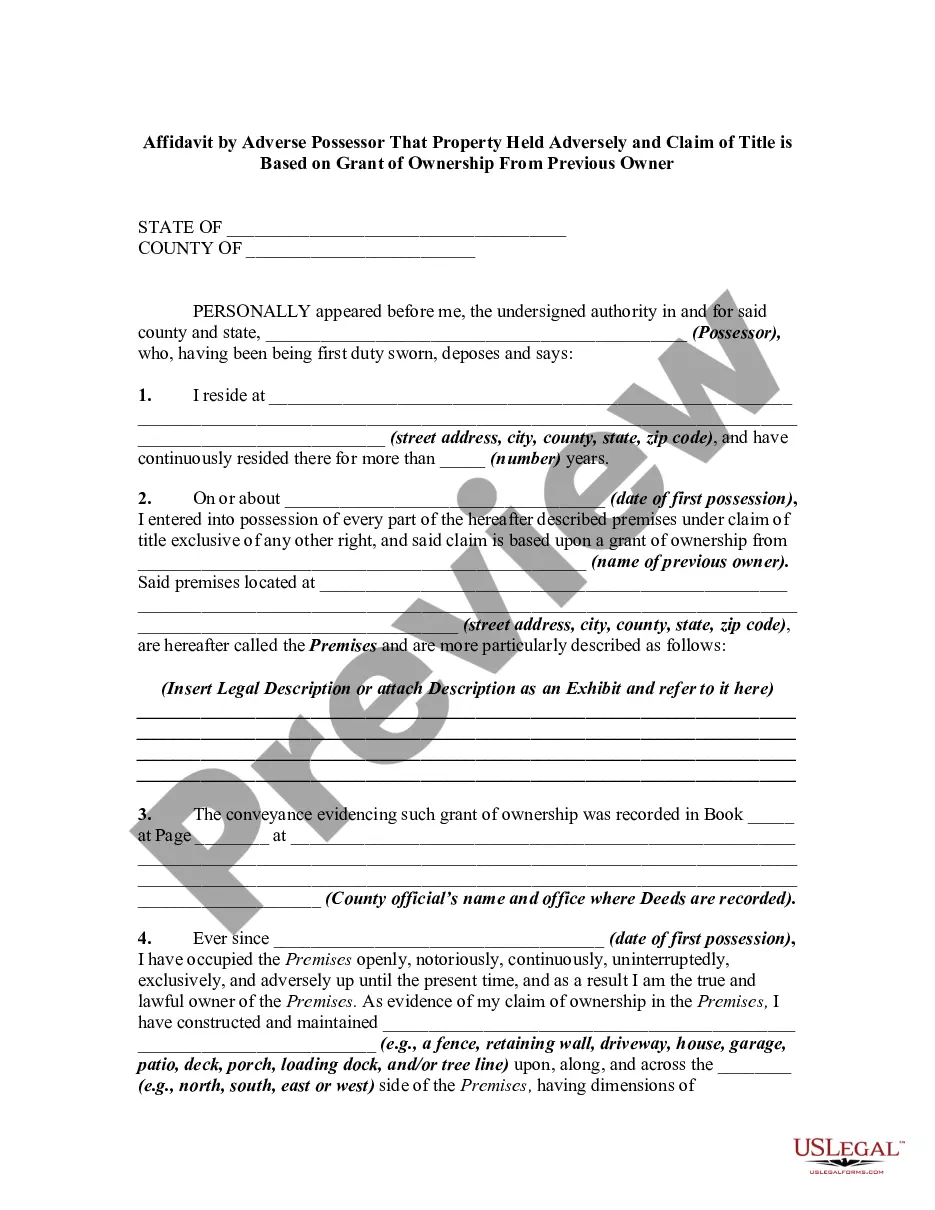
How to fill out Affidavit By Adverse Possessor That Property Held Adversely And Claim Of Title Is Based On Grant Of Ownership From Previous Owner - Squatters Rights?
- If you are an existing user, log into your account and ensure your subscription is active. Click the Download button to save the needed form template on your device.
- For first-time users, start by exploring the Preview mode and form descriptions. Verify that your selected form aligns with your legal requirements and local jurisdiction.
- Search for additional templates if necessary. Use the Search tab above to find any forms that may better fulfill your requirements.
- Once you’ve selected the appropriate document, proceed to purchase it. Hit the Buy Now button and choose your preferred subscription plan. Remember to create an account for full access.
- Finalize your purchase by entering your credit card information or opting for your PayPal account to complete the transaction.
- After your payment is processed, download your form. It will be available in the My Forms section of your profile for future access.
US Legal Forms provides an extensive collection of over 85,000 easily editable documents, ensuring that users have the tools they need to create precise legal forms without hassle.
Take control of your legal documentation today! Visit US Legal Forms and simplify your legal form process.
Form popularity
FAQ
The burden of proof in New York varies based on the legal issue at hand. For civil cases, the standard is typically 'preponderance of the evidence,' while criminal cases require 'beyond a reasonable doubt.' Understanding these burdens can be crucial for those navigating legal issues, including adverse possession requirements with high court. USLegalForms offers resources and templates to help guide you through these complexities easily.
In New York, the burden of proof for adverse possession is set on the claimant to demonstrate their entitlement to the property. You must establish that you have satisfied the legal requirements over a continuous period. The evidence presented should show your exclusive and open control of the property, supporting the adverse possession requirements with high court. Engaging with legal professionals can help gather necessary proof effectively.
In New York, the burden of proof for adverse possession lies with the party claiming the title. This means you must provide clear and convincing evidence to substantiate your claim. The courts will review the type of possession you have exercised in relation to the adverse possession requirements with high court. It’s important to document your use and occupancy effectively to strengthen your position.
To successfully claim adverse possession in New York, you need to meet five essential requirements. First, you must possess the land openly, meaning your use is visible and not secretive. Second, your possession must be exclusive, ensuring that you are the only one using the property. Third, the possession must be continuous, which generally means uninterrupted for a statutory period. Fourth, you need to demonstrate actual possession, showing that you are physically using the property. Lastly, your possession must be hostile, meaning it's without permission from the actual owner, aligning with the adverse possession requirements with high court.
To successfully claim land through adverse possession, you must typically fulfill requirements such as open, notorious, exclusive, and continuous possession of the property for a statutory period. Compliance with these adverse possession requirements with high court definitions is essential, as each state has different laws governing the specifics. Reviewing trustworthy resources like US Legal Forms can clarify these requirements further.
Adverse possession is a legal doctrine that allows a person to claim ownership of land under certain conditions, usually after a specified period of possession. This doctrine is rooted in the concept that land should not remain idle, provided the adverse possession requirements with high court endorsement are met. It helps resolve disputes where the true owner has not maintained or asserted their rights.
A key requirement for acquiring ownership through adverse possession is open and notorious possession of the property, which means that your use must be visible and known to others. Additionally, you must establish continuous and exclusive possession, fulfilling the adverse possession requirements with high court recognition. Each state might add its specifics, so it's important to refer to local regulations.
To claim property through adverse possession, you must prove that your possession meets the requirements with high court validity. This includes showing continuous, exclusive, open, and hostile use of the property for a legally required timeframe. Evidence can include photographs, witness statements, or utility bills to support your claim.
In Tennessee, the period for adverse possession typically lasts for 20 years for uninterrupted and exclusive use. To successfully claim ownership, you need to demonstrate your possession meets the adverse possession requirements with high court evidence. Understanding your state's regulations is crucial, so consider consulting legal resources for accurate guidance.
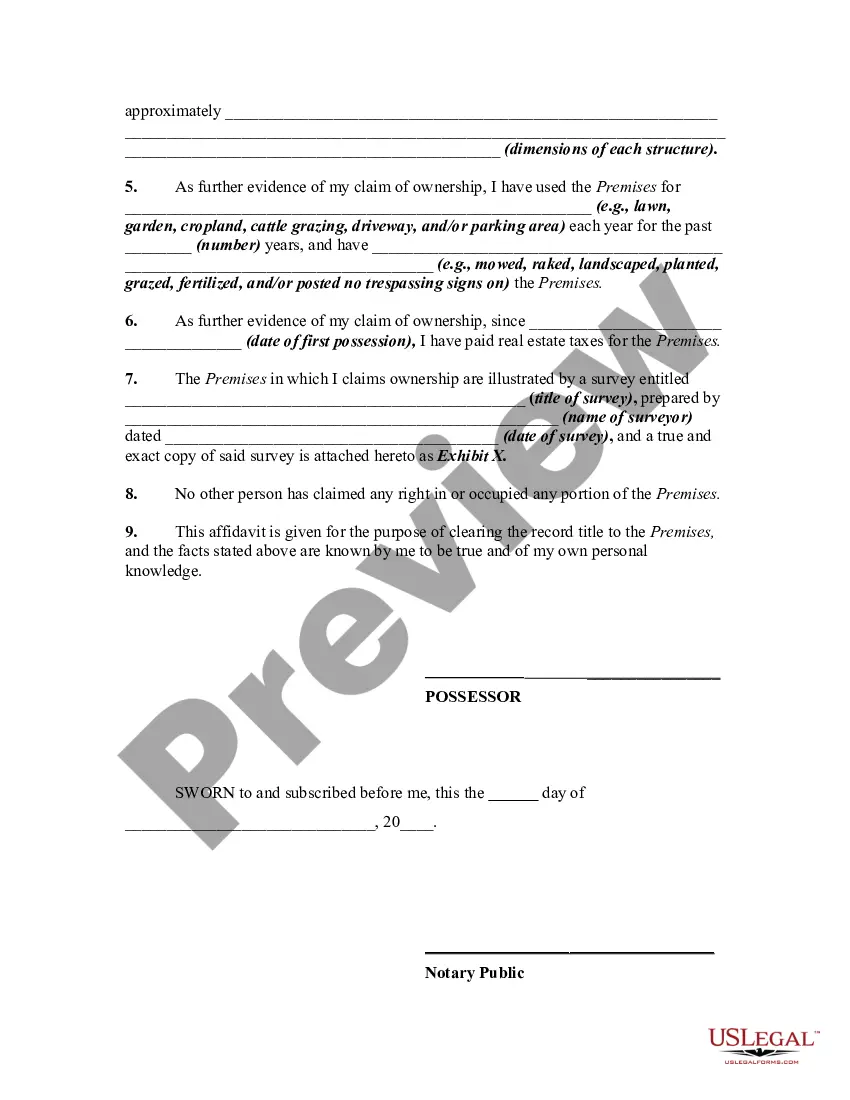
Recording an adverse possession claim requires you to gather evidence that satisfies the adverse possession requirements with high court standards. You usually need to file a claim or a affidavit with the appropriate land records office where the property is located. Documenting your possession clearly and obtaining supporting evidence can significantly strengthen your claim.