Discharge Debtor Bankruptcy For 5 Years
Description
Get your form ready online
Our built-in tools help you complete, sign, share, and store your documents in one place.
Make edits, fill in missing information, and update formatting in US Legal Forms—just like you would in MS Word.
Download a copy, print it, send it by email, or mail it via USPS—whatever works best for your next step.
Sign and collect signatures with our SignNow integration. Send to multiple recipients, set reminders, and more. Go Premium to unlock E-Sign.
If this form requires notarization, complete it online through a secure video call—no need to meet a notary in person or wait for an appointment.
We protect your documents and personal data by following strict security and privacy standards.

Make edits, fill in missing information, and update formatting in US Legal Forms—just like you would in MS Word.

Download a copy, print it, send it by email, or mail it via USPS—whatever works best for your next step.

Sign and collect signatures with our SignNow integration. Send to multiple recipients, set reminders, and more. Go Premium to unlock E-Sign.

If this form requires notarization, complete it online through a secure video call—no need to meet a notary in person or wait for an appointment.

We protect your documents and personal data by following strict security and privacy standards.
Looking for another form?





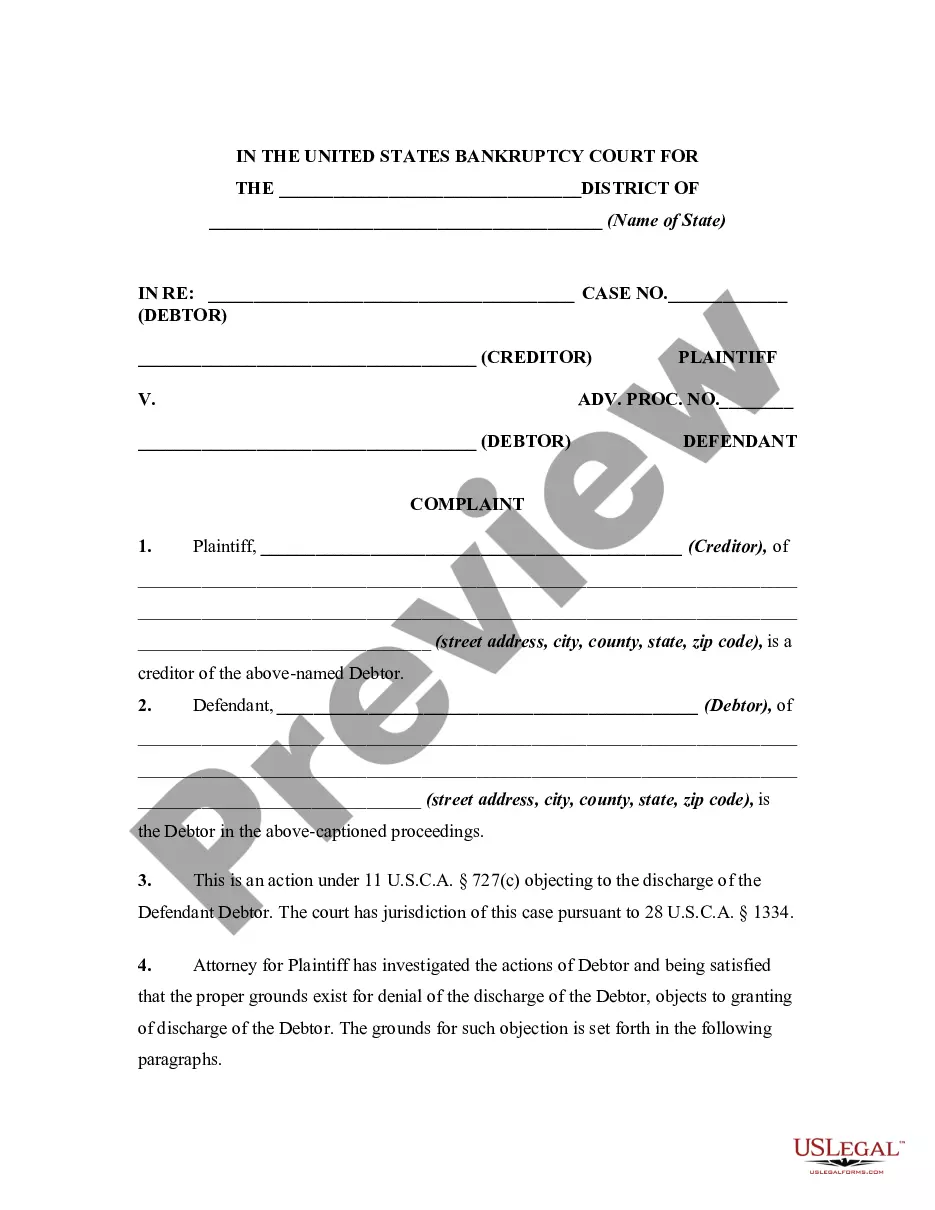
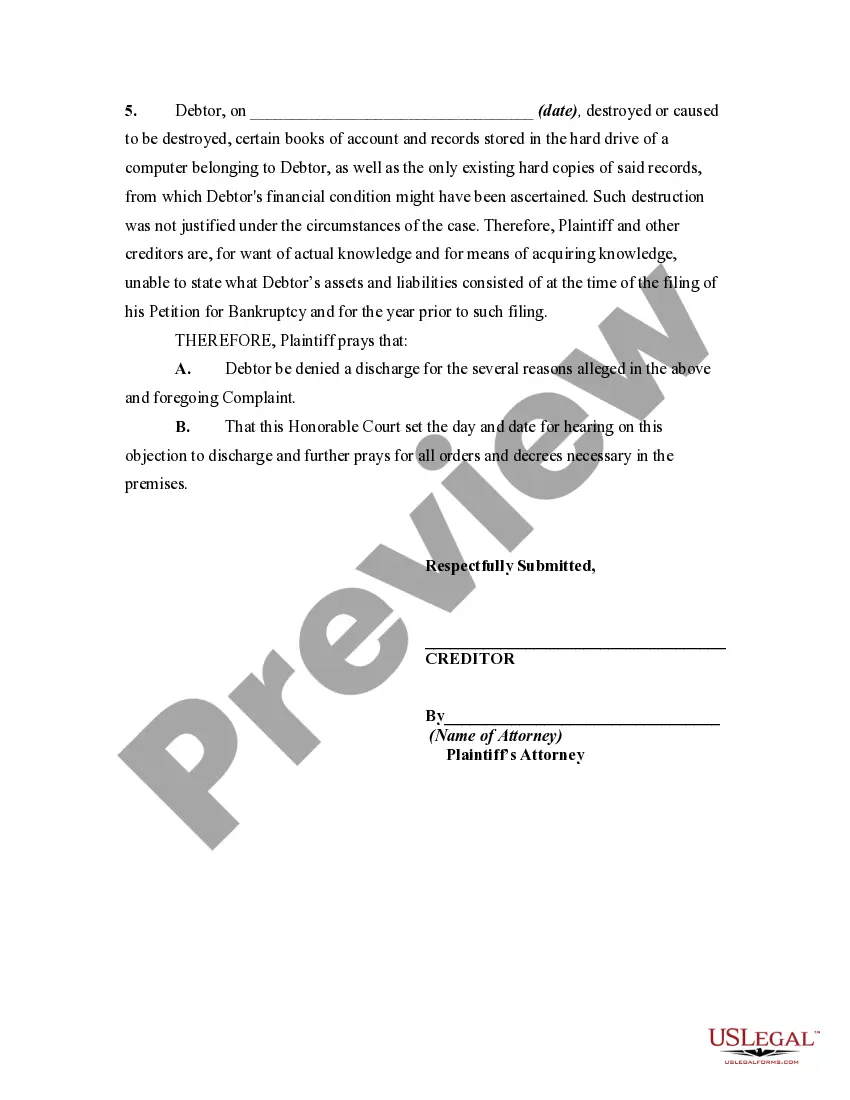
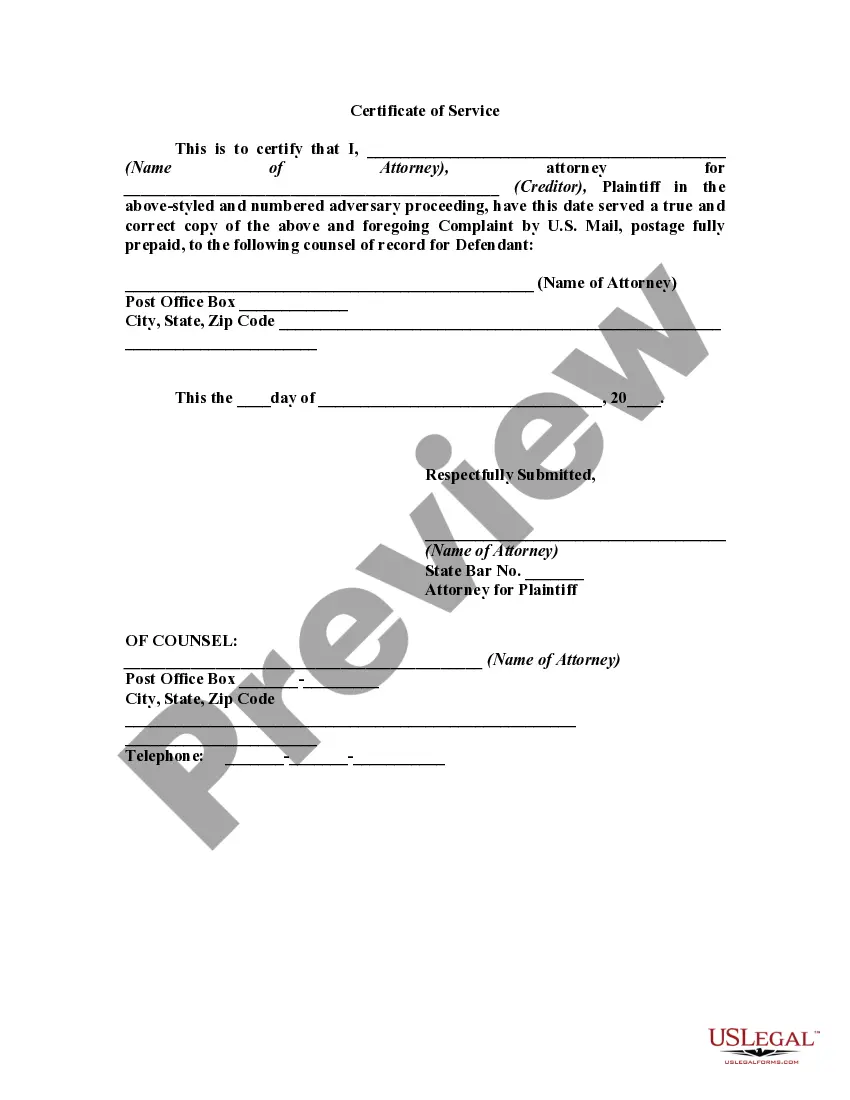
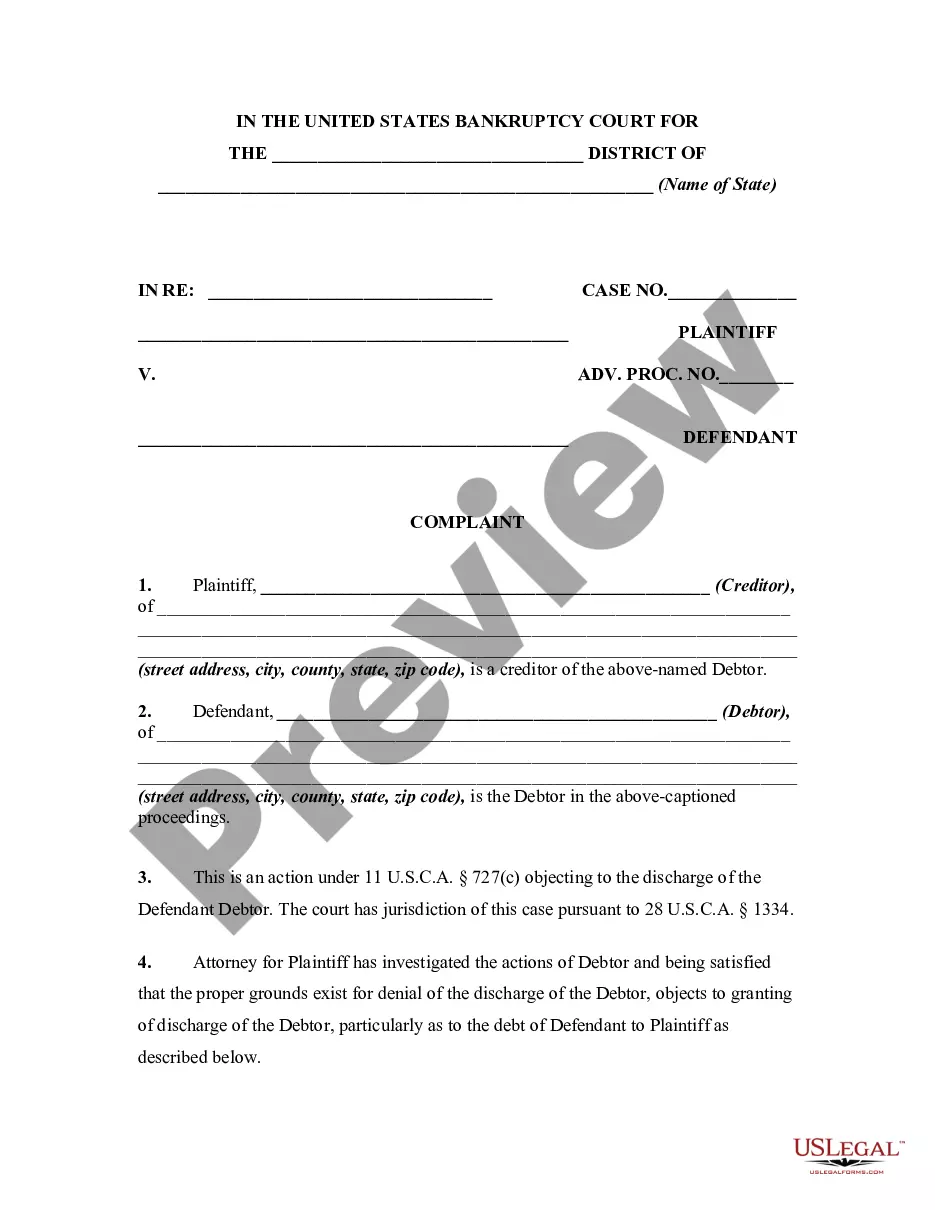
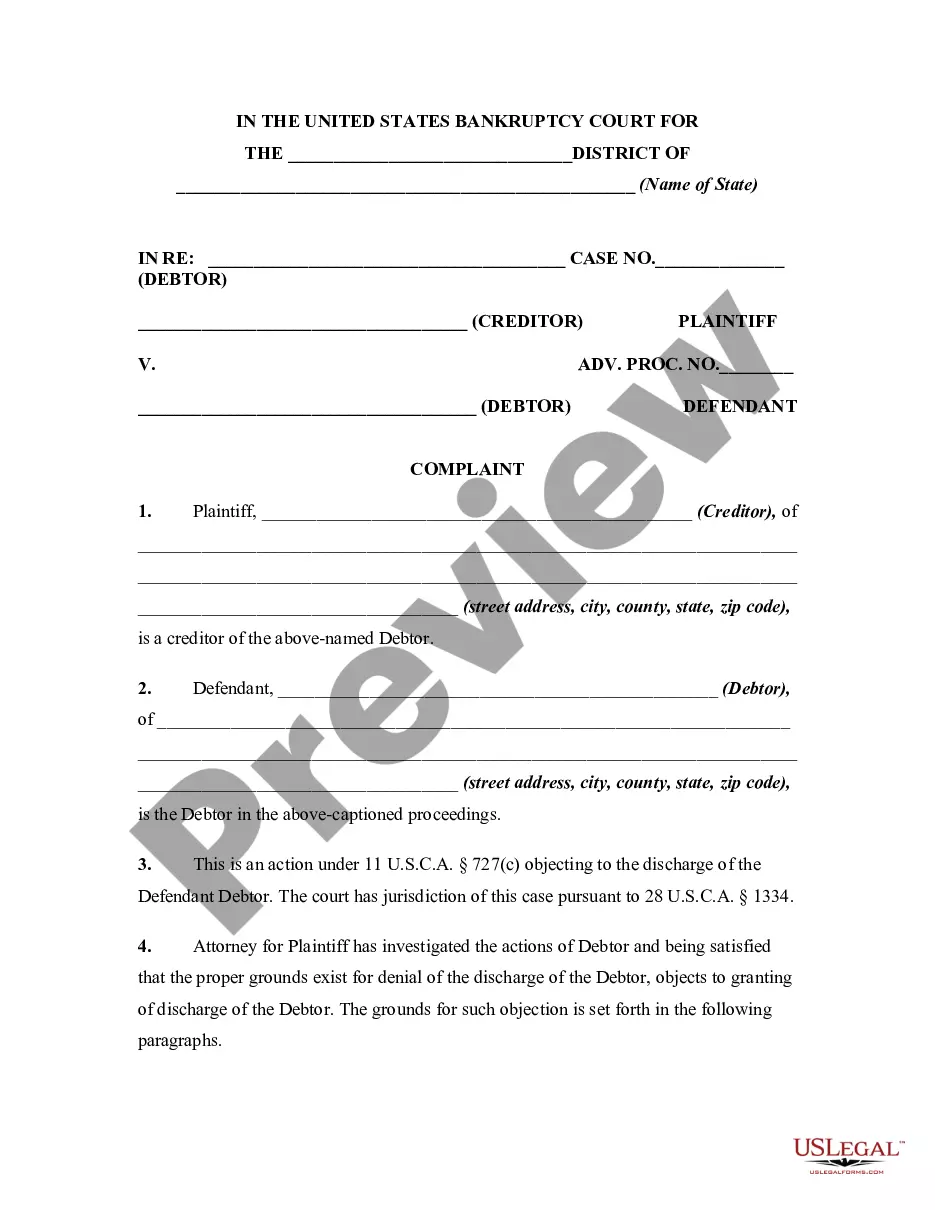
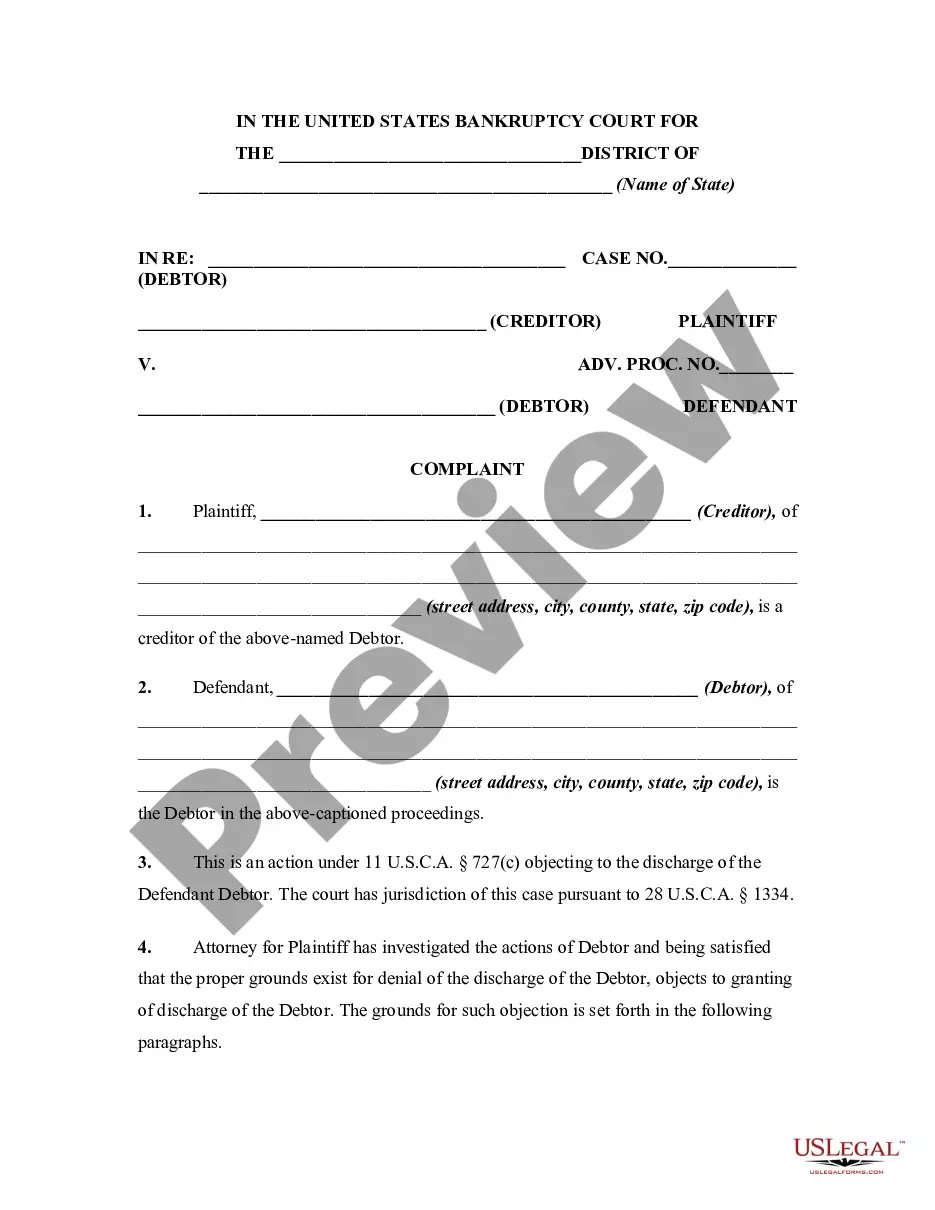
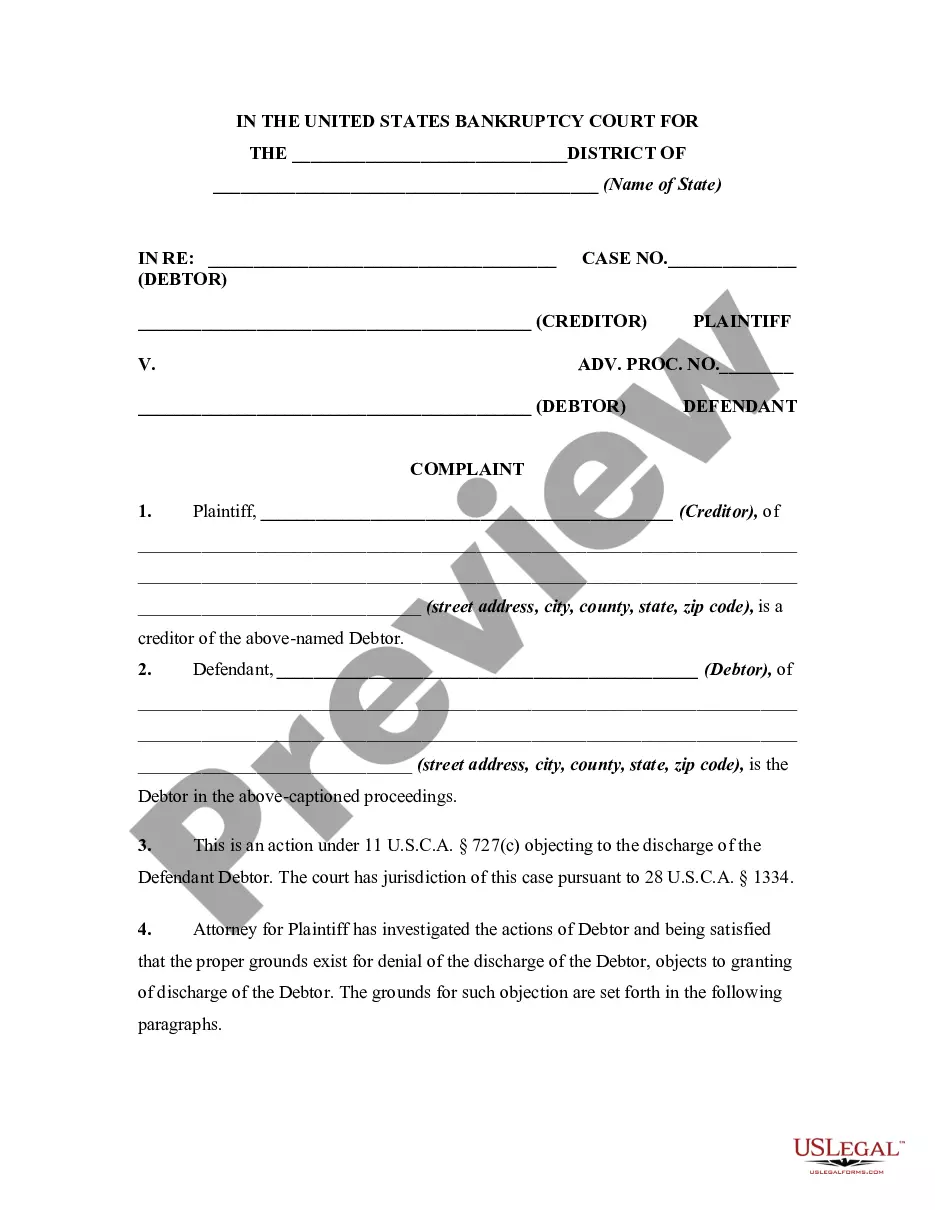
How to fill out Complaint Objecting To Discharge Of Debtor In Bankruptcy Proceeding Due To Destruction Of Books From Which Financial Condition Might Have Been?
- Log in to your US Legal Forms account if you're a returning user. Verify your subscription is active; renew it if necessary.
- Begin by browsing the templates. Make use of the Preview mode to ensure you pick the correct document that meets local jurisdiction requirements.
- If the selected form doesn’t suit your needs, utilize the Search tab to find alternative templates.
- Proceed to purchase the desired document by clicking on the Buy Now button. Choose a subscription plan that fits your requirements.
- Complete your purchase by entering your credit card details or utilizing your PayPal account.
- Download the form to your device, and access it anytime through the My Forms section in your profile.
Successfully following these steps will ensure that you have the necessary documentation to discharge a debtor from bankruptcy for 5 years. US Legal Forms not only streamlines this process but also guarantees that you have access to expert assistance for form completion, ensuring your documents are accurate and valid.
Take control of your legal needs today by visiting US Legal Forms and simplify your document preparation!
Form popularity
FAQ
You can typically file for bankruptcy again after your discharge debtor bankruptcy for 5 years. This waiting period allows you to rebuild your financial standing before taking another step towards bankruptcy relief. Keep in mind that if your situation requires immediate action, consulting with legal professionals can provide guidance tailored to your needs. Consider using platforms like US Legal Forms to navigate the complexities of the process effectively.
You should keep your bankruptcy discharge papers indefinitely. These documents serve as proof that your debts have been discharged and can help you during various financial transactions. Even though the discharge debtor bankruptcy for 5 years might be your primary concern, maintaining these papers beyond this period protects you from potential disputes. If you ever need to verify your bankruptcy status or protect your rights, these records will be essential.
Discharged debt in bankruptcy is no longer the responsibility of the debtor, which can lead to a much lighter financial load. This discharge means that creditors cannot collect on those debts, allowing individuals the freedom to rebuild their lives. However, it’s crucial to maintain accurate records of your discharge for any future financial transactions.
Debtors in bankruptcy often experience a temporary relief from an overwhelming financial burden. Although they might lose some assets, they also gain the opportunity to restructure their finances and focus on future stability. This process can ultimately lead to a more manageable financial life, though it requires commitment and ongoing effort.
Yes, many debts are eliminated after bankruptcy, providing a significant fresh start. However, as mentioned, some debts remain, which means that not all financial obligations will disappear. Ultimately, discharge debtor bankruptcy for 5 years can serve as a vital step in rebuilding your credit and financial health, even if some debts persist.
When a debtor declares bankruptcy, an automatic stay is put in place, which stops most creditors from collecting debts. The court then oversees the debtor's finances, determining how assets will be managed or liquidated. By filing for bankruptcy, you may find a path toward financial freedom, but the process does require careful planning and execution.
Generally, once a bankruptcy has been discharged, it cannot be reversed. However, in rare cases, creditors may file a motion to contest the discharge under specific circumstances. It's crucial to consult a legal professional to navigate these complex situations, especially if you feel your rights have been compromised.
Bankruptcy does not cover certain types of debts, such as student loans, child support, alimony, and most tax debts. While discharge debtor bankruptcy for 5 years addresses many financial burdens, it's important to understand which obligations remain your responsibility. Knowing these exclusions helps you plan your financial future more effectively.
You should keep your bankruptcy discharge papers for at least five years after the discharge. This documentation serves as proof that your debts have been discharged, which may help you in future financial dealings. Additionally, having these papers on hand can protect you against any potential errors in your credit report related to your bankruptcy.
After 5 years, the discharge will typically fall off your credit report, helping to improve your credit score. This is a significant time frame to rebuild and establish credit history positively. Utilize resources like US Legal Forms to help you navigate rebuilding while benefiting from the discharge debtor bankruptcy for 5 years.