Discharge Bankruptcy How For Is
Description
Get your form ready online
Our built-in tools help you complete, sign, share, and store your documents in one place.
Make edits, fill in missing information, and update formatting in US Legal Forms—just like you would in MS Word.
Download a copy, print it, send it by email, or mail it via USPS—whatever works best for your next step.
Sign and collect signatures with our SignNow integration. Send to multiple recipients, set reminders, and more. Go Premium to unlock E-Sign.
If this form requires notarization, complete it online through a secure video call—no need to meet a notary in person or wait for an appointment.
We protect your documents and personal data by following strict security and privacy standards.

Make edits, fill in missing information, and update formatting in US Legal Forms—just like you would in MS Word.

Download a copy, print it, send it by email, or mail it via USPS—whatever works best for your next step.

Sign and collect signatures with our SignNow integration. Send to multiple recipients, set reminders, and more. Go Premium to unlock E-Sign.

If this form requires notarization, complete it online through a secure video call—no need to meet a notary in person or wait for an appointment.

We protect your documents and personal data by following strict security and privacy standards.
Looking for another form?








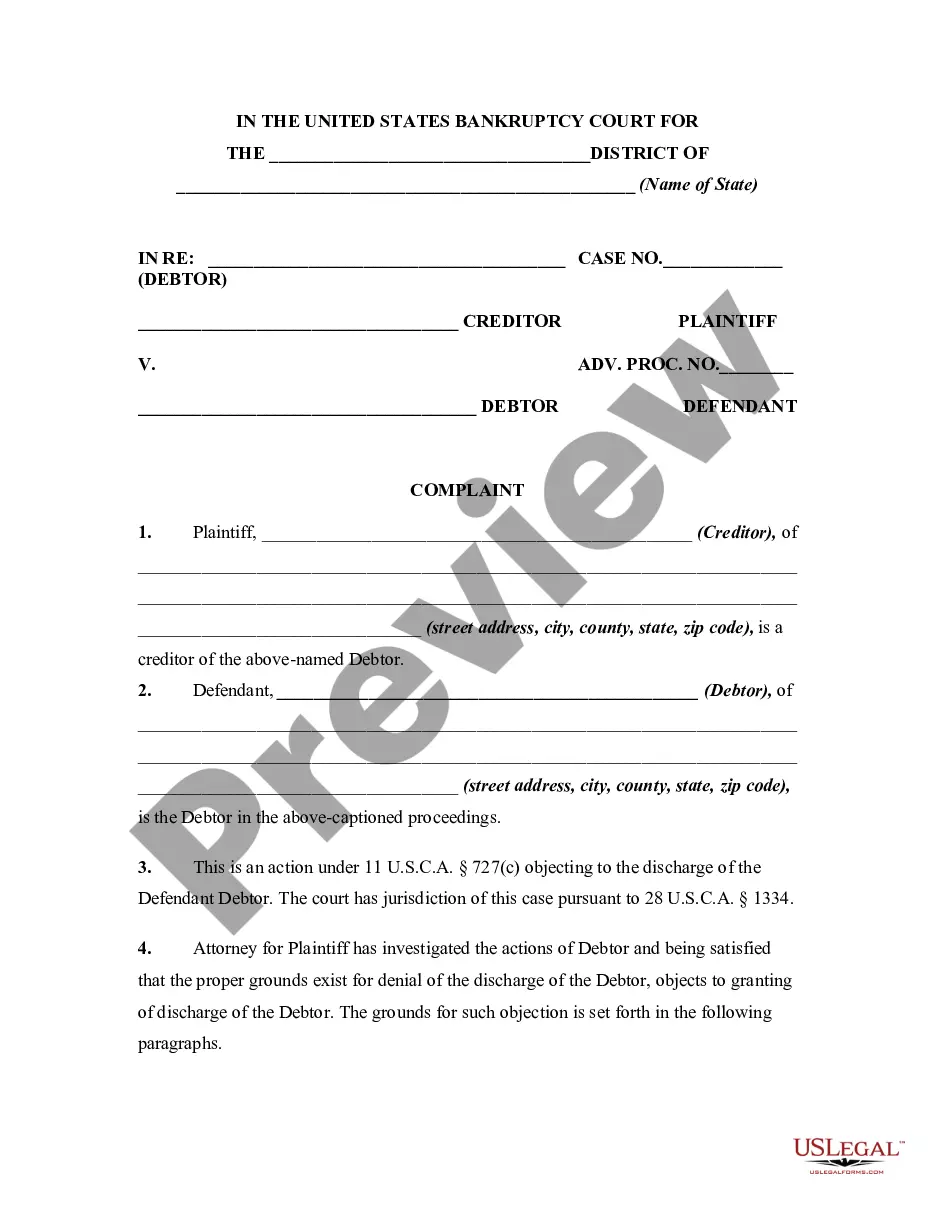
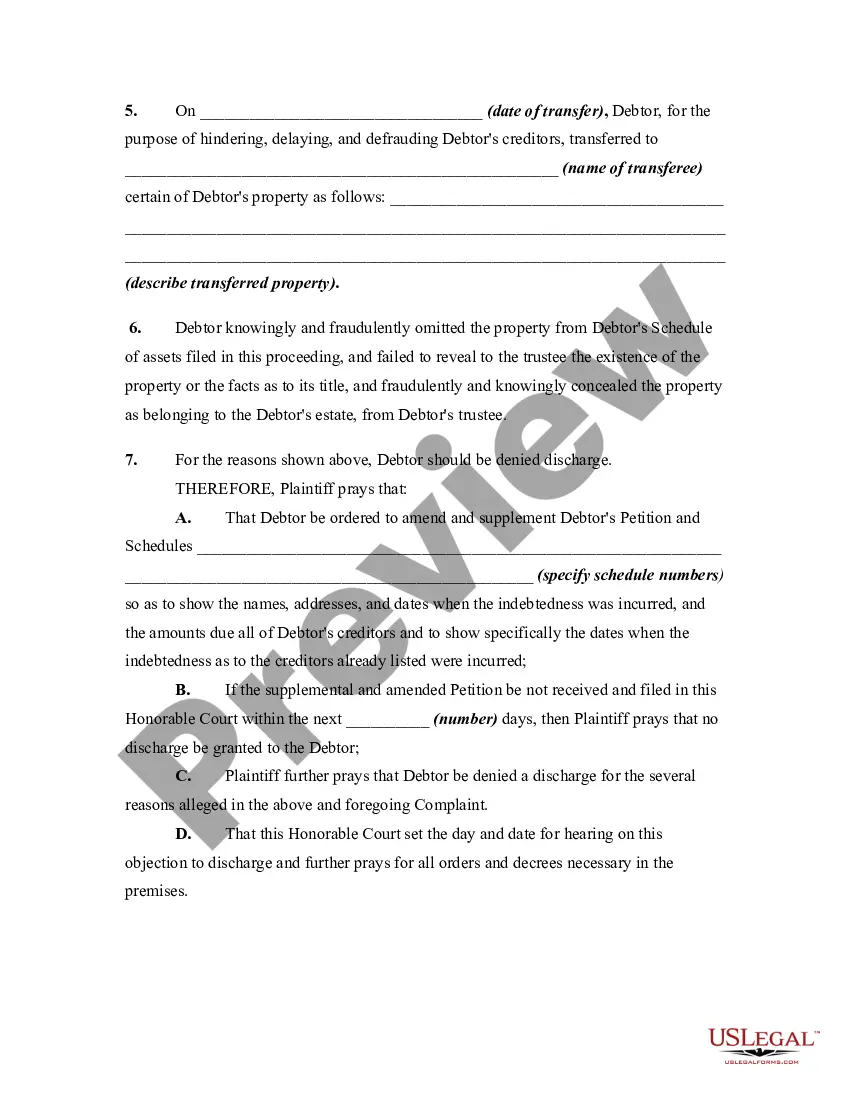
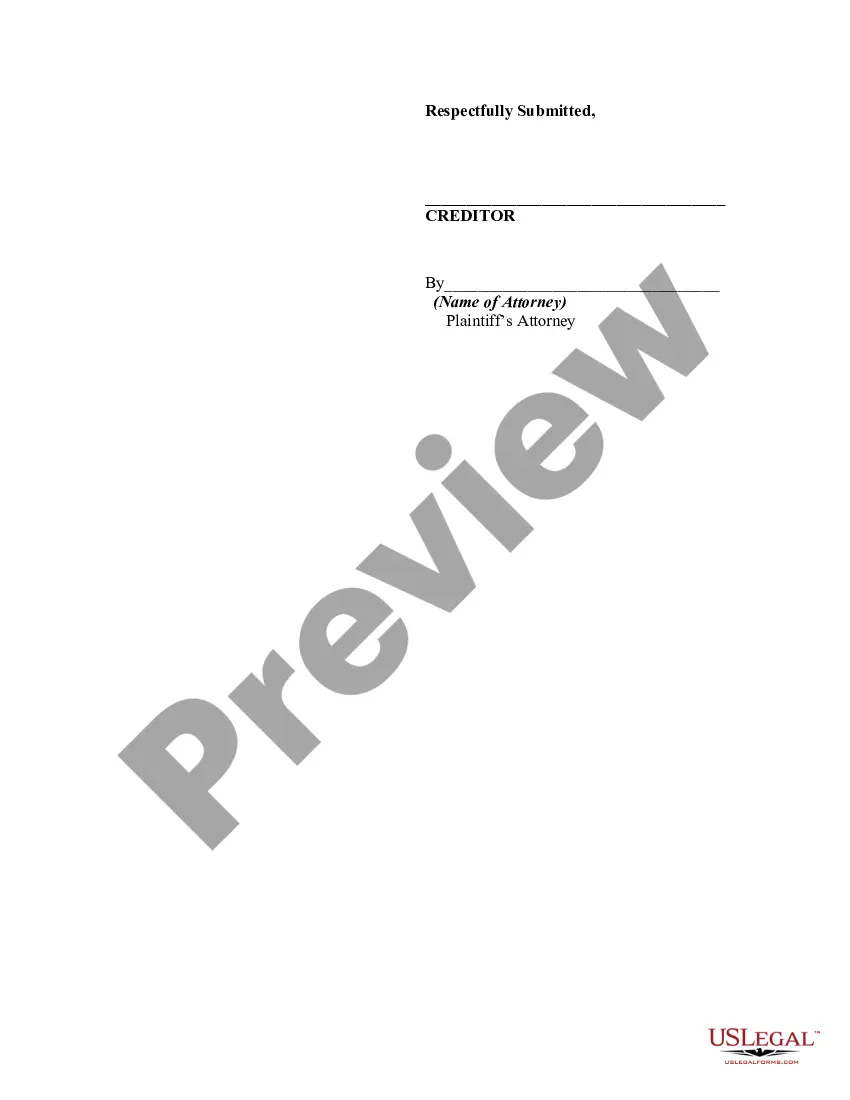
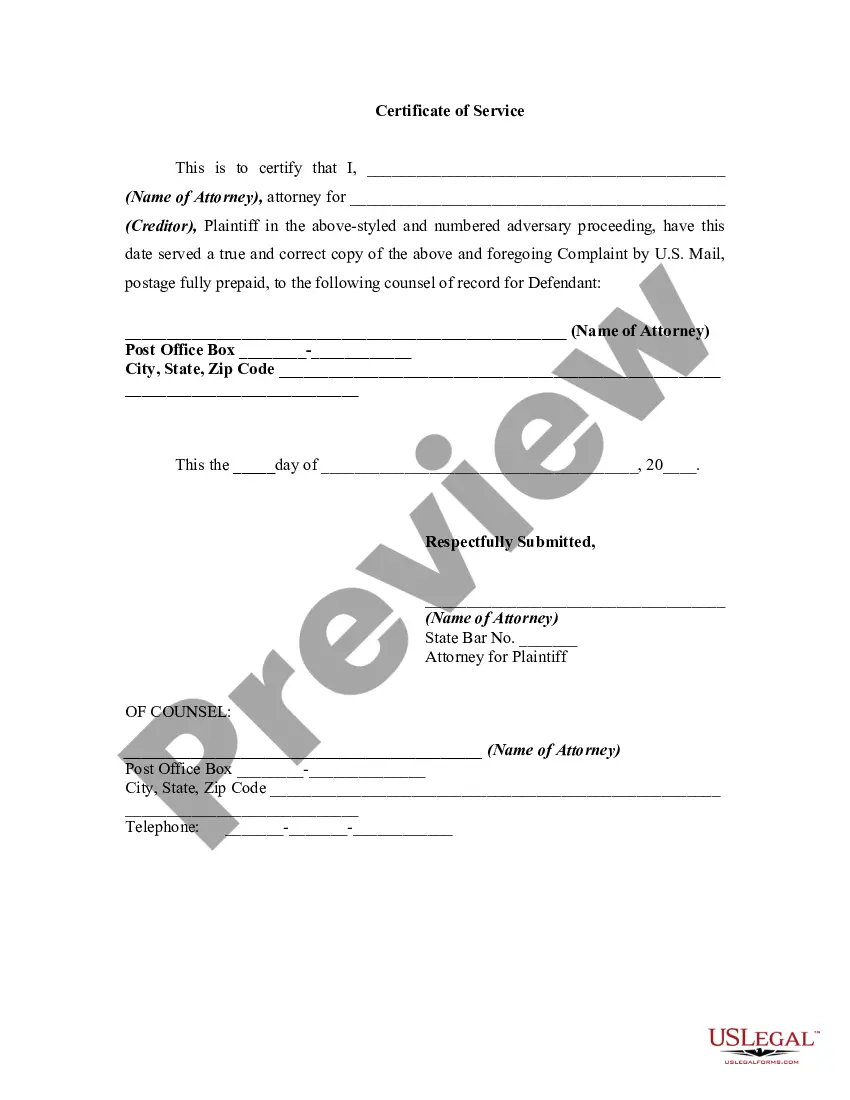
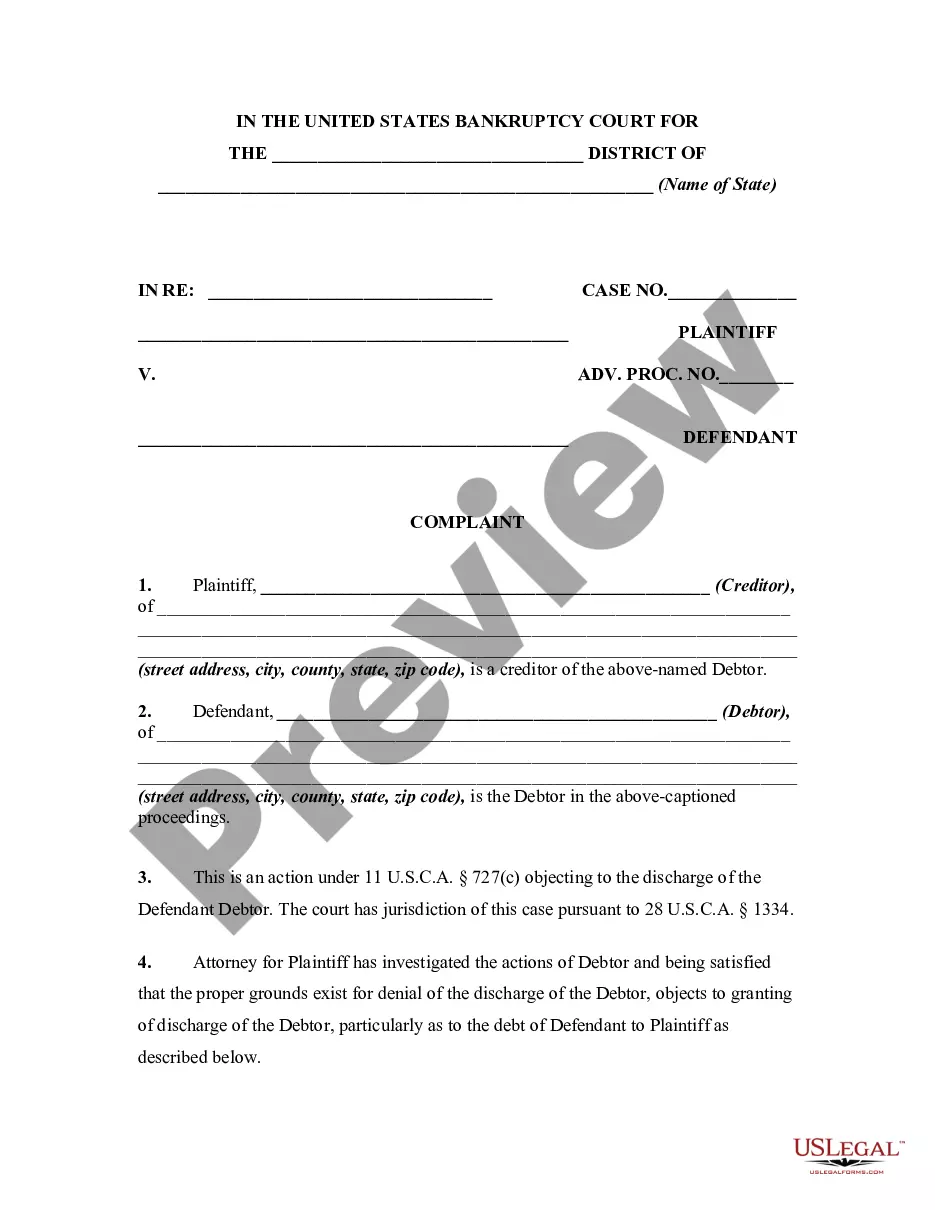
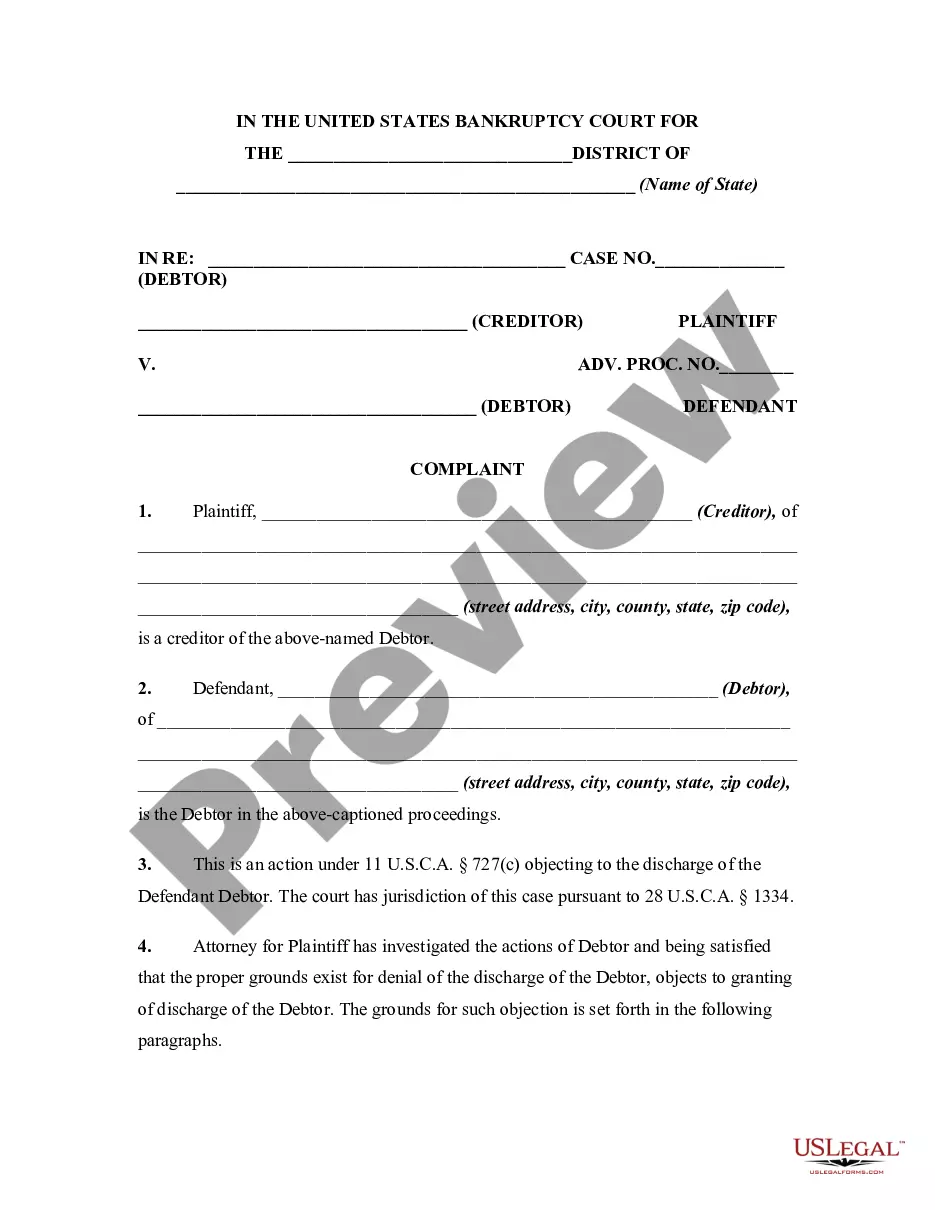
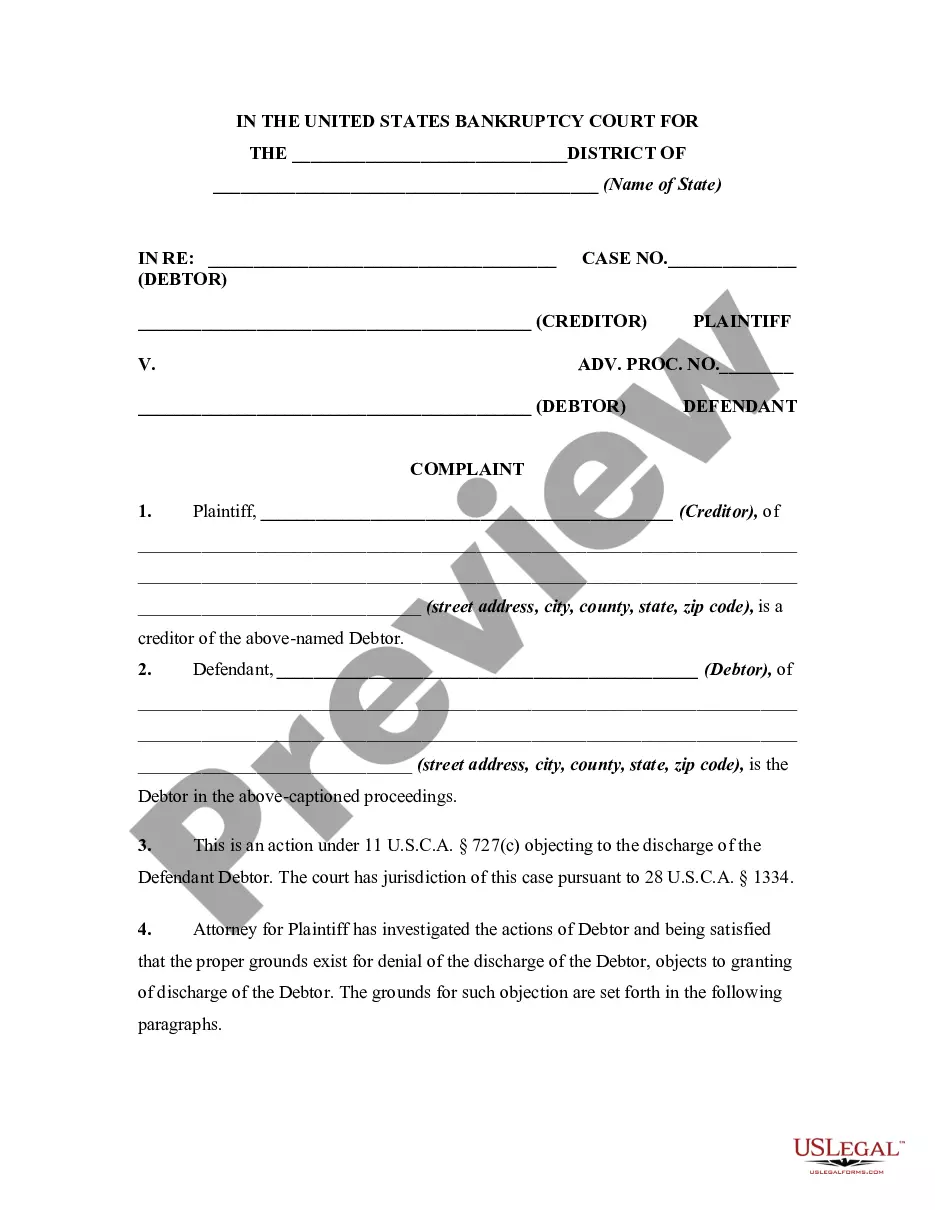
How to fill out Complaint Objecting To Discharge In Bankruptcy Proceedings For Concealment By Debtor And Omitting From Schedules Fraudulently Transferred Property?
- Begin by logging into your existing account on US Legal Forms. Confirm your subscription is current; if not, renew it based on your payment plan.
- If you're new to the service, start by browsing through the extensive online library. Use the Preview mode to check form descriptions and ensure they align with your legal needs.
- In case you can't find an appropriate template, utilize the Search tab at the top. This will help you find the right document customized for your jurisdiction.
- Once you locate the necessary form, click the 'Buy Now' button and select your preferred subscription plan. Create an account to access the resources available.
- Complete your transaction by entering your payment details, either through credit card or PayPal. After payment, you will be able to access the document.
- Finally, download the form to your device. You can always find it later in the 'My Forms' menu of your profile for easy completion.
With US Legal Forms, you can be confident that you'll receive the exact documents needed to expedite your bankruptcy process. Our vast collection includes more than 85,000 editable templates and access to legal experts for support.
Don’t let the legal complexity hinder your progress. Access US Legal Forms today and empower yourself with the right resources for your discharge bankruptcy journey!
Form popularity
FAQ
In Chapter 7 bankruptcy, you may lose assets that are not exempt under state and federal laws. This can include luxury items, additional vehicles, and investment properties. However, many essential items, such as your primary home and basic personal belongings, may be protected. It's important to understand how discharge bankruptcy works in relation to your assets, and resources like US Legal Forms can guide you through the exemptions.
The main downside of Chapter 7 bankruptcy is that it may result in the loss of certain non-exempt assets. This process can affect your credit score significantly, impacting your ability to borrow in the future. Additionally, not all debts are dischargeable, such as child support and some tax obligations. Knowing how discharge bankruptcy works is vital to understanding these risks, and consulting with US Legal Forms can provide you with valuable insights.
Whether to choose Chapter 7 or Chapter 13 depends on your unique financial circumstances. Chapter 7 allows for quicker relief from debts, while Chapter 13 involves a repayment plan over years. Consider your income, assets, and the types of debts you owe. Understanding how discharge bankruptcy works for you will help you make an informed decision.
You can file Chapter 7 bankruptcy before the 8-year waiting period if you have filed a previous Chapter 7 bankruptcy. However, if you have previously filed for Chapter 7, you may need to consider a Chapter 13 filing instead. It is crucial to evaluate your financial situation with care, as understanding how discharge bankruptcy works is essential. You can consult the US Legal Forms platform for guidance on this process.
Typically, a bankruptcy discharge follows the 341 meeting within a few months, subject to various conditions and timelines set by the court. The exact duration can vary based on the complexity of your case and the court’s schedule. Being aware of these timelines can help you plan your financial future effectively. For assistance in tracking your bankruptcy process, US Legal Forms offers valuable resources to help you stay informed.
When a bankruptcy is discharged, you are released from personal liability for most debts. This means creditors can no longer pursue you for payment on those debts. However, it's essential to know that some debts, like student loans and certain taxes, may remain. For further clarification on what debts are affected, US Legal Forms can provide comprehensive information.
Correct, a discharged bankruptcy indicates your case is effectively closed concerning the discharged debts. It means you have fulfilled the necessary conditions set by the court. Yet, some debts may still require attention after discharge. For additional guidance on understanding your discharge status, explore the offerings from US Legal Forms.
Yes, a bankruptcy discharge signifies that the court has officially concluded your bankruptcy case, and you are no longer responsible for the discharged debts. However, it is crucial to understand that certain financial obligations may survive the discharge. Tracking your case and its implications is important, and US Legal Forms can aid you in navigating these complexities.
It is advisable to keep your bankruptcy discharge papers indefinitely. These documents serve as proof that your debts under bankruptcy have been eliminated. In case of future questions regarding your financial history, having this documentation available can be quite beneficial. Platforms like US Legal Forms provide useful templates and resources for maintaining your important financial records.
You can confirm the end of your bankruptcy by reviewing the official court documents you received after discharge. Generally, once the court issues a discharge, your obligations under the bankruptcy are lifted. It’s essential to keep an eye on your credit report for updates, as this can reflect your bankruptcy's status. For assistance in understanding this process, consider the resources on the US Legal Forms platform.