Bankruptcy Fraud Regarding Foreclosure
Description
Get your form ready online
Our built-in tools help you complete, sign, share, and store your documents in one place.
Make edits, fill in missing information, and update formatting in US Legal Forms—just like you would in MS Word.
Download a copy, print it, send it by email, or mail it via USPS—whatever works best for your next step.
Sign and collect signatures with our SignNow integration. Send to multiple recipients, set reminders, and more. Go Premium to unlock E-Sign.
If this form requires notarization, complete it online through a secure video call—no need to meet a notary in person or wait for an appointment.
We protect your documents and personal data by following strict security and privacy standards.

Make edits, fill in missing information, and update formatting in US Legal Forms—just like you would in MS Word.

Download a copy, print it, send it by email, or mail it via USPS—whatever works best for your next step.

Sign and collect signatures with our SignNow integration. Send to multiple recipients, set reminders, and more. Go Premium to unlock E-Sign.

If this form requires notarization, complete it online through a secure video call—no need to meet a notary in person or wait for an appointment.

We protect your documents and personal data by following strict security and privacy standards.
Looking for another form?









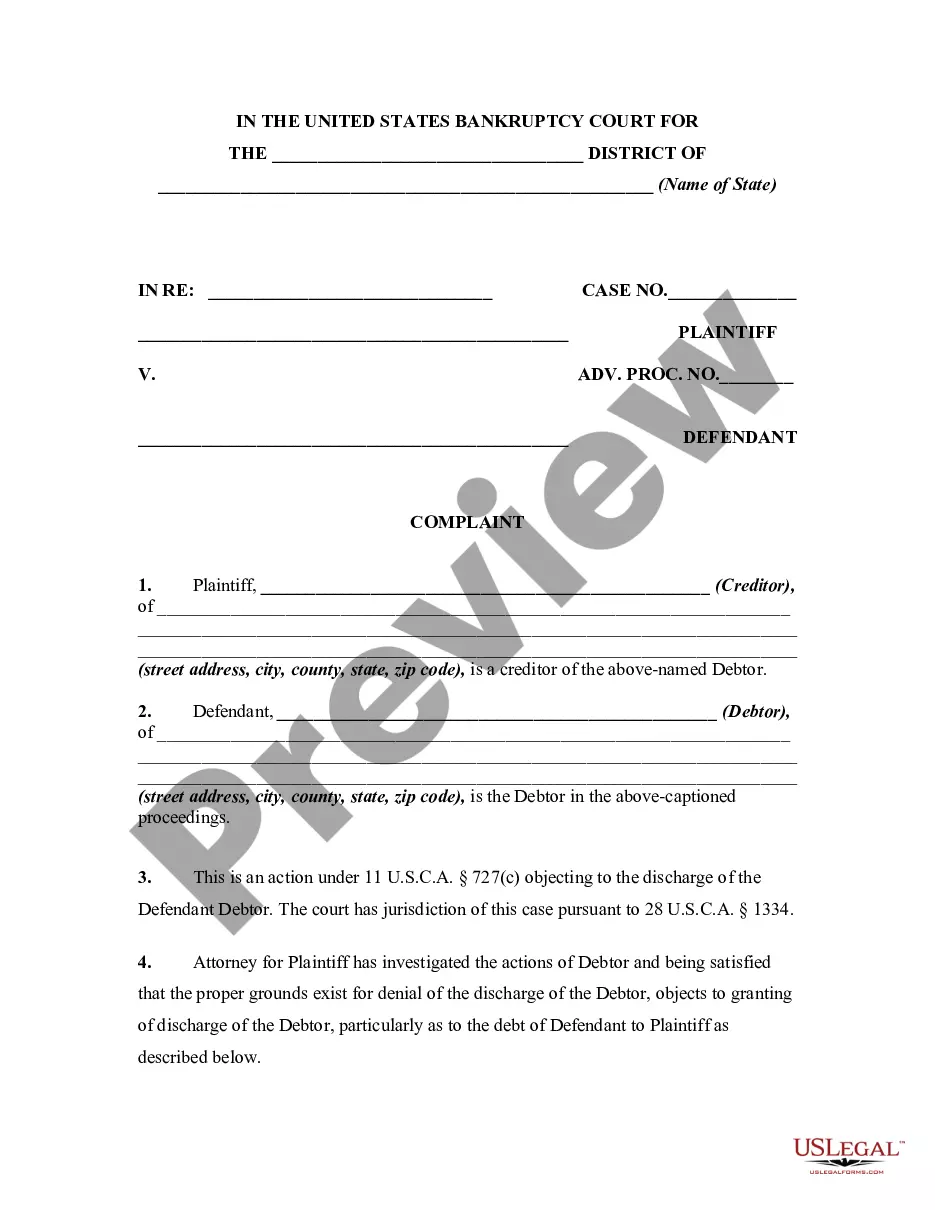
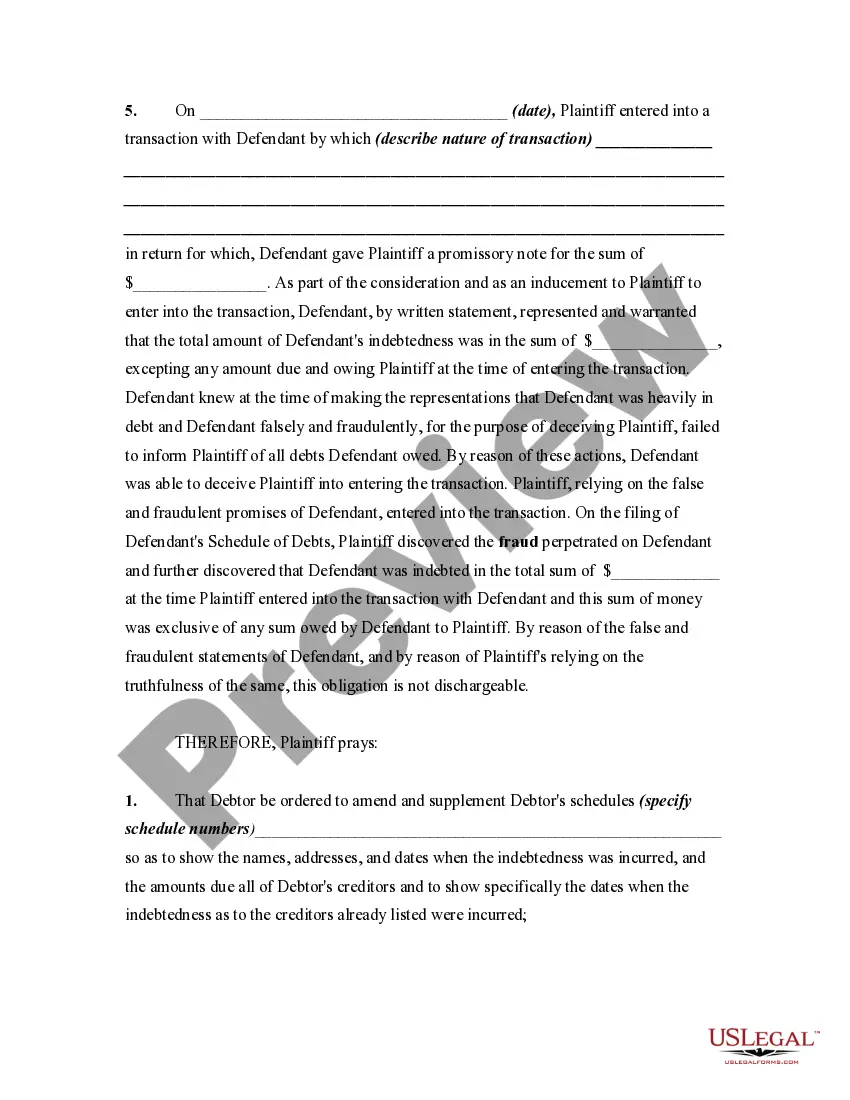
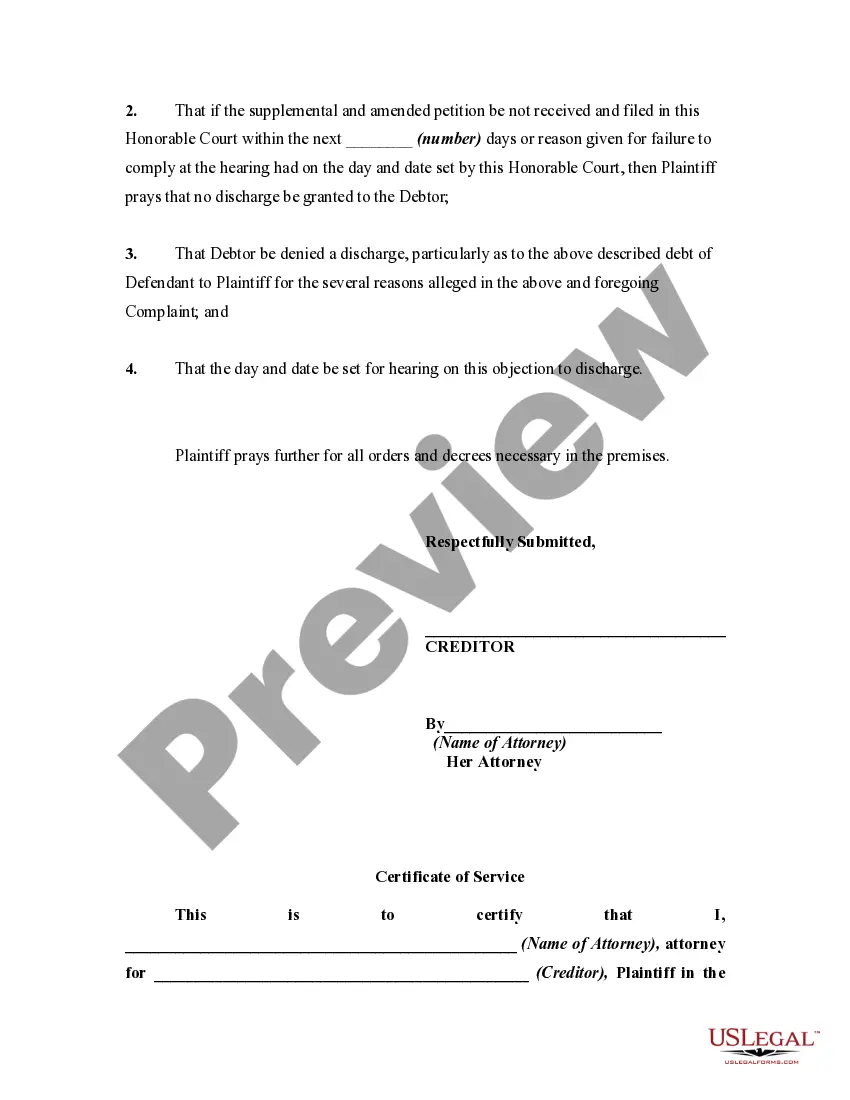
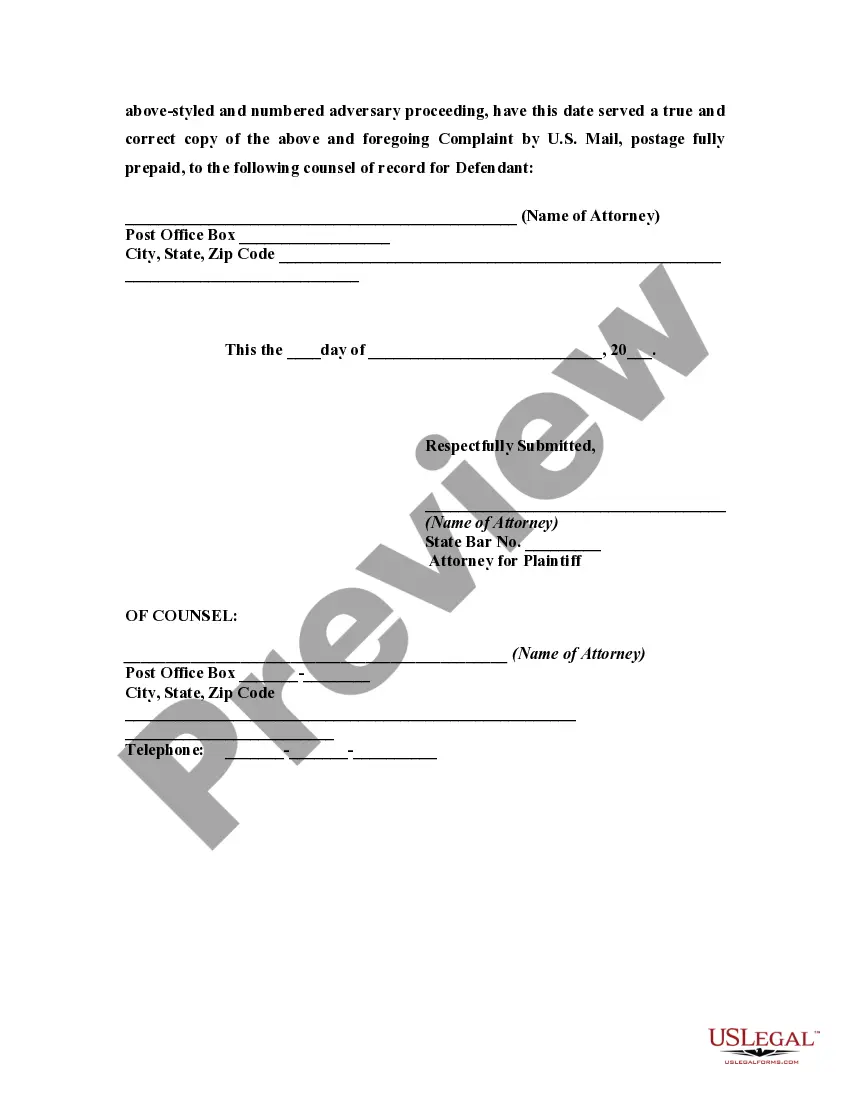
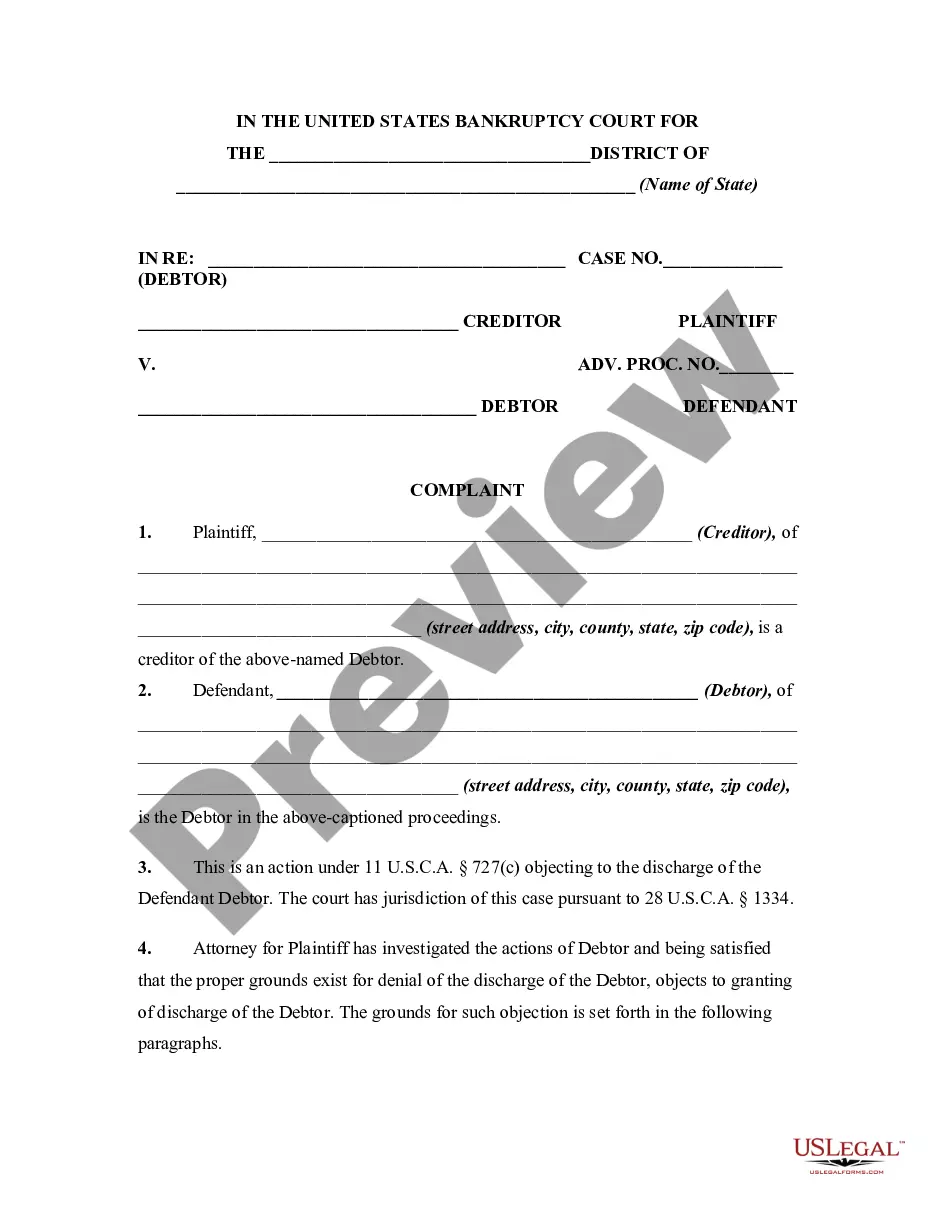
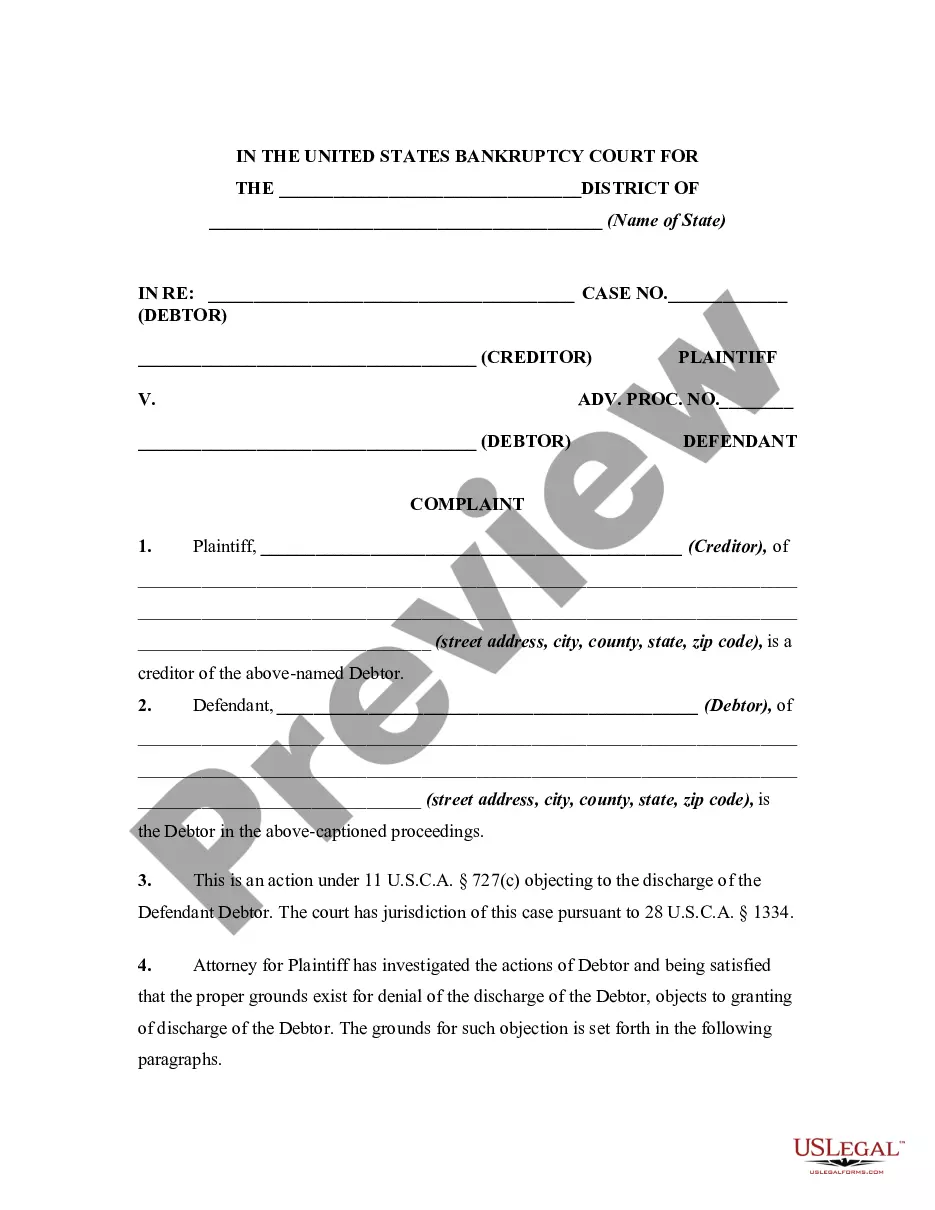
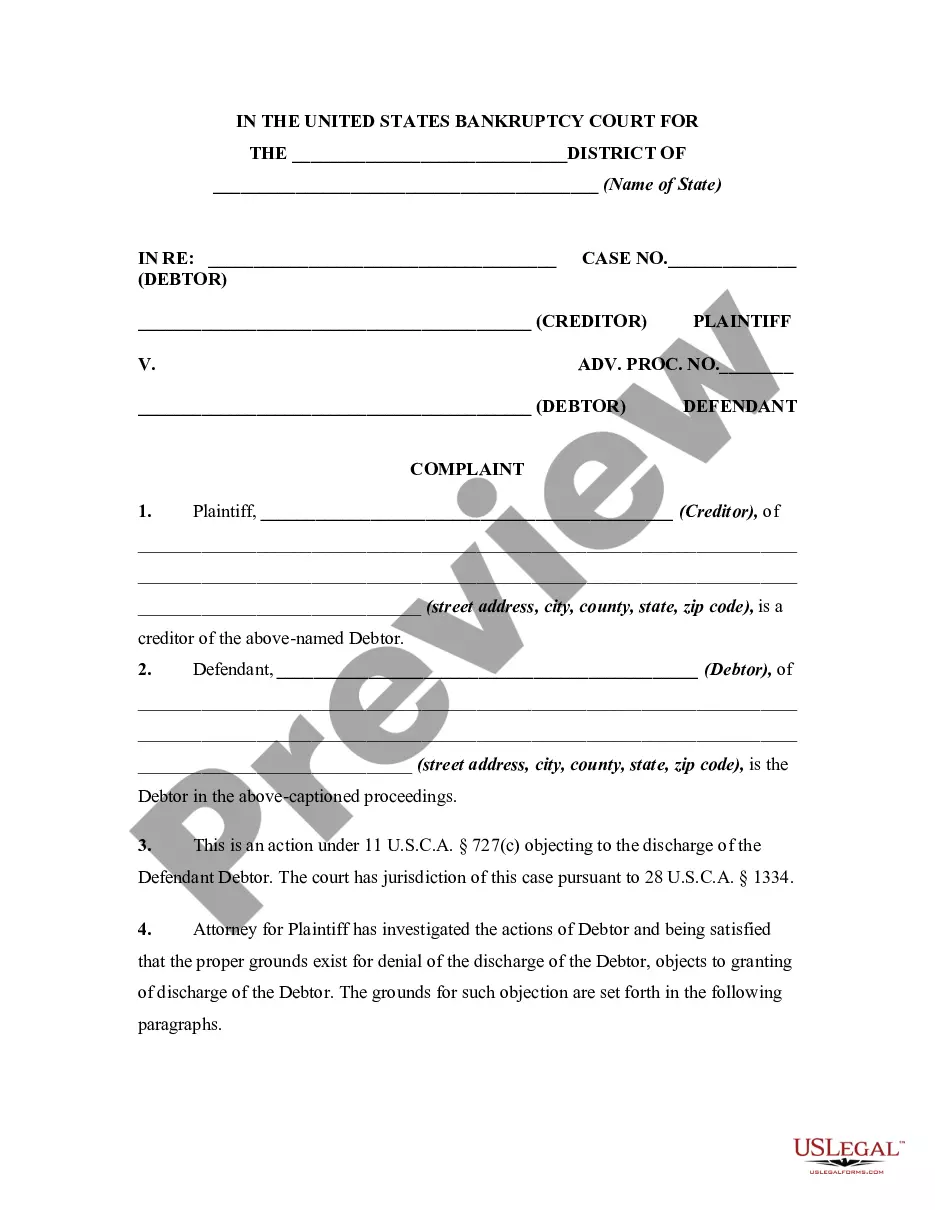
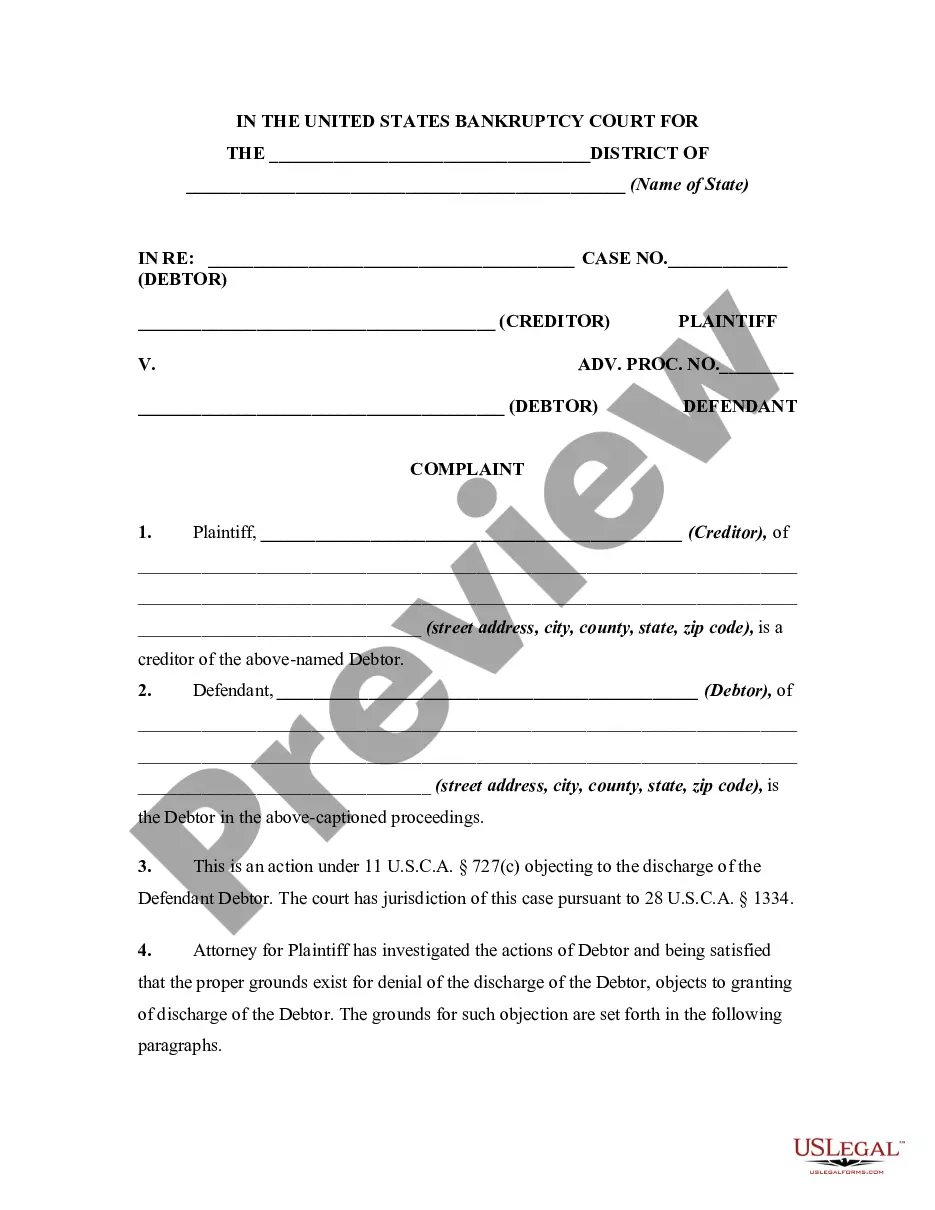
How to fill out Complaint Objecting To Discharge By Bankruptcy Court On The Grounds That Transaction Was Induced By Fraud Regarding Debtor's Financial Condition?
Engaging with legal paperwork and procedures may be an add-on that consumes a significant portion of your day. Bankruptcy Fraud Related to Foreclosure and similar forms generally necessitate that you search for them and comprehend how to fill them out proficiently.
Thus, whether you are managing financial, legal, or personal issues, having an extensive and user-friendly online resource of forms readily available can be a great assistance.
US Legal Forms is the premier online service for legal templates, featuring over 85,000 state-specific forms and a variety of resources that will aid you in completing your paperwork swiftly.
Explore the collection of pertinent documents at your fingertips with just a single click.
- US Legal Forms provides you with forms specific to your state and county that are available for download at any time.
- Safeguard your document management processes with a service of superior quality that enables you to assemble any form in moments without extra or concealed fees.
- Simply Log In to your account, locate Bankruptcy Fraud Related to Foreclosure, and obtain it instantly from the My documents section.
- You can also retrieve forms you have previously saved.
Form popularity
FAQ
Proving bankruptcy fraud can be quite challenging due to the need for clear evidence and the legal complexities involved. A strong case requires thorough documentation and a clear demonstration of intent to deceive. In situations involving bankruptcy fraud regarding foreclosure, it is often beneficial to work with legal professionals who specialize in this area. They can help you navigate the intricacies of the legal system more effectively.
The hardest fraud to detect often involves complex schemes that conceal true intentions, such as identity theft or sophisticated financial manipulations. In the context of bankruptcy fraud regarding foreclosure, perpetrators may hide assets or create false documentation. These tactics can make it challenging for authorities to uncover the truth. Staying informed and vigilant is essential to recognizing potential fraud.
In a fraud case, various forms of evidence may be necessary, including financial records, correspondence, and witness statements. Specifically, for bankruptcy fraud regarding foreclosure, any documentation that shows discrepancies or concealed assets will be vital. Collecting this evidence promptly can strengthen your case. Platforms like USLegalForms can assist you in organizing and filing necessary legal documents.
Yes, filing for bankruptcy can temporarily halt a foreclosure process through an automatic stay. This legal protection gives you time to reorganize your finances and explore your options. However, it is crucial to understand that this is not a permanent solution to bankruptcy fraud regarding foreclosure. Engaging with a knowledgeable attorney can help you navigate this complex situation effectively.
To prove bankruptcy fraud, one must gather substantial evidence showing intentional misrepresentation or concealment of information. This may include discrepancies in financial documents, testimonies from witnesses, or records of undisclosed assets. In cases involving bankruptcy fraud regarding foreclosure, documentation is key in establishing a pattern of deceit. Consulting a legal expert can provide guidance on how to build a solid case.
Bankruptcy fraud occurs when individuals provide false information or hide assets during the bankruptcy process. This type of fraud is particularly serious as it undermines the integrity of the legal system. When dealing with bankruptcy fraud regarding foreclosure, it's essential to disclose all debts and assets fully. Failure to do so can lead to severe legal consequences.
An individual intentionally files false or incomplete forms. Including false information on a bankruptcy form may also constitute perjury. An individual files multiple times using either false information or real information in several jurisdictions. An individual bribes a court-appointed trustee.
If you run up new debt during the time leading to bankruptcy without any corresponding reason, the court could consider it presumptive fraud.
The Foreclosure Rescue Fraud Prevention Act prohibits businesses or individuals from collecting up-front fees from the homeowner prior to completing all services contained in the contract. This includes foreclosure rescue services or loan modification services related to foreclosures.
In the United States, about 10 percent of bankruptcy filings involve fraudulent claims. The four most commonly encountered fraud schemes are concealment of assets, petition mills, multiple-filing schemes, and bust-out schemes.