Motion Stay Sample For Lift
Description
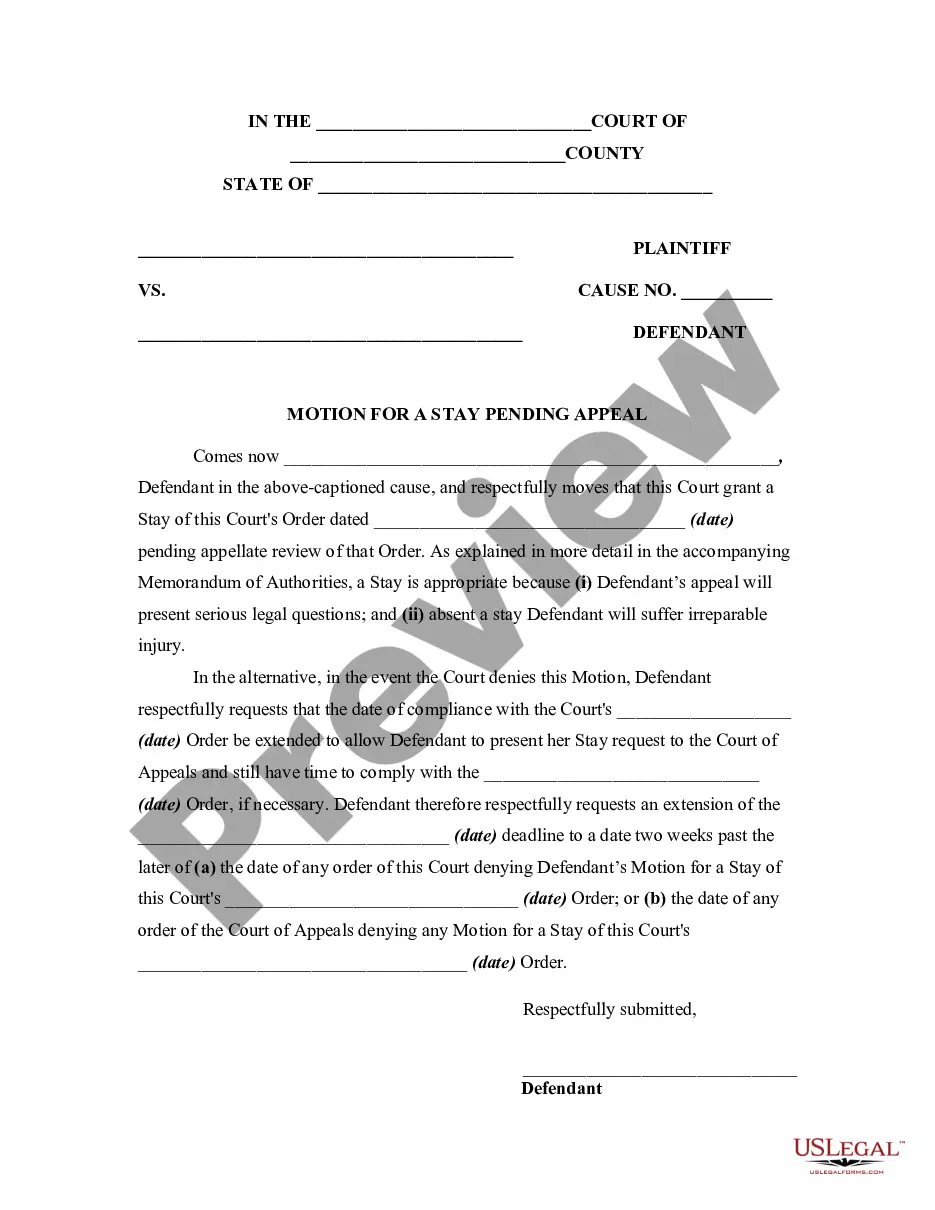
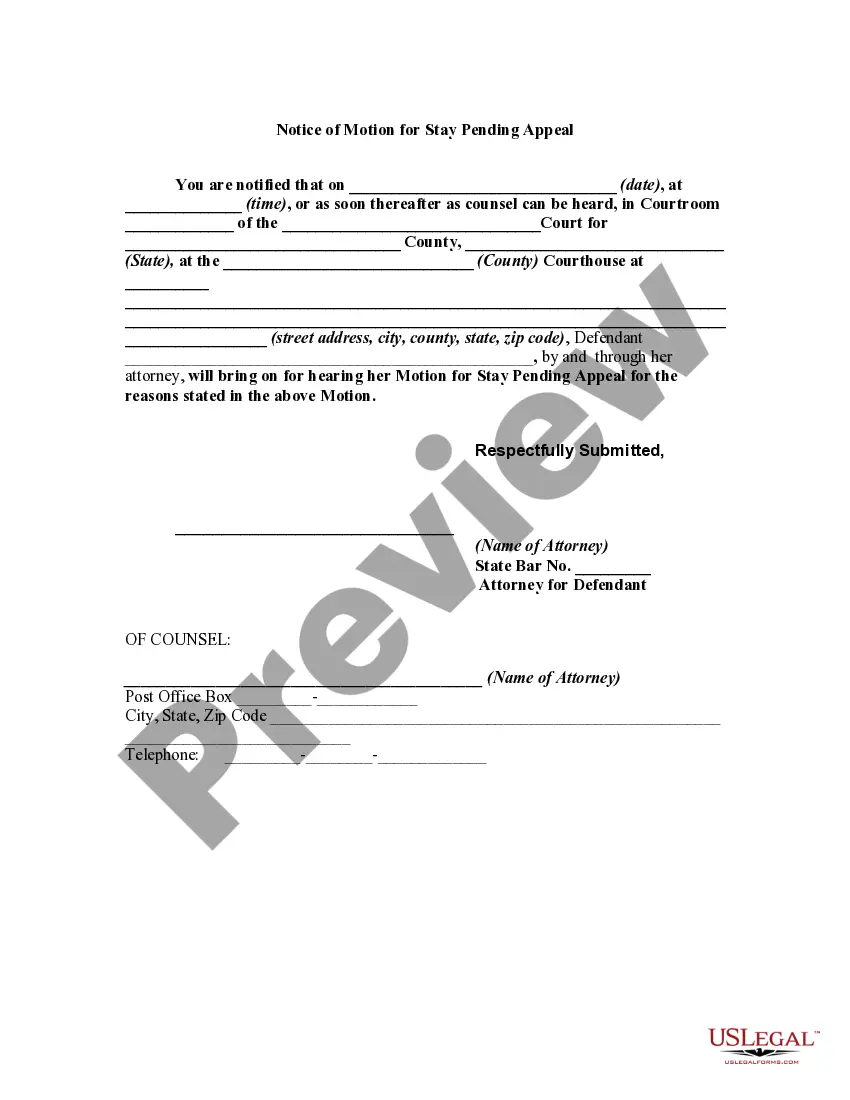
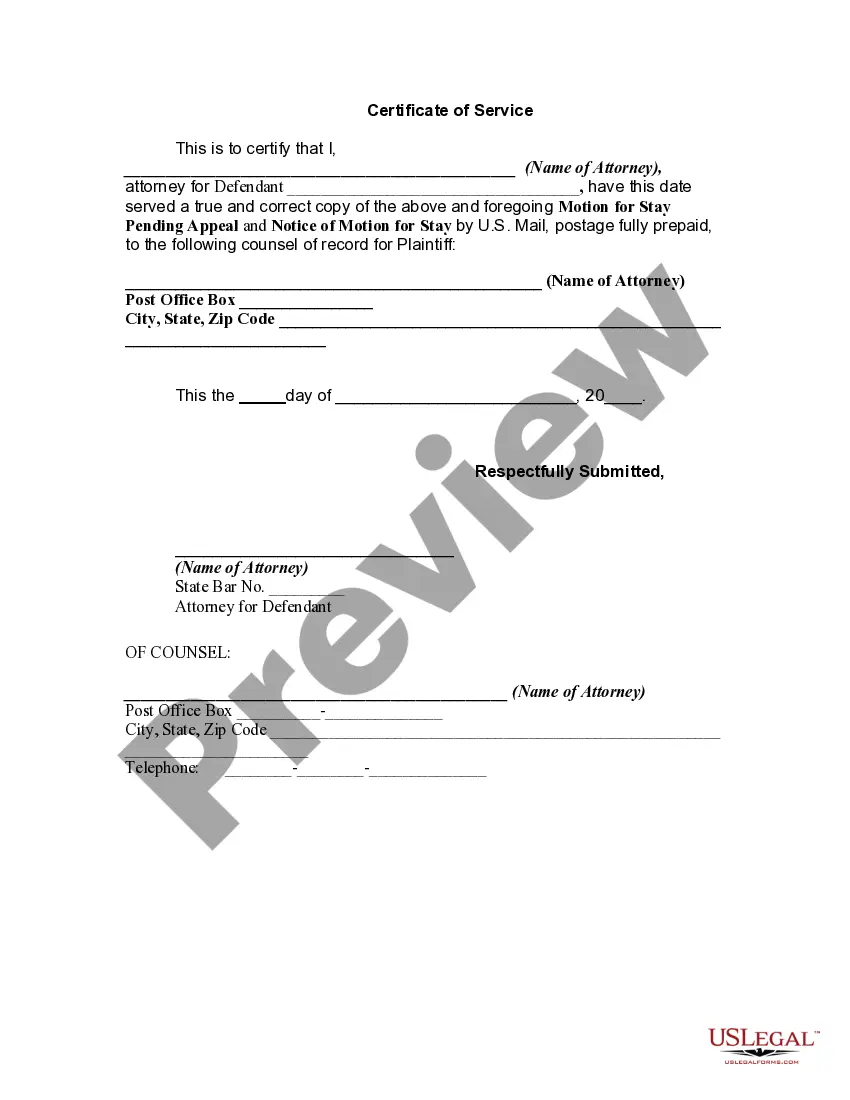
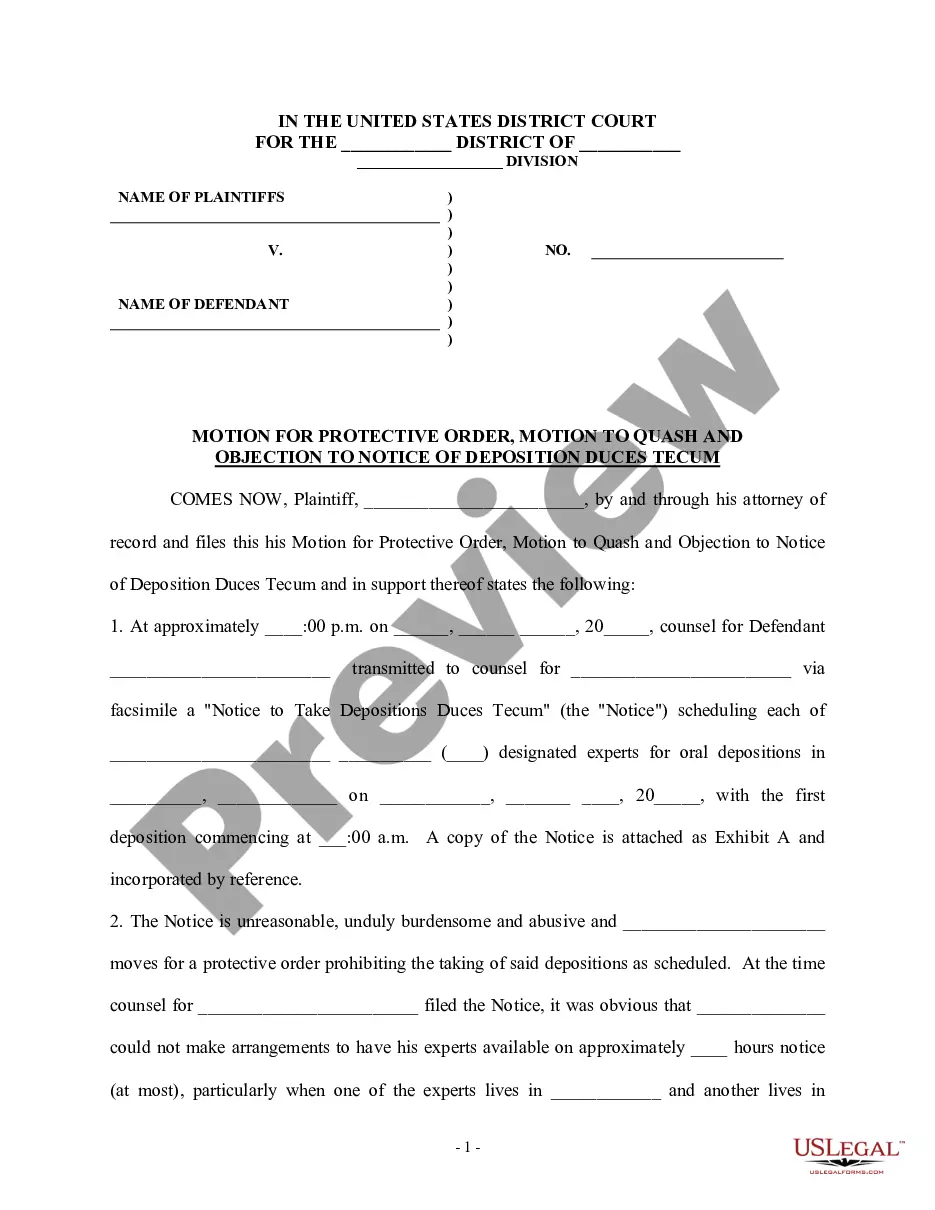
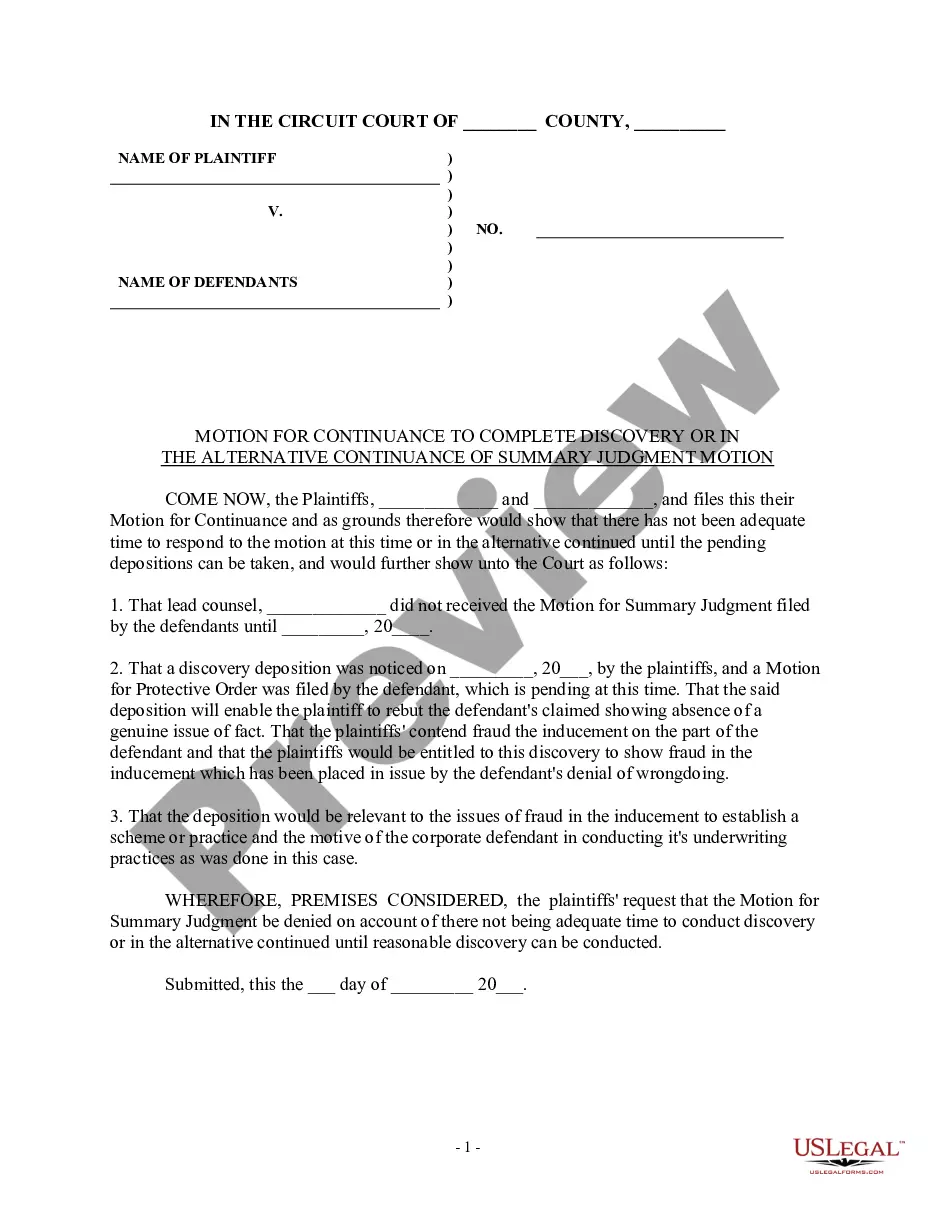








How to fill out Motion For Stay Pending Appeal And Notice Of Motion?
Securing a reliable source for obtaining the most up-to-date and pertinent legal templates is a significant part of navigating bureaucracy.
Locating the appropriate legal documents necessitates precision and carefulness, which is why it's crucial to obtain Motion Stay Sample For Lift exclusively from trustworthy providers, such as US Legal Forms. An incorrect template can squander your time and prolong the issue at hand.
Once you have the form on your device, you can modify it with the editor or print it and fill it out manually. Eliminate the stress associated with your legal paperwork. Explore the comprehensive US Legal Forms catalog to find legal templates, verify their suitability for your situation, and download them right away.
- Leverage the library navigation or the search function to locate your template.
- Access the form’s details to verify if it meets the requirements of your state and locality.
- Preview the form, if offered, to confirm that it is indeed the one you wish to use.
- Return to the search if the Motion Stay Sample For Lift does not suit your needs.
- If you are certain about the form’s appropriateness, download it.
- For registered users, click Log in to verify your identity and access your chosen templates in My documents.
- If you don’t have an account yet, click Buy now to purchase the template.
- Choose the pricing option that aligns with your needs.
- Proceed to register to complete your acquisition.
- Finalize your purchase by selecting a payment method (credit card or PayPal).
- Select the file format for downloading Motion Stay Sample For Lift.
Form popularity
FAQ
In some situations, a creditor might file a motion to lift the automatic stay. This would allow them to resume collection actions. One situation would be if you were behind on your payments for a secured loan, such as a mortgage or car payment, and the loan amount was greater than the value of the home or car.
The automatic stay is an order that goes into place when you file for bankruptcy and stops most collection efforts. But the stay isn't absolute, and a creditor can ask the bankruptcy court to lift the automatic stay and allow collection efforts to resume. If successful, the creditor can continue pursuing its debt.
Two main methods exist for fighting a motion for relief from automatic stay. These types are ?procedural? and ?substantive? objections. Basically, procedural objections challenge the manner in which the motion was filed, while substantive objections challenge the actual substance of the motion.
If you surrendered property in your bankruptcy, such as a house or a car, the creditor will file a Motion for Relief from Stay in order to get permission to proceed with foreclosure or to repossess the property.
When relief from stay is granted, it does not remove the property from the bankruptcy estate or grant the creditor ownership of the property. It simply removes the stay and restores the parties to their state law rights.