Motion For Stay Relief
Description
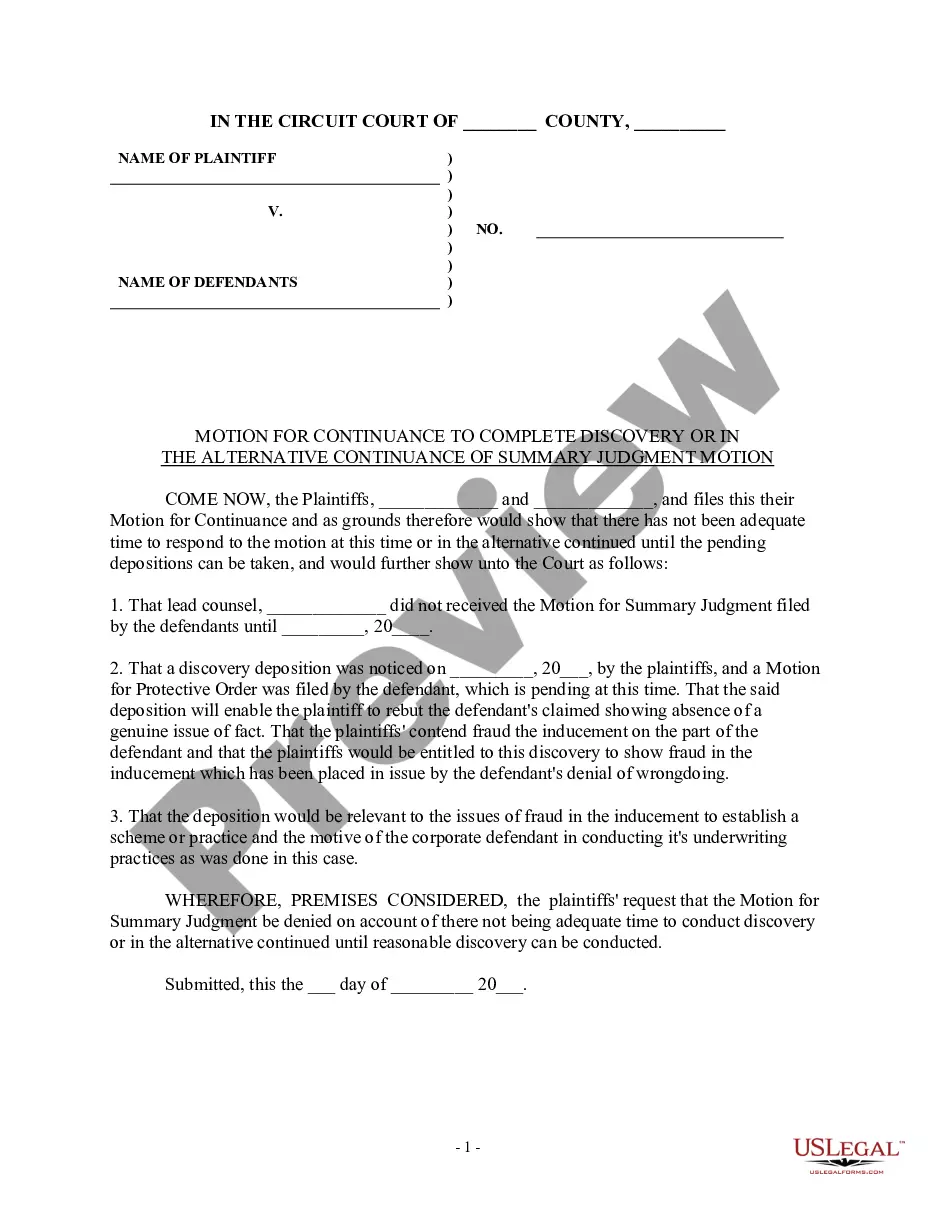
Get your form ready online
Our built-in tools help you complete, sign, share, and store your documents in one place.
Make edits, fill in missing information, and update formatting in US Legal Forms—just like you would in MS Word.
Download a copy, print it, send it by email, or mail it via USPS—whatever works best for your next step.
Sign and collect signatures with our SignNow integration. Send to multiple recipients, set reminders, and more. Go Premium to unlock E-Sign.
If this form requires notarization, complete it online through a secure video call—no need to meet a notary in person or wait for an appointment.
We protect your documents and personal data by following strict security and privacy standards.

Make edits, fill in missing information, and update formatting in US Legal Forms—just like you would in MS Word.

Download a copy, print it, send it by email, or mail it via USPS—whatever works best for your next step.

Sign and collect signatures with our SignNow integration. Send to multiple recipients, set reminders, and more. Go Premium to unlock E-Sign.

If this form requires notarization, complete it online through a secure video call—no need to meet a notary in person or wait for an appointment.

We protect your documents and personal data by following strict security and privacy standards.
Looking for another form?
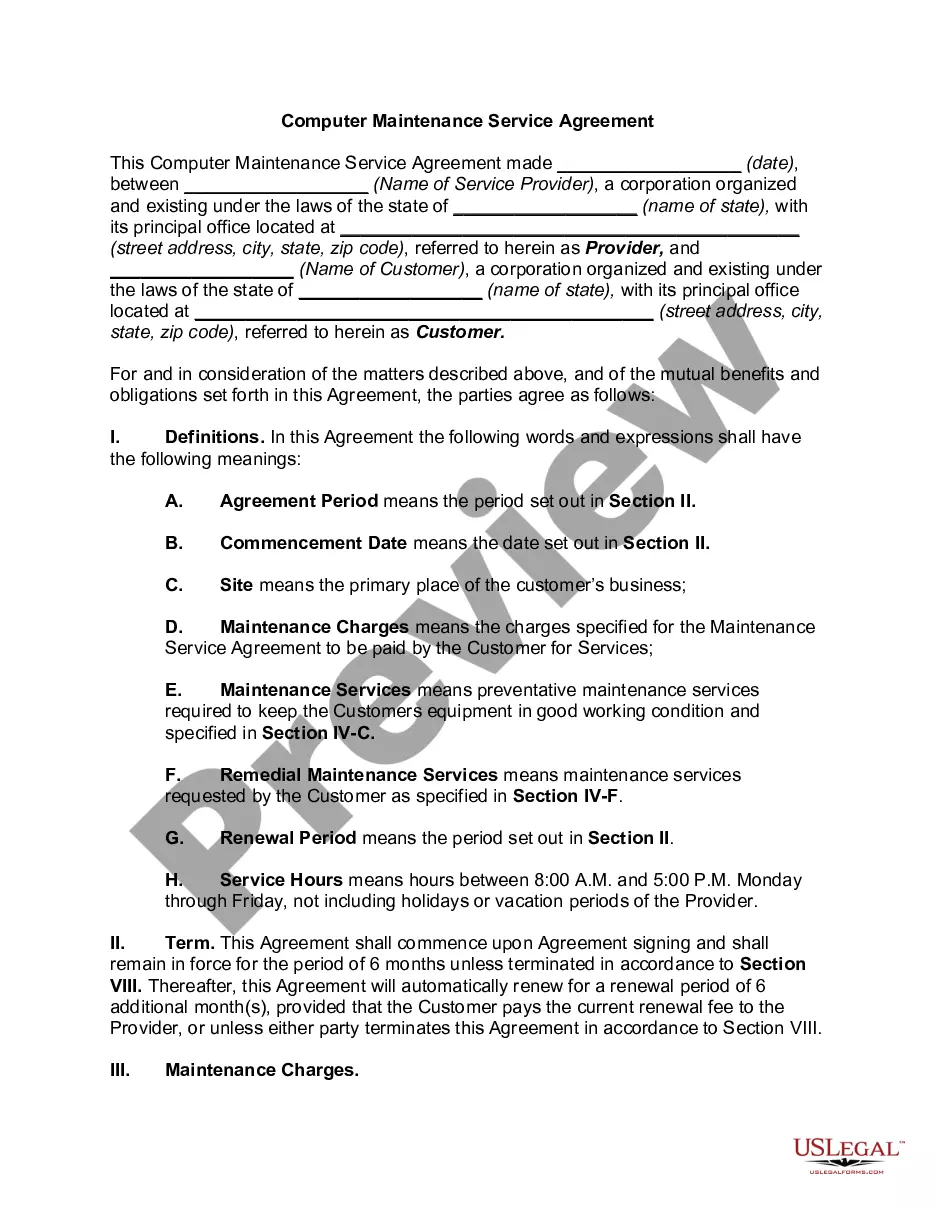







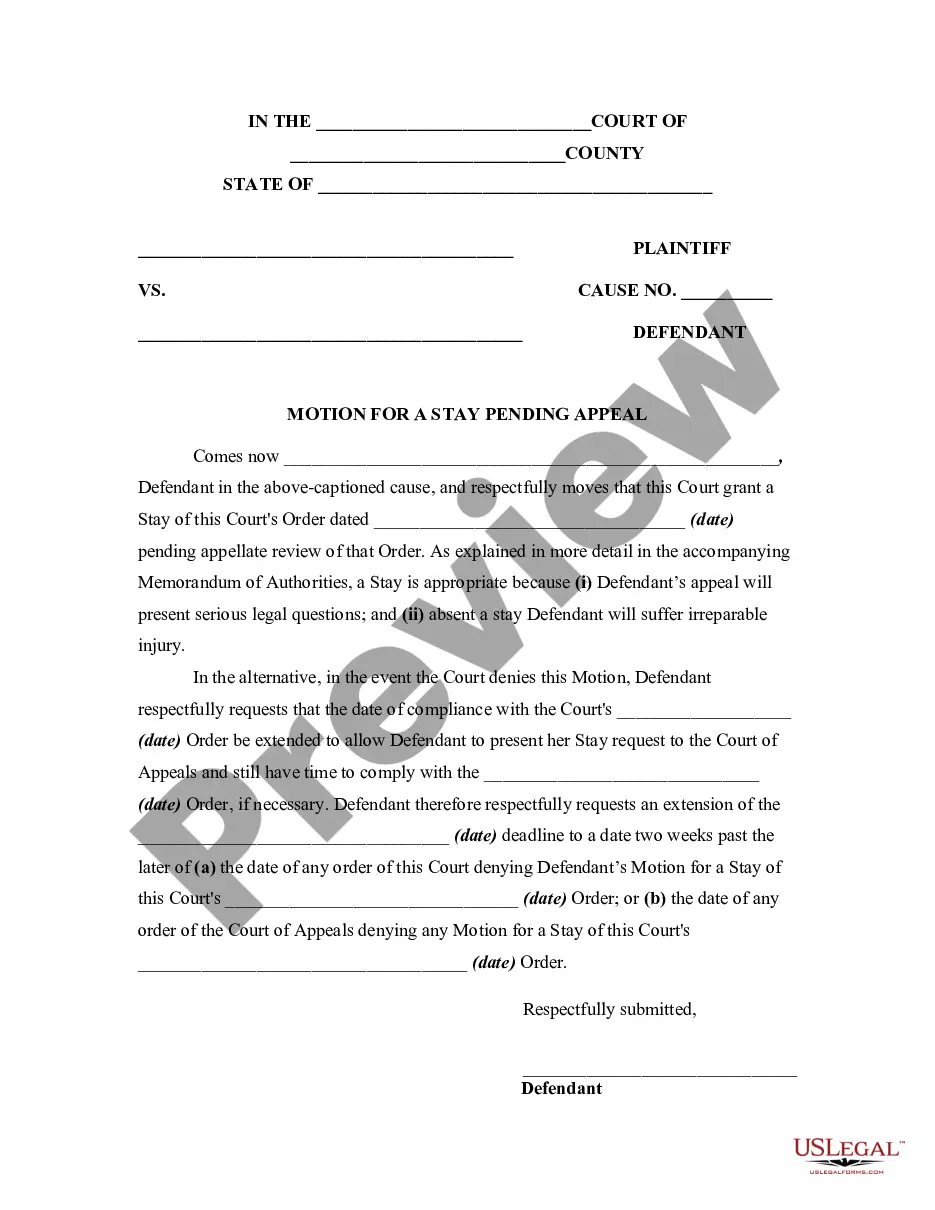
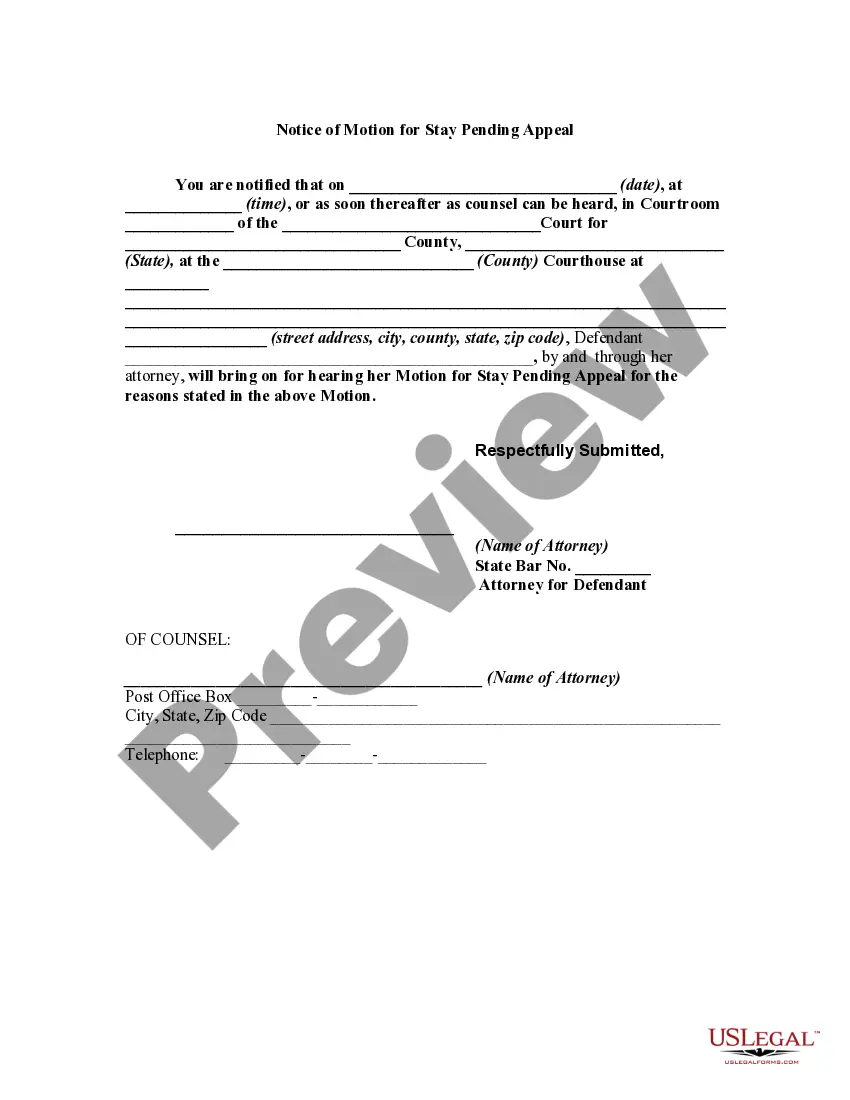
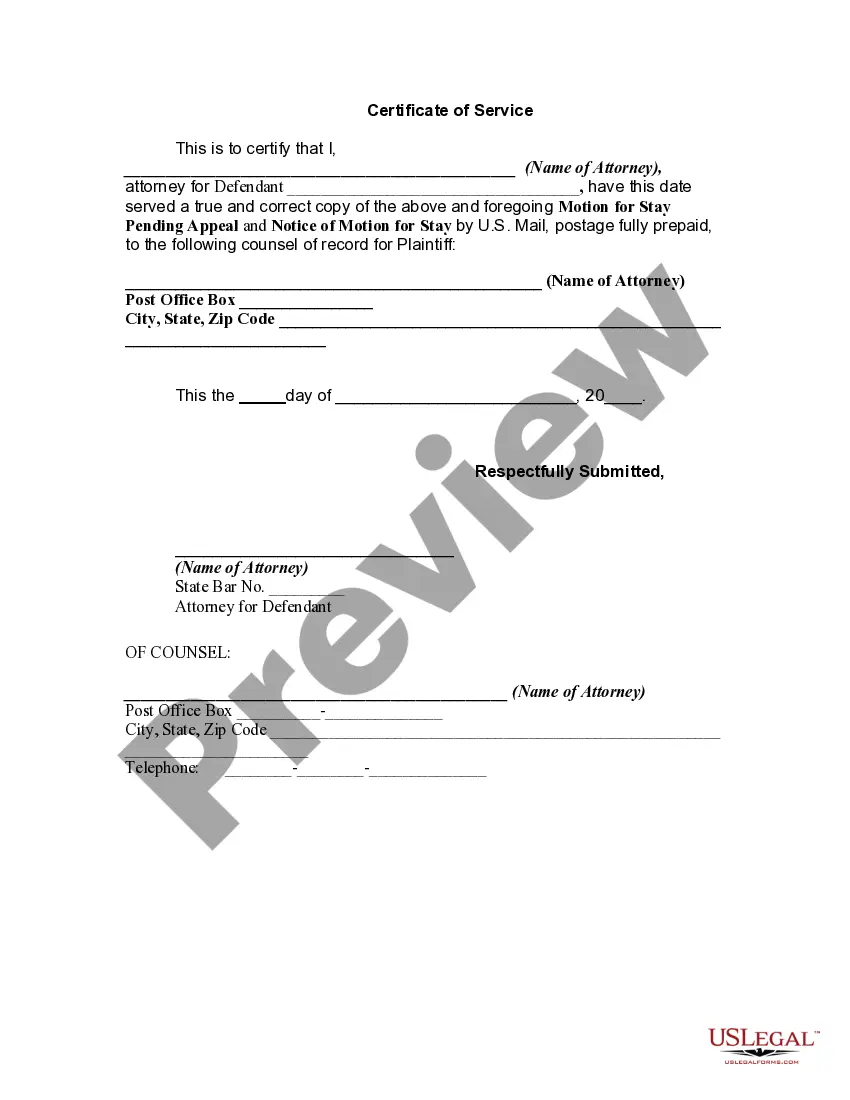
How to fill out Motion For Stay Pending Appeal And Notice Of Motion?
Acquiring legal templates that comply with federal and local statutes is essential, and the internet presents numerous choices to select from.
However, what’s the benefit of wasting time looking for the right Motion For Stay Relief example online when the US Legal Forms digital library already consolidates such templates in one location.
US Legal Forms is the foremost online legal repository with over 85,000 editable templates created by attorneys for various business and personal circumstances. They are straightforward to navigate, with all documents categorized by state and intended use. Our experts stay updated with legislative changes, so you can always trust your form is current and compliant when procuring a Motion For Stay Relief from our platform.
Press Buy Now once you’ve located the appropriate form and choose a subscription option. Set up an account or Log In, and process the payment via PayPal or a credit card. Choose the optimal format for your Motion For Stay Relief and download it. All documents you find on US Legal Forms are reusable. To re-download and fill out previously acquired forms, go to the My documents tab in your account. Experience the most comprehensive and user-friendly legal documentation service!
- Acquiring a Motion For Stay Relief is quick and effortless for both existing and new users.
- If you already possess an account with an active subscription, Log In and store the document sample you require in your preferred format.
- If you're new to our website, follow the steps outlined below.
- Evaluate the template using the Preview feature or the text description to ensure it fulfills your criteria.
- Search for an alternative sample using the search bar at the top of the page if necessary.
Form popularity
FAQ
A motion for relief of stay is a legal request to lift an automatic stay order in bankruptcy cases. This motion allows creditors to pursue certain actions against a debtor's property, which may be essential for the creditor's recovery. By filing a motion for stay relief, creditors can seek to regain the right to collect debts once more. Understanding this process is vital for anyone involved in bankruptcy proceedings, and resources like US Legal Forms can provide invaluable assistance in navigating your options.
A motion for temporary relief refers to an immediate request for court intervention to grant temporary changes in the status of a case. This type of motion often seeks relief from certain obligations during the ongoing legal process, ensuring that the involved parties can maintain stability. When dealing with sensitive legal matters, a motion for stay relief is a common request that offers essential support. For those in need of assistance, uslegalforms can help you navigate these legal complexities effectively.
A motion for relief from stay is a legal request made to the court to lift a stay that prevents creditors from proceeding with collection actions against a debtor. This motion seeks permission for creditors to continue their collection efforts, typically because the debt is secured by collateral. By filing a motion for stay relief, creditors aim to recover their interests while ensuring the debtor adheres to the legal process. Understanding this motion is crucial for anyone navigating bankruptcy proceedings.
Common reasons for relief of stay include the debtor's lack of equity in the secured property or demonstrating that the property is not necessary for the success of the bankruptcy case. Creditors may seek to proceed with collection actions to recover losses or to protect their interests against depreciation. Recognizing these reasons is vital for both creditors and debtors when addressing motions for stay relief.
The causes for relief from the automatic stay may include the debtor’s failure to make timely payments on a secured obligation or the property being no longer necessary for an effective reorganization. Additionally, if the creditor's interest is not adequately protected, they may have grounds to request relief. It's important to clearly articulate these causes within your motion for stay relief to comply with legal standards.
Filling out a motion form involves providing specific details such as case information, the nature of the request, and supporting legal arguments. You must follow the format required by your jurisdiction and ensure all relevant information is included. Resources like US Legal Forms can assist you in accessing templates and guide you on the necessary steps to complete your motion for stay relief accurately.
The basis for relief from stay typically includes the debtor's failure to make payments on secured debts or a lack of equity in the property. If the property is not essential to the debtor's reorganization plan or if it poses a burden, creditors may argue for relief. Each case is assessed on its unique facts, underscoring the need for a clear understanding of the criteria involved in a motion for stay relief.
Responding to a motion for relief from stay involves preparing a formal objection, which details your reasons for opposing the motion. You must file this objection with the court and serve it to the involved parties before the hearing date. Include any facts or legal arguments that support your stance to protect your rights effectively. Consulting resources like US Legal Forms can provide templates and guidance to navigate this process.
In a motion for stay relief, the burden of proof falls on the creditor who filed the motion. The creditor must demonstrate that they have a valid claim to relief from the automatic stay. This requires showing the court that the debtor's actions or lack thereof justify lifting the stay, allowing the creditor to pursue their rights. Successfully understanding and meeting this burden is crucial for creditors seeking a motion for stay relief.
Yes, a motion for stay relief can be denied by the court if the evidence and arguments presented do not support the request. The judge will consider various factors, including the effect on the parties involved and potential harm. If the court finds that lifting the stay is not justified, it will issue a denial. Understanding the requirements and preparing adequately can significantly increase your chances of a favorable outcome.