Appeal Still Pending
Description
Get your form ready online
Our built-in tools help you complete, sign, share, and store your documents in one place.
Make edits, fill in missing information, and update formatting in US Legal Forms—just like you would in MS Word.
Download a copy, print it, send it by email, or mail it via USPS—whatever works best for your next step.
Sign and collect signatures with our SignNow integration. Send to multiple recipients, set reminders, and more. Go Premium to unlock E-Sign.
If this form requires notarization, complete it online through a secure video call—no need to meet a notary in person or wait for an appointment.
We protect your documents and personal data by following strict security and privacy standards.

Make edits, fill in missing information, and update formatting in US Legal Forms—just like you would in MS Word.

Download a copy, print it, send it by email, or mail it via USPS—whatever works best for your next step.

Sign and collect signatures with our SignNow integration. Send to multiple recipients, set reminders, and more. Go Premium to unlock E-Sign.

If this form requires notarization, complete it online through a secure video call—no need to meet a notary in person or wait for an appointment.

We protect your documents and personal data by following strict security and privacy standards.
Looking for another form?







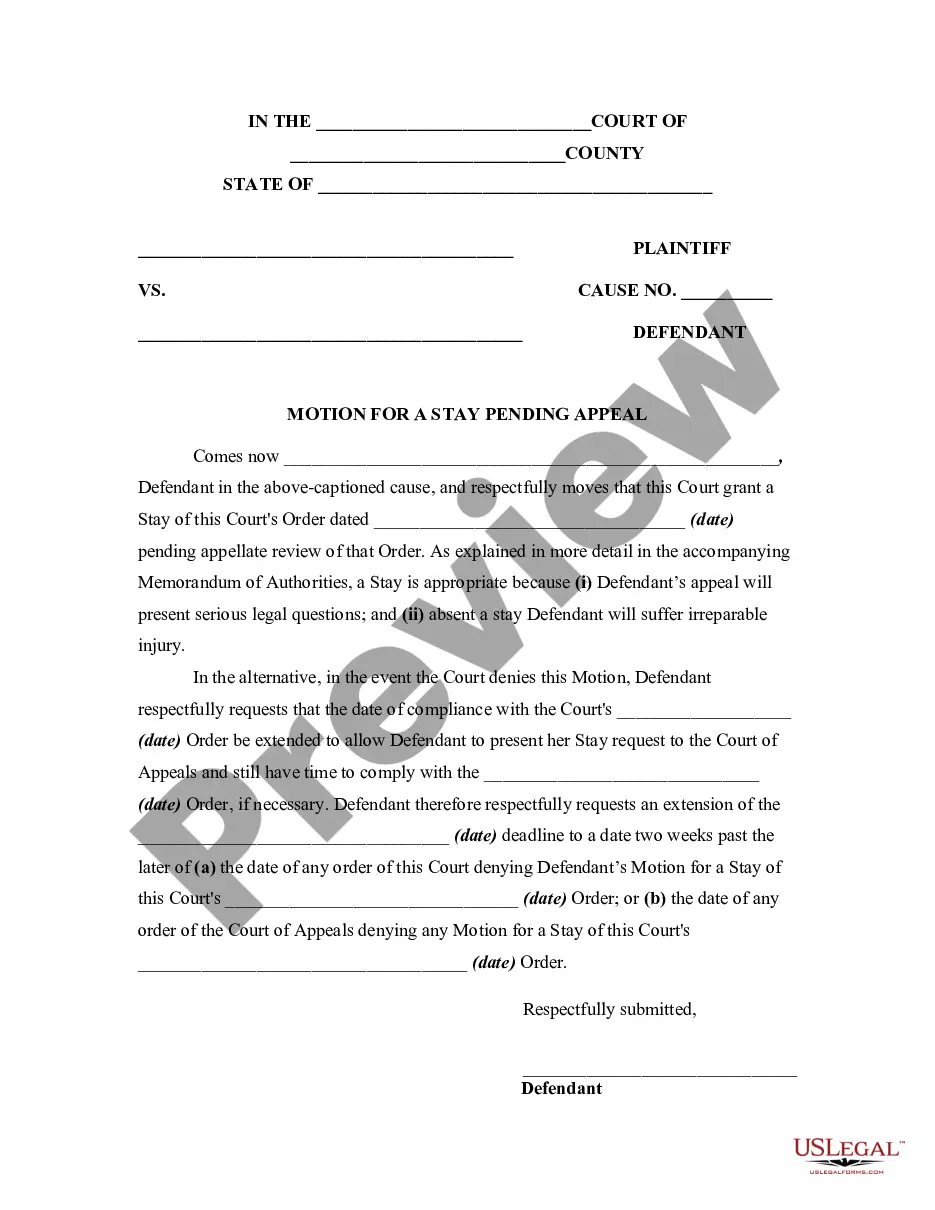
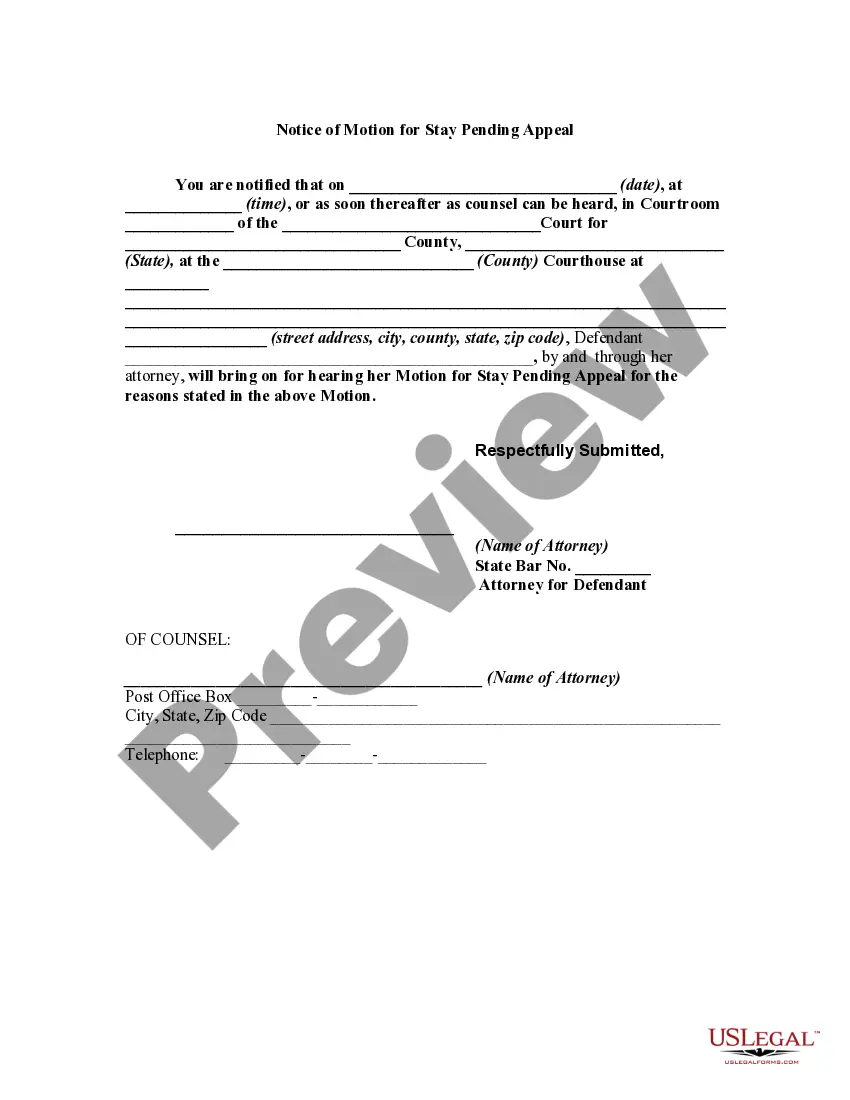
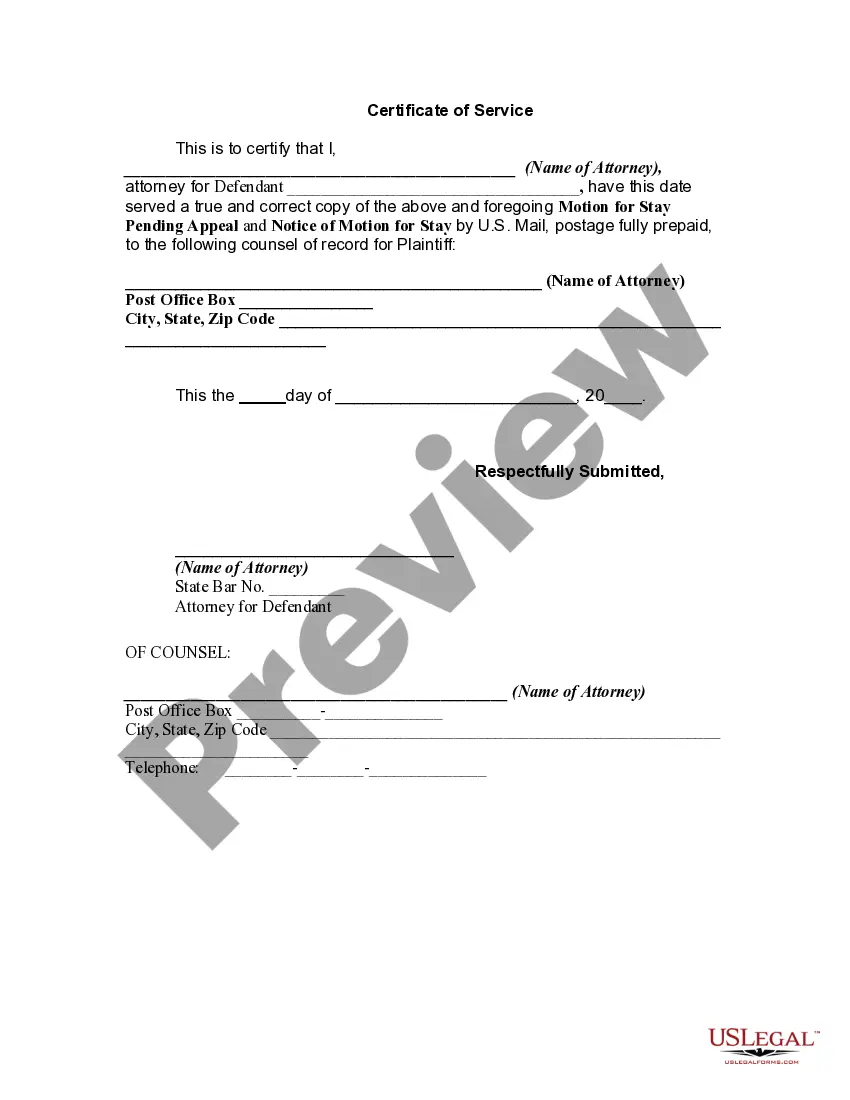
How to fill out Motion For Stay Pending Appeal And Notice Of Motion?
- Log in to your US Legal Forms account to access your previous documents. Ensure your subscription is active; renew if necessary.
- Preview the available forms in the library. It’s crucial to verify that the selected form aligns with your specific legal requirements and jurisdiction.
- If you need to search for different templates, utilize the Search tab effectively to find any inconsistencies in the forms currently viewed.
- Select the appropriate document by clicking on the Buy Now button and choose the subscription option that best suits your needs.
- Process your payment using your credit card or PayPal account to finalize the purchase of your selected document.
- Download the completed form directly to your device. You can always revisit it later in the My Forms menu for any future needs.
With US Legal Forms, you gain access to an extensive library of over 85,000 editable legal forms, ensuring you find precisely what you need. Our platform also empowers users to connect with legal experts for tailored assistance, promoting the creation of legally sound documents.
Don't let legal complexities hold you back. Start your journey with US Legal Forms today and ensure all your documents are in order.
Form popularity
FAQ
The period to file an appeal typically spans from 30 to 60 days after the judgment in many courts. This timeframe can differ based on various factors, including the case type and jurisdiction. If your appeal is still pending, understanding this timeline is vital to ensure your appeal is filed on time and appropriately.
Yes, there is a time limit on appealing, and it is important to familiarize yourself with your jurisdiction's specific laws. Often, this time frame is short, ranging from two weeks to two months depending on the type of court and case. If your appeal is still pending, be sure to keep track of these critical deadlines to maintain your rights.
The time limit to file an appeal can vary, but it usually ranges from 14 to 60 days following the issuance of a judgment. It's essential to act quickly if your circumstances lead you to consider an appeal still pending. Timeliness is critical as missing this window may jeopardize your case.
A motion to stay pending appeal allows a party to request that the enforcement of a judgment be paused while the appeal is being resolved. This can prevent significant changes or actions from occurring until the appeal concludes. If your appeal is still pending, filing such a motion may offer you a vital opportunity to stabilize your situation.
Yes, there is typically a limit on appeals to ensure efficiency in the legal process. Usually, only one appeal is allowed per case, and once an appeal is filed, you cannot appeal the same issue again unless you have new evidence or circumstances. If you find your appeal still pending, it is essential to monitor deadlines and requirements.
The maximum time limit to file an appeal generally varies by jurisdiction and the type of case. In many instances, you must file your appeal within 30 to 60 days from the date of the decision. If your appeal is still pending, it is crucial to act promptly, as missing the deadline may forfeit your right to appeal.
Your appeal may still be pending due to various reasons including court backlog, complexity of the case, or awaiting additional documentation. This process can understandably be frustrating, but it’s crucial to remain patient. Staying informed about the status of your case is important. Regularly checking in with your attorney will help you understand any developments.
The odds of winning an appeal depend significantly on the circumstances of your case and the court’s decisions. Statistically, you might find that fewer than 30% of appeals succeed. Nevertheless, proper preparation and legal counsel can improve these odds. Using resources like USLegalForms can help structure your appeal effectively.
If you lose in the court of appeals, your only option is often to seek further review by the Supreme Court. However, keep in mind that the Supreme Court hears a limited number of cases each year. This process can also be quite challenging and requires a valid constitutional or fundamental issue to be raised. Therefore, having a strategic attorney at this stage can be pivotal.
Winning an appeal can be challenging, as it typically requires demonstrating errors in the original ruling. The appellate courts review the trial record and legal arguments rather than re-evaluating the entire case. Therefore, carefully presenting your case is vital. Engaging knowledgeable legal experts can ease the difficulty of navigating this process.