Complaint Amend Without Leave
Description
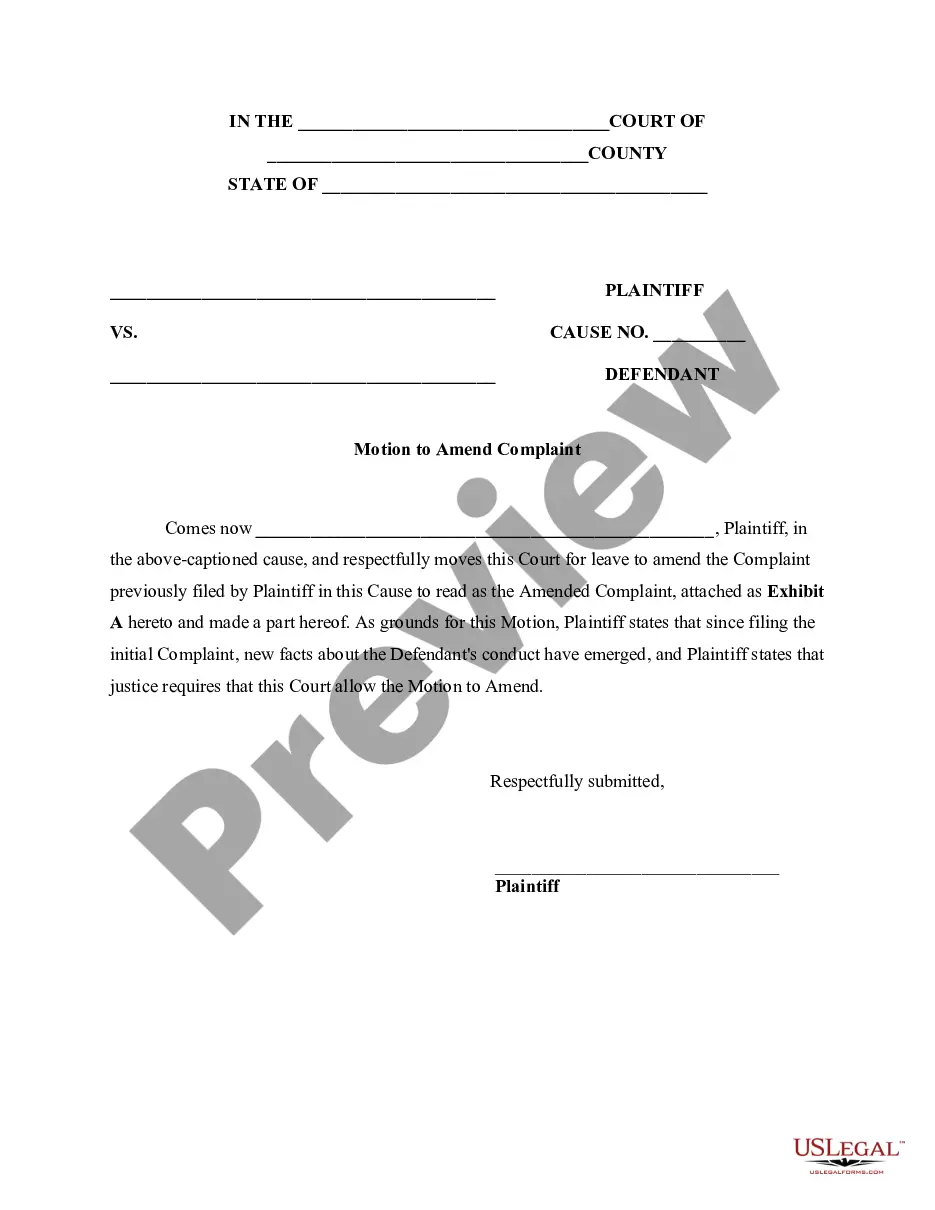
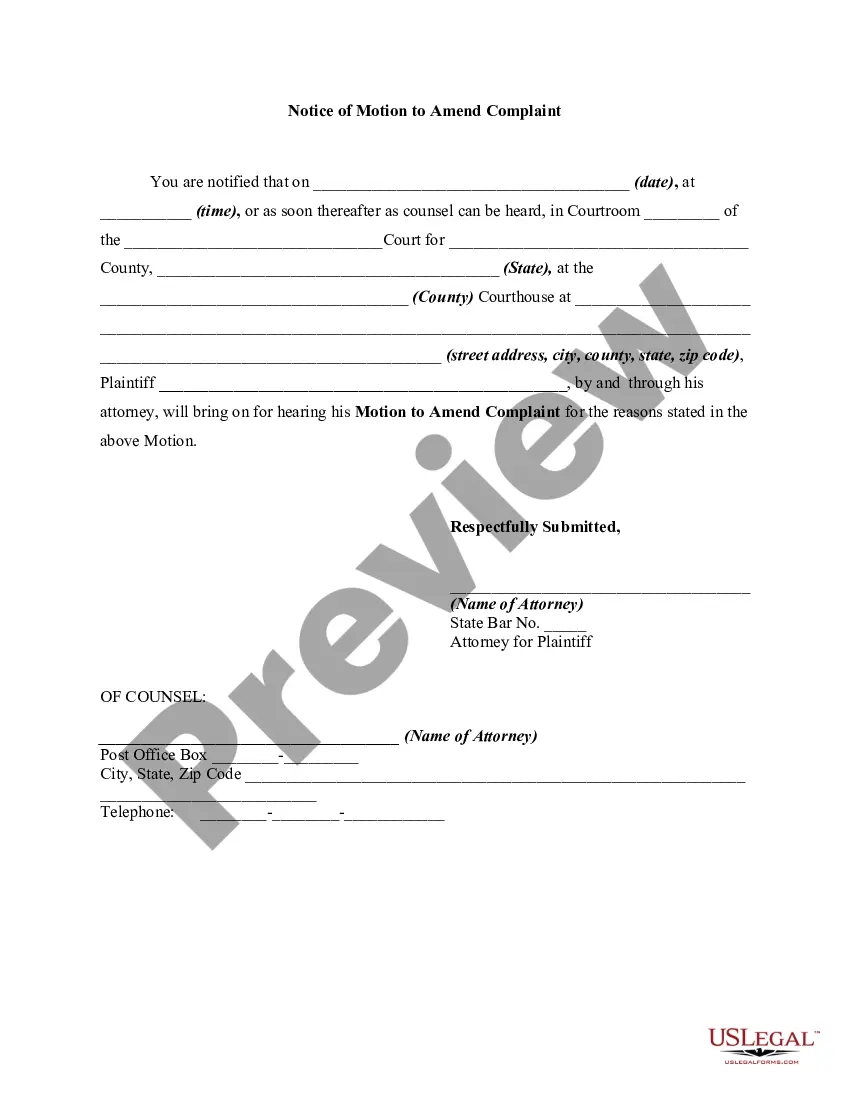
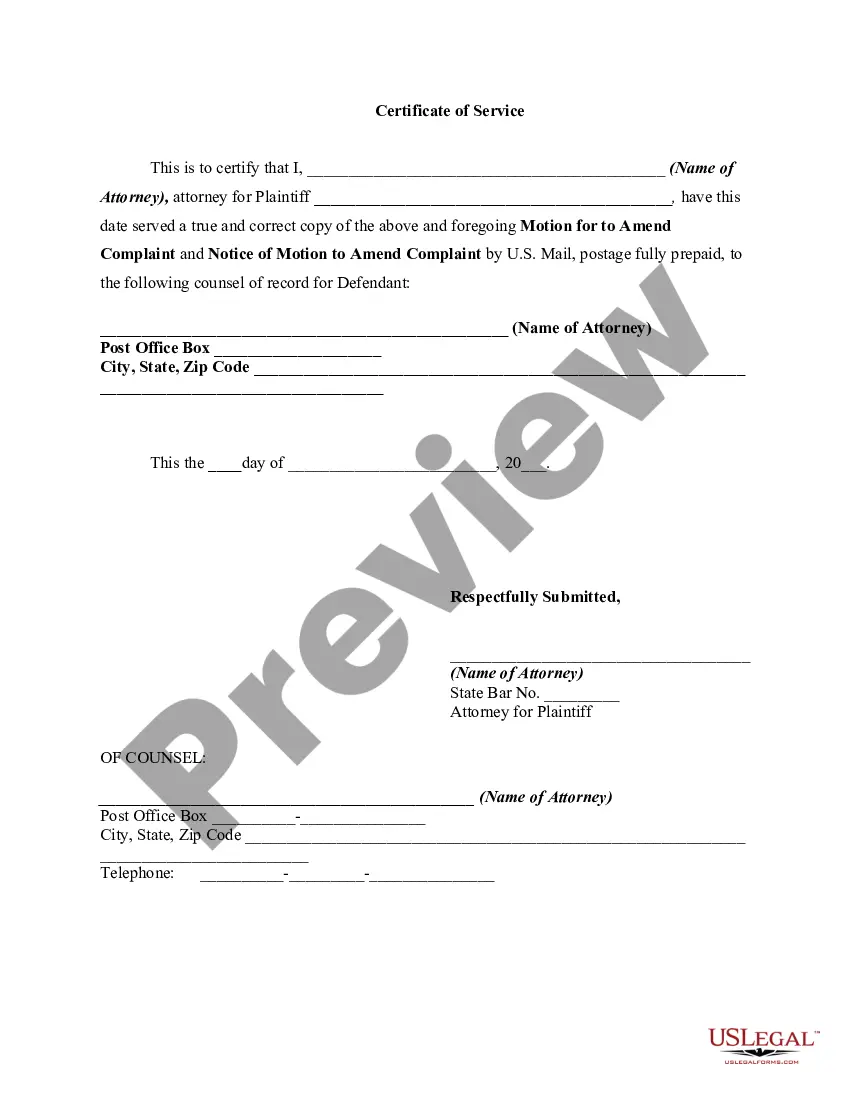

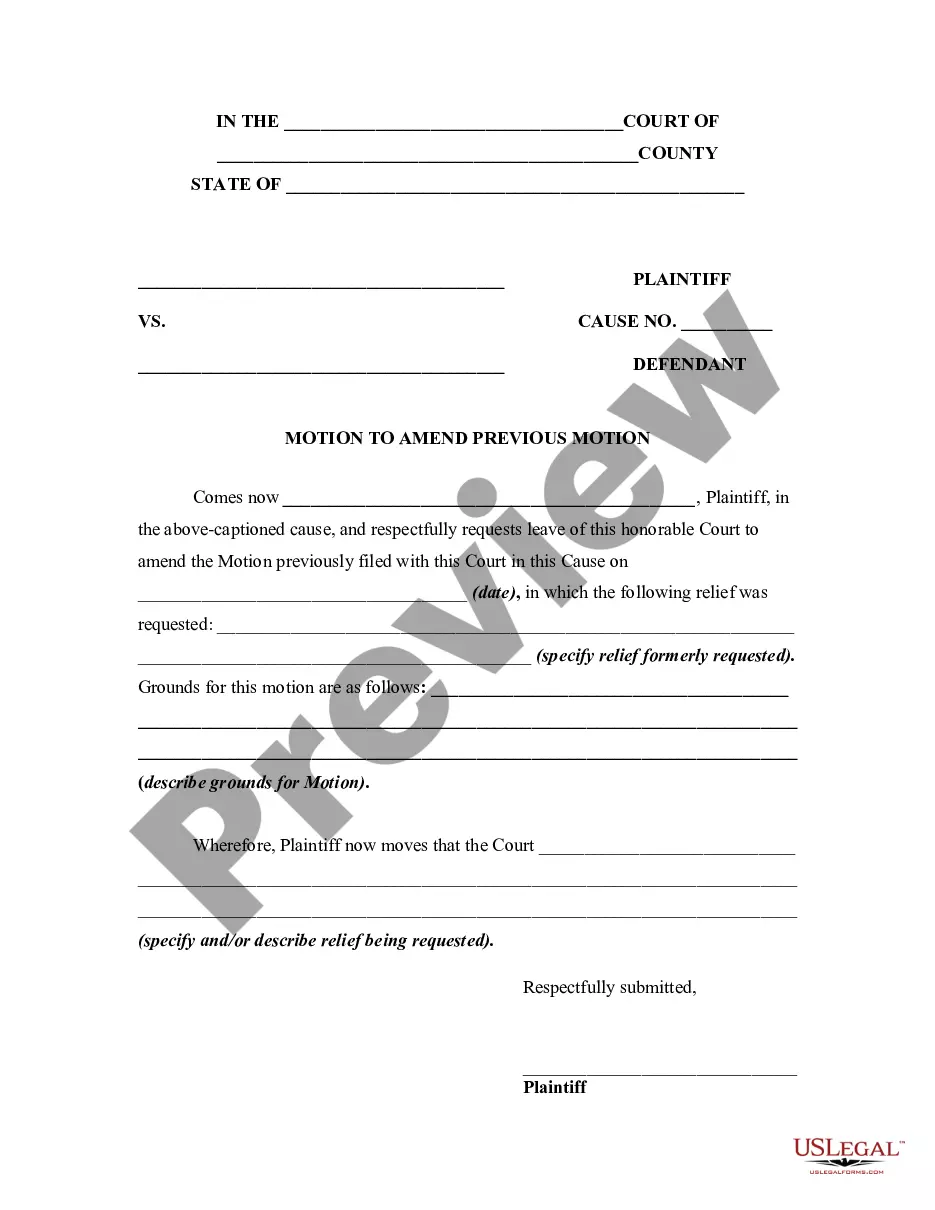
Get your form ready online
Our built-in tools help you complete, sign, share, and store your documents in one place.
Make edits, fill in missing information, and update formatting in US Legal Forms—just like you would in MS Word.
Download a copy, print it, send it by email, or mail it via USPS—whatever works best for your next step.
Sign and collect signatures with our SignNow integration. Send to multiple recipients, set reminders, and more. Go Premium to unlock E-Sign.
If this form requires notarization, complete it online through a secure video call—no need to meet a notary in person or wait for an appointment.
We protect your documents and personal data by following strict security and privacy standards.

Make edits, fill in missing information, and update formatting in US Legal Forms—just like you would in MS Word.

Download a copy, print it, send it by email, or mail it via USPS—whatever works best for your next step.

Sign and collect signatures with our SignNow integration. Send to multiple recipients, set reminders, and more. Go Premium to unlock E-Sign.

If this form requires notarization, complete it online through a secure video call—no need to meet a notary in person or wait for an appointment.

We protect your documents and personal data by following strict security and privacy standards.
Looking for another form?
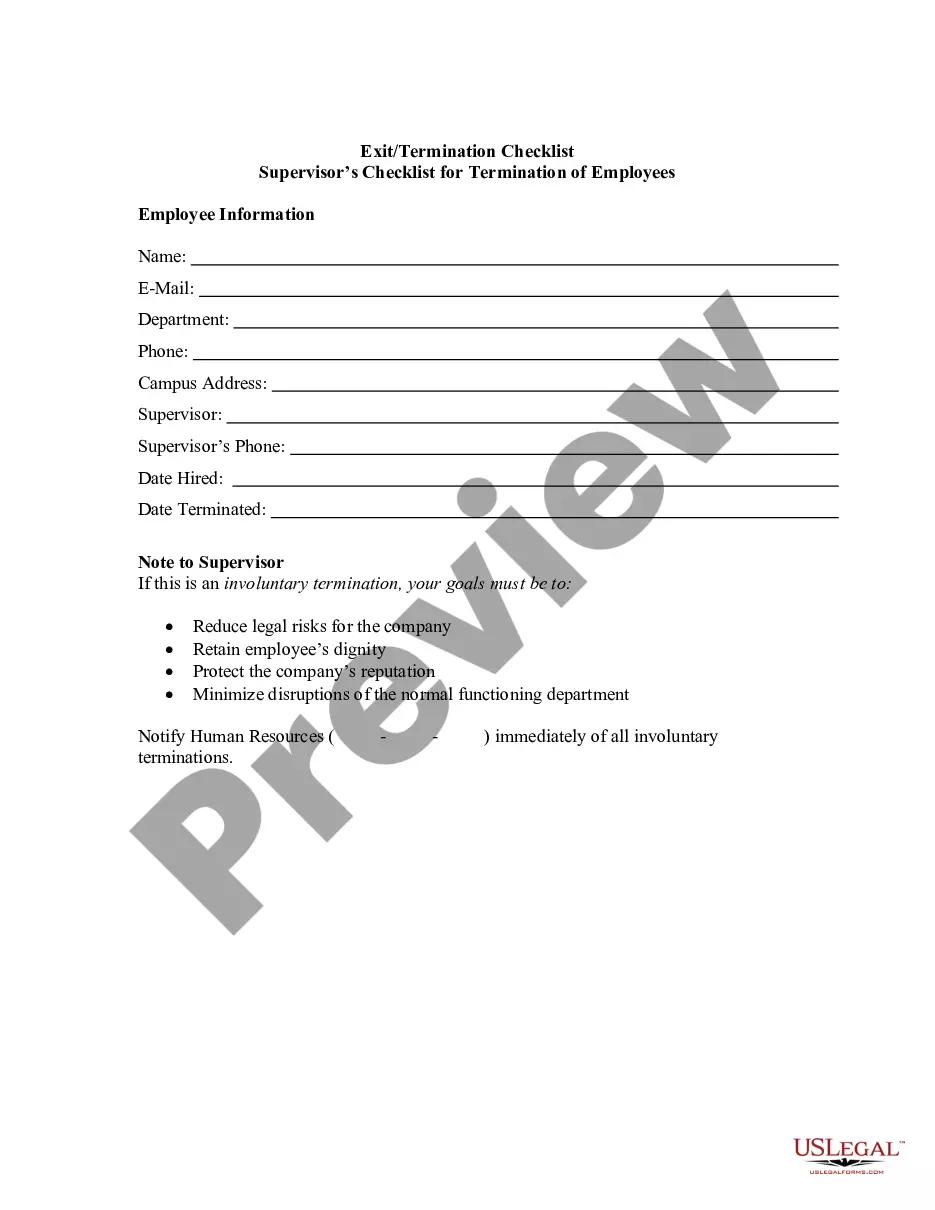
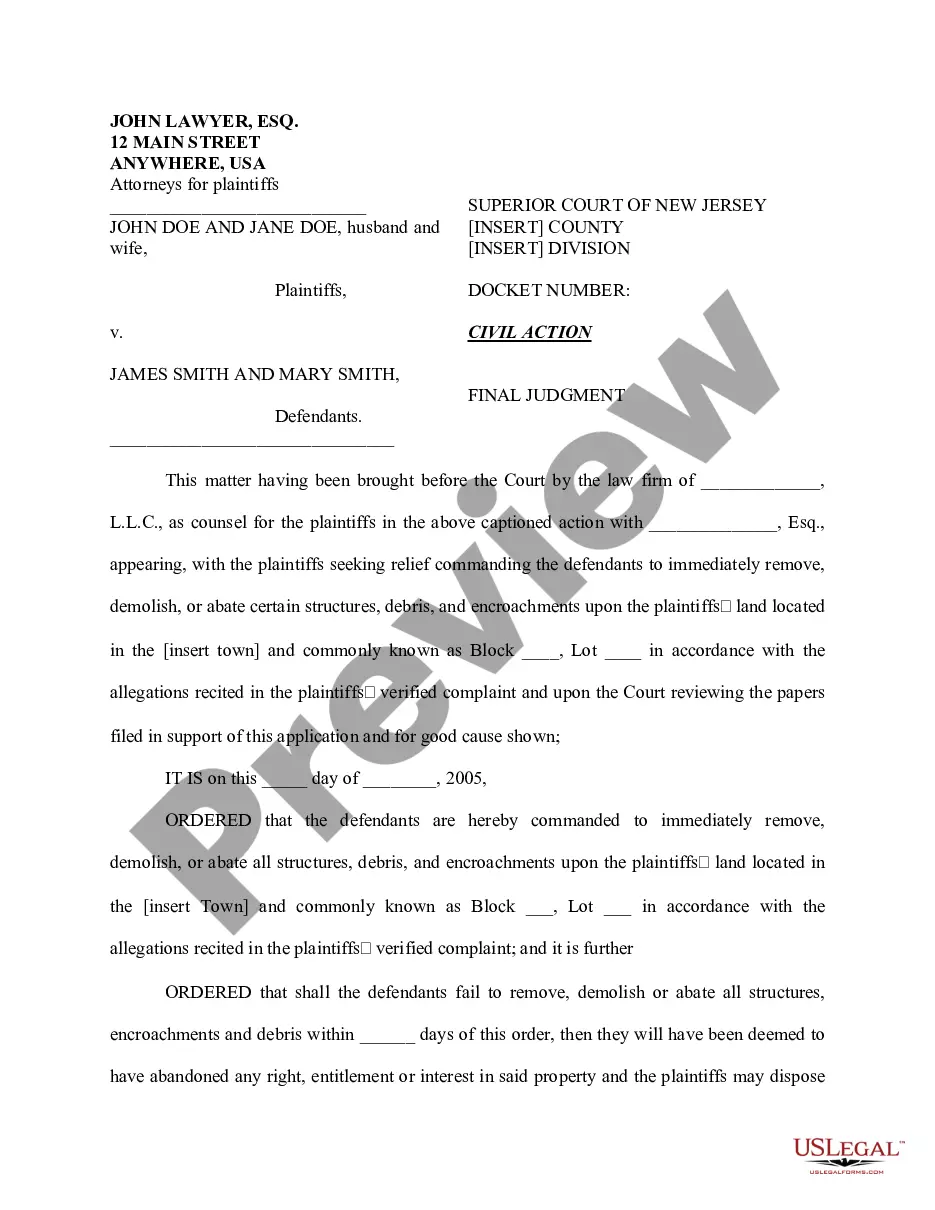

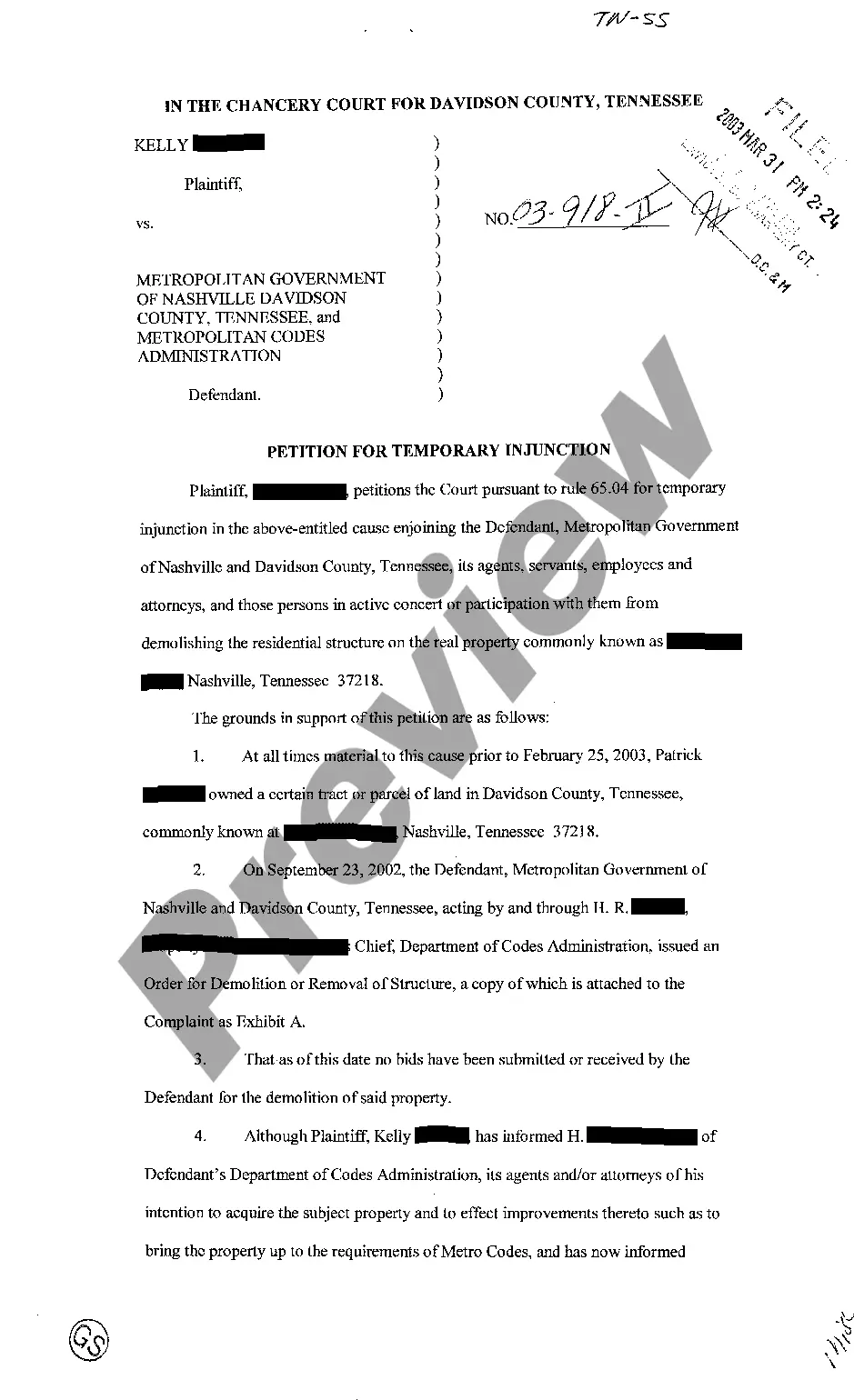
How to fill out Simple Motion To Amend Complaint And Notice Of Motion?
Whether for commercial objectives or personal issues, everyone must confront legal matters at some point in their lifetime. Completing legal documentation necessitates meticulous attention, starting from selecting the correct form template.
For example, if you select an incorrect version of a Complaint Amend Without Leave, it will be rejected once you submit it. Thus, it is crucial to have a trustworthy source of legal documents such as US Legal Forms.
With a comprehensive US Legal Forms catalog available, you need not waste time searching for the suitable template on the internet. Utilize the library’s simple navigation to discover the right document for any situation.
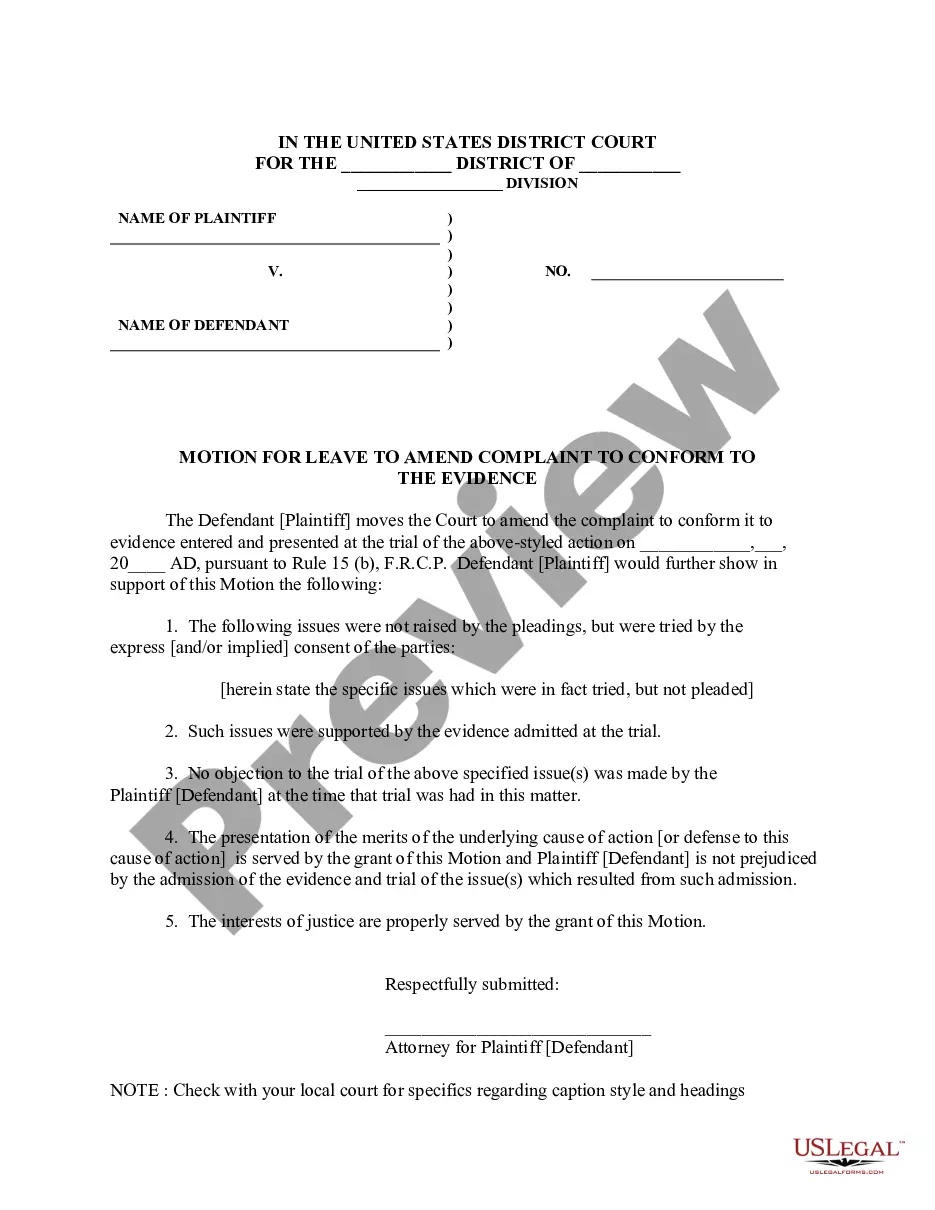
- Locate the sample you require by employing the search field or browsing the catalog.
- Review the form’s description to confirm it aligns with your case, state, and area.
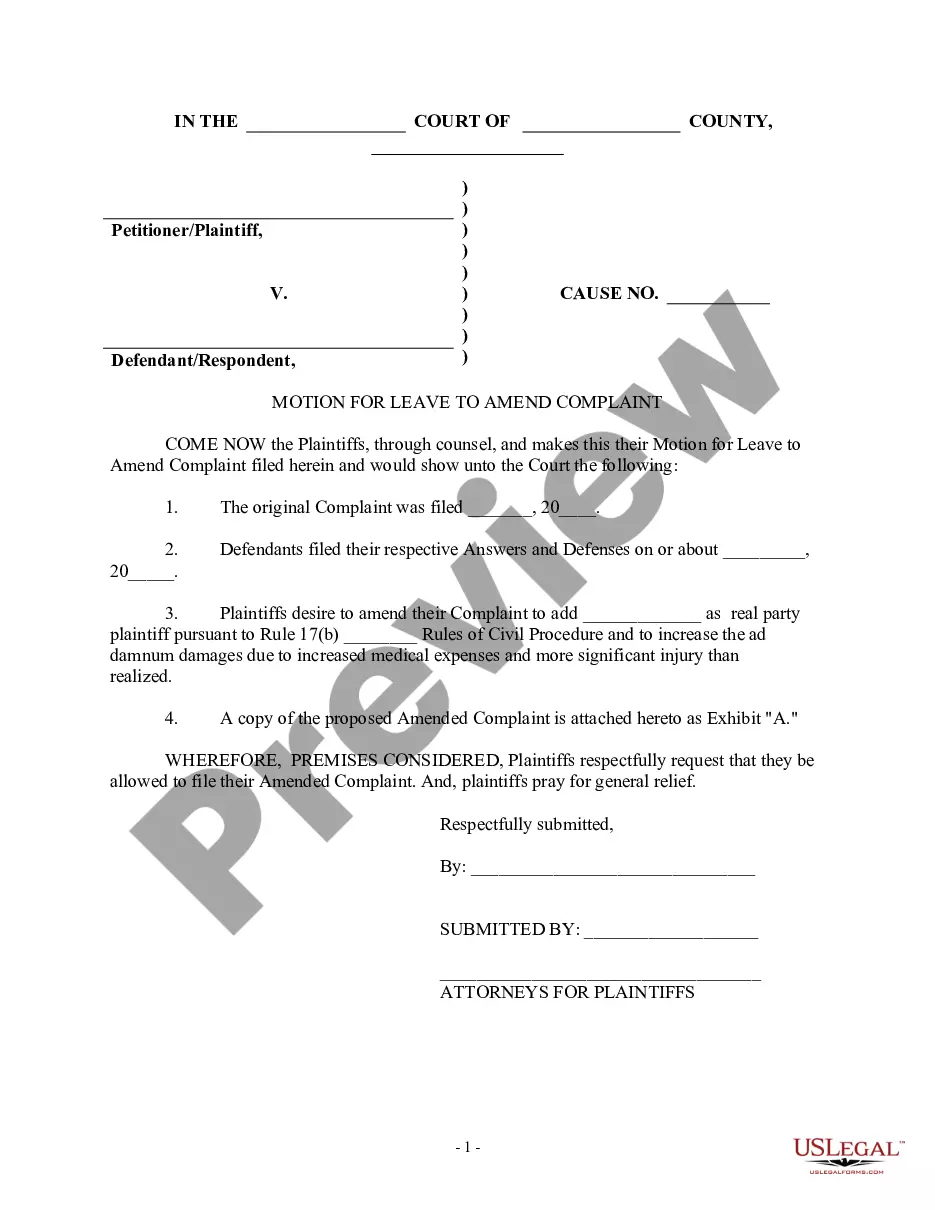
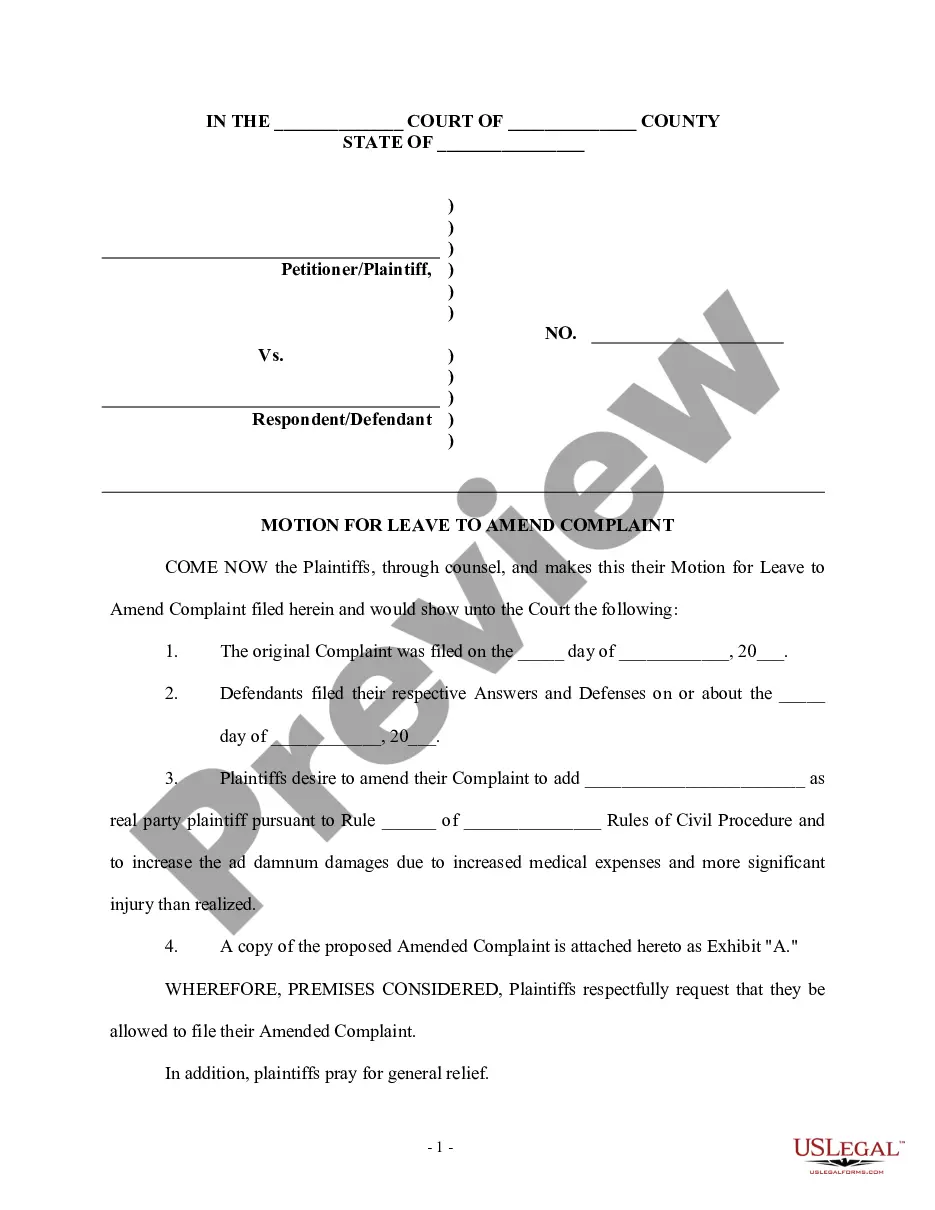
- Click on the form’s preview to view it.
- If it is not the right document, return to the search function to find the Complaint Amend Without Leave sample you need.
- Download the file when it satisfies your needs.
- If you possess a US Legal Forms account, simply click Log in to access previously saved files in My documents.
- If you do not have an account yet, you may acquire the form by clicking Buy now.
- Select the appropriate pricing option.
- Fill out the account registration form.
- Choose your payment method: either a credit card or a PayPal account.
- Select the file format you desire and download the Complaint Amend Without Leave.
- Once downloaded, you can complete the form using editing software or print it and finish it by hand.
Form popularity
FAQ
Without leave to amend means that a party can revise their complaint without needing to ask the court for permission. This approach simplifies the process and enables quicker adjustments to legal documents. If you find yourself needing to make changes swiftly, understanding how to complaint amend without leave can be invaluable, and platforms like USLegalForms can support you in this process.
'With leave to amend' refers to a situation where a party requests permission from the court to modify their complaint. This permission grants the party the opportunity to correct errors, add new information, or refine their arguments. When you contrast this with a complaint amend without leave, the latter allows changes without seeking court approval, providing more flexibility.
A motion to amend allows a party to make changes to their legal documents, ensuring that all relevant information is accurately presented. This process helps clarify claims and defenses, making the legal arguments stronger. When you file a complaint amend without leave, you can adjust your claims without needing court approval, which streamlines the process.
Amendments to a complaint may be refused if they are deemed futile, if they would significantly delay the proceedings, or if they unfairly disadvantage the opposing party. Courts prioritize judicial efficiency and fairness, so it's crucial to ensure your amendments are well-founded and necessary. Understanding these potential barriers can help you prepare a stronger case for your complaint amend without leave.
The procedure for amending a complaint usually involves filing a motion with the court or submitting a proposed amended complaint, depending on the rules of your jurisdiction. You may also need to serve the amended complaint to all parties involved in the case. Utilizing platforms like US Legal Forms can simplify this process by providing templates and guidance for your complaint amend without leave.
The grounds for amending a complaint include the need to correct factual inaccuracies, to reflect changes in the law, or to include additional parties or claims that have become relevant. Courts generally favor amendments that promote justice and clarify the issues at play. Knowing these grounds can help you effectively navigate the amendment process.
The timeframe to amend a complaint can vary based on jurisdiction, but typically, you have a specified number of days after the initial complaint is filed or after a response is received. In many cases, this period is around 21 to 30 days. It's essential to be aware of your local rules to ensure you comply with the timeline when considering a complaint amend without leave.
The grounds for leave to amend a complaint generally include the desire to clarify issues, correct errors, or add new claims that have emerged during the litigation process. Courts often grant leave to amend when it serves the interest of justice and does not unfairly prejudice the opposing party. If you find yourself needing to amend your complaint, understanding these grounds can be beneficial.
A good cause to amend a complaint typically involves new evidence, changes in circumstances, or corrections to mistakes that affect the case's validity. For example, if you discover additional facts that support your claims, this could provide a solid basis for a complaint amend without leave. It is essential to present a compelling reason that justifies the need for the amendment.
The phrase 'without leave to amend' indicates that a party is not permitted to modify their complaint without obtaining permission from the court. This term is significant in legal proceedings, as it can restrict a party's ability to introduce new facts or claims after the initial filing. Understanding this concept is crucial for anyone navigating the legal process, especially when considering how to manage a complaint amend without leave.