Restraining Order On Injunction
Description

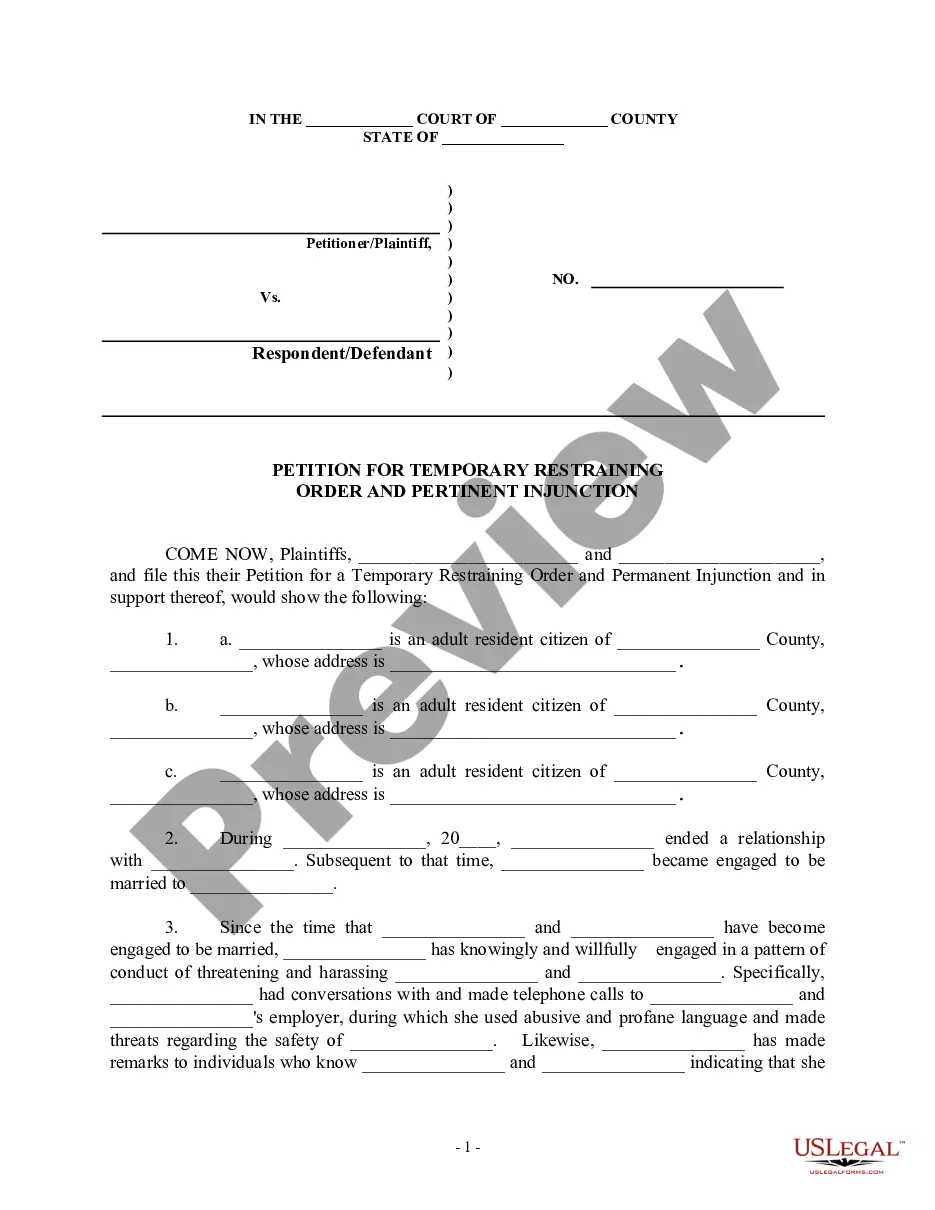

Get your form ready online
Our built-in tools help you complete, sign, share, and store your documents in one place.
Make edits, fill in missing information, and update formatting in US Legal Forms—just like you would in MS Word.
Download a copy, print it, send it by email, or mail it via USPS—whatever works best for your next step.
Sign and collect signatures with our SignNow integration. Send to multiple recipients, set reminders, and more. Go Premium to unlock E-Sign.
If this form requires notarization, complete it online through a secure video call—no need to meet a notary in person or wait for an appointment.
We protect your documents and personal data by following strict security and privacy standards.

Make edits, fill in missing information, and update formatting in US Legal Forms—just like you would in MS Word.

Download a copy, print it, send it by email, or mail it via USPS—whatever works best for your next step.

Sign and collect signatures with our SignNow integration. Send to multiple recipients, set reminders, and more. Go Premium to unlock E-Sign.

If this form requires notarization, complete it online through a secure video call—no need to meet a notary in person or wait for an appointment.

We protect your documents and personal data by following strict security and privacy standards.
Looking for another form?
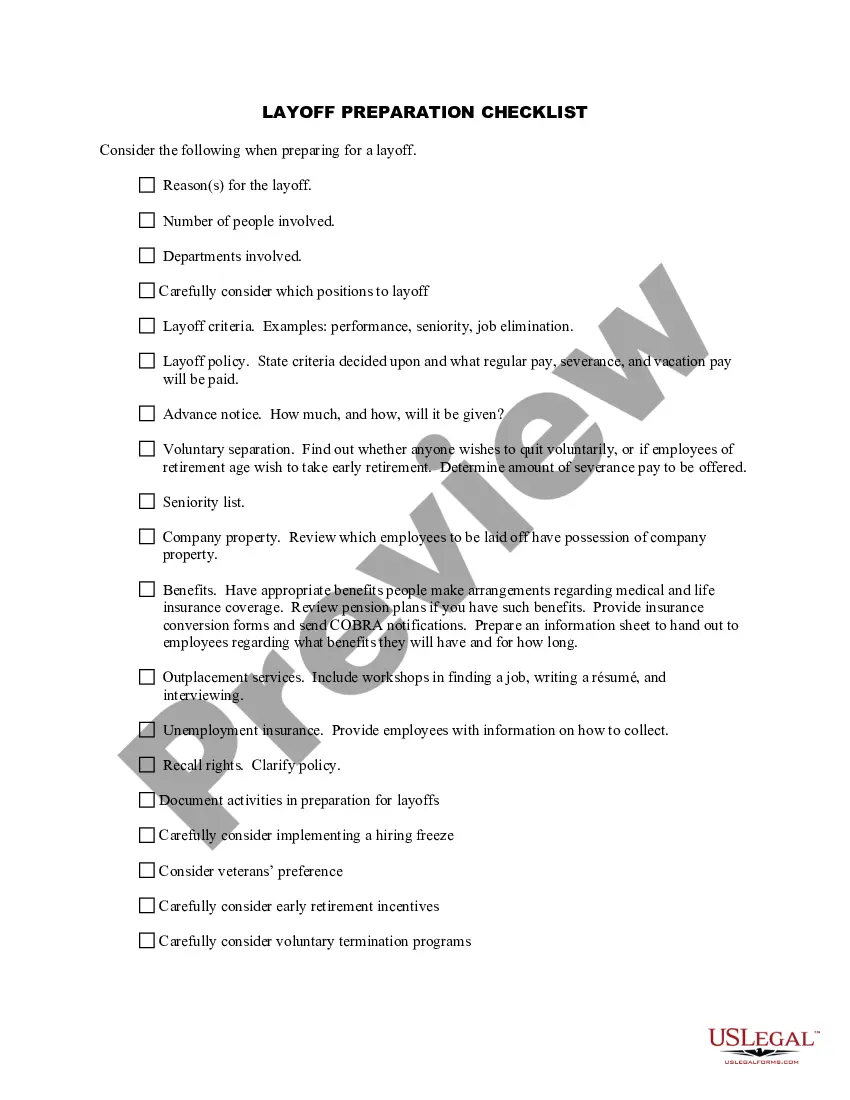






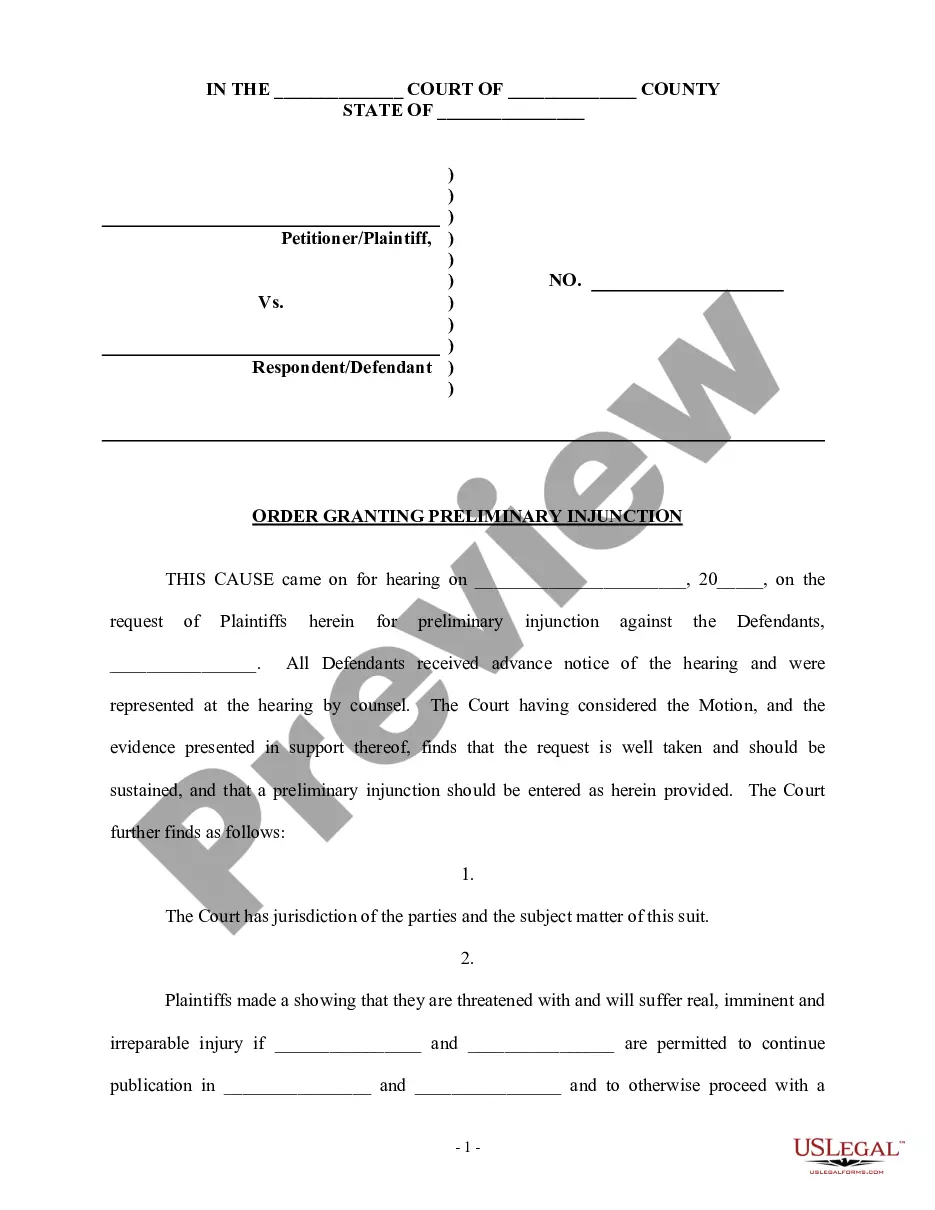
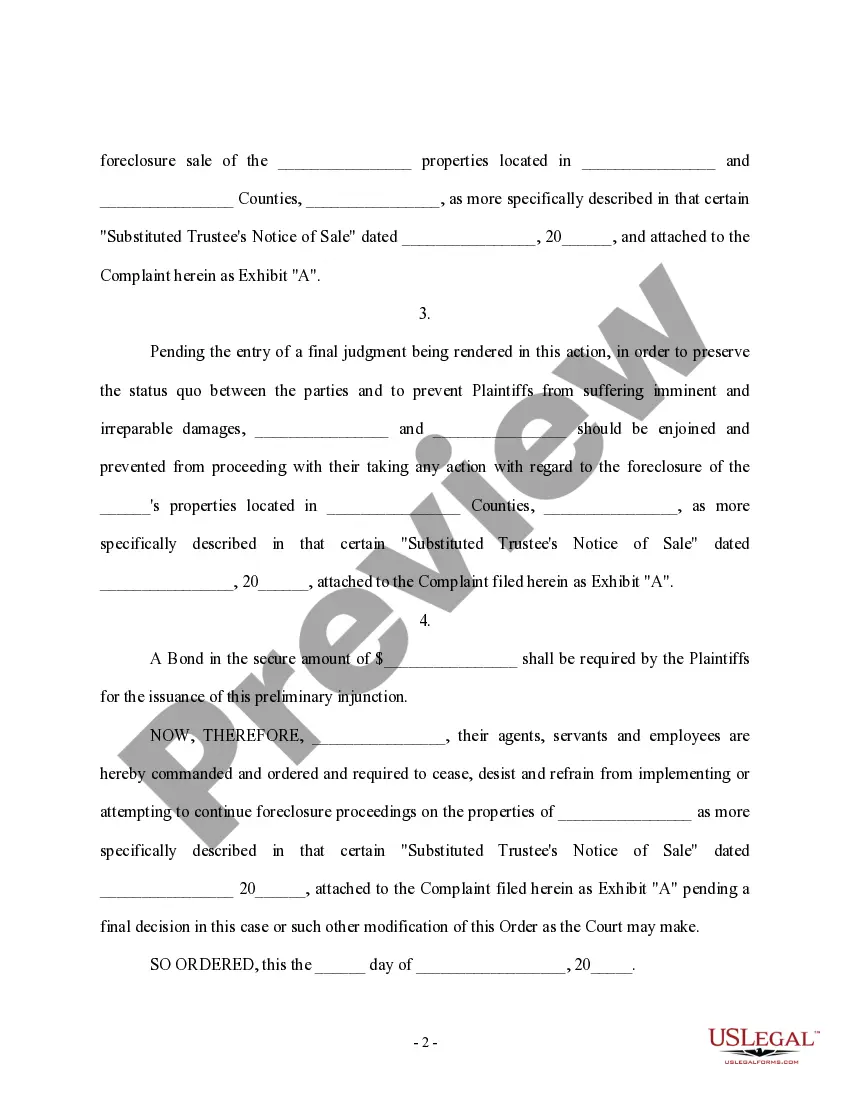
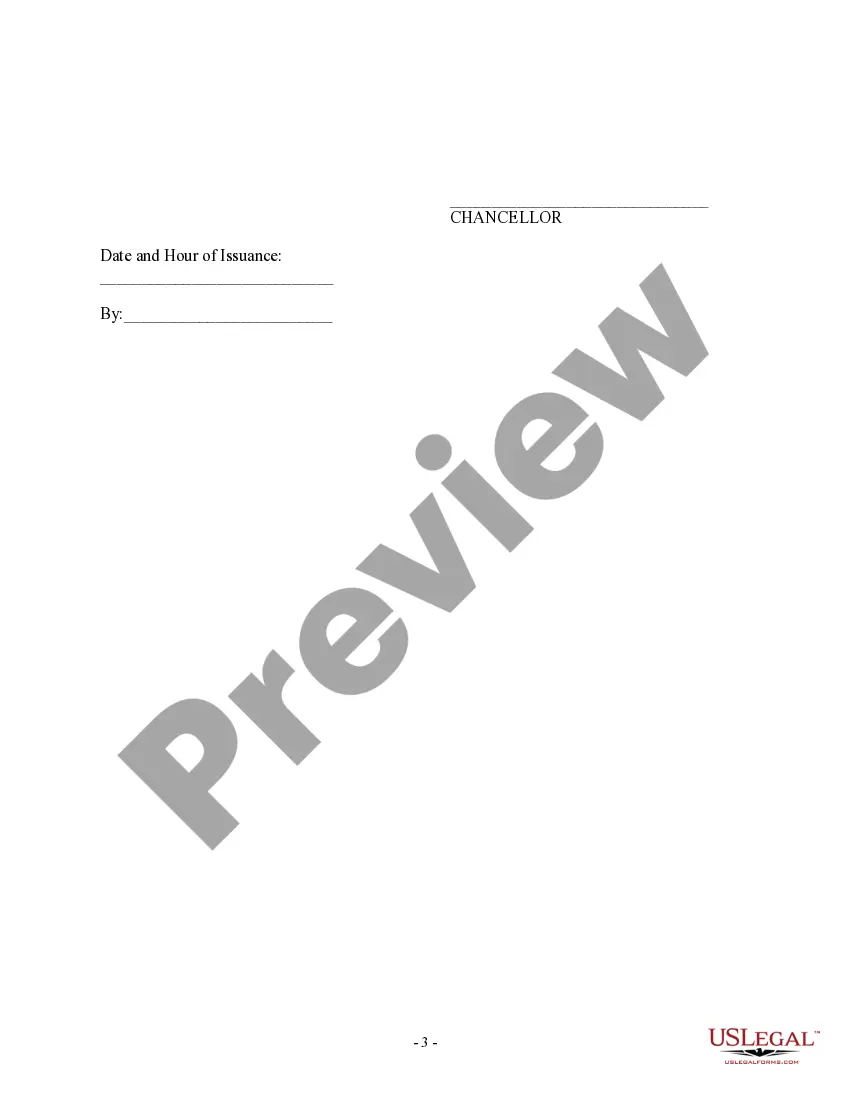
How to fill out Order Granting Preliminary Injunction?
The Restraining Order On Injunction displayed on this page is a versatile formal template crafted by experienced attorneys in accordance with federal and state statutes and guidelines.
For over 25 years, US Legal Forms has delivered individuals, businesses, and legal professionals with more than 85,000 authenticated, state-specific documents for any personal or commercial circumstance. It’s the fastest, simplest, and most dependable means to acquire the papers you require, as the service ensures the utmost level of data protection and anti-malware safeguards.
Subscribe to US Legal Forms to access verified legal documents for all of life's scenarios.
- Search for the document you need and examine it.
- Select the pricing plan that best fits your needs and create an account. Use PayPal or a credit card for a swift transaction. If you already possess an account, Log In and inspect your subscription to continue.
- Choose the fillable format for your Restraining Order On Injunction (PDF, Word, RTF) and download the file onto your device.
- Print the template to fill it out manually. Alternatively, use an online multifunctional PDF editor to efficiently and accurately complete and sign your document with a legally-binding electronic signature.
- Re-download your documents whenever required. Access the My documents tab in your account to retrieve any previously purchased templates.
Form popularity
FAQ
This is a word I often hear used to described a long-term partner with whom a person lives. The phrase live-in girlfriend or boyfriend is sometimes used. Domestic partner also describes the situation, but in recent years it has come to refer to homosexual partnerships more often than heterosexual ones.
A cohabiting couple is a couple that lives together in an intimate and committed relationship, who are not married to each other and not in a civil partnership. Cohabiting couples can be opposite-sex or same-sex. A cohabiting relationship can continue to be 'intimate' even if it is not sexual.
Until the 1980s, it was illegal for unmarried couples to cohabitate, which made it impossible for many same-sex couples to live together.
A cohabitation agreement is a legal document between unmarried couples who are living together. It sets out arrangements for finances, property and children while you're living together and if you split up, become ill or die. You can make an agreement at any time. It's good to do it before you move in together.
Cohabitation. n. living together in the same residence, generally either as husband and wife or for an extended period of time as if the parties were married. Cohabitation implies that the parties are having sexual intercourse while living together, but the definition would not apply to a casual sexual encounter.
A cohabitation agreement is a contract between two people who are in relationship and live together but are not married. Good cohabitation agreements are (ideally) crafted early on, and deal with issues involving property, debts, inheritances, other estate planning considerations and health care decisions.
The state does not recognize common-law marriage or cohabitation and will only recognize domestic partnership agreements if the parties created a legal agreement in another state and moved together to New Mexico.