Motion To Dispense With Mediation Florida
Description

Get your form ready online
Our built-in tools help you complete, sign, share, and store your documents in one place.
Make edits, fill in missing information, and update formatting in US Legal Forms—just like you would in MS Word.
Download a copy, print it, send it by email, or mail it via USPS—whatever works best for your next step.
Sign and collect signatures with our SignNow integration. Send to multiple recipients, set reminders, and more. Go Premium to unlock E-Sign.
If this form requires notarization, complete it online through a secure video call—no need to meet a notary in person or wait for an appointment.
We protect your documents and personal data by following strict security and privacy standards.

Make edits, fill in missing information, and update formatting in US Legal Forms—just like you would in MS Word.

Download a copy, print it, send it by email, or mail it via USPS—whatever works best for your next step.

Sign and collect signatures with our SignNow integration. Send to multiple recipients, set reminders, and more. Go Premium to unlock E-Sign.

If this form requires notarization, complete it online through a secure video call—no need to meet a notary in person or wait for an appointment.

We protect your documents and personal data by following strict security and privacy standards.
Looking for another form?








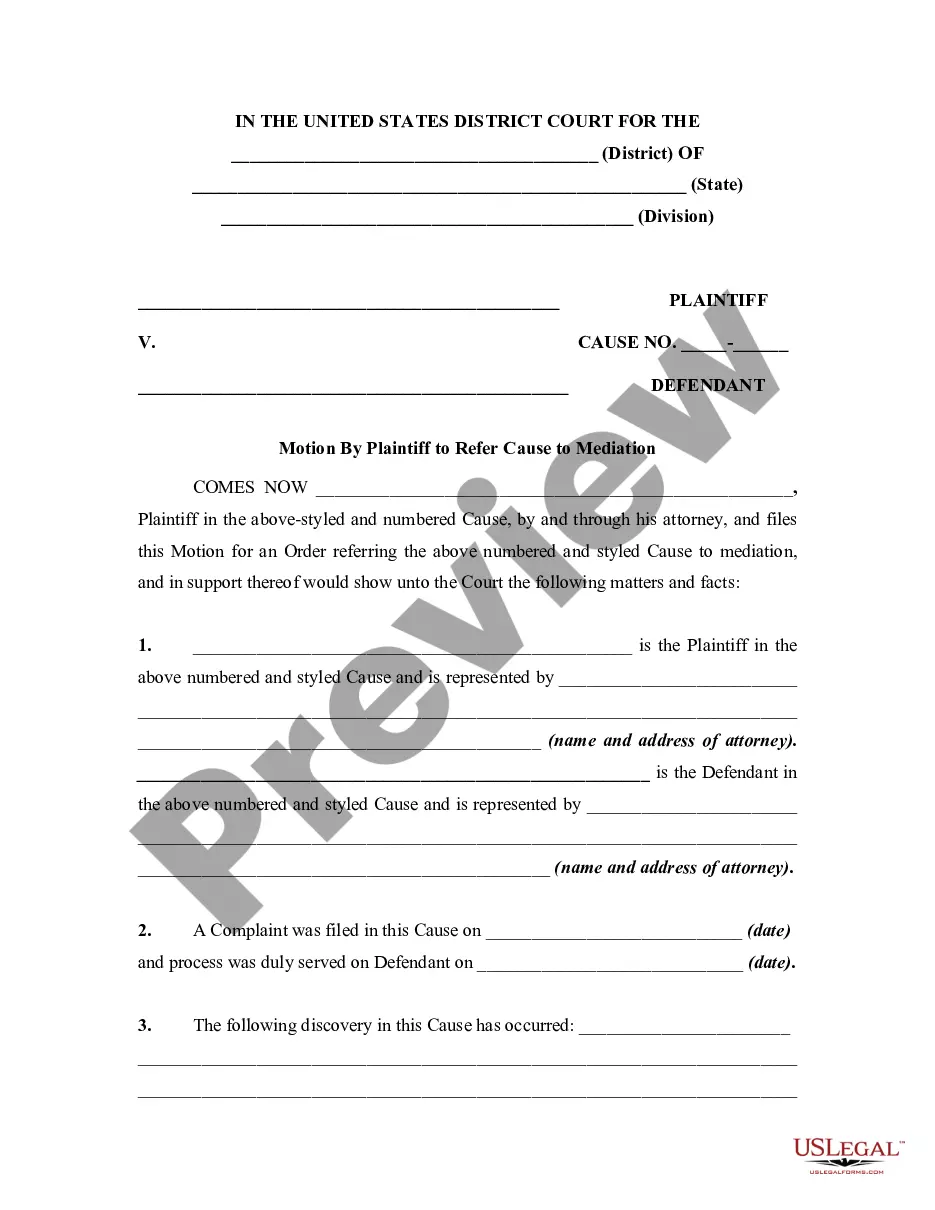
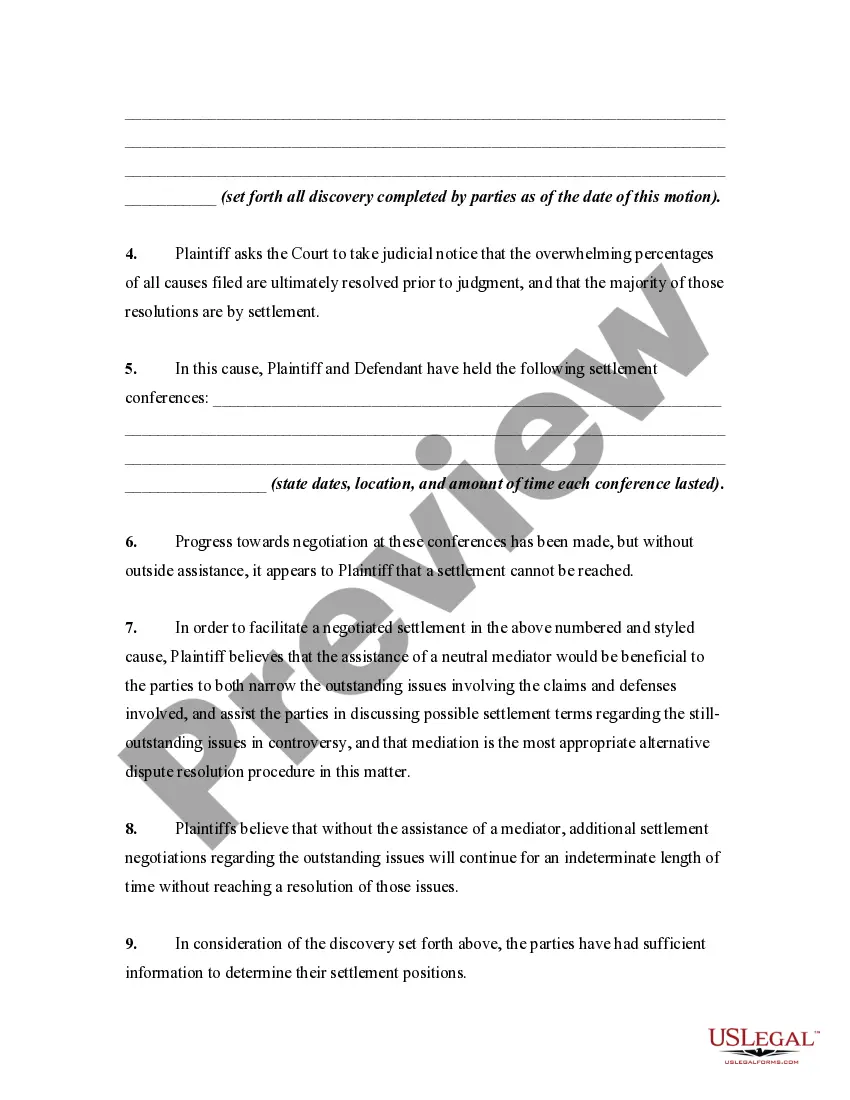
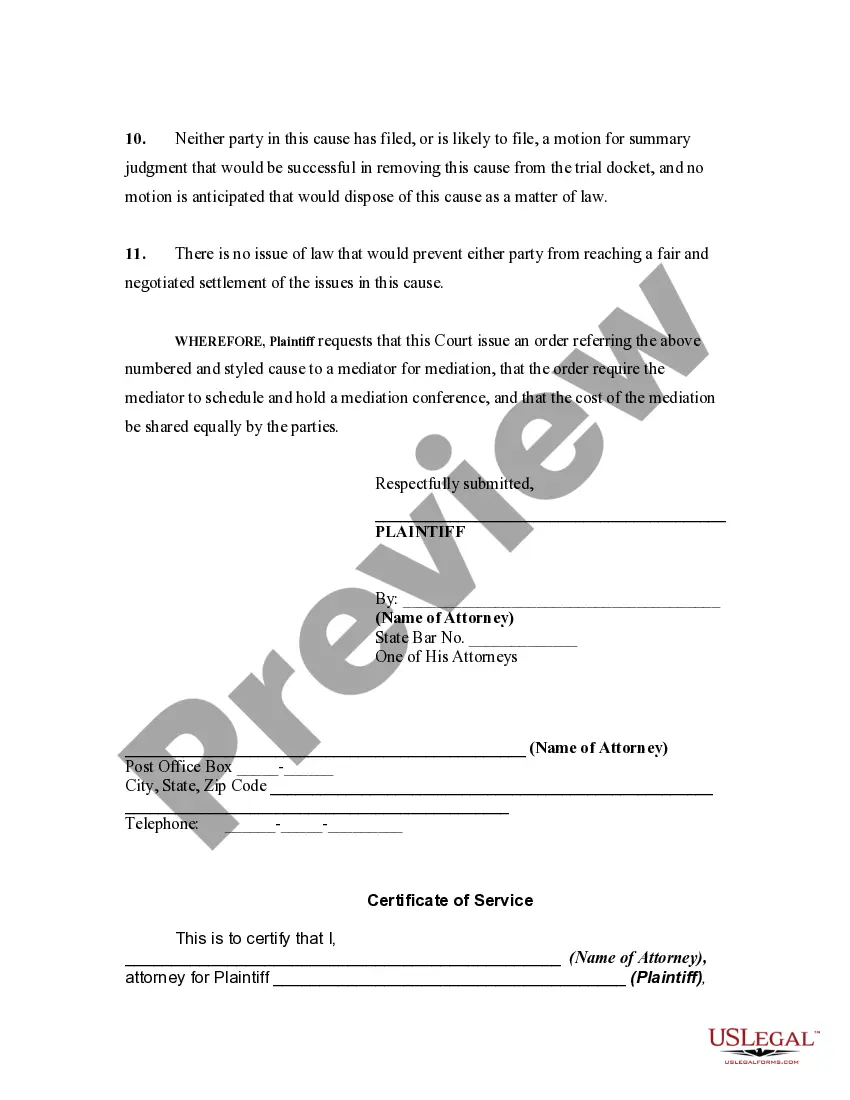
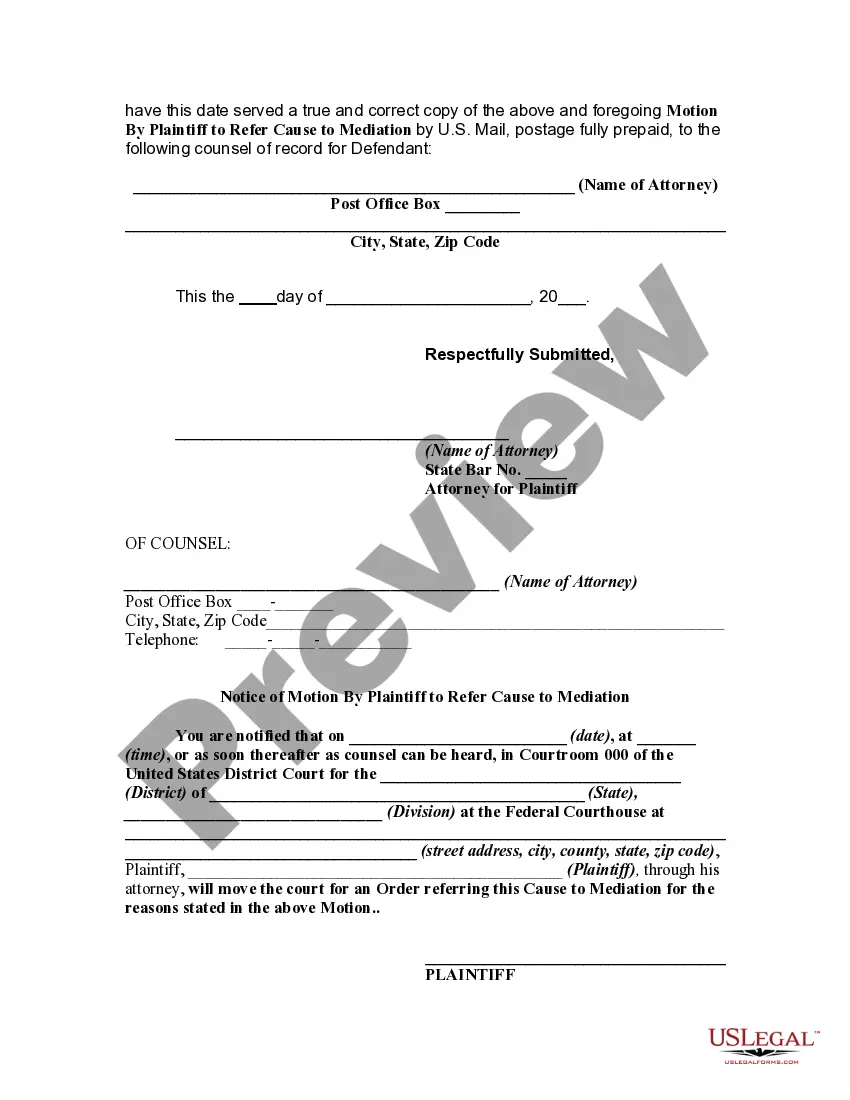
How to fill out Motion By Plaintiff To Refer Cause To Mediation?
Utilizing legal document examples that comply with federal and state regulations is essential, and the internet provides numerous alternatives to choose from.
However, what's the benefit of spending time searching for the suitable Motion To Dispense With Mediation Florida sample online if the US Legal Forms digital library has already compiled such templates in one location.
US Legal Forms is the largest online legal database with more than 85,000 fillable forms crafted by attorneys for any professional and personal circumstance.
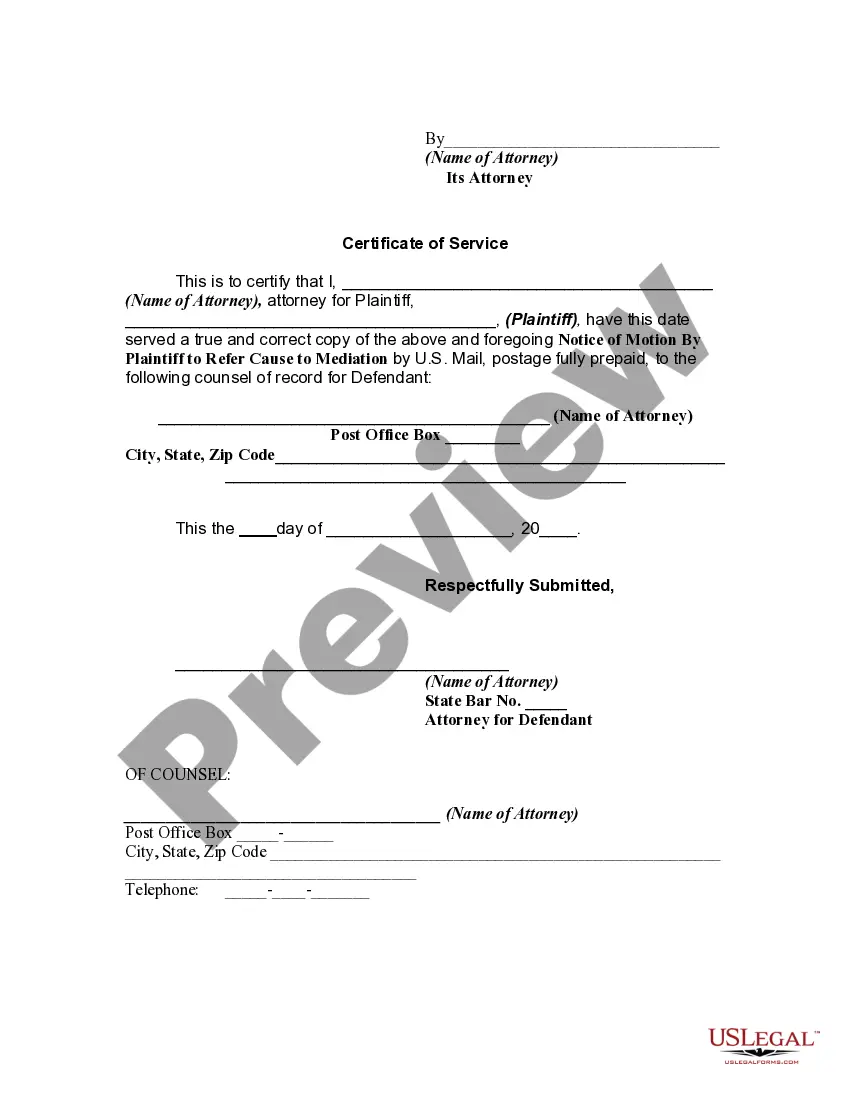
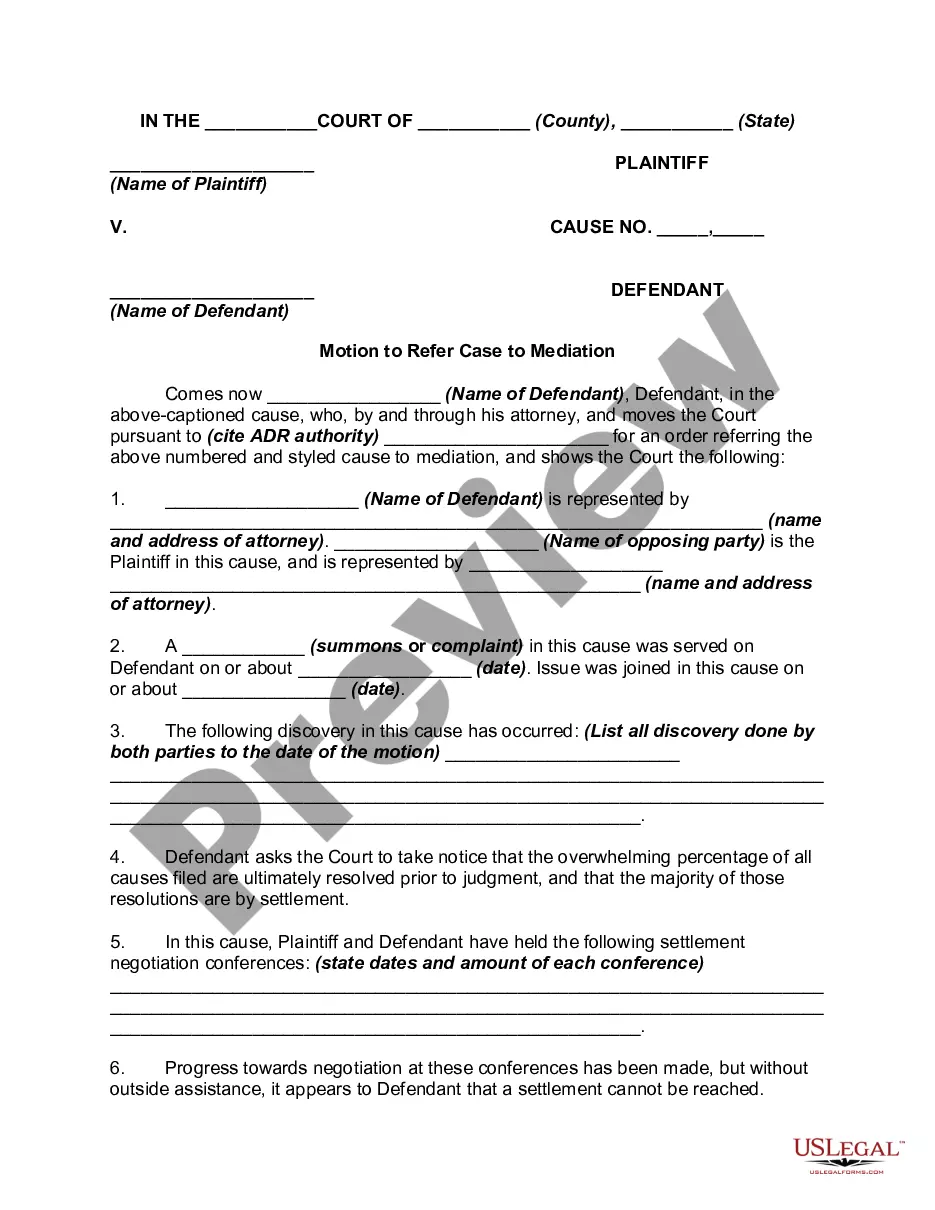
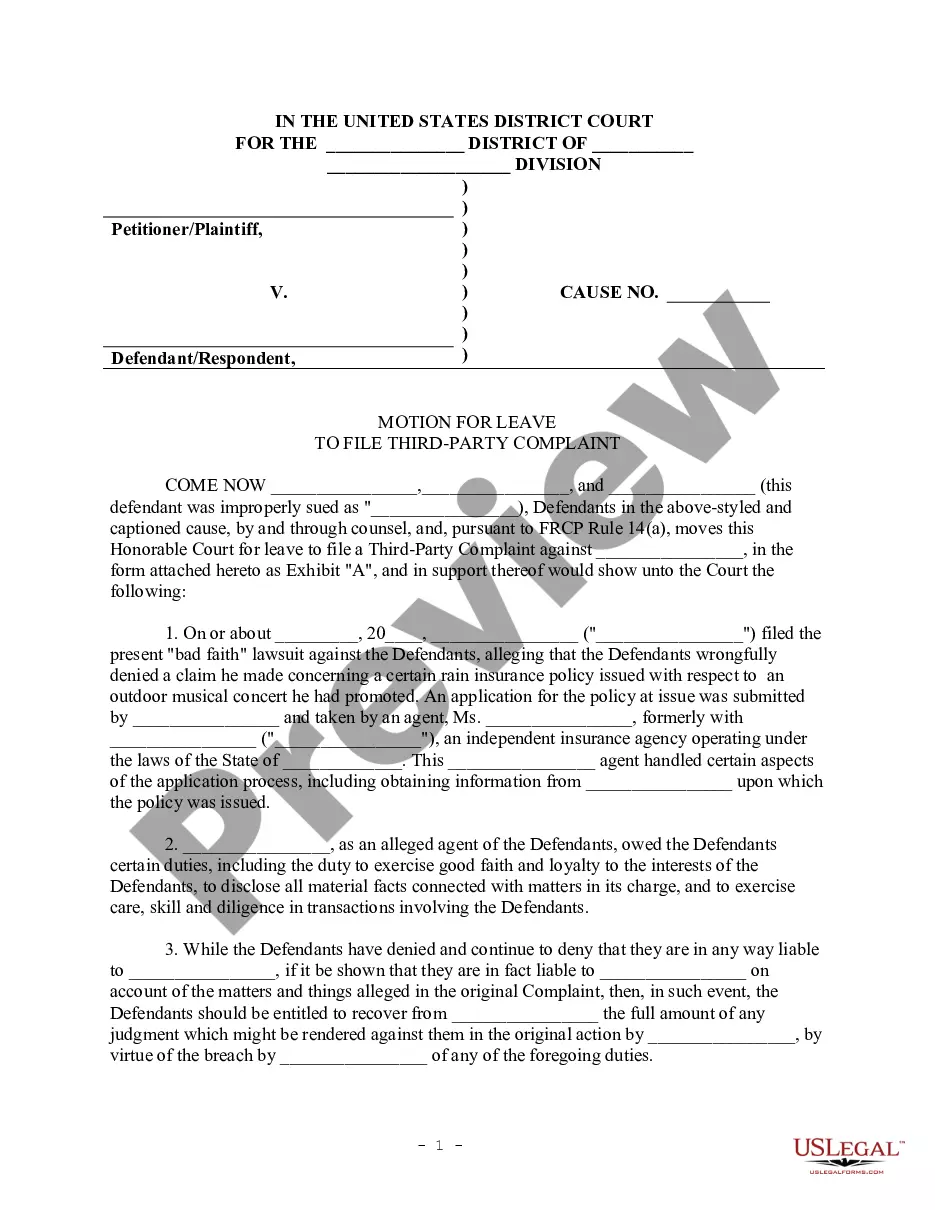
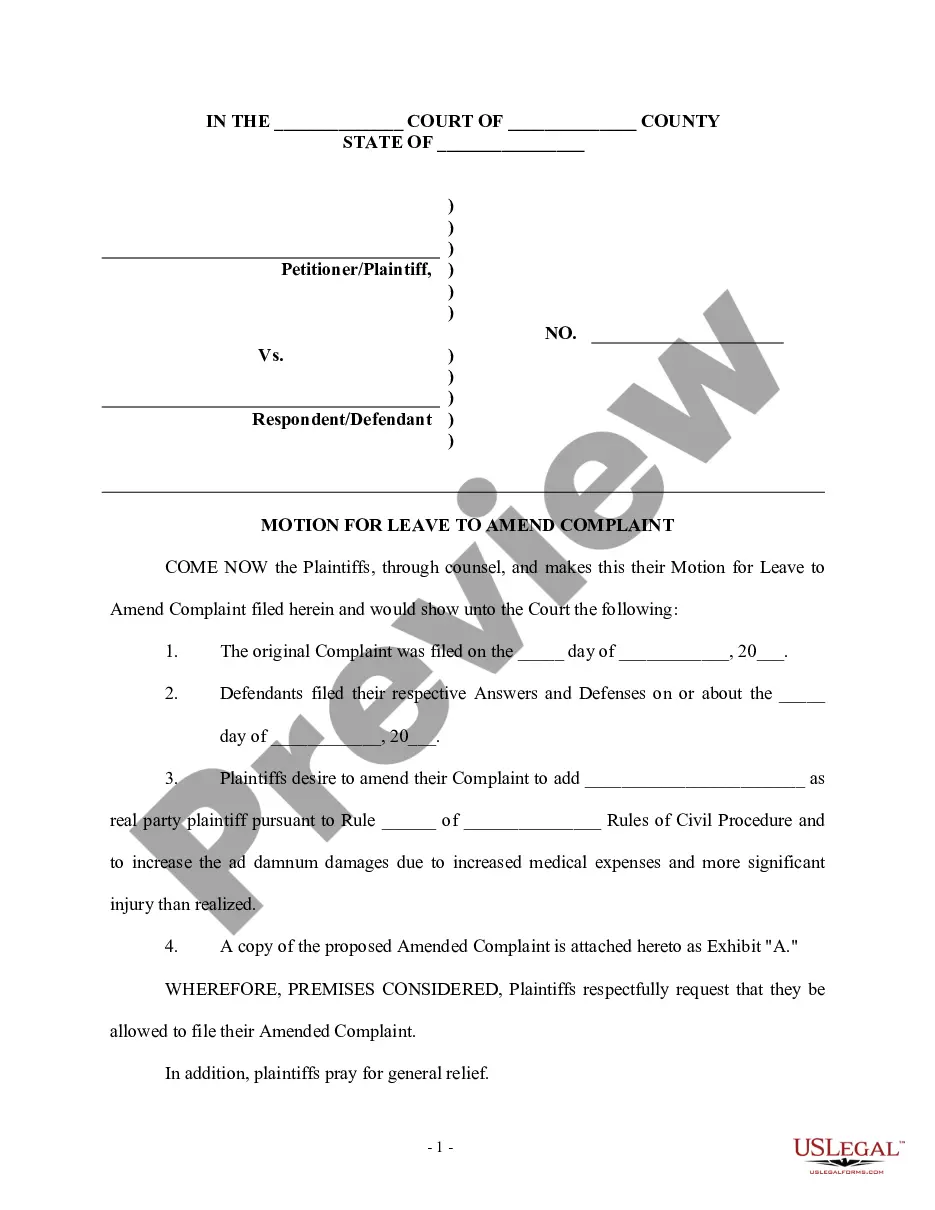
Explore the template using the Preview option or through the text outline to ensure it satisfies your needs.
- They are straightforward to navigate with all documents categorized by state and intended use.
- Our experts stay current with legislative updates, ensuring that your form is always up to date and compliant when acquiring a Motion To Dispense With Mediation Florida from our site.
- Obtaining a Motion To Dispense With Mediation Florida is swift and uncomplicated for both existing and new users.
- If you already possess an account with an active subscription, Log In and store the document sample you require in the correct format.
- If you are new to our platform, adhere to the instructions below.
Form popularity
FAQ
Studies indicate that approximately 70% to 80% of mediation sessions result in a settlement. These high success rates reflect the effectiveness of mediation in resolving disputes. When considering options such as a motion to dispense with mediation in Florida, it's beneficial to weigh this evidence against your specific situation.
Divorce mediation is often required in Florida, especially in contested cases involving children. This requirement aims to encourage settlement and reduce court congestion. If you believe mediation is unnecessary, you may consider filing a motion to dispense with mediation in Florida, but you will need to provide valid reasoning.
Rule 5.550 pertains to mediation in family law cases within the Florida legal system. This rule specifies the requirements for mediation before finalizing divorces or custody arrangements. Knowing about Rule 5.550 is essential for those considering a motion to dispense with mediation in Florida.
Rule 10.420 of the Florida Rules of Civil Procedure deals with the mediation of family law matters. This rule outlines the appropriate procedures when handling family cases, including how a motion to dispense with mediation in Florida can be filed. Understanding this rule can clarify expectations during the mediation process.
When a case is in mediation, it indicates that the parties have entered a process to resolve their dispute outside of court. A mediator facilitates discussions, helping both sides explore options and find common ground. While in mediation, parties have the opportunity to negotiate terms without the pressure of a court trial.
Rule 9.300 of the Florida Rules of Appellate Procedure pertains to motions in appellate cases. This rule includes guidelines for filing motions related to mediation, such as those applicable when seeking to dispense with mediation in Florida. Understanding Rule 9.300 can help you navigate your legal options successfully.
Mediation is a process designed to help parties settle their disputes, but they are not the same thing. Mediation involves negotiations guided by a mediator, while settlement is the actual agreement reached at the end of those negotiations. In other words, mediation can lead to a settlement, but mediation itself is merely a tool to find common ground.
Mediation does not automatically mean settlement. It is a structured process aimed at facilitating discussion between parties to help them reach an agreement. While mediation can lead to a settlement, it is not guaranteed. If parties do not settle, they can still pursue other legal avenues.
Rule 1.720 of the Florida Rules of Civil Procedure addresses mediation procedures in civil cases. This rule outlines the requirement for parties to engage in mediation before proceeding to trial. If you wish to file a motion to dispense with mediation in Florida, you must demonstrate valid reasons for bypassing this step.
Mediation is not a final decision. Instead, it is a process where parties try to resolve their disputes with the help of a neutral mediator. The goal of mediation is to reach a mutually acceptable agreement. If an agreement is not possible, the matter may proceed to court, where a final decision will be made.