Petition Person Conservator With The Government
Description
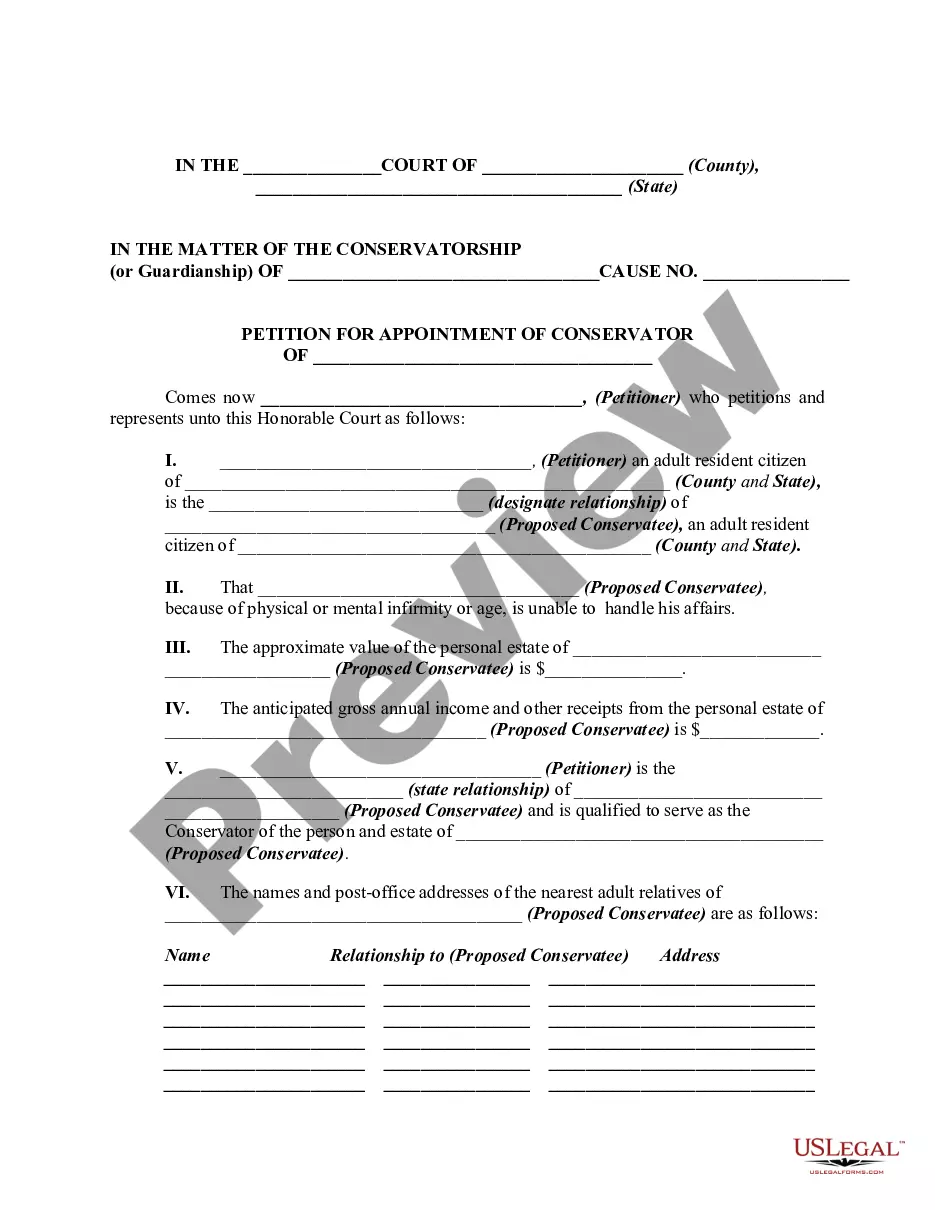





How to fill out Petition For Appointment Of Conservator Or Legal Guardian Of Person And Estate Of Adult Who Physical Or Mental Infirmity Or Age, Is Unable To Handle Affairs?
- If you are a returning user, simply log in to your account and download your required form template directly by clicking the Download button. Ensure your subscription is active or renew it as per your payment plan.
- For first-time users, start by checking the Preview mode and form description to ensure you select the correct document that adheres to your local jurisdiction requirements.
- If you find a mismatch, don't hesitate to use the Search tab at the top to locate the right template.
- Once you've found the necessary document, click on the Buy Now button and select a subscription plan that suits you. You will need to register for an account to access the library's extensive resources.
- Next, complete your purchase by entering your payment information through credit card or PayPal.
- Finally, download your form to your device, ensuring you can access it anytime from the My Forms section in your profile.
By utilizing US Legal Forms, individuals and attorneys can easily navigate the complexities of legal documentation. With an extensive library of over 85,000 fillable forms and packages, you'll save valuable time while ensuring precision.
Don't hesitate—join US Legal Forms today to streamline your legal processes.
Form popularity
FAQ
Conservatorships are typically established to protect individuals who cannot manage their personal or financial matters due to incapacity. Reasons may include advanced age, significant mental health issues, or developmental disabilities. By filing a petition to appoint a person conservator with the government, you can ensure that the individual receives the necessary support and care tailored to their unique situation.
People often end up in conservatorships due to mental illness, severe cognitive impairments, or physical disabilities that impair their ability to make informed decisions. Family members, friends, or even professionals may observe these signs and take action. They can then petition the person conservator with the government, initiating a legal process to ensure the individual's needs are met and protected.
To put someone on conservatorship, you must first file a petition with the government, detailing the reasons for the conservatorship. You will need to provide evidence that the individual cannot make sound decisions regarding their personal and financial affairs. Engaging a legal professional can simplify the process, helping you navigate the requirements and effectively petition the person conservator with the government.
In certain circumstances, a conservator can add themselves to a bank account in the name of the individual they are overseeing. When you petition a person for conservatorship with the government, the conservator is permitted to handle finances, which may include managing bank accounts. However, it is crucial to ensure that this action aligns with the best interests of the individual and adheres to legal requirements. Always consult with a legal expert to ensure compliance and proper management.
A conservator typically holds broader powers than a trustee because they manage both personal and financial matters of an individual, while a trustee primarily oversees a trust’s assets. When you petition a person for conservatorship with the government, that individual gains authority to make critical decisions on behalf of someone unable to do so. This can include healthcare, daily living arrangements, and managing financial accounts. Understanding this distinction is vital for anyone navigating these responsibilities.
Yes, a conservator can be held liable for the decisions they make while managing another person’s affairs. If a conservator fails to act in the best interest of the individual or mismanages funds, they may face legal consequences. Therefore, it is essential to carefully petition a person for conservatorship with the government and choose someone responsible and trustworthy. Proper documentation and adherence to legal duties can help protect both the conservator and the individual they serve.
The role of a conservator involves managing the financial and personal affairs of an individual who cannot do so themselves due to various reasons, such as incapacity or disability. When you petition a person for conservatorship with the government, you ensure that someone trustworthy oversees the well-being and finances of your loved one. A conservator acts in the best interest of the person, making decisions that align with their needs and preferences. This role is crucial for providing stability and support during challenging times.
One major disadvantage of conservatorship is the potential loss of control over personal decisions by the individual. Additionally, conservatorships can come with high costs for legal fees and court expenses. It is essential to weigh these factors carefully when considering how to petition a person conservator with the government.
The duration of conservatorships varies significantly, depending on the individual's circumstances and ongoing needs. Some may be short-term, while others last for years or even indefinitely. Regular evaluations by the court help determine if the conservatorship should continue or if the individual can regain autonomy.
In California, essential forms for conservatorship include the Petition for Appointment of Conservator, Declaration of Grievous Harm, and the Notice of Hearing. Each form serves a specific purpose in the legal process. By utilizing US Legal Forms, you can efficiently access the necessary documents to petition a person conservator with the government.