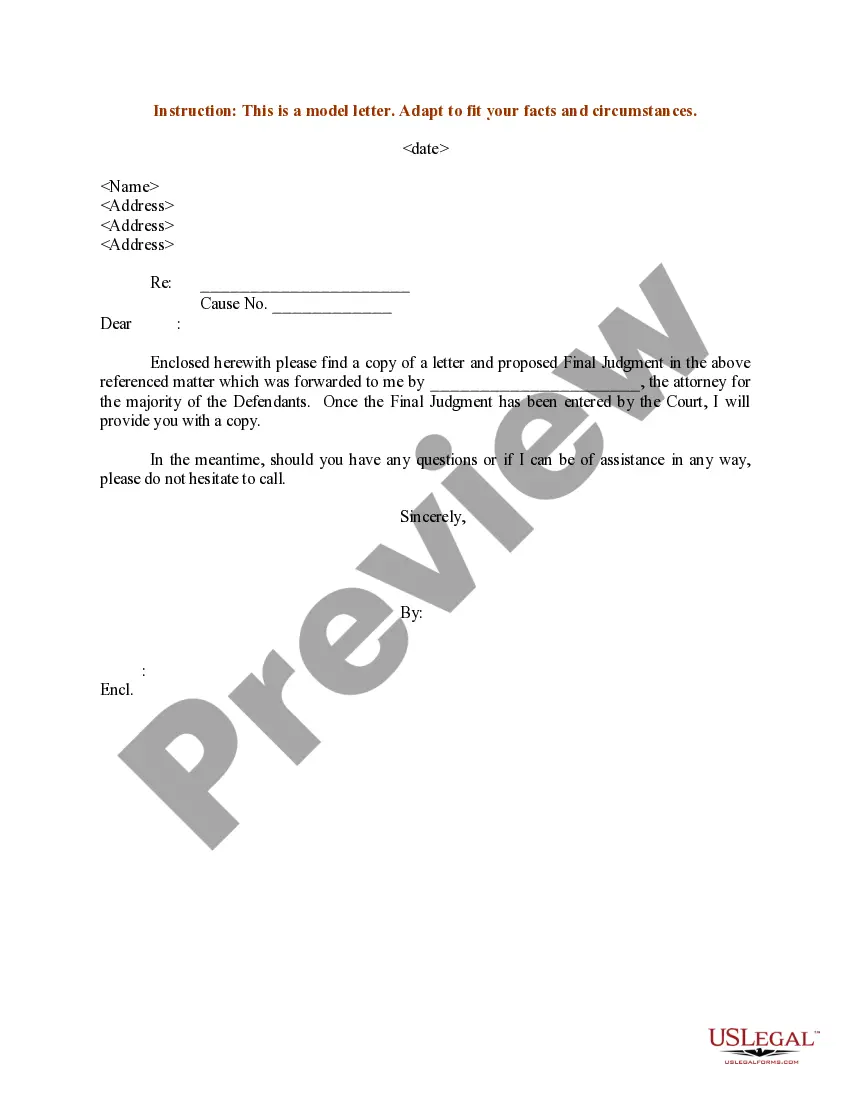
Proposed Judgment Sample Format
Description
Get your form ready online
Our built-in tools help you complete, sign, share, and store your documents in one place.
Make edits, fill in missing information, and update formatting in US Legal Forms—just like you would in MS Word.
Download a copy, print it, send it by email, or mail it via USPS—whatever works best for your next step.
Sign and collect signatures with our SignNow integration. Send to multiple recipients, set reminders, and more. Go Premium to unlock E-Sign.
If this form requires notarization, complete it online through a secure video call—no need to meet a notary in person or wait for an appointment.
We protect your documents and personal data by following strict security and privacy standards.

Make edits, fill in missing information, and update formatting in US Legal Forms—just like you would in MS Word.

Download a copy, print it, send it by email, or mail it via USPS—whatever works best for your next step.

Sign and collect signatures with our SignNow integration. Send to multiple recipients, set reminders, and more. Go Premium to unlock E-Sign.

If this form requires notarization, complete it online through a secure video call—no need to meet a notary in person or wait for an appointment.

We protect your documents and personal data by following strict security and privacy standards.
Looking for another form?
How to fill out Sample Letter For Proposed Final Judgment?
Regardless of whether for commercial objectives or personal issues, everyone must confront legal matters at some point in their existence.
Completing legal paperwork requires meticulous focus, starting with selecting the correct form template.
Once it is stored, you can complete the form using editing software or print it to fill it out by hand. With an extensive US Legal Forms collection available, you do not need to waste time searching for the suitable sample online. Make use of the library’s simple navigation to discover the ideal template for any occasion.
- For instance, if you choose an incorrect version of the Proposed Judgment Sample Format, it will be rejected upon submission.
- Hence, it is vital to find a trustworthy source of legal papers such as US Legal Forms.
- If you need to acquire a Proposed Judgment Sample Format example, adhere to these straightforward steps.
- Use the search field or browse the catalog to find the necessary sample.
- Review the details of the form to ensure it aligns with your circumstances, state, and locality.
- Click on the form’s preview to examine it.
- If it’s the incorrect document, return to the search function to locate the Proposed Judgment Sample Format you require.
- Download the template if it satisfies your requirements.
- If you have a US Legal Forms account, simply click Log in to access previously saved documents in My documents.
- If you don’t possess an account yet, you can download the form by clicking Buy now.
- Choose the appropriate pricing option.
- Fill out the profile registration form.
- Select your payment method: either a credit card or a PayPal account.
- Choose the document format you want and download the Proposed Judgment Sample Format.
Form popularity
FAQ
The three primary types of judgment include default judgment, summary judgment, and judgment after trial. Each type addresses different circumstances in legal proceedings and has distinct procedures. For anyone drafting legal documents, understanding these types can simplify the creation of a proposed judgment sample format that aligns with the intended legal outcome.
The Bible refers to three main types of judgments: the judgment of sin, the judgment of believers, and the final judgment of all humanity. Each type conveys profound implications for moral and spiritual accountability. Exploring a proposed judgment sample format can provide insight into how concepts of judgment have historical context in legal frameworks.
Generally, not paying a judgment does not lead to jail time, but it can result in other financial penalties. Courts often rely on civil remedies to enforce judgments, such as garnishments or liens. It’s beneficial to consult a proposed judgment sample format to comprehend how such judgments can be structured and enforced efficiently.
The three elements of a judgment include the court's decision, the legal rationale behind the decision, and any ordered remedies. Each of these elements plays a crucial role in the enforcement of the judgment. Understanding these elements can aid in preparing a proposed judgment sample format, which outlines how the court’s directives are structured.
An example of a default judgment includes a court ruling in favor of a plaintiff because the defendant did not appear or respond to a lawsuit. This ruling typically grants the plaintiff the relief they sought, as outlined in their proposed judgment. For reference, reviewing a proposed judgment sample format can provide you with a clear picture of how such judgments are structured.
To obtain a default judgment, you must file a request in court after the opposing party fails to respond within the specified time frame. Be sure to prepare your documentation carefully, using a proposed judgment sample format to present your case clearly. Following the correct procedure will help ensure a swift ruling in your favor.
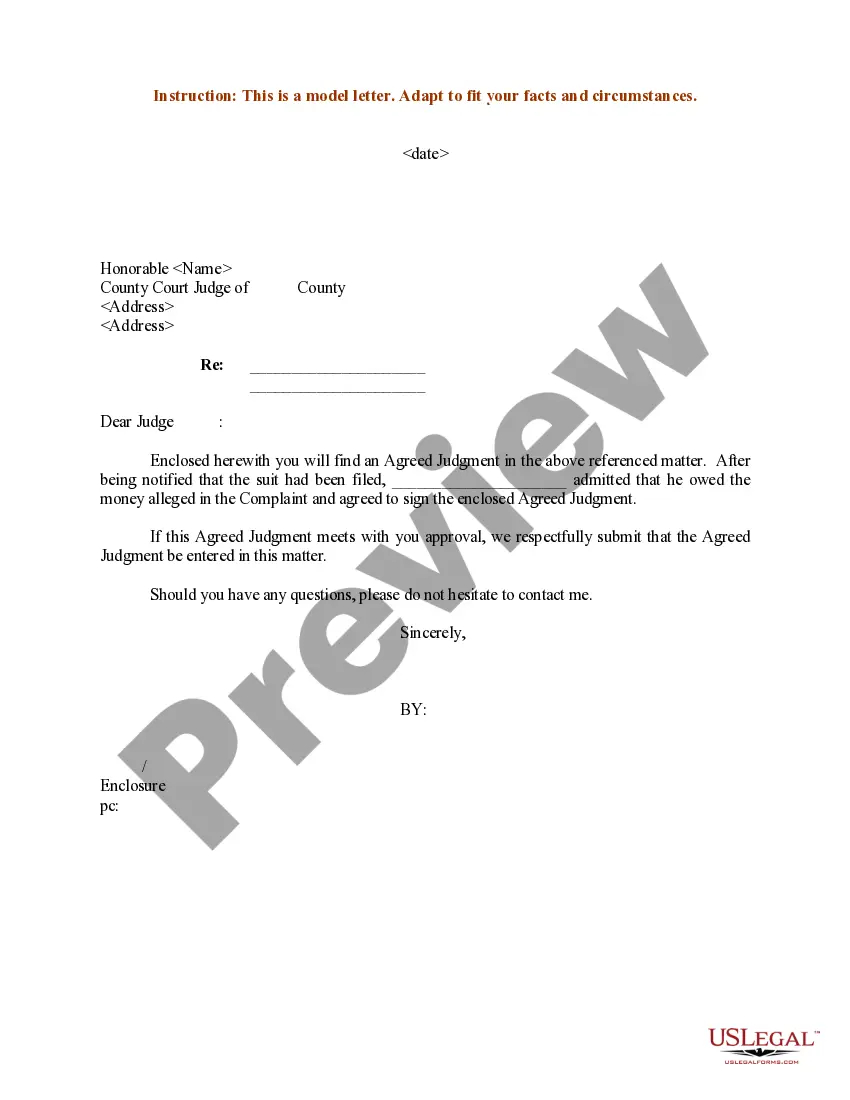
Writing a default judgment letter involves clearly stating the facts of the case and demonstrating that the opposing party has failed to respond. You should format the letter professionally, using the proposed judgment sample format to guide your writing. Include all necessary details and ensure that the court can readily interpret your intentions based on this document.
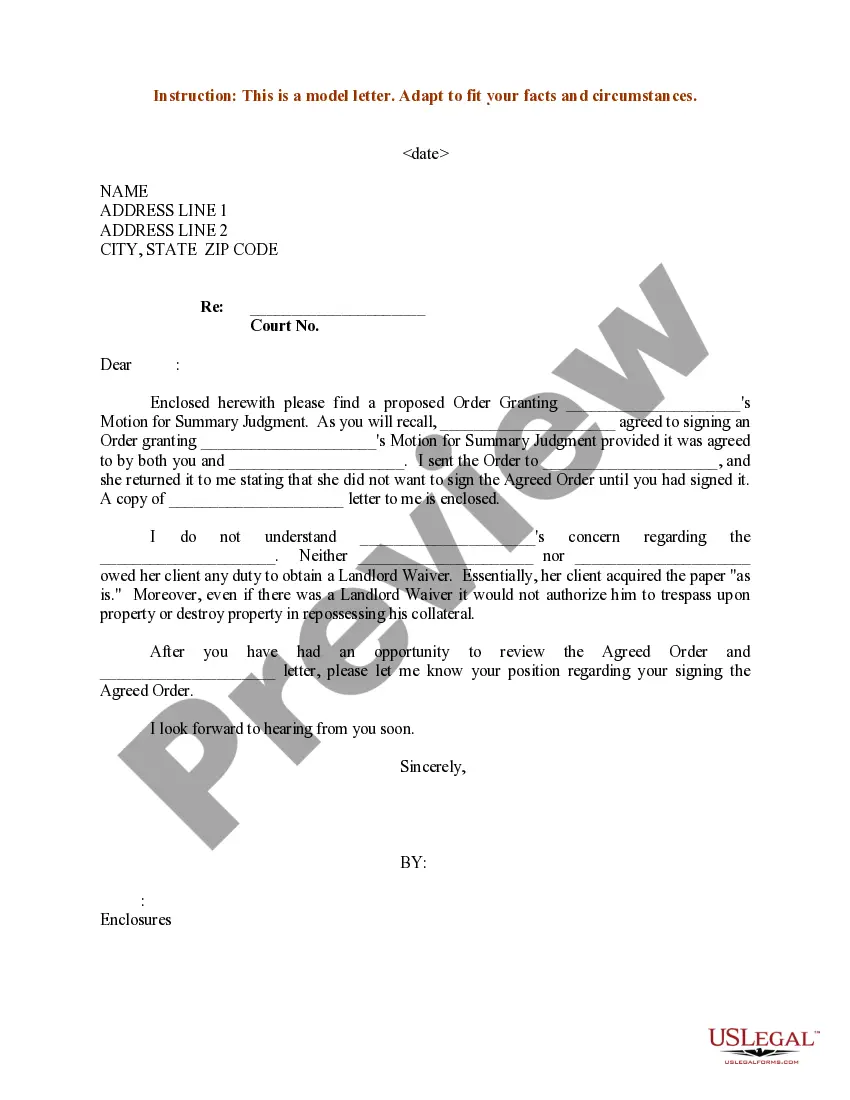
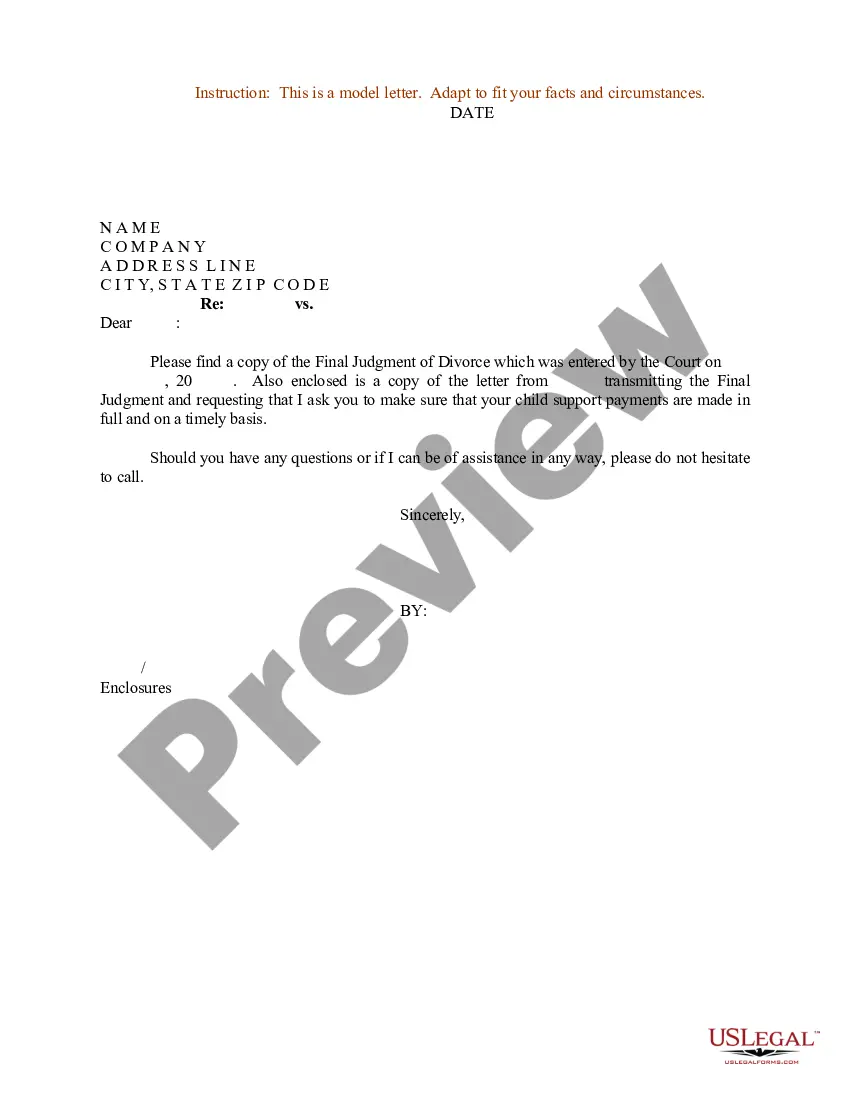
A proposed judgment is a legal document that suggests the terms of a judgment from one party in a case. It outlines the resolution that the proposing party believes should be adopted by the court. By using a proposed judgment sample format, you ensure clarity and compliance with court requirements, making it easier for the judge to understand the desired outcome.