Affirmative Defenses In California For Breach Of Contract
Description
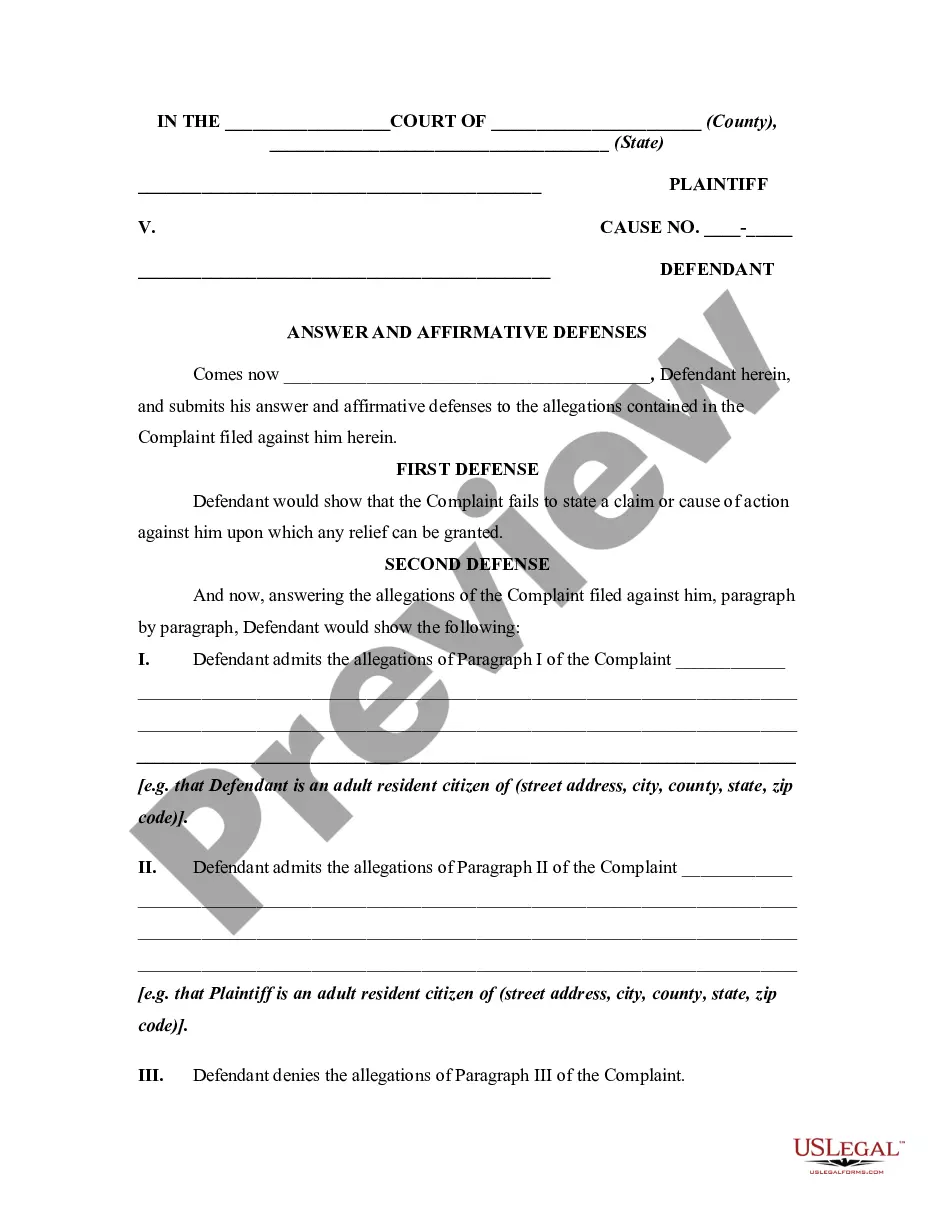

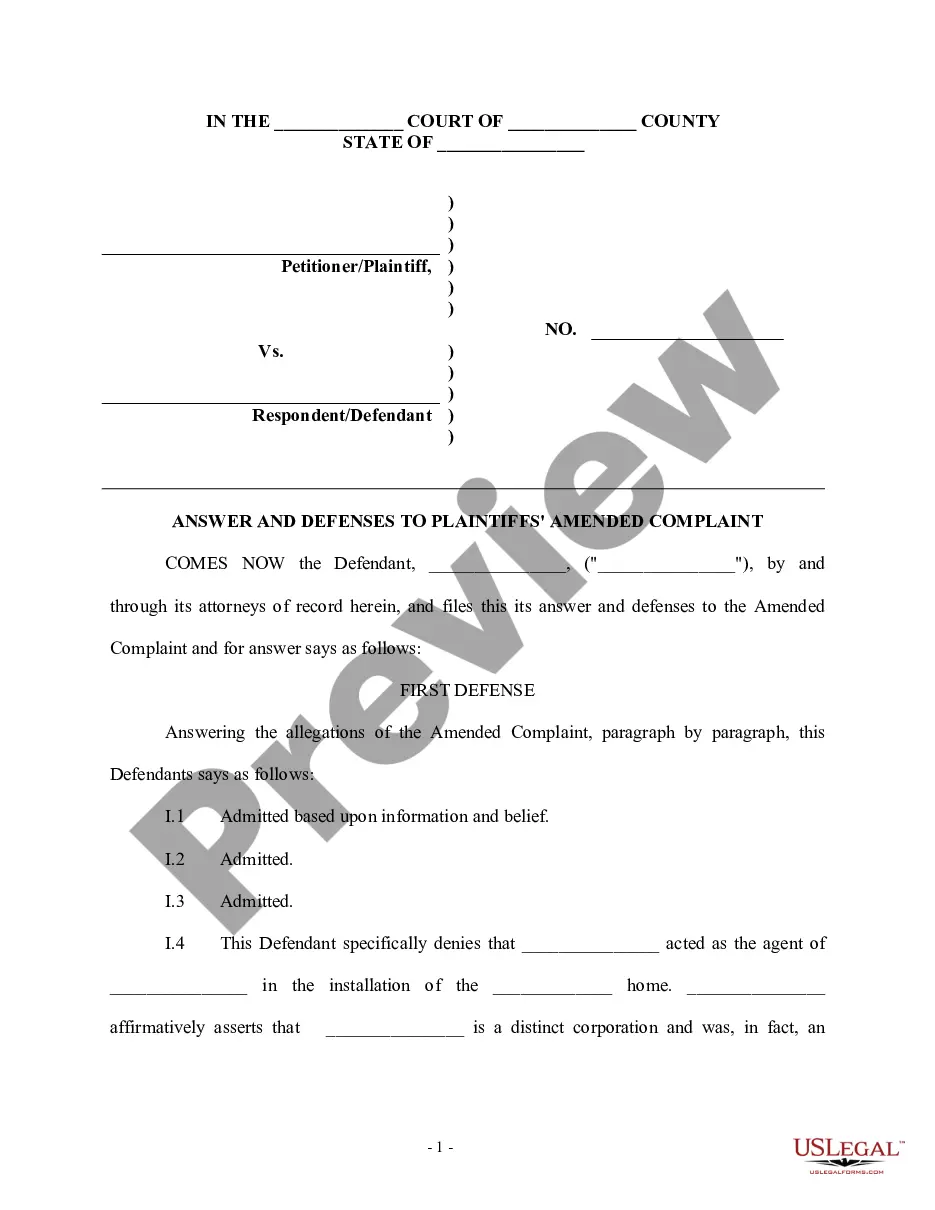


How to fill out Answer With Specific Denials And Admissions Along With Denial Of Sufficient Knowledge Or Information To Form A Belief As To Certain Allegations?
Finding a reliable source to obtain the latest and suitable legal templates is a significant part of navigating bureaucracy. Identifying the correct legal documents requires precision and carefulness, which is why it is crucial to obtain samples of Affirmative Defenses In California For Breach Of Contract exclusively from credible sources, like US Legal Forms. An incorrect template can squander your time and hinder your progress. With US Legal Forms, you have minimal concerns. You can access and view all the details regarding the document’s applicability and importance for the situation and in your state or county.
Consider the following steps to complete your Affirmative Defenses In California For Breach Of Contract.
Once you have the form on your device, you may edit it using the editor or print it out and complete it manually. Eliminate the hassle associated with your legal paperwork. Explore the extensive US Legal Forms library to find legal samples, assess their relevance to your situation, and download them instantly.
- Use the library navigation or search box to find your template.
- Check the form’s description to determine if it meets the requirements of your state and county.
- Preview the form, if available, to confirm that it is indeed the one you are interested in.
- Return to the search and locate the appropriate document if the Affirmative Defenses In California For Breach Of Contract does not fulfill your needs.
- When you are confident about the form’s applicability, download it.
- If you are a registered user, click Log in to verify and access your chosen forms in My documents.
- If you do not have an account yet, click Buy now to acquire the template.
- Choose the pricing option that fits your requirements.
- Proceed to the registration to complete your purchase.
- Finalize your transaction by selecting a payment method (credit card or PayPal).
- Choose the document format for downloading Affirmative Defenses In California For Breach Of Contract.
Form popularity
FAQ
An affirmative defense is one of the most common types of defenses against a breach-of-contract claim. In an affirmative defense, you do not contest the claims of the plaintiff; however, you do contest that there were additional factors that render the breach of contract claim irrelevant.
If you were not legally able to agree to the contract, you might argue that you lacked capacity. For example, if a fast-talking salesman got you to agree to buy a home exercise machine, but you are a minor, you can argue that the contract is not enforceable against you because you lacked capacity.
Affirmative defenses are legal defenses that raise new facts or issues not raised in the Complaint. If you want the court to consider your legal defenses you MUST include them in your Answer. Therefore, any possible defense you might want the court to consider at trial should be in your Answer.
Most defenses to breach of contract are "affirmative defenses." Affirmative defenses are reasons given by the defendant as to why a plaintiff in a case should not win, even if what the plaintiff says is true. To support an affirmative defense, you must assert facts or circumstances that render the breach claim moot.
The most common defenses to enforcement of a contract or liability for damages are: Enforcement of the contract would violate public policy. ... Performance of the contract has become impossible or the purpose of the contract has become frustrated. ... The contract is illegal. ... The contract lacks consideration.