Music Contract Template With Sound
Description
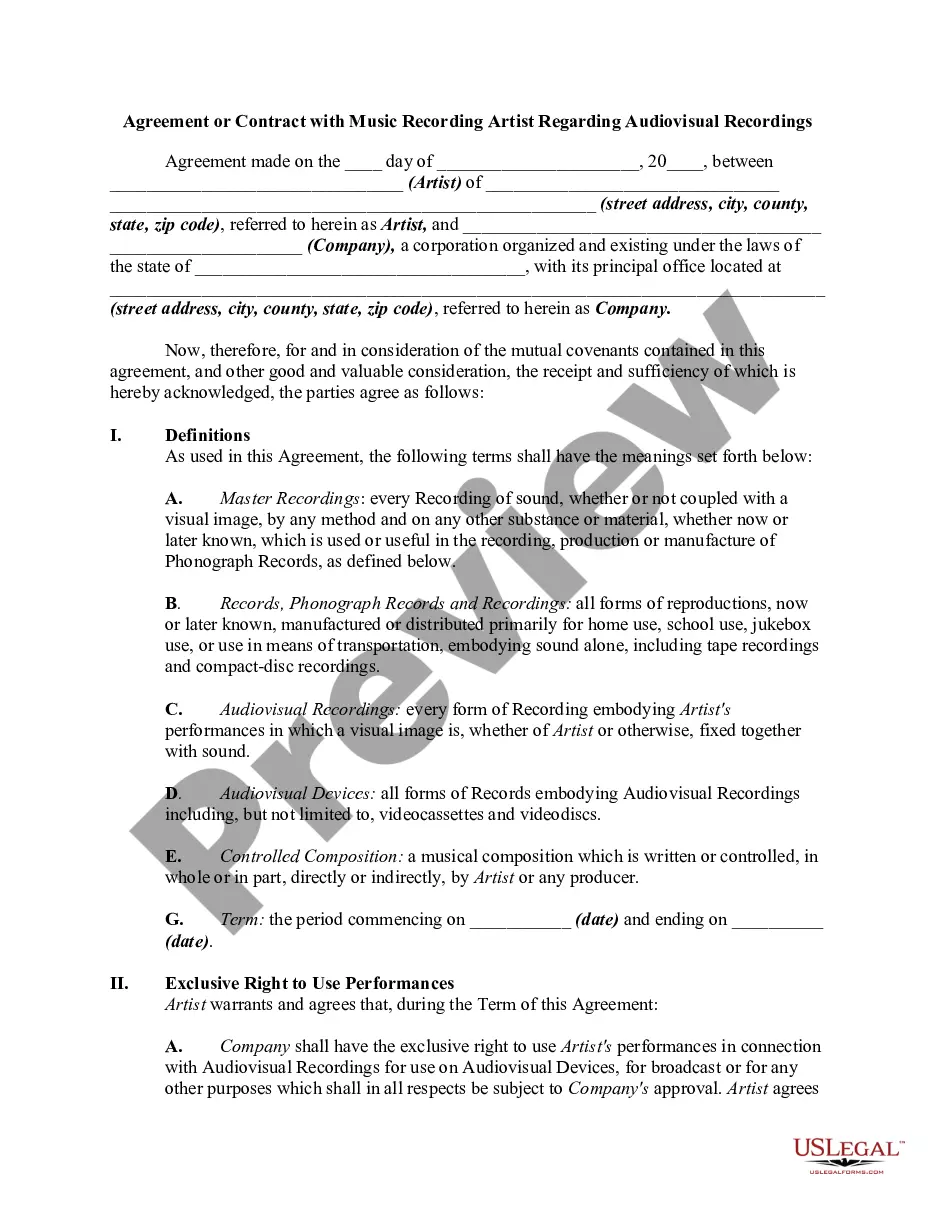
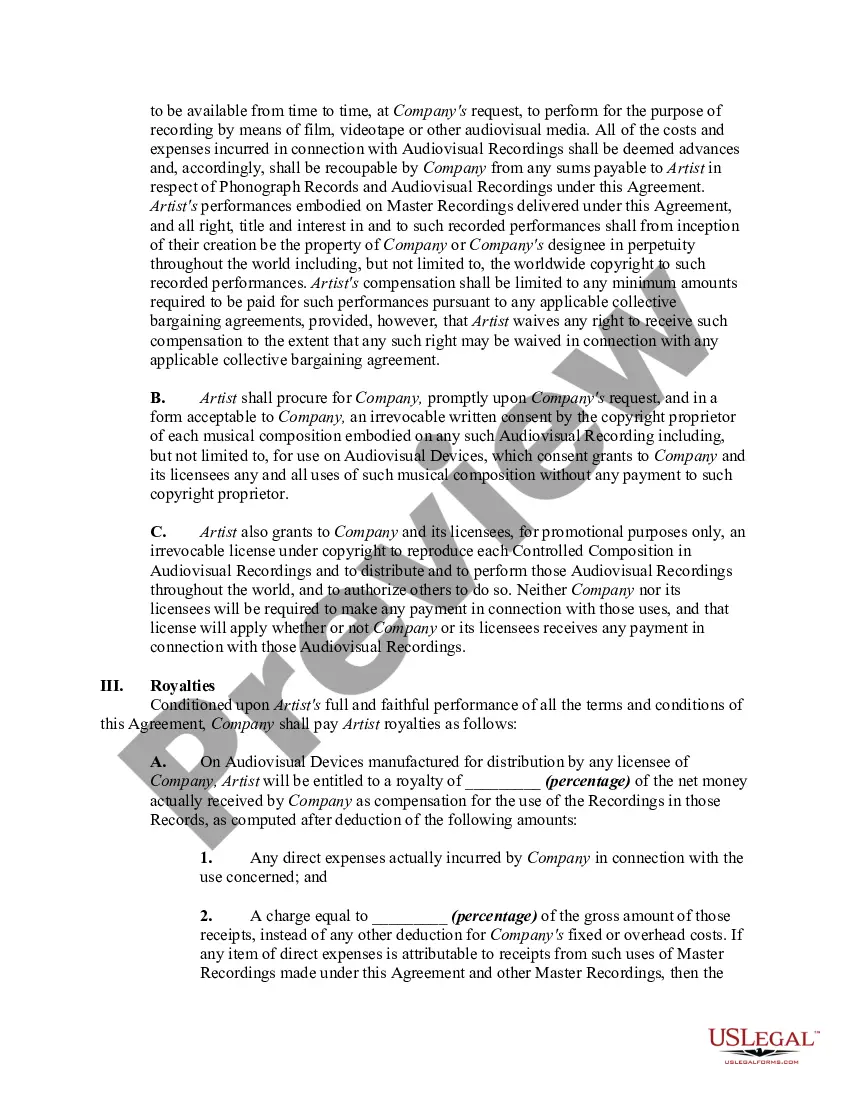
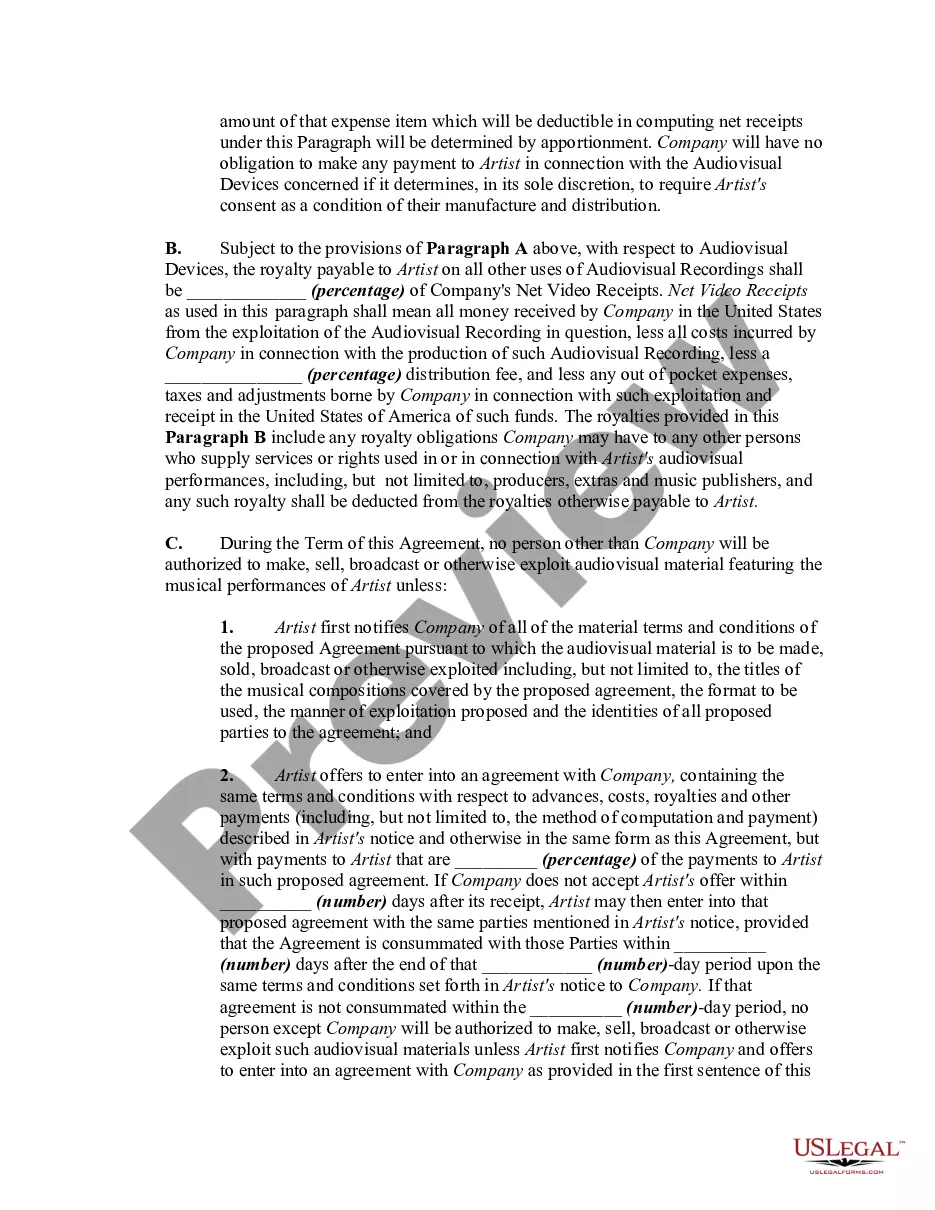
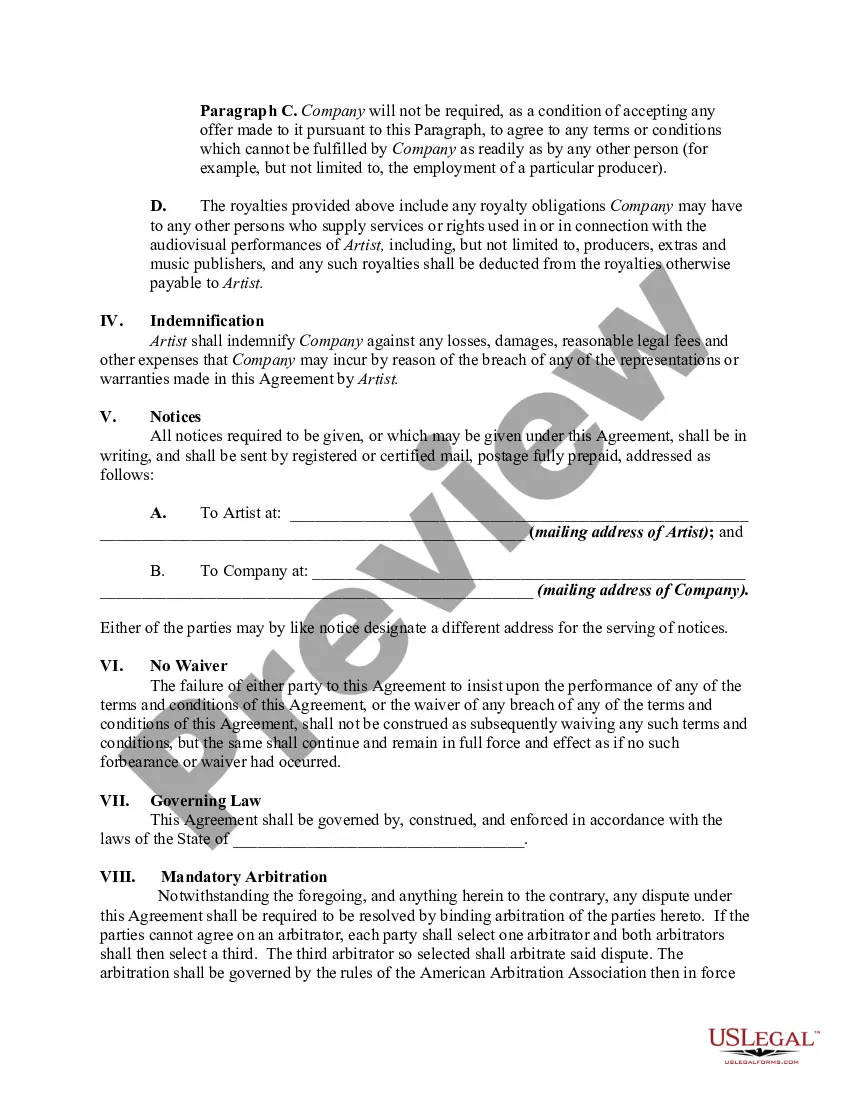
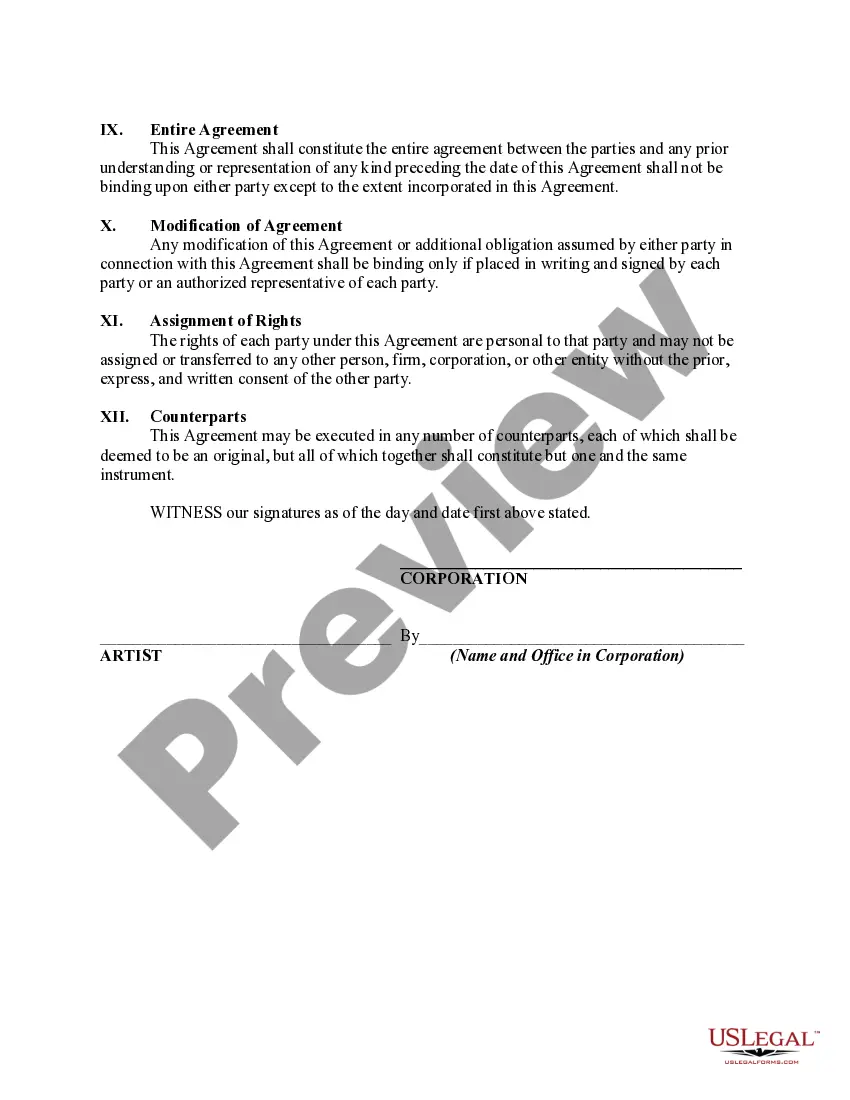
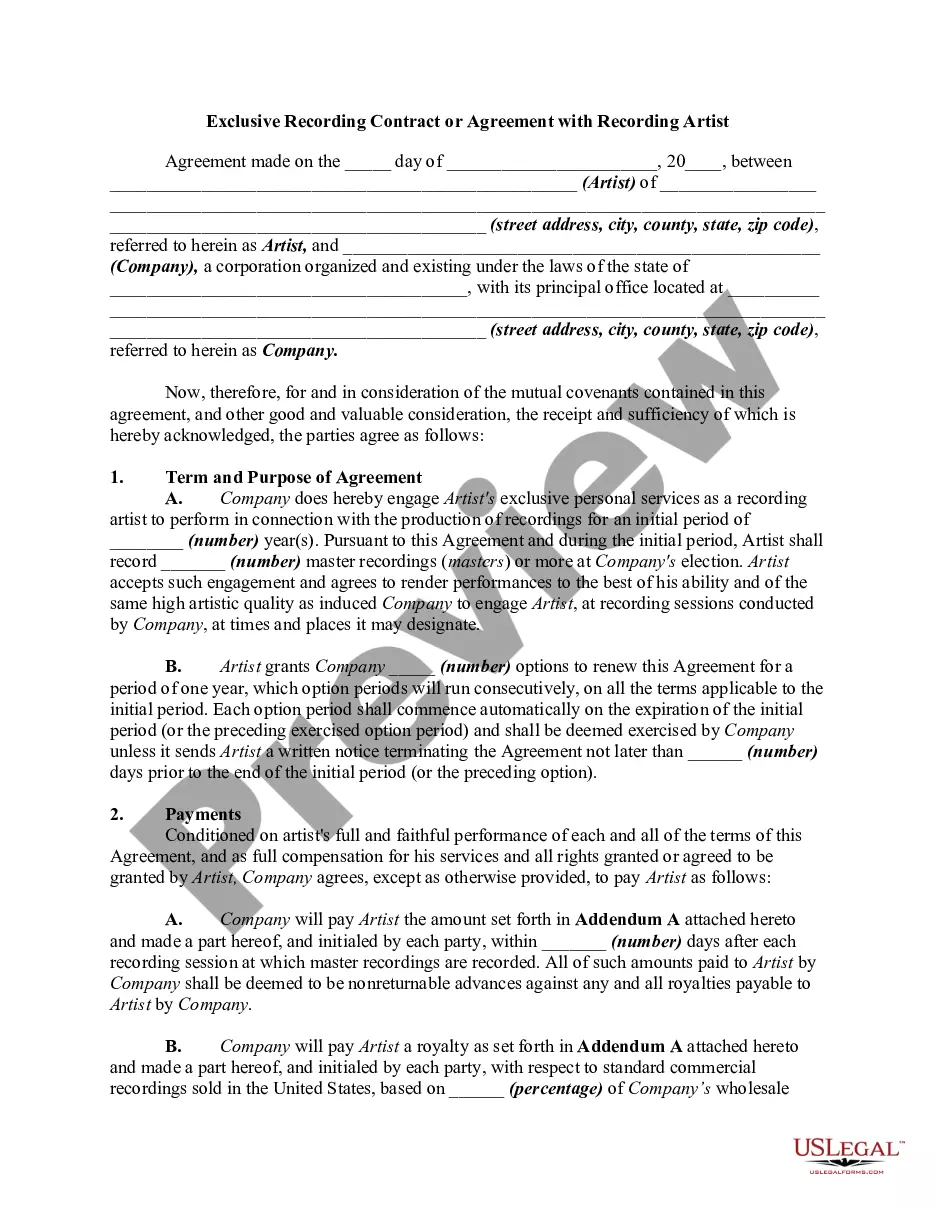
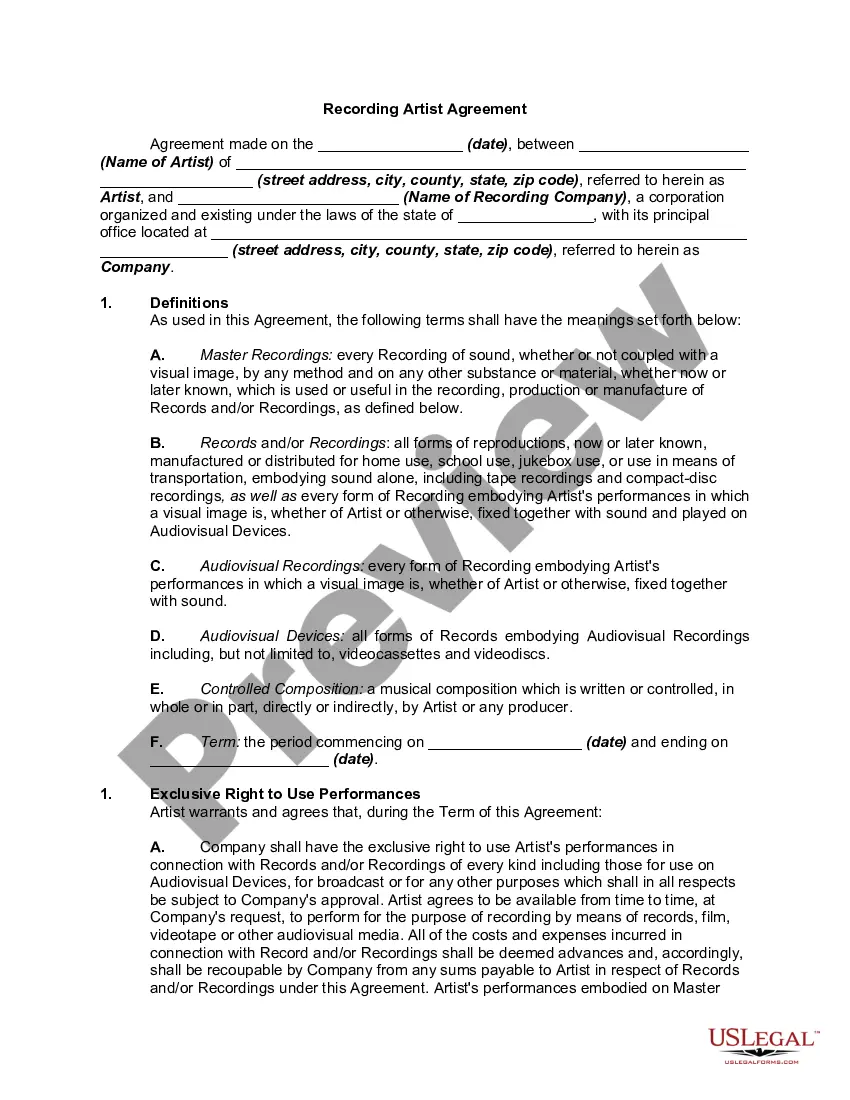
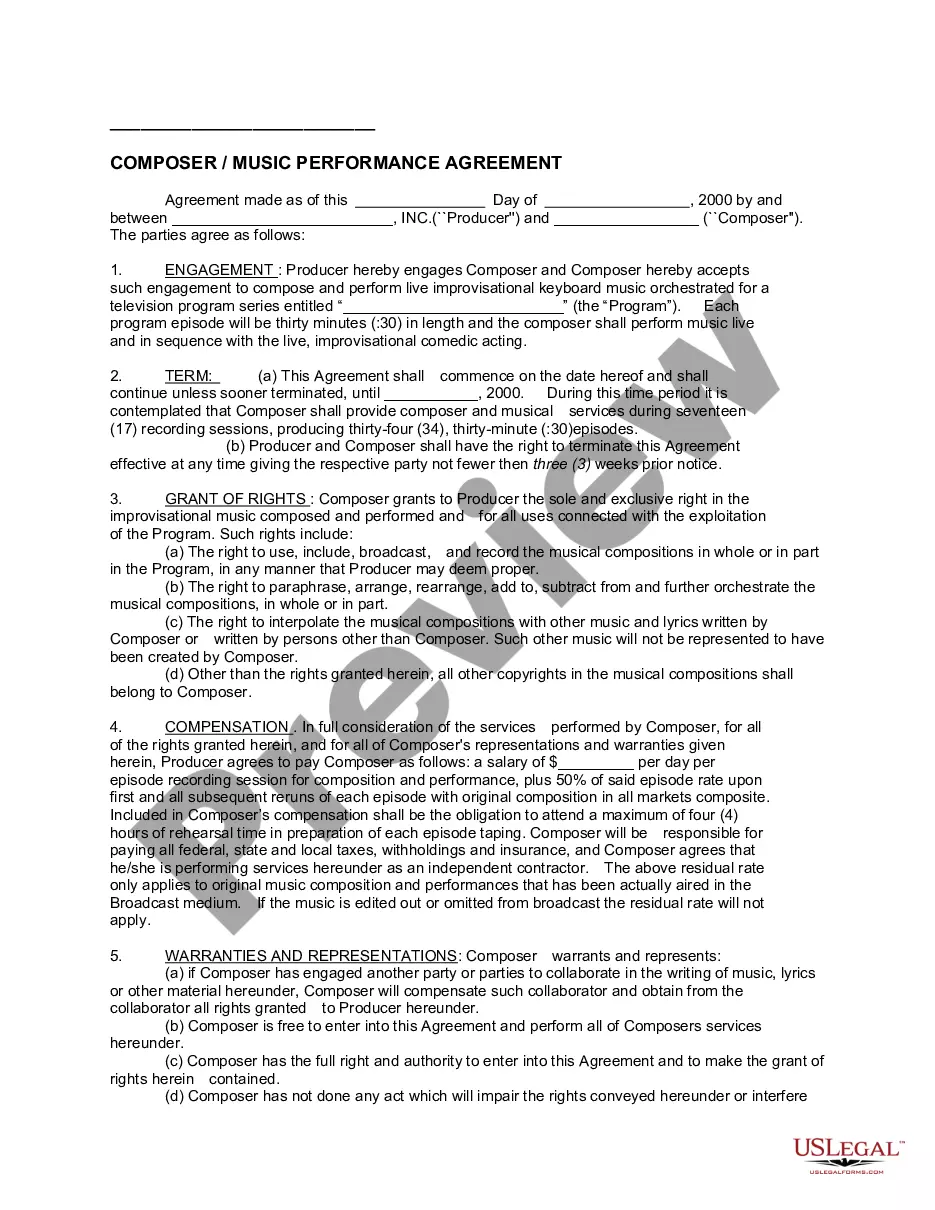


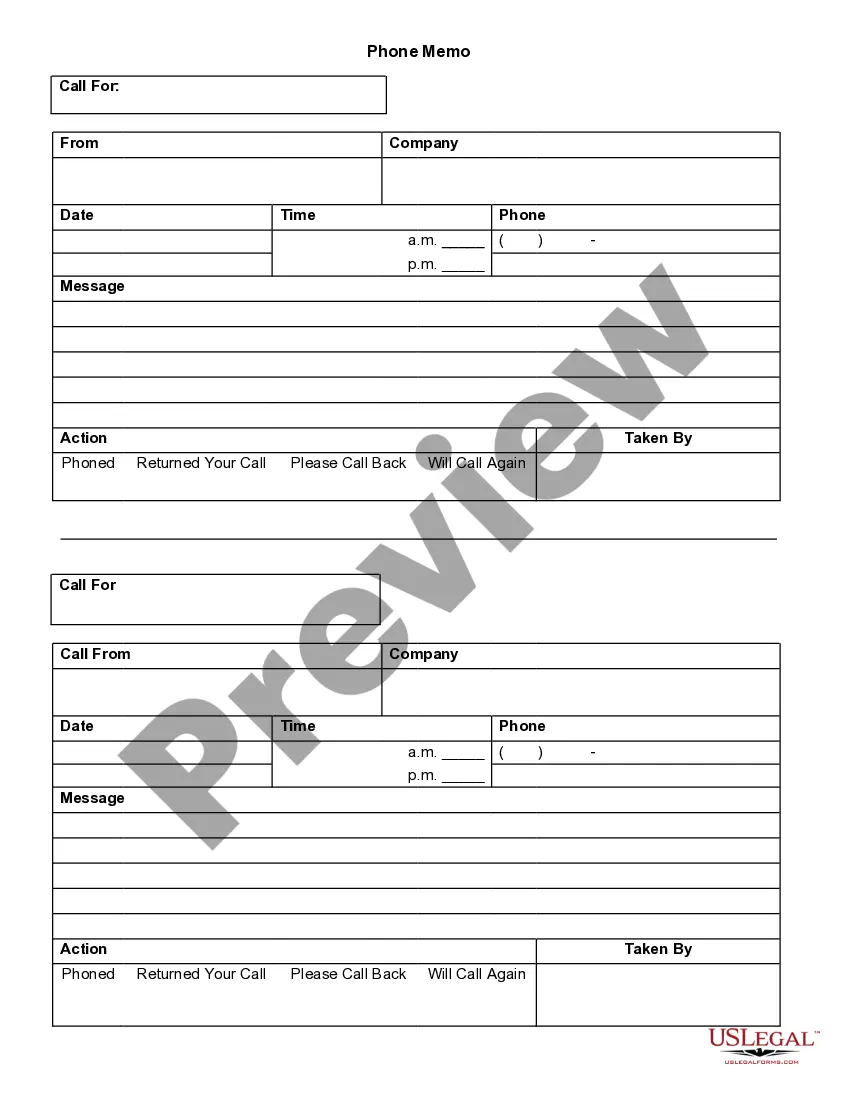

How to fill out Agreement Or Contract With Music Recording Artist Regarding Audiovisual Recordings?
Dealing with legal documents and operations can be a lengthy addition to your whole day.
Music Contract Template With Sound and similar forms often necessitate you to search for them and find your way to finish them efficiently.
Consequently, whether you are managing financial, legal, or personal issues, having a thorough and useful online collection of forms readily available will be beneficial.
US Legal Forms is the leading online site for legal templates, offering over 85,000 state-specific documents and a range of tools to help you finalize your paperwork swiftly.
Is this your first time using US Legal Forms? Register and set up your account in a few minutes, and you will gain access to the form library and Music Contract Template With Sound. Then, follow the steps outlined below to complete your form: Ensure you have located the correct form using the Review option and examining the form details. Select Buy Now when you are ready, and pick the subscription plan that suits you best. Click Download then fill out, eSign, and print the form. US Legal Forms has 25 years of experience assisting users in managing their legal documentation. Obtain the form you need right away and simplify any process effortlessly.
- Browse the library of relevant documents accessible to you with just one click.
- US Legal Forms provides state- and county-specific forms available at any time for download.
- Safeguard your document management processes with a top-notch service that allows you to prepare any form in minutes without any extra or concealed fees.
- Simply Log In to your account, find Music Contract Template With Sound, and download it instantly within the My documents section.
- You can also access forms you have downloaded previously.
Form popularity
FAQ
Creating a music contract involves outlining key terms such as rights, responsibilities, and payment agreements. Start by identifying the parties involved and the scope of the work. A music contract template with sound simplifies this process by providing a structured framework to follow. Using this template helps ensure that all essential elements are included, protecting your interests.
To legally own your music, you must register your work with the U.S. Copyright Office. This step protects your rights and ensures you can control how your music is used. Additionally, using a music contract template with sound can help outline ownership details when collaborating with others. This way, you maintain your rights and avoid disputes.
A 70/30 record deal refers to the division of profits between the artist and the record label. In this arrangement, the label receives 70% of the revenue, while the artist retains 30%. This type of deal often covers expenses such as marketing and production costs. For artists looking to navigate such agreements, a music contract template with sound can provide clarity and structure.
To write a music contract agreement, start by defining the parties involved and outlining the scope of work. Include key details such as payment terms, ownership rights, and duration of the agreement. Utilizing a music contract template with sound from uslegalforms can streamline this process, ensuring you cover all necessary aspects while protecting your interests.
Yes, you can write your own legally binding contract, but it is crucial to ensure it meets all legal requirements. Using a music contract template with sound can simplify this process by providing a solid foundation that includes essential elements such as terms, obligations, and rights. This approach helps protect your rights and ensures clarity in your agreements.
A 70 30 record deal typically means that the record label receives 70% of the profits, while the artist retains 30%. This arrangement can vary based on negotiations, but it often reflects the label's investment in marketing and production. If you want to protect your interests, consider using a music contract template with sound that outlines profit distribution clearly.
The Artist's Guide To Recording Contracts - How They Work YouTube Start of suggested clip End of suggested clip Recording. But also from the song. So because your music is now split into two the master. And theMoreRecording. But also from the song. So because your music is now split into two the master. And the publishing. The master is the recording. Of your song.
For example, if a major label spends $250,000 to record an album, the band must make over $250,000 in royalties until they receive their first royalty check. Once a band sells enough records to pay back the amount to the record label, the band has recouped and will receive royalties on future record sales.
Every record label contract is different. Major labels may use a 50-100 page document, while indie labels might be as short as 5 pages. The gist of them is the same ? the artist sells rights to exploit their songs for profit to the label, in exchange for a cut of the profits.
A recording contract should include the following: Artist and record company contact details. Production details. Recording details. Exclusivity clauses. Confirmed and expected payments and royalties to the artist. Promotional appearances. Termination provisions.