Between Two Fences
Description

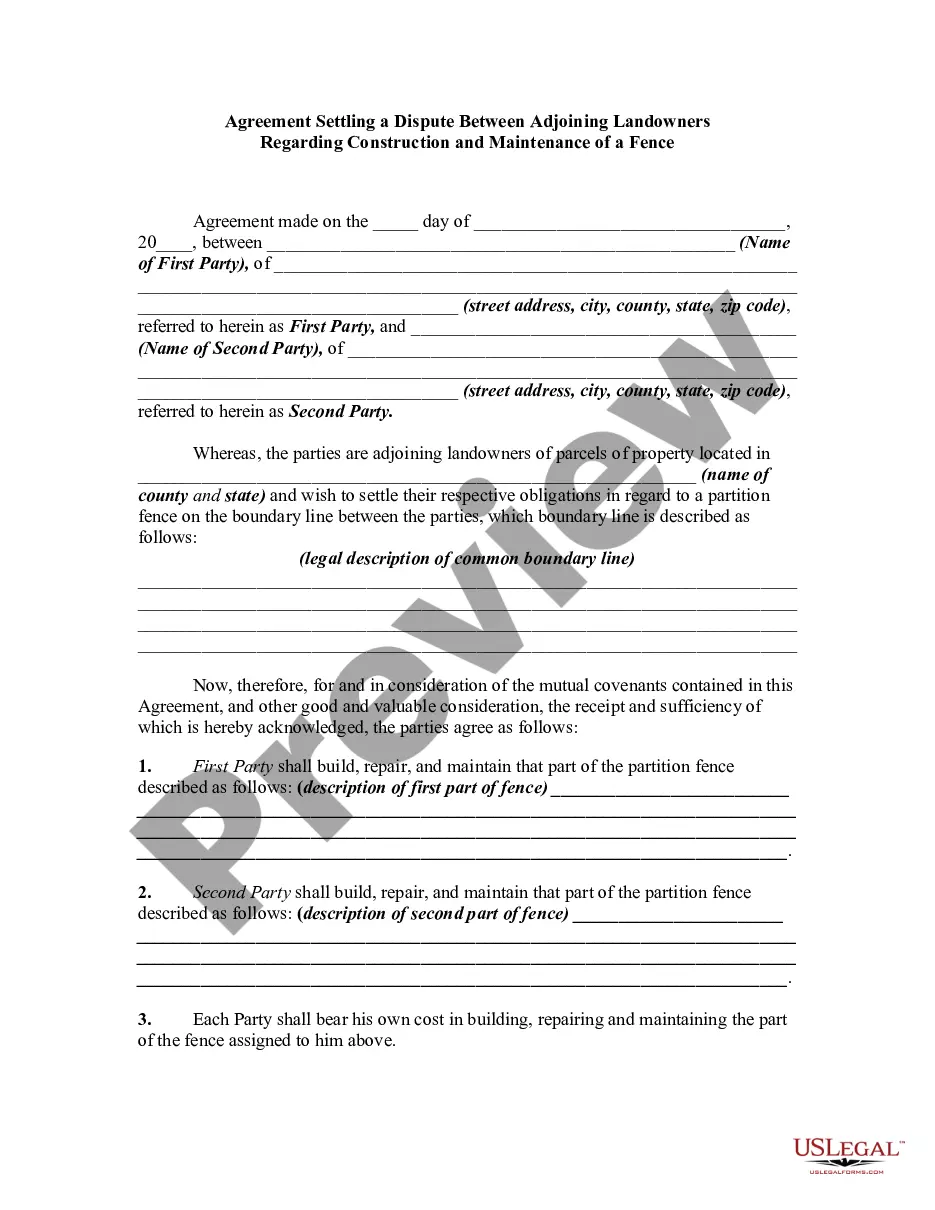
Get your form ready online
Our built-in tools help you complete, sign, share, and store your documents in one place.
Make edits, fill in missing information, and update formatting in US Legal Forms—just like you would in MS Word.
Download a copy, print it, send it by email, or mail it via USPS—whatever works best for your next step.
Sign and collect signatures with our SignNow integration. Send to multiple recipients, set reminders, and more. Go Premium to unlock E-Sign.
If this form requires notarization, complete it online through a secure video call—no need to meet a notary in person or wait for an appointment.
We protect your documents and personal data by following strict security and privacy standards.

Make edits, fill in missing information, and update formatting in US Legal Forms—just like you would in MS Word.

Download a copy, print it, send it by email, or mail it via USPS—whatever works best for your next step.

Sign and collect signatures with our SignNow integration. Send to multiple recipients, set reminders, and more. Go Premium to unlock E-Sign.

If this form requires notarization, complete it online through a secure video call—no need to meet a notary in person or wait for an appointment.

We protect your documents and personal data by following strict security and privacy standards.
Looking for another form?


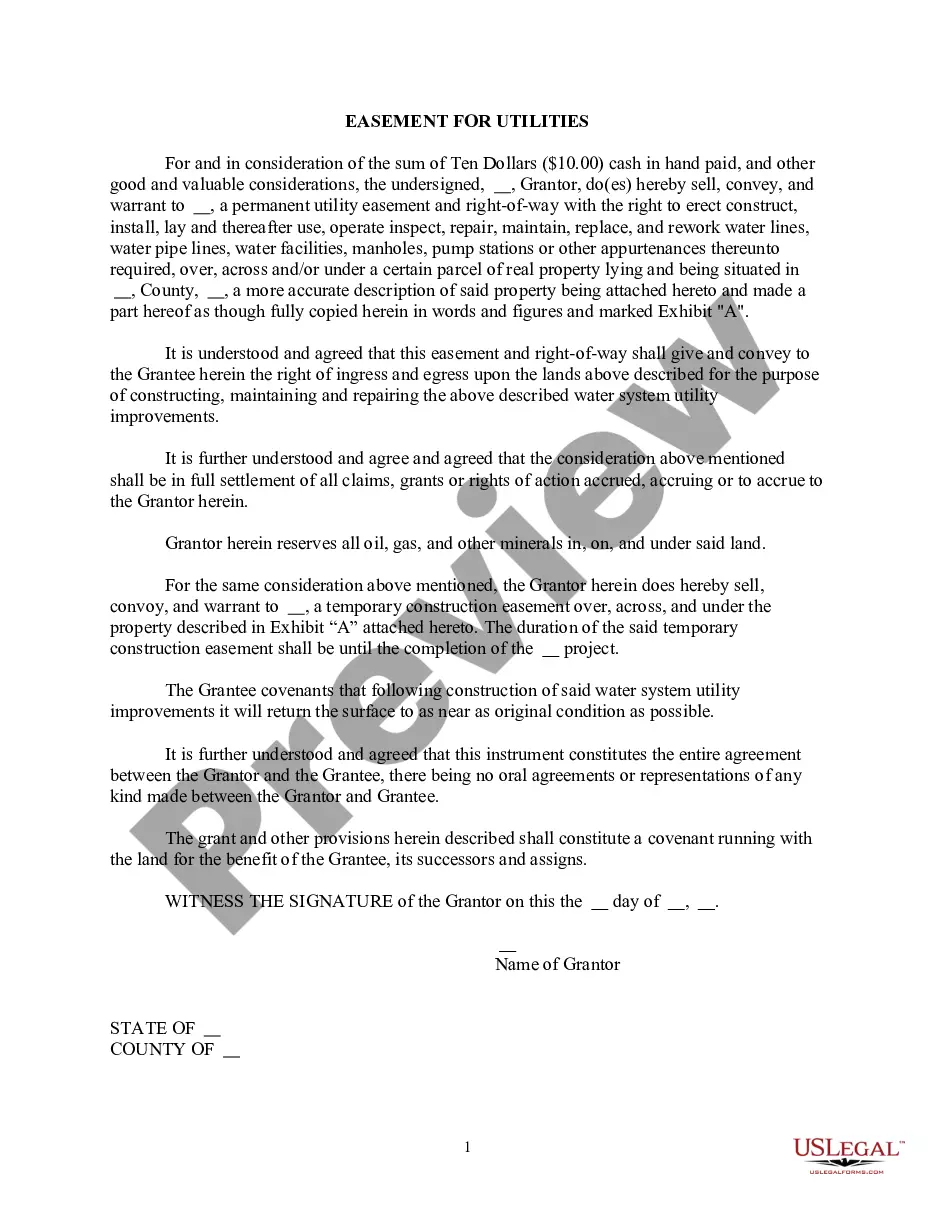
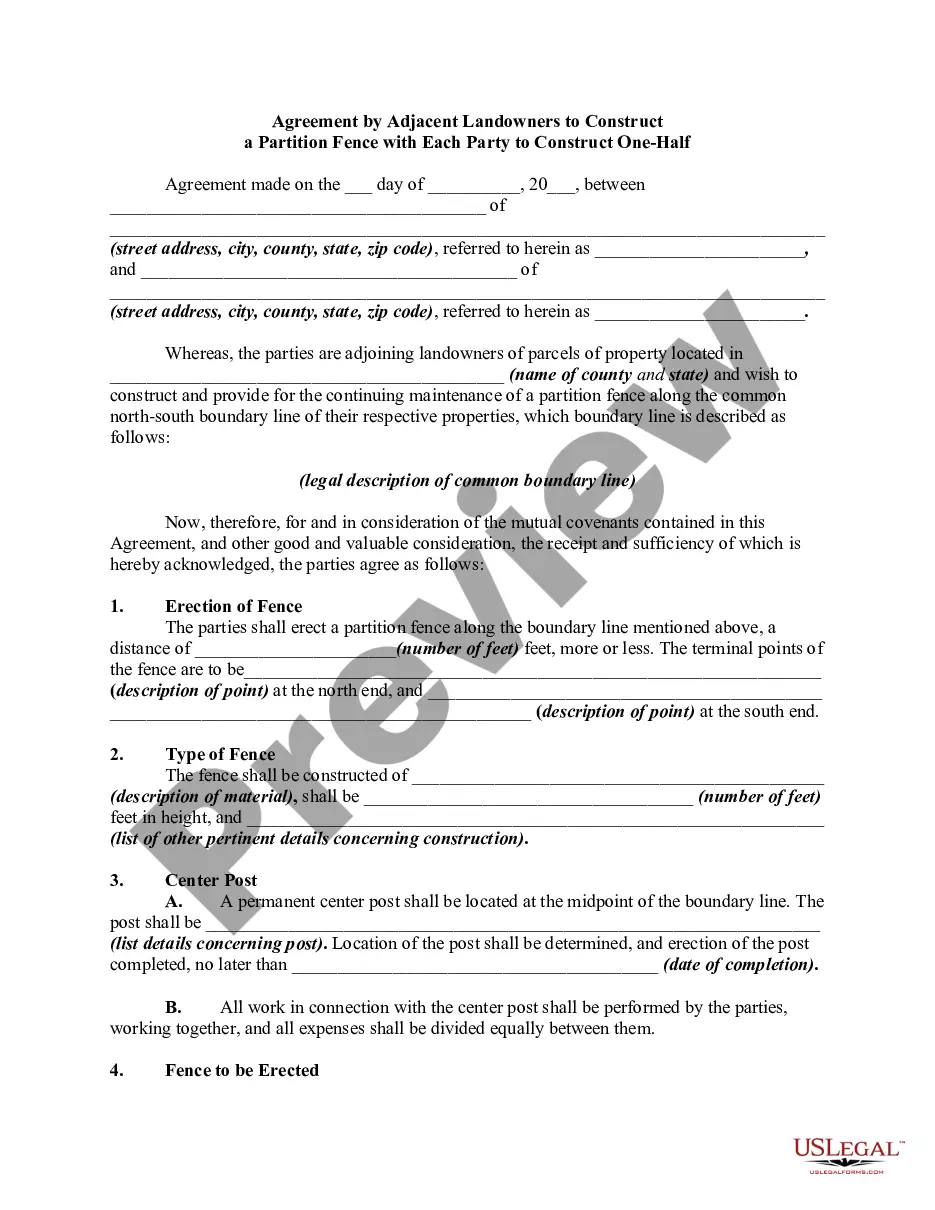
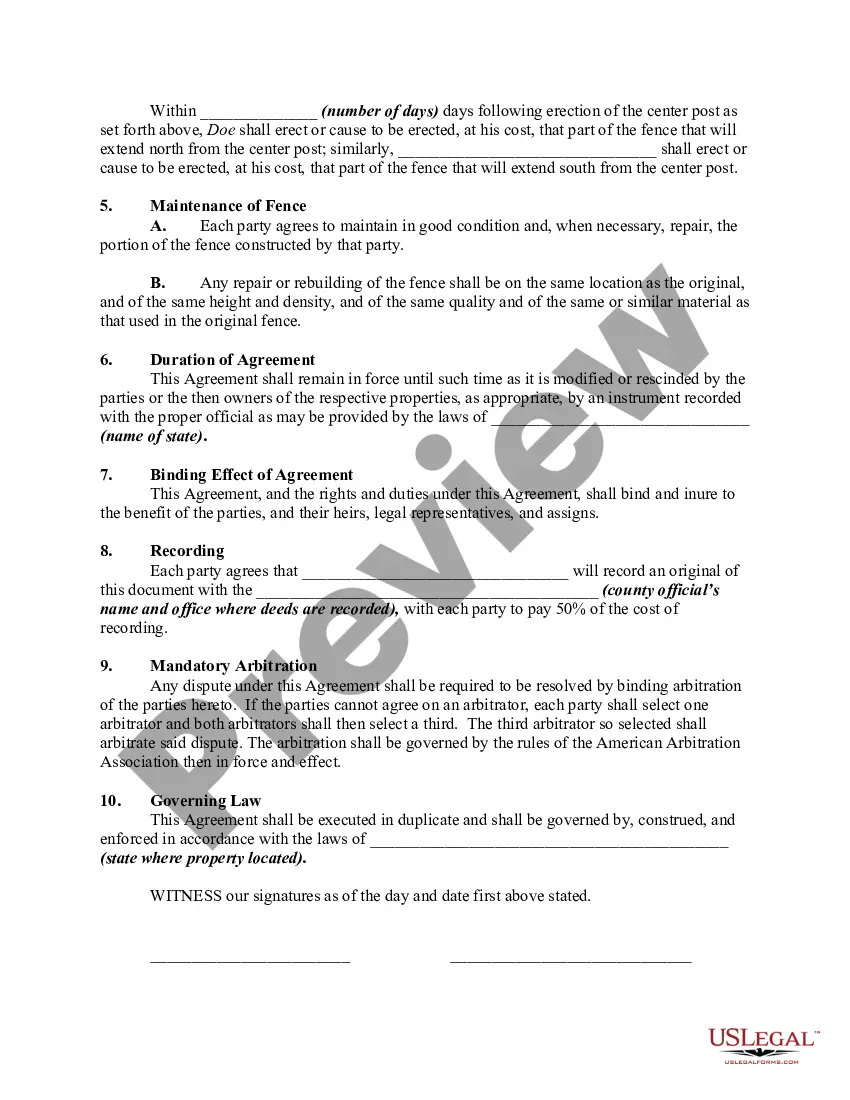
How to fill out Agreement By Adjacent Landowners To Construct A Partition Fence With Each Party To Construct One-Half?
- If you're a returning user, log in to your account to start. Ensure your subscription is active; if not, renew it accordingly.
- For first-time users, start by browsing the form descriptions in the Preview mode. Assess and confirm that the selected form aligns with your local jurisdiction needs.
- In case of any discrepancies, utilize the Search tab to locate the appropriate template that fulfills specific requirements.
- Proceed to purchase by clicking the Buy Now button and selecting your preferred subscription plan. You will need to create an account to access the extensive library.
- Complete your transaction by entering your payment details, via credit card or PayPal, to finalize your subscription.
- Download your selected form directly to your device, and access it anytime through the My Forms menu in your profile.
Utilizing US Legal Forms grants individuals and professionals access to over 85,000 legally vetted documents, alongside premium expert assistance for any complexities you might encounter.
Don't let legal paperwork overwhelm you—get started today with US Legal Forms and take advantage of our resources for a seamless experience.
Form popularity
FAQ
The property line between two houses is the legally defined boundary that separates the two properties. Knowing this line is essential to avoid potential disputes with your neighbor and to ensure that any fencing work or landscaping does not encroach on their space. Commonly, property lines are marked by fences, but they can also be defined by surveys. If you need help determining your property line, US Legal Forms provides reliable tools and form templates to assist you between two fences.
When installing a fence, the distance between two fence posts typically ranges from six to eight feet. This measurement can vary based on the type of fence you choose and the terrain of your property. It's crucial to maintain proper spacing between posts to ensure your fence remains strong and stable. Using our platform, you can access resources that guide you on the best practices for measuring and installing your fence between two fences.
Deciding who gets the good side of a fence often involves open dialogue between neighbors. While there's no hard-and-fast rule, mutual agreements can enhance community harmony. It’s advisable to discuss preferences calmly before erecting a new fence or making significant changes between two fences.
If a fence is entirely on your property, you may have the legal right to paint it, but it’s considerate to inform your neighbor first. Painting the side that faces their yard can impact how they view the property, so communication is beneficial. Discussing your plans can help maintain a harmonious relationship, especially when dealing with boundaries between two fences.
If you discover a gap between two fences, consider filling it using shrubs or small trees for natural privacy. Alternatively, you could install additional fencing or trellises to close the space. Taking action helps maintain security and can improve the aesthetic appeal of both yards.
The land between two fences is typically considered part of each property, although local laws may vary. Ownership can often depend on the original property lines defined in title deeds. Therefore, it's wise to check local regulations or consult a professional to clarify the specifics regarding boundaries when dealing with the space between two fences.
Legally, you do not have to provide your neighbor with the good side of the fence. However, ethical considerations may suggest doing so as it can promote goodwill and neighborly relations. People often choose to present the better side outwardly, but communication is key when fences are involved.
To fix a gap between two fences, start by identifying the source of the gap. You might need to adjust the fencing or add a material like lattice to close the space effectively. By addressing the issue promptly, you can enhance privacy and security while ensuring that both sides of the fence maintain a neat appearance.
When placing a fence between two properties, there's often confusion regarding the good side. Generally, while you are not legally required to give your neighbor the good side, maintaining a friendly relationship may encourage a more cooperative atmosphere. It can be beneficial to discuss preferences with your neighbor when building or repairing a fence.
In many cases, property owners are not obligated to provide their neighbors with the good side of the fence. However, it is a thoughtful gesture that can foster goodwill and neighborly relations. Creating a positive atmosphere among neighbors often goes a long way in maintaining a peaceful coexistence between two fences.