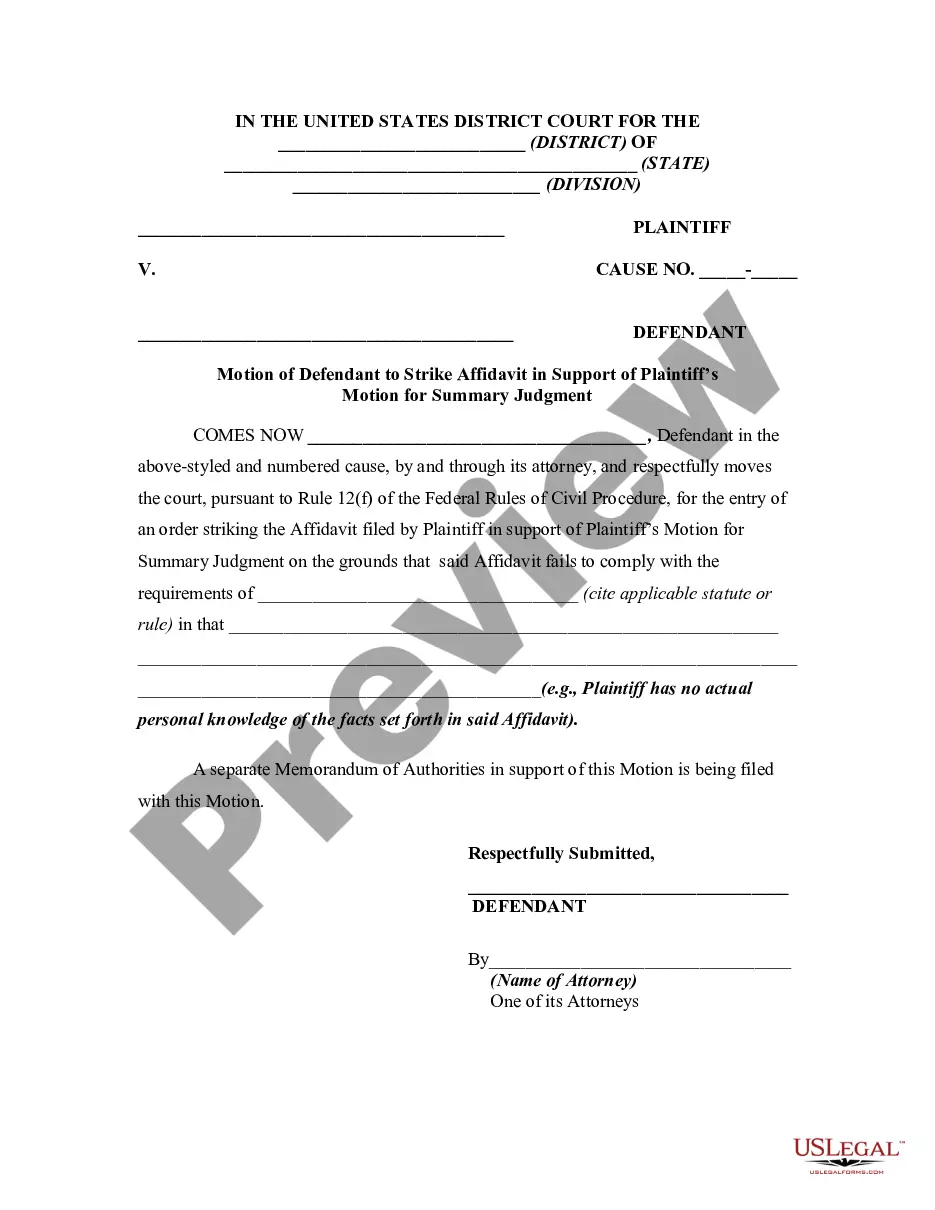
Motion To Strike Answer
Description

Get your form ready online
Our built-in tools help you complete, sign, share, and store your documents in one place.
Make edits, fill in missing information, and update formatting in US Legal Forms—just like you would in MS Word.
Download a copy, print it, send it by email, or mail it via USPS—whatever works best for your next step.
Sign and collect signatures with our SignNow integration. Send to multiple recipients, set reminders, and more. Go Premium to unlock E-Sign.
If this form requires notarization, complete it online through a secure video call—no need to meet a notary in person or wait for an appointment.
We protect your documents and personal data by following strict security and privacy standards.

Make edits, fill in missing information, and update formatting in US Legal Forms—just like you would in MS Word.

Download a copy, print it, send it by email, or mail it via USPS—whatever works best for your next step.

Sign and collect signatures with our SignNow integration. Send to multiple recipients, set reminders, and more. Go Premium to unlock E-Sign.

If this form requires notarization, complete it online through a secure video call—no need to meet a notary in person or wait for an appointment.

We protect your documents and personal data by following strict security and privacy standards.
Looking for another form?

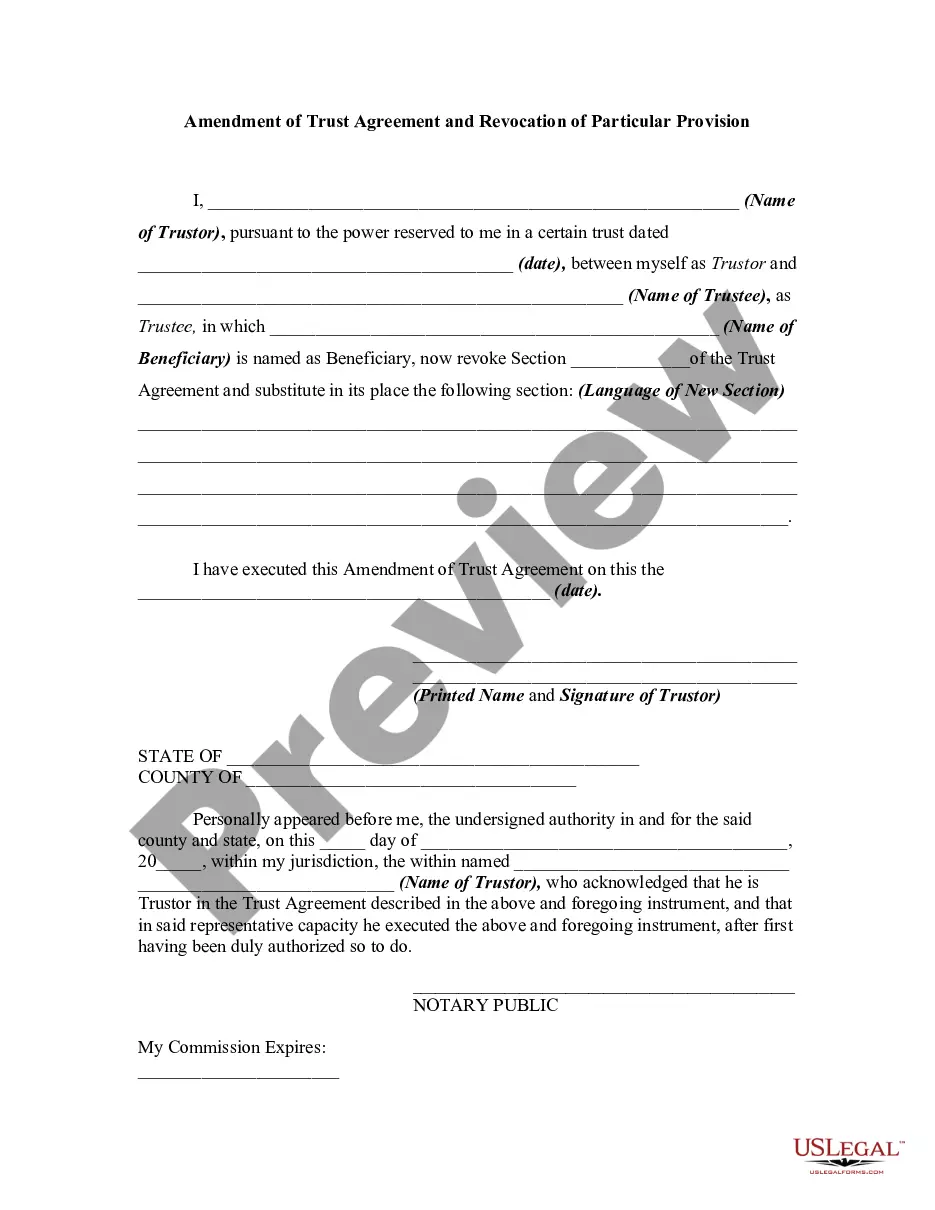



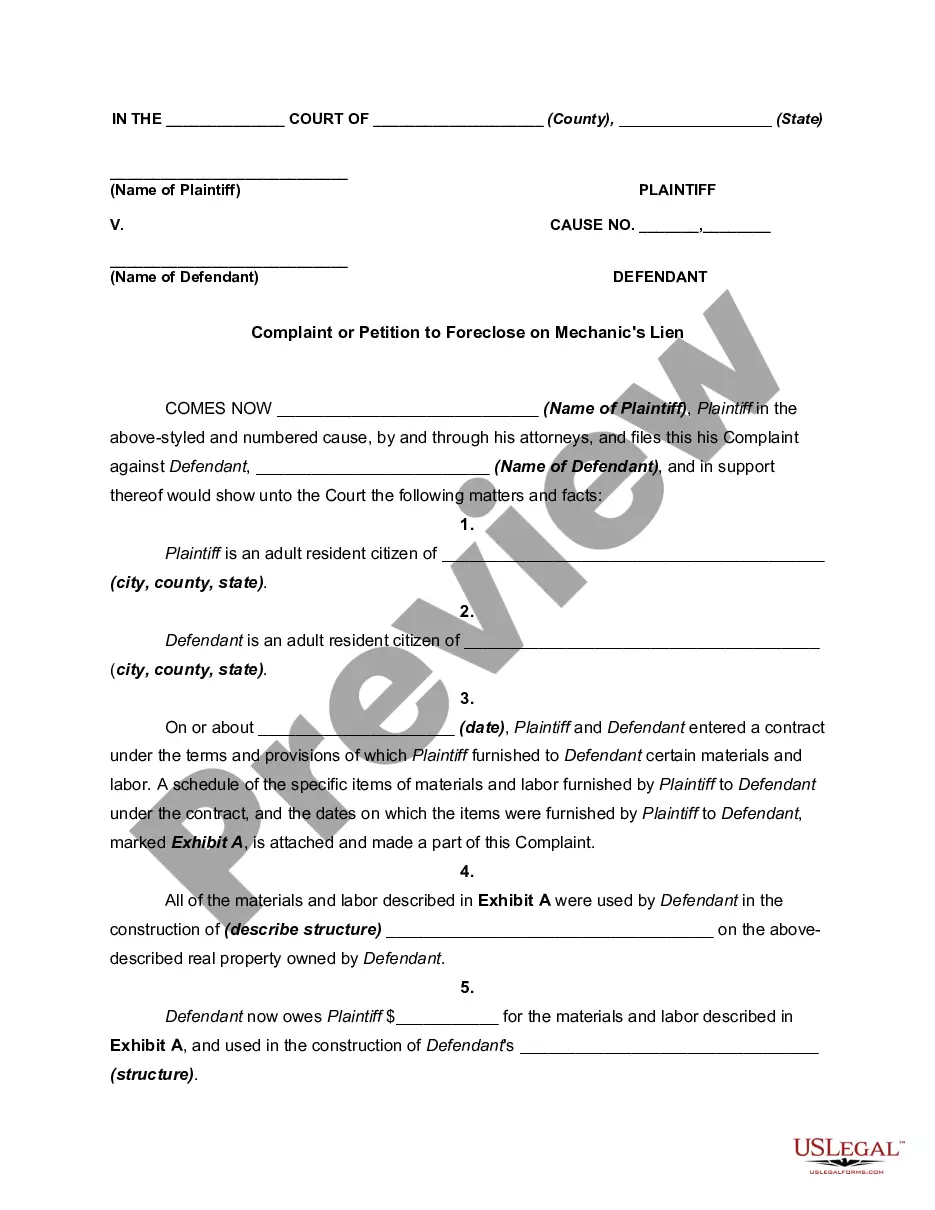
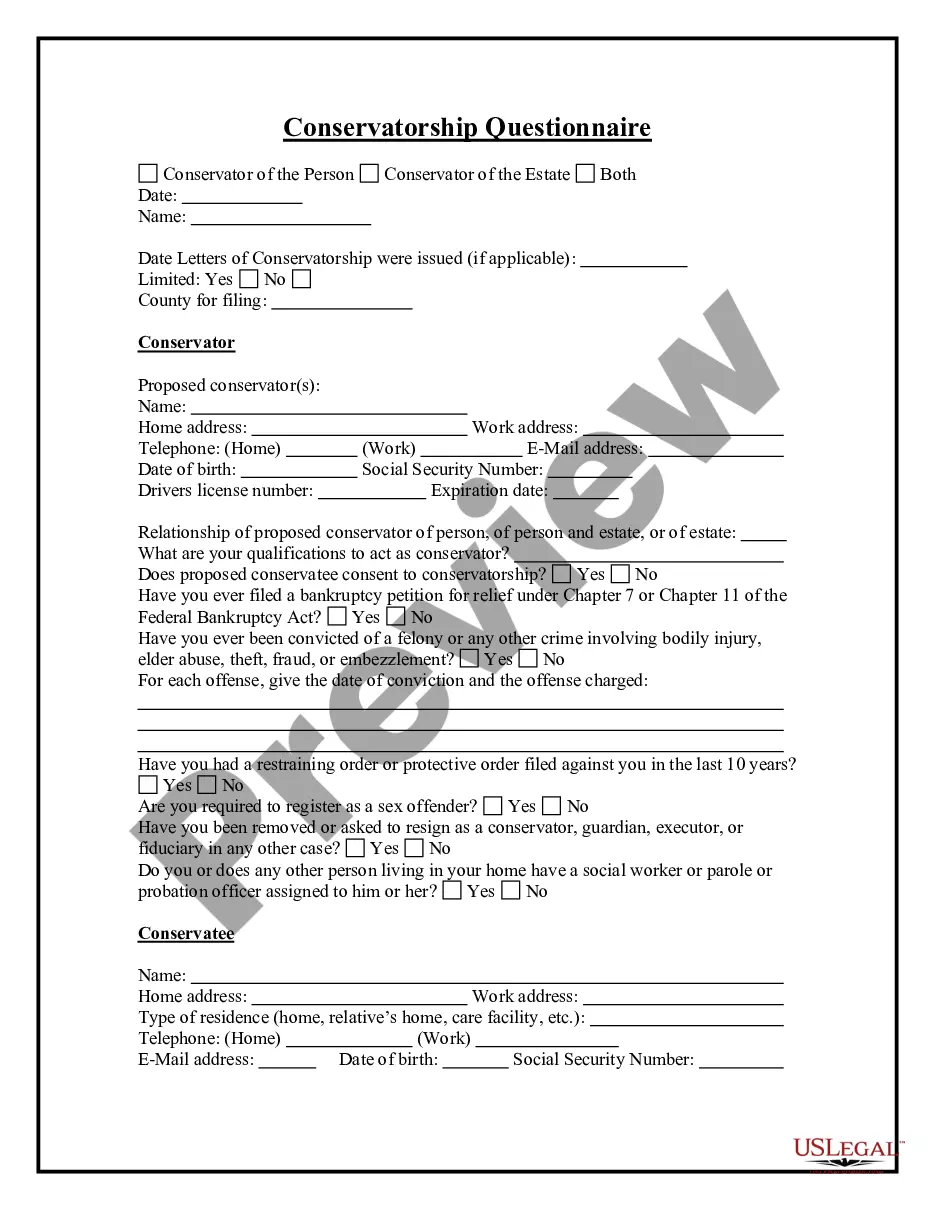



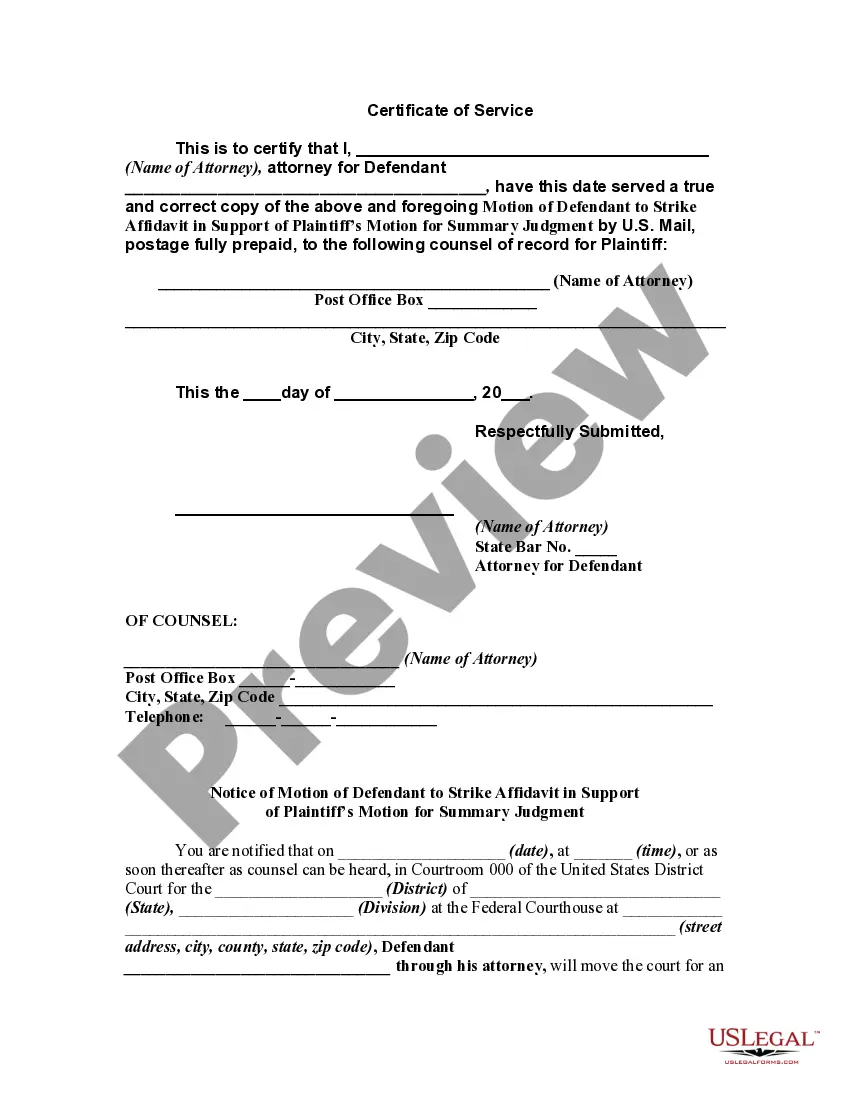
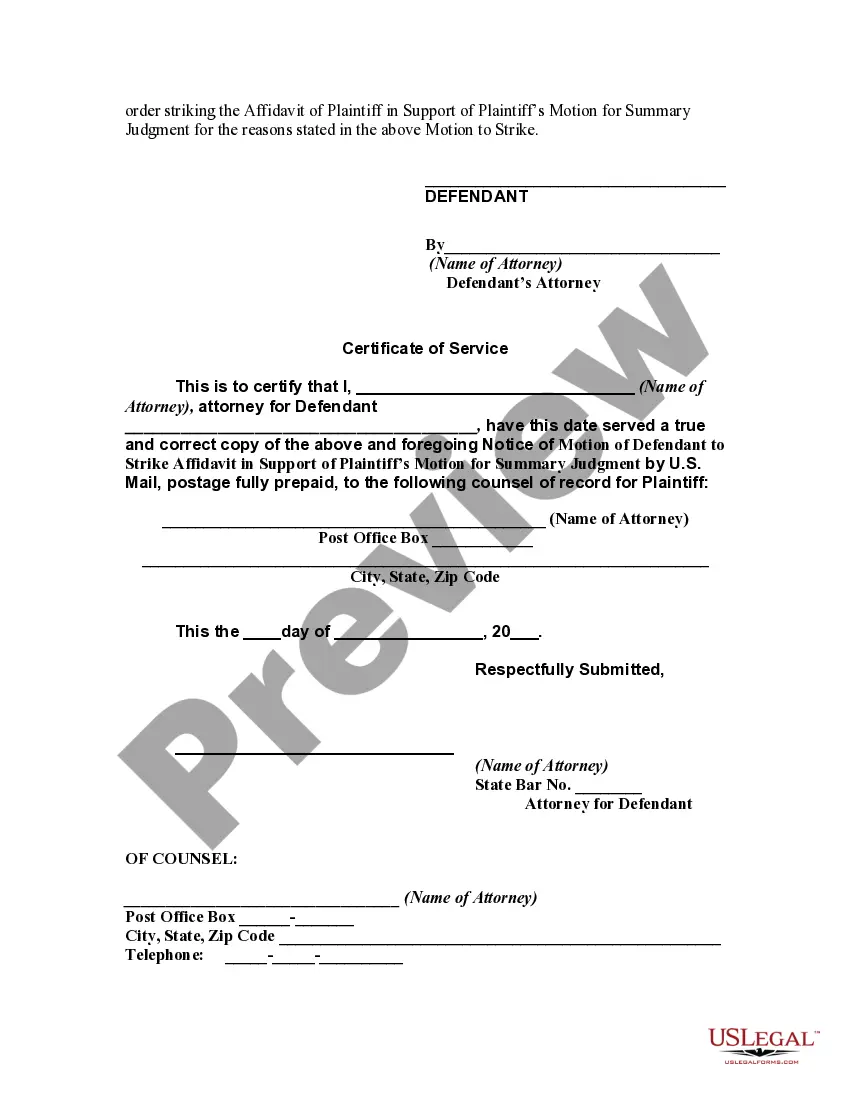
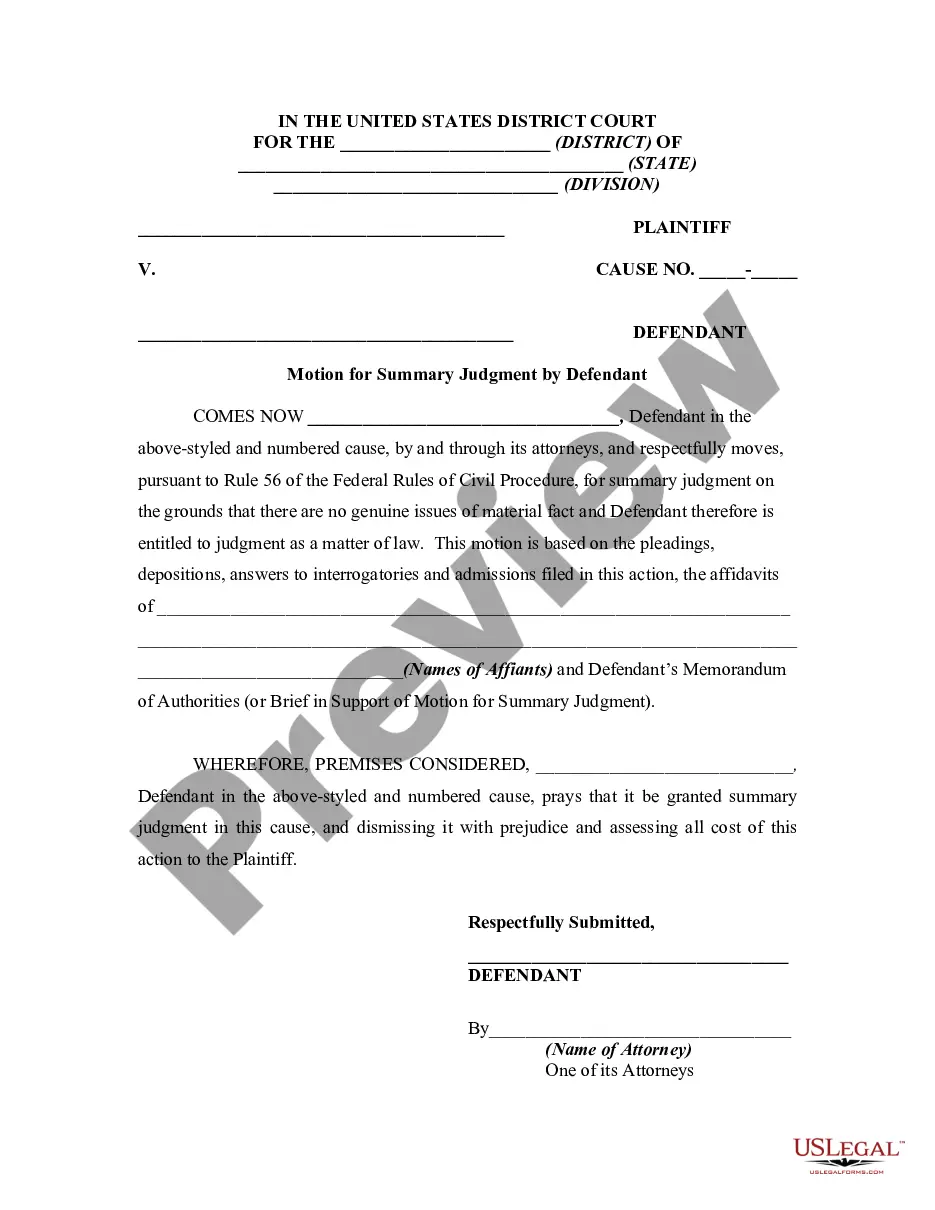
How to fill out Motion Of Defendant To Strike Affidavit In Support Of Plaintiffs Motion For Summary Judgment And Notice Of Motion To Strike?
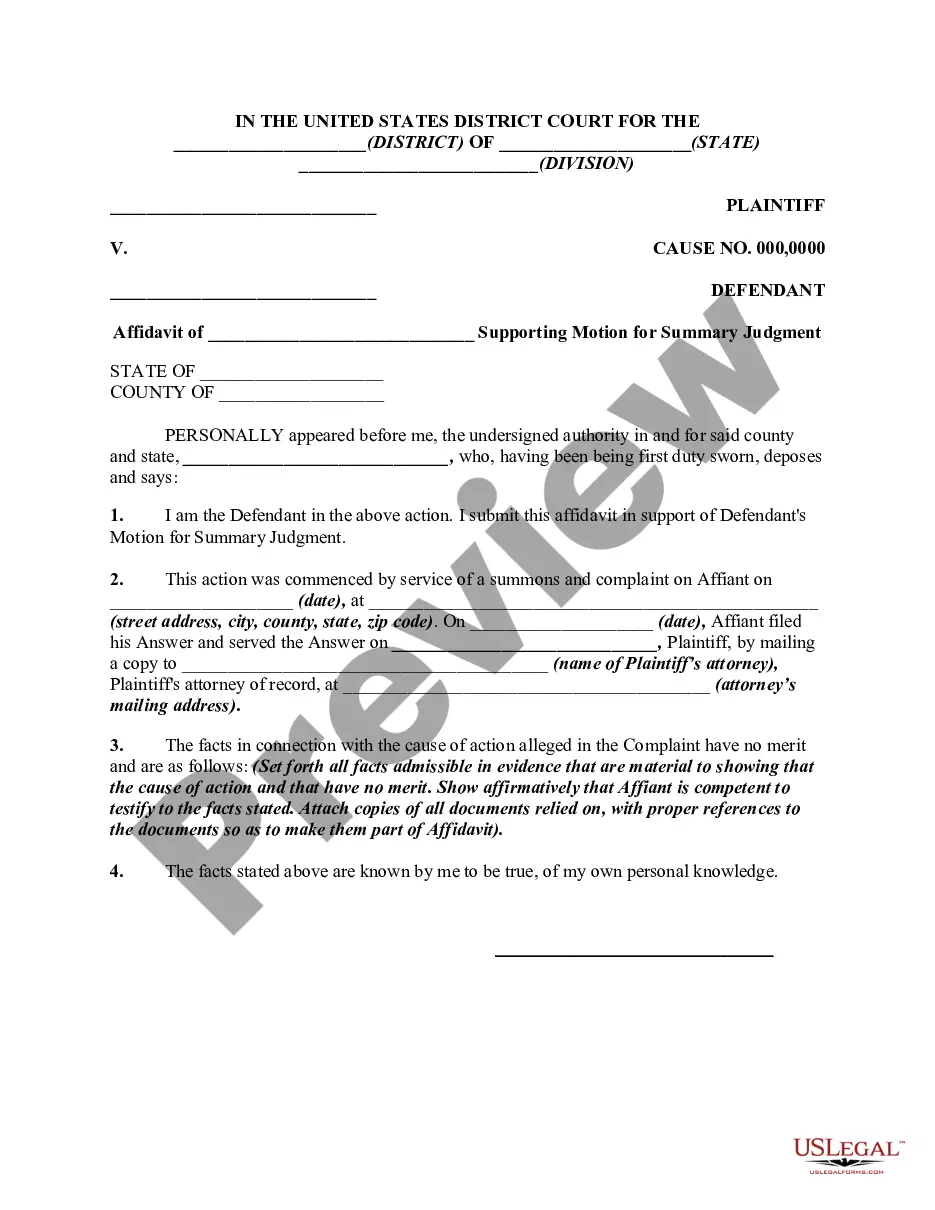
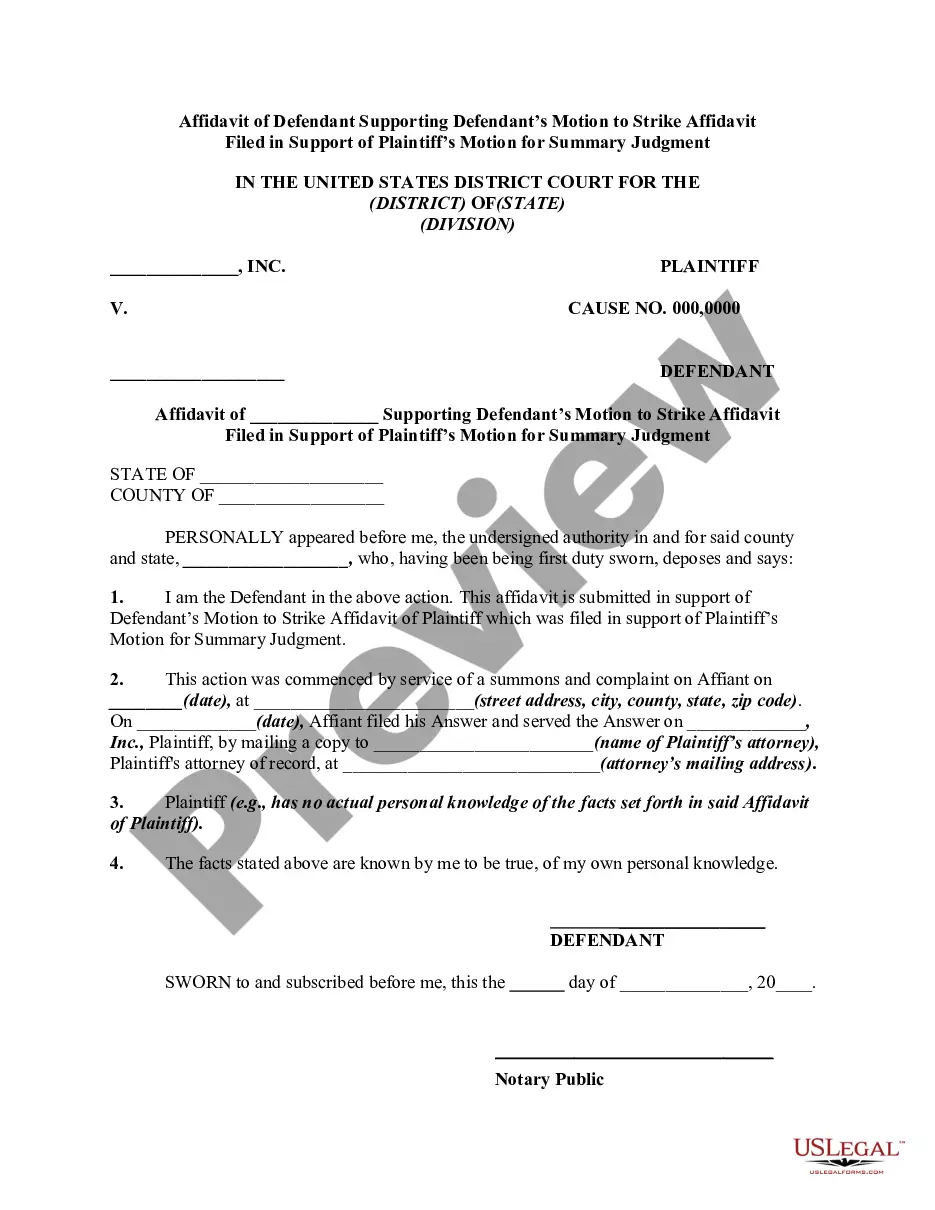
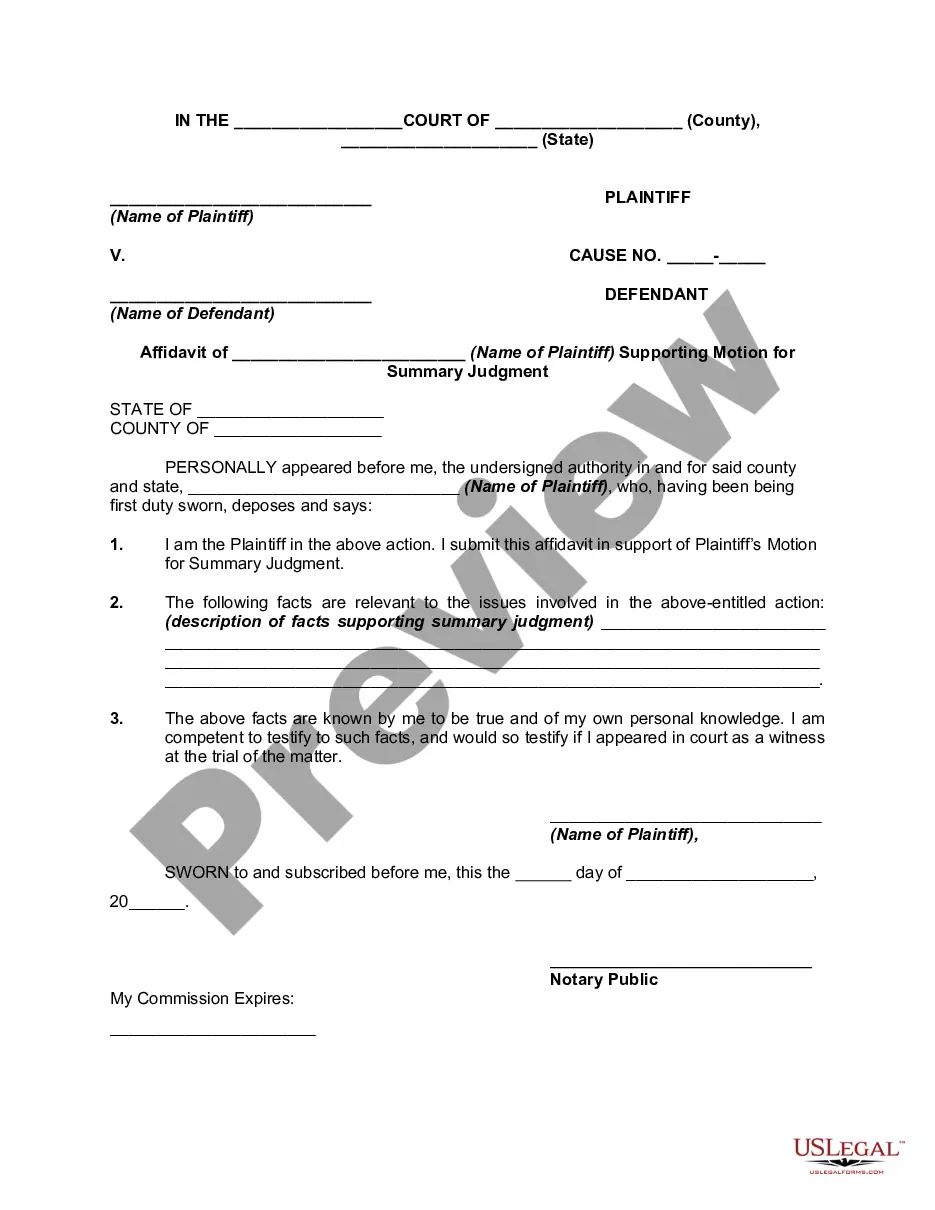
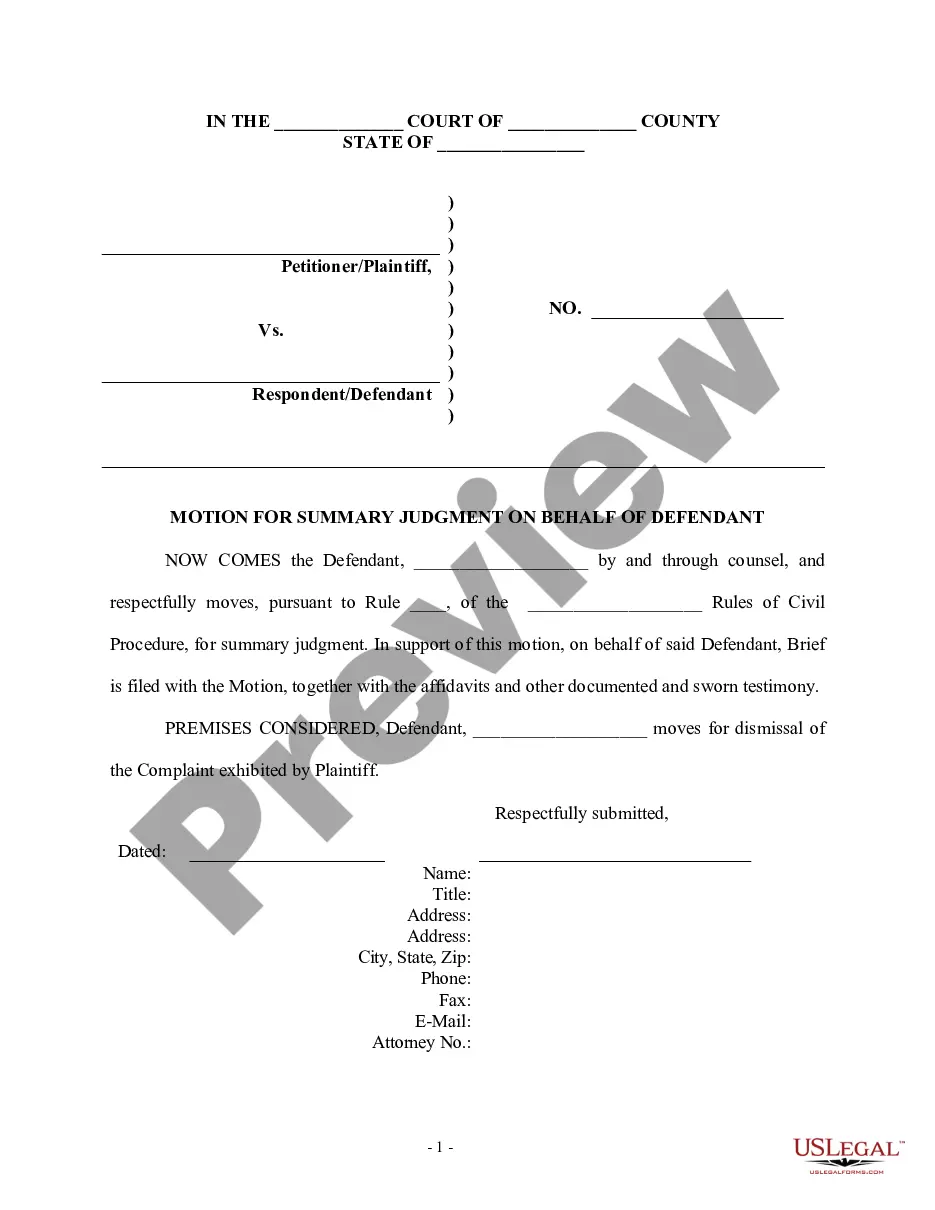
The Motion To Strike Answer you see on this page is a reusable formal template drafted by professional lawyers in line with federal and regional laws. For more than 25 years, US Legal Forms has provided people, businesses, and legal professionals with more than 85,000 verified, state-specific forms for any business and personal scenario. It’s the quickest, simplest and most trustworthy way to obtain the paperwork you need, as the service guarantees the highest level of data security and anti-malware protection.
Getting this Motion To Strike Answer will take you only a few simple steps:
- Browse for the document you need and review it. Look through the file you searched and preview it or check the form description to confirm it fits your needs. If it does not, use the search bar to get the right one. Click Buy Now when you have located the template you need.
- Sign up and log in. Opt for the pricing plan that suits you and register for an account. Use PayPal or a credit card to make a prompt payment. If you already have an account, log in and check your subscription to continue.
- Acquire the fillable template. Choose the format you want for your Motion To Strike Answer (PDF, DOCX, RTF) and download the sample on your device.
- Complete and sign the document. Print out the template to complete it manually. Alternatively, use an online multi-functional PDF editor to quickly and precisely fill out and sign your form with a legally-binding] {electronic signature.
- Download your paperwork one more time. Make use of the same document once again whenever needed. Open the My Forms tab in your profile to redownload any previously downloaded forms.
Subscribe to US Legal Forms to have verified legal templates for all of life’s circumstances at your disposal.
Form popularity
FAQ
Against Other Pleadings A motion to strike may be brought against complaints, cross-complaints, answers and demurrers. A motion to strike can be brought against an entire pleading, or any part of a pleading.
2023 California Rules of Court A notice of motion to strike must be given within the time allowed to plead, and if a demurrer is interposed, concurrently therewith, and must be noticed for hearing and heard at the same time as the demurrer.
A motion to strike asks the court to ban a pleading, like an Answer, from being used. See CPLR 3126. A motion for contempt asks the court to fine and/or jail the other side for ignoring the court's order.
N. a request for a judge's order to eliminate all or a portion of the legal pleading (complaint, answer) of the opposition on any one of several grounds. It is often used in an attempt to have an entire cause of action removed ("stricken") from the court record.
A motion to strike is a request to a judge that part of a party's pleading or a piece of evidence be removed from the record. During the pleading stage, this can be accomplished by a tool such as Rule 12(f) of the Federal Rules of Civil Procedure or a state equivalent.