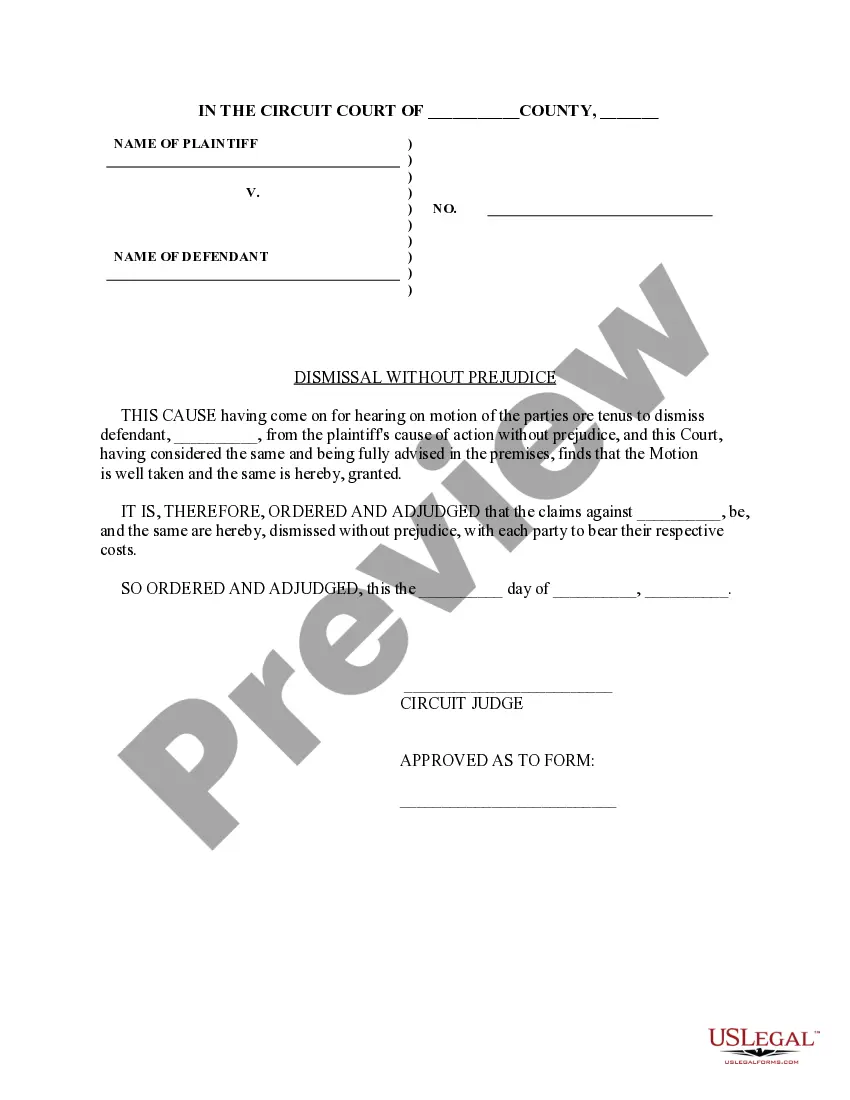
Civil Case Dismissed Without Prejudice
Description
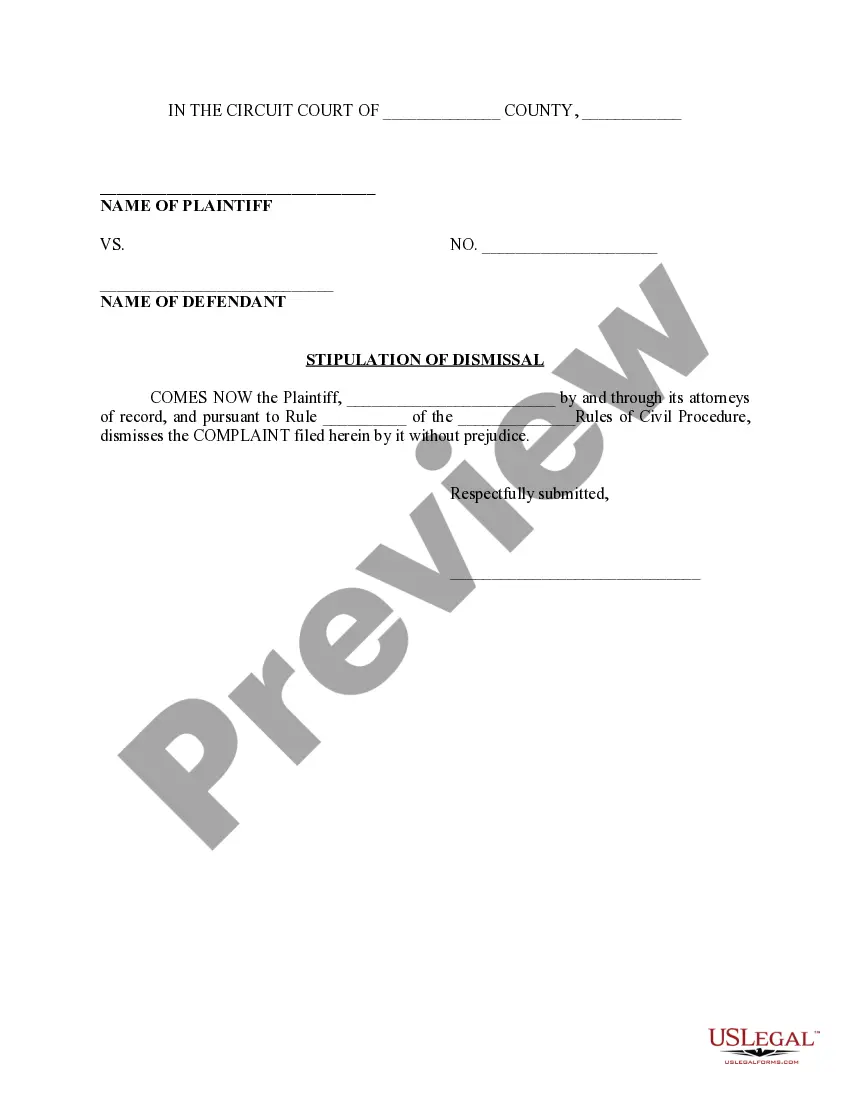
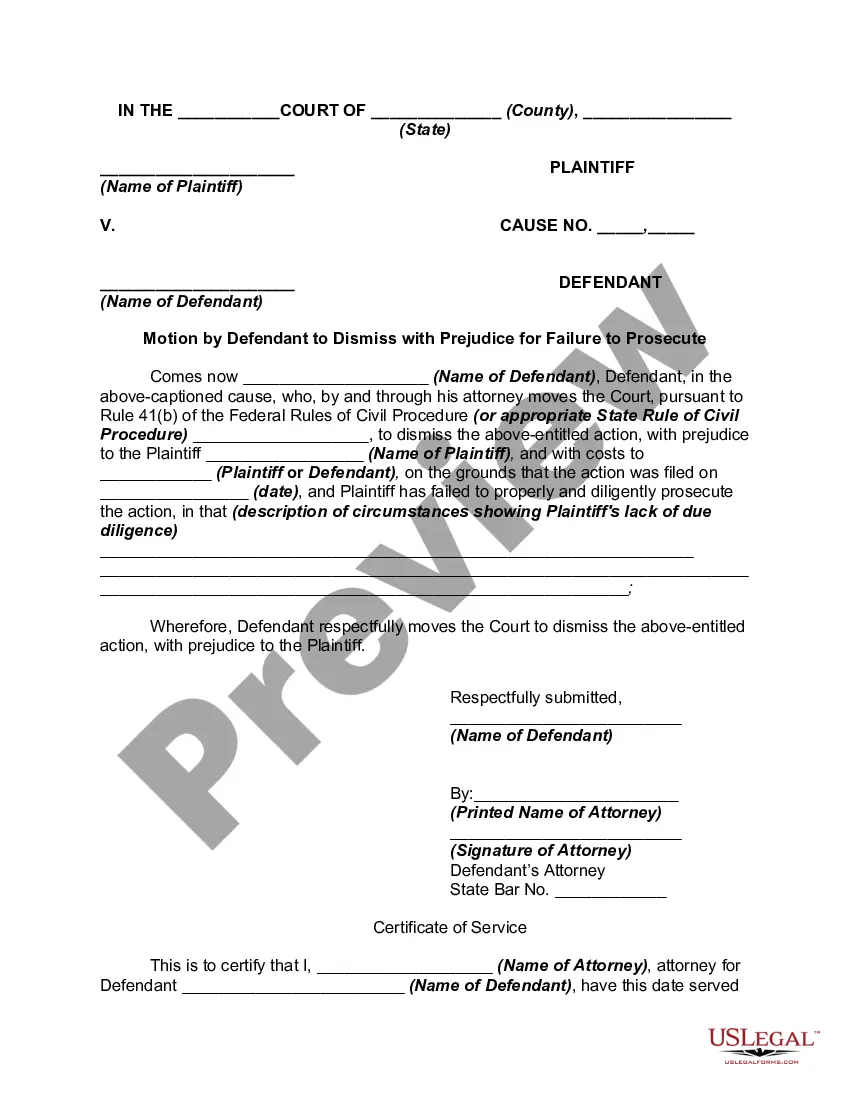
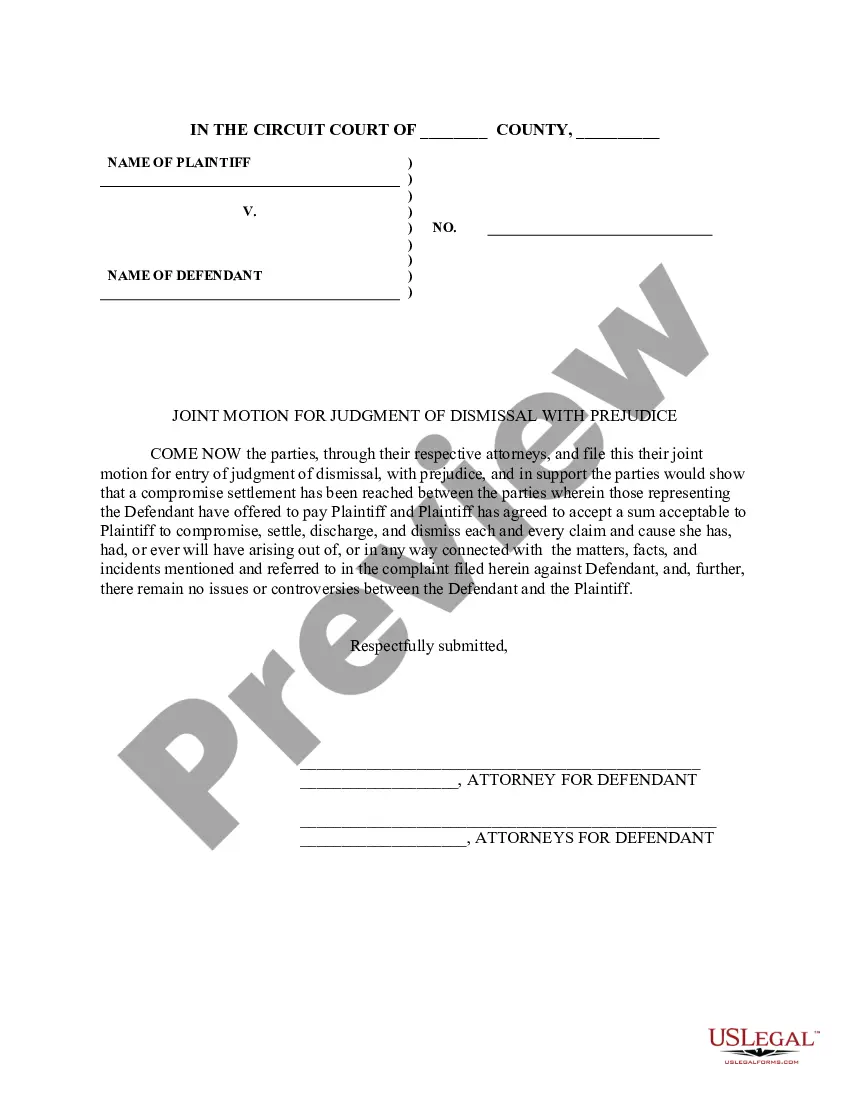
Get your form ready online
Our built-in tools help you complete, sign, share, and store your documents in one place.
Make edits, fill in missing information, and update formatting in US Legal Forms—just like you would in MS Word.
Download a copy, print it, send it by email, or mail it via USPS—whatever works best for your next step.
Sign and collect signatures with our SignNow integration. Send to multiple recipients, set reminders, and more. Go Premium to unlock E-Sign.
If this form requires notarization, complete it online through a secure video call—no need to meet a notary in person or wait for an appointment.
We protect your documents and personal data by following strict security and privacy standards.

Make edits, fill in missing information, and update formatting in US Legal Forms—just like you would in MS Word.

Download a copy, print it, send it by email, or mail it via USPS—whatever works best for your next step.

Sign and collect signatures with our SignNow integration. Send to multiple recipients, set reminders, and more. Go Premium to unlock E-Sign.

If this form requires notarization, complete it online through a secure video call—no need to meet a notary in person or wait for an appointment.

We protect your documents and personal data by following strict security and privacy standards.
Looking for another form?

How to fill out Dismissal Without Prejudice?
Managing legal documents and tasks can be a lengthy addition to your day. Civil Case Dismissed Without Prejudice and similar forms frequently require you to locate them and figure out how to fill them out accurately.
Thus, if you are addressing financial, legal, or personal affairs, possessing a thorough and useful online directory of forms at your disposal will be immensely beneficial.
US Legal Forms is the premier online resource for legal templates, featuring over 85,000 state-specific documents and numerous tools to help you complete your forms swiftly.
Browse the collection of relevant documents available to you with just a single click.
After that, follow these steps to complete your form: Ensure you have found the correct form using the Review function and examining the form details. Select Buy Now when ready, and choose the subscription plan that fits your needs. Click Download, then fill out, eSign, and print the form. US Legal Forms has a quarter-century of experience assisting users manage their legal documents. Find the form you need today and simplify any process without hassle.
- US Legal Forms provides state- and county-specific documents available for download at any time.
- Protect your document management processes with a top-quality service that enables you to create any form in minutes without additional or concealed fees.
- Simply Log In to your account, locate Civil Case Dismissed Without Prejudice, and download it instantly from the My documents section.
- You can also retrieve previously saved forms.
- Is this your first experience with US Legal Forms? Register and create an account in just a few minutes to gain access to the form directory and Civil Case Dismissed Without Prejudice.
Form popularity
FAQ
No, a dismissal without prejudice is not a conviction. It simply means that the case is not currently moving forward, but it does not imply any determination of guilt or liability. This type of dismissal leaves the door open for future legal action if the plaintiff chooses to refile. For more information on your legal options, consider exploring the resources available through USLegalForms.
Someone may choose to dismiss a case without prejudice for several reasons, such as needing more time to gather evidence or reassessing their legal strategy. This option allows the plaintiff to maintain the ability to refile later without losing the original claim. Dismissing without prejudice can be a prudent choice in civil litigation. USLegalForms offers resources to help you understand this decision better.
Choosing between dismissal with or without prejudice depends on your circumstances. A dismissal without prejudice provides the chance to refile, giving you another shot at your claims. Conversely, a dismissal with prejudice is final and prevents any future claims on the same issue. Assessing your case with a legal expert can help you make the best decision.
A dismissal does not necessarily mean you lost the case; rather, it indicates that the case will not proceed in its current form. In many instances, a dismissal without prejudice allows you the opportunity to refile. Therefore, it's essential to understand the implications of the dismissal type. Seeking help from platforms like USLegalForms can clarify your legal standing.
You should use 'without prejudice' when you wish to preserve the right to bring the same claim in the future. This is often beneficial if you believe you can strengthen your case or gather more evidence later. Opting for a dismissal without prejudice can serve as a strategic move in civil litigation. For further assistance, USLegalForms can help you navigate your options.
The distinction between a civil case dismissed with or without prejudice is significant. A dismissal without prejudice allows the plaintiff to refile the case later, while a dismissal with prejudice prevents any further action on the same claim. Generally, having a case dismissed without prejudice offers more flexibility for future legal action. If you're unsure about your situation, consulting a legal expert can provide clarity.
Civil cases may get dismissed for various reasons, including lack of evidence, failure to comply with court rules, or procedural issues. When a case is dismissed, it often indicates that the court found insufficient grounds to proceed. Understanding why a civil case is dismissed can help you avoid similar pitfalls in the future. If you need guidance, consider using resources like USLegalForms.