Sample Default Judgment California With Motion To Dismiss
Description
Get your form ready online
Our built-in tools help you complete, sign, share, and store your documents in one place.
Make edits, fill in missing information, and update formatting in US Legal Forms—just like you would in MS Word.
Download a copy, print it, send it by email, or mail it via USPS—whatever works best for your next step.
Sign and collect signatures with our SignNow integration. Send to multiple recipients, set reminders, and more. Go Premium to unlock E-Sign.
If this form requires notarization, complete it online through a secure video call—no need to meet a notary in person or wait for an appointment.
We protect your documents and personal data by following strict security and privacy standards.

Make edits, fill in missing information, and update formatting in US Legal Forms—just like you would in MS Word.

Download a copy, print it, send it by email, or mail it via USPS—whatever works best for your next step.

Sign and collect signatures with our SignNow integration. Send to multiple recipients, set reminders, and more. Go Premium to unlock E-Sign.

If this form requires notarization, complete it online through a secure video call—no need to meet a notary in person or wait for an appointment.

We protect your documents and personal data by following strict security and privacy standards.
Looking for another form?
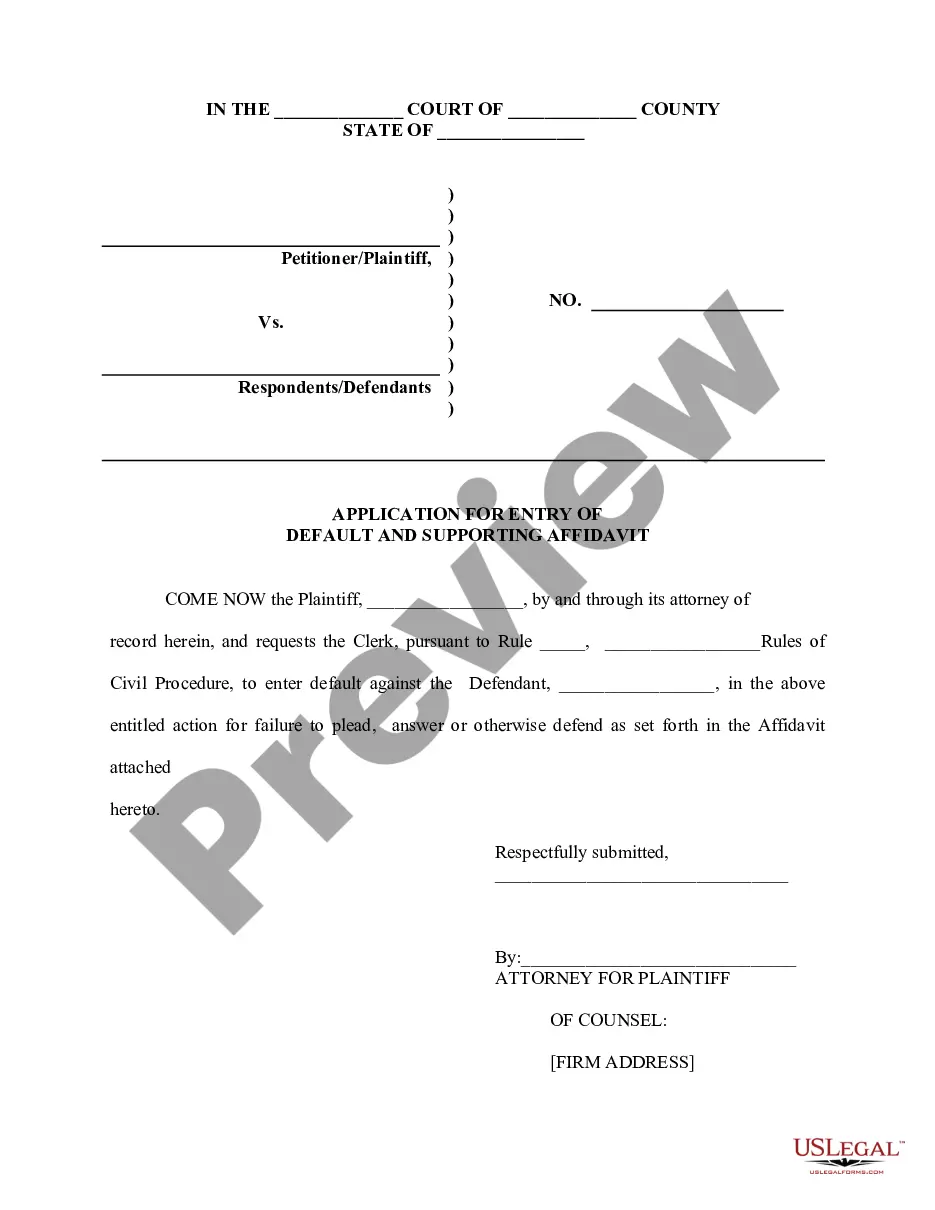
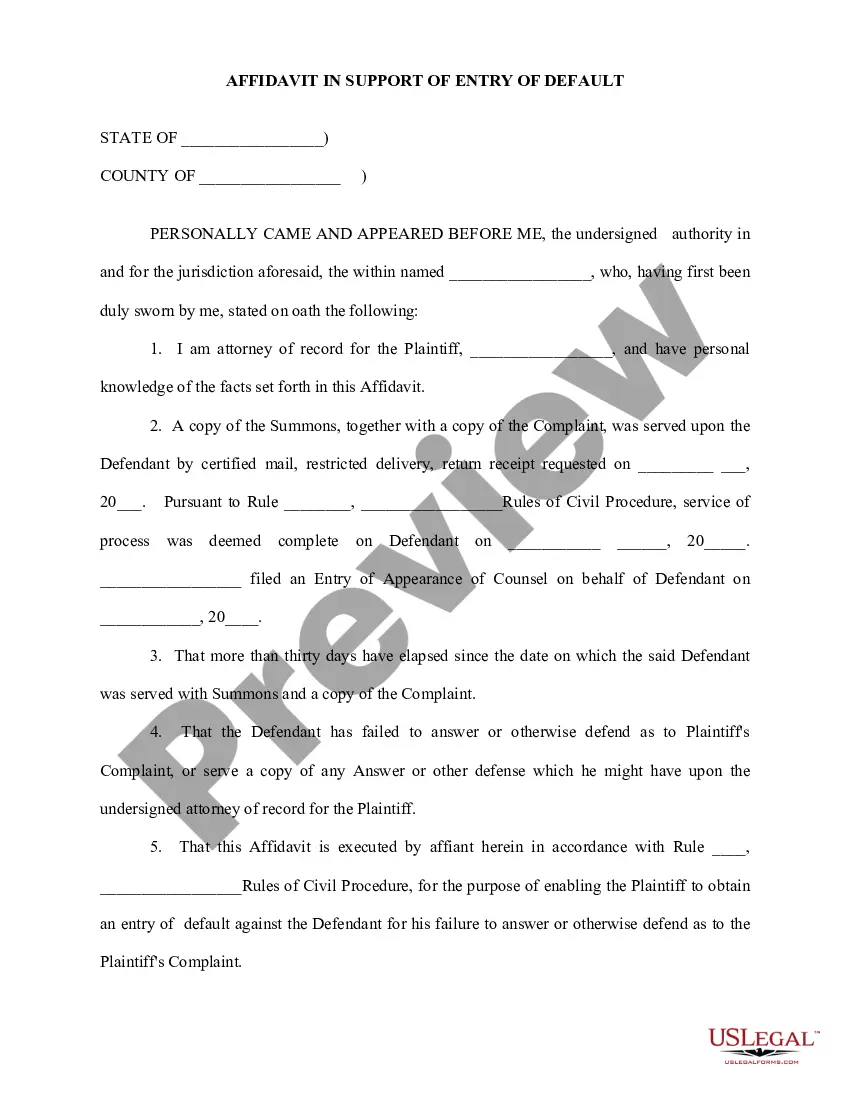
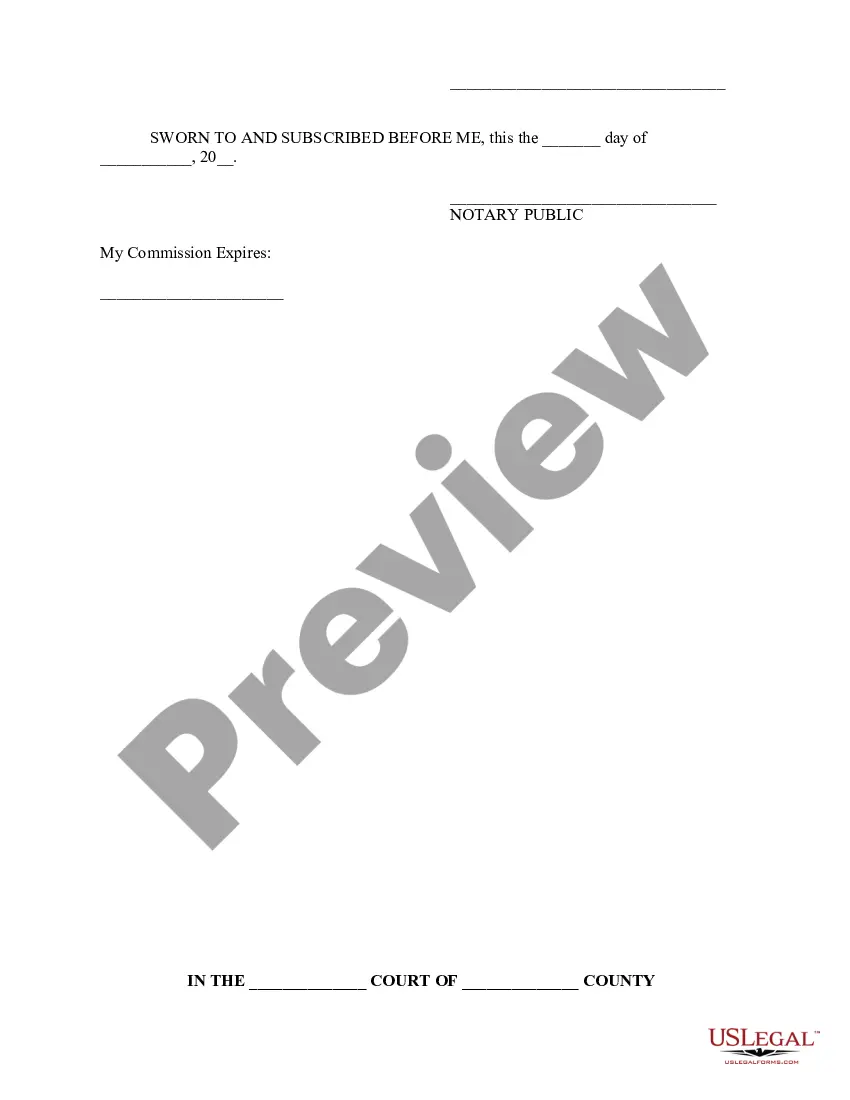
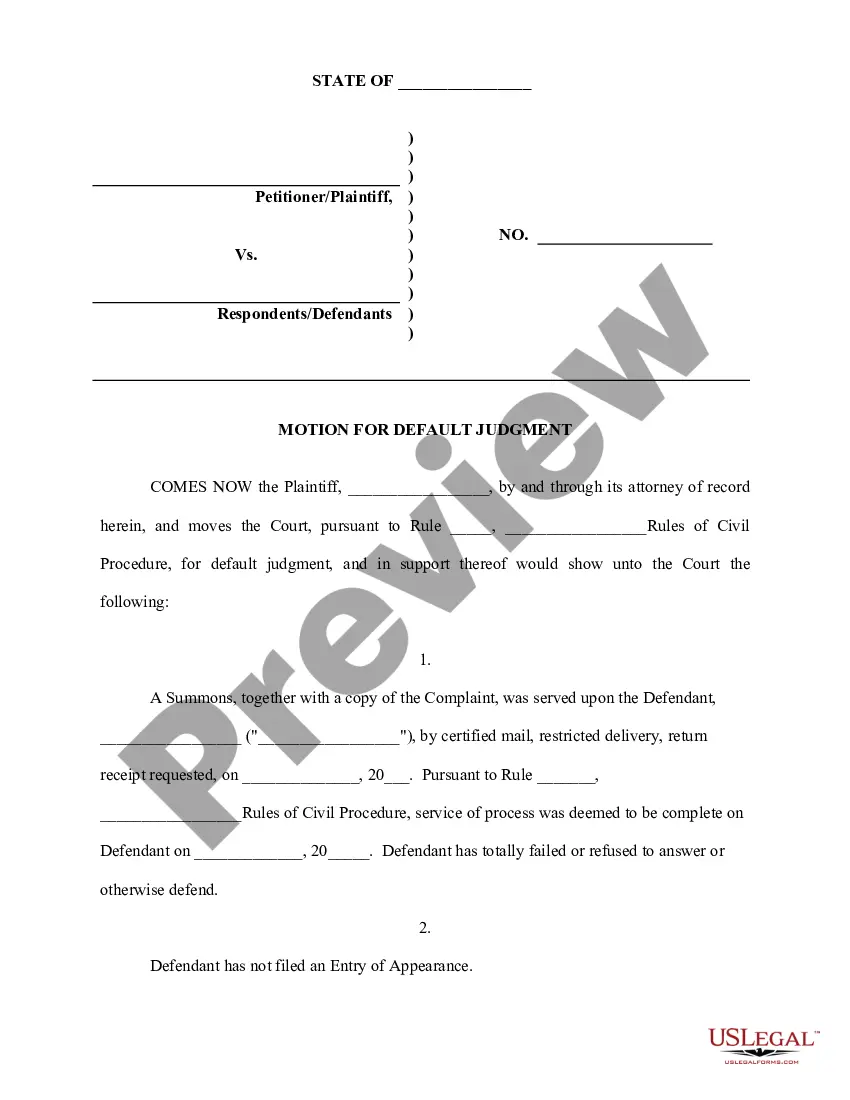
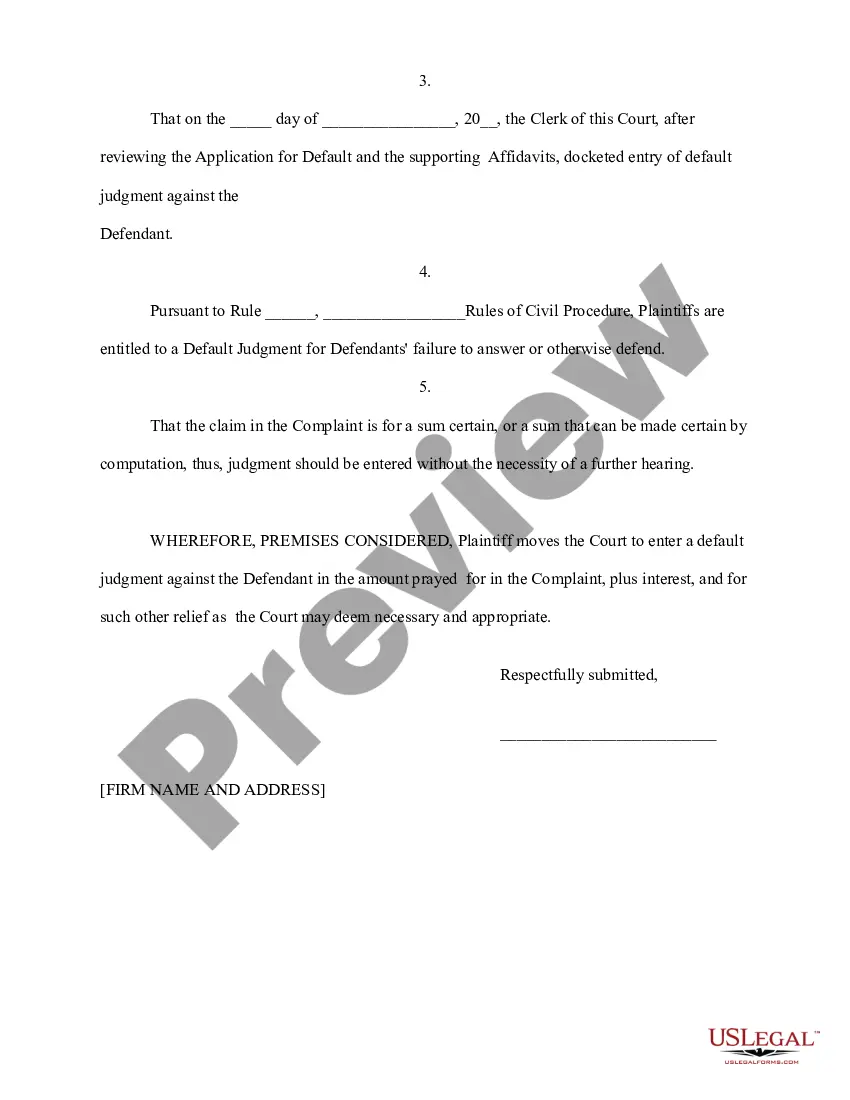
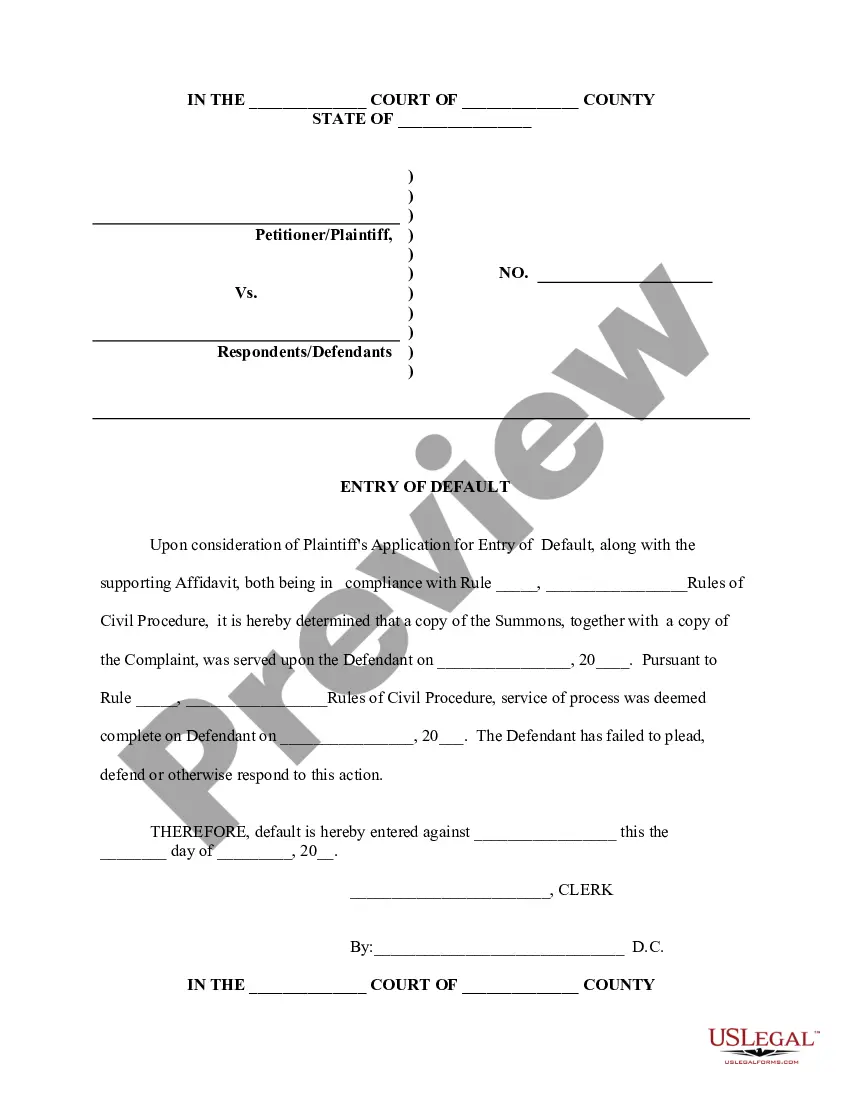
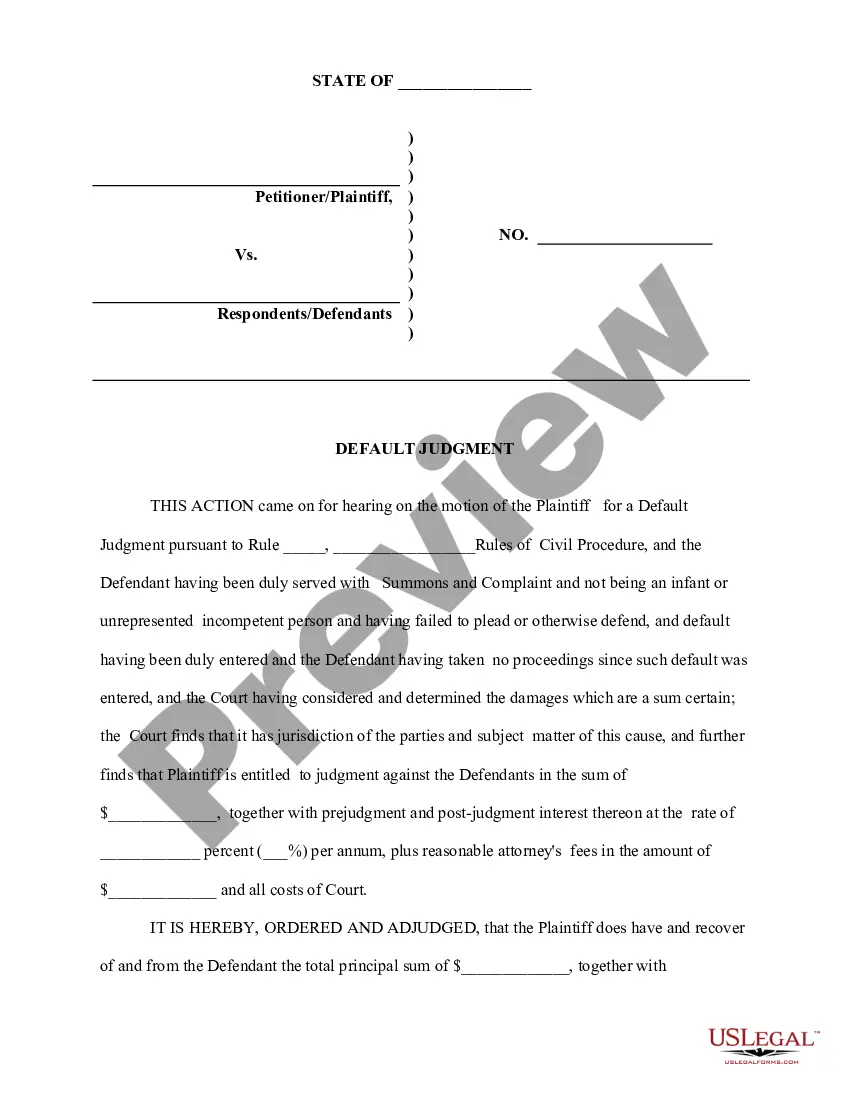
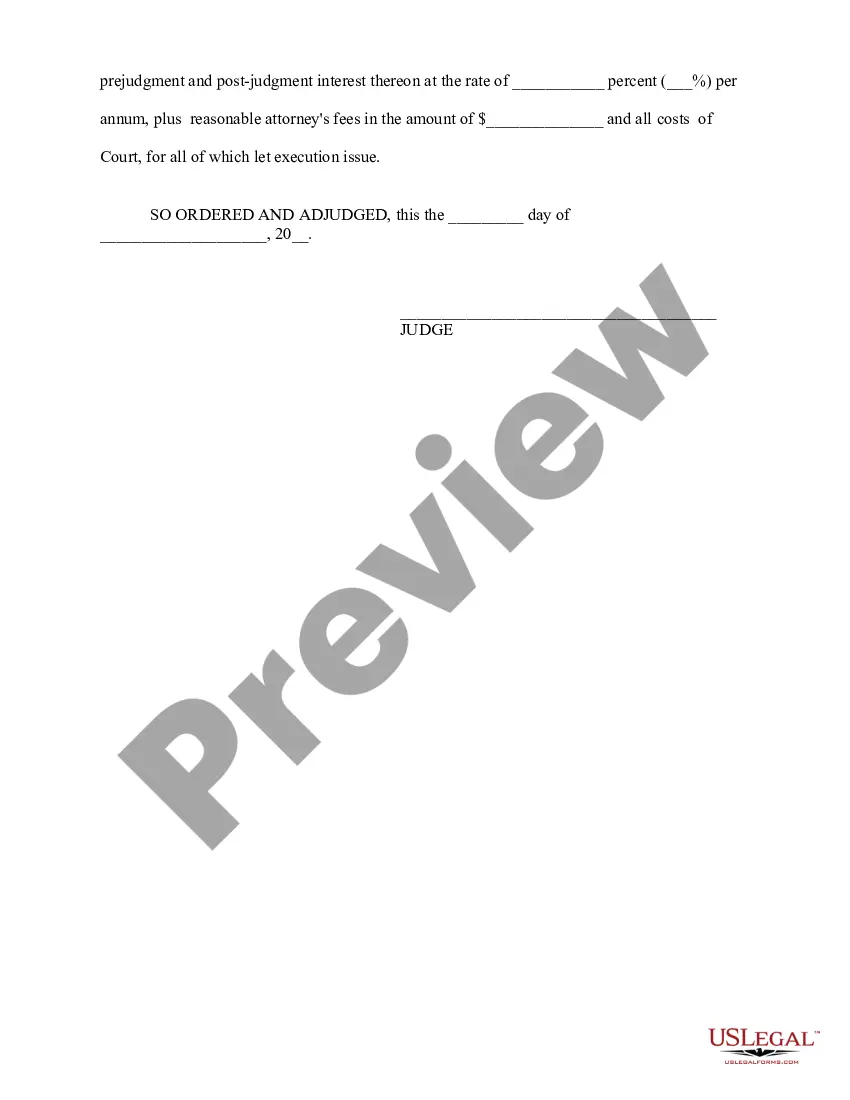
How to fill out Application For Entry Of Default - Affidavit - Motion - Entry Of Default - Default Judgment?
It’s clear that you cannot become a legal expert instantly, nor can you understand how to swiftly draft Sample Default Judgment California With Motion To Dismiss without a specialized background.
Drafting legal documents is a lengthy process that necessitates specific education and skills. So why not entrust the creation of the Sample Default Judgment California With Motion To Dismiss to the experts.
With US Legal Forms, one of the most comprehensive legal document repositories, you can discover anything from court documents to templates for internal business communication.
If you need a different template, restart your search.
Create a free account and choose a subscription plan to buy the form. Click Buy now. Once the payment is processed, you can access the Sample Default Judgment California With Motion To Dismiss, fill it out, print it, and deliver it by mail to the appropriate individuals or organizations.
- We understand how crucial it is to comply with federal and local regulations.
- That’s why, on our site, all templates are location-specific and current.
- Here’s how you can begin using our platform and acquire the document you need in just a few minutes.
- Locate the document you require by utilizing the search feature at the top of the page.
- Preview it (if this option is available) and review the accompanying description to ascertain if Sample Default Judgment California With Motion To Dismiss is what you seek.
Form popularity
FAQ
File your forms at the courthouse where you filed your case. The court clerk will process your Request for Dismissal (Form CIV-110) and Form CIV-120. The clerk will keep the original and return the copies of Form CIV-110 to you, stamped "Filed." Keep one for your records.
If you were sued and lost because you did not appear in court, you can file an SC-135 Notice of Motion to Vacate Judgment. By filing this motion, you are asking the court to cancel the judgment entered against you and to give you a new trial.
If the defendant does not deliver a defence within the allotted period, the plaintiff may issue a motion for judgment in default of defence. However, if the court considers it in the interests of justice, time for delivery of the statement of claim may be extended for a period deemed necessary.
How to ask to cancel the judge's decision Fill out the Notice. Fill out a Notice of Motion to Vacate Judgment and Declaration (form SC-135) ... Make copies. Make 2 copies of the Notice. File the Notice and pay the filing fee. Give the original and the 2 copies to the court clerk. ... Go to your new court date.
Motions to dismiss are filed for a range of reasons, which may include: Statute of limitations expiration: The case does not fall within California's time limit for filing. Lack of subject matter jurisdiction: The court does not have the authority to hear this type of case.