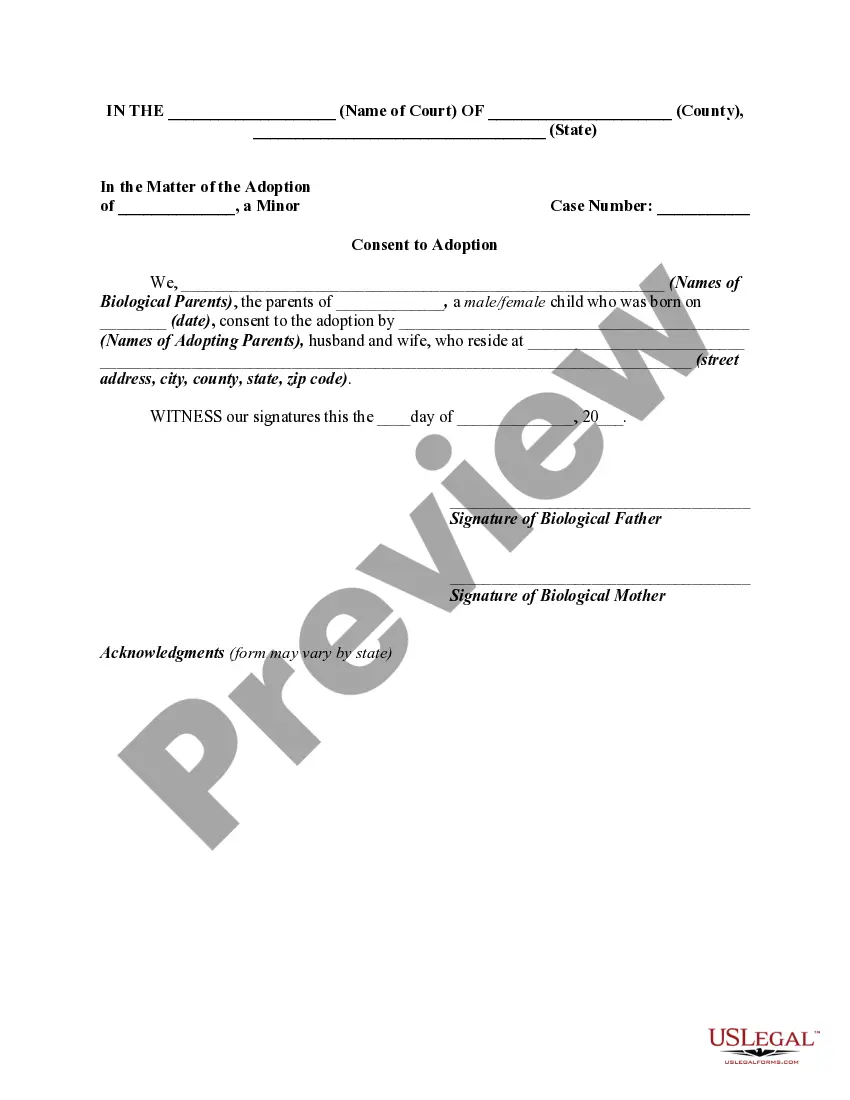
Biological Child In Tagalog
Description
Get your form ready online
Our built-in tools help you complete, sign, share, and store your documents in one place.
Make edits, fill in missing information, and update formatting in US Legal Forms—just like you would in MS Word.
Download a copy, print it, send it by email, or mail it via USPS—whatever works best for your next step.
Sign and collect signatures with our SignNow integration. Send to multiple recipients, set reminders, and more. Go Premium to unlock E-Sign.
If this form requires notarization, complete it online through a secure video call—no need to meet a notary in person or wait for an appointment.
We protect your documents and personal data by following strict security and privacy standards.

Make edits, fill in missing information, and update formatting in US Legal Forms—just like you would in MS Word.

Download a copy, print it, send it by email, or mail it via USPS—whatever works best for your next step.

Sign and collect signatures with our SignNow integration. Send to multiple recipients, set reminders, and more. Go Premium to unlock E-Sign.

If this form requires notarization, complete it online through a secure video call—no need to meet a notary in person or wait for an appointment.

We protect your documents and personal data by following strict security and privacy standards.
Looking for another form?

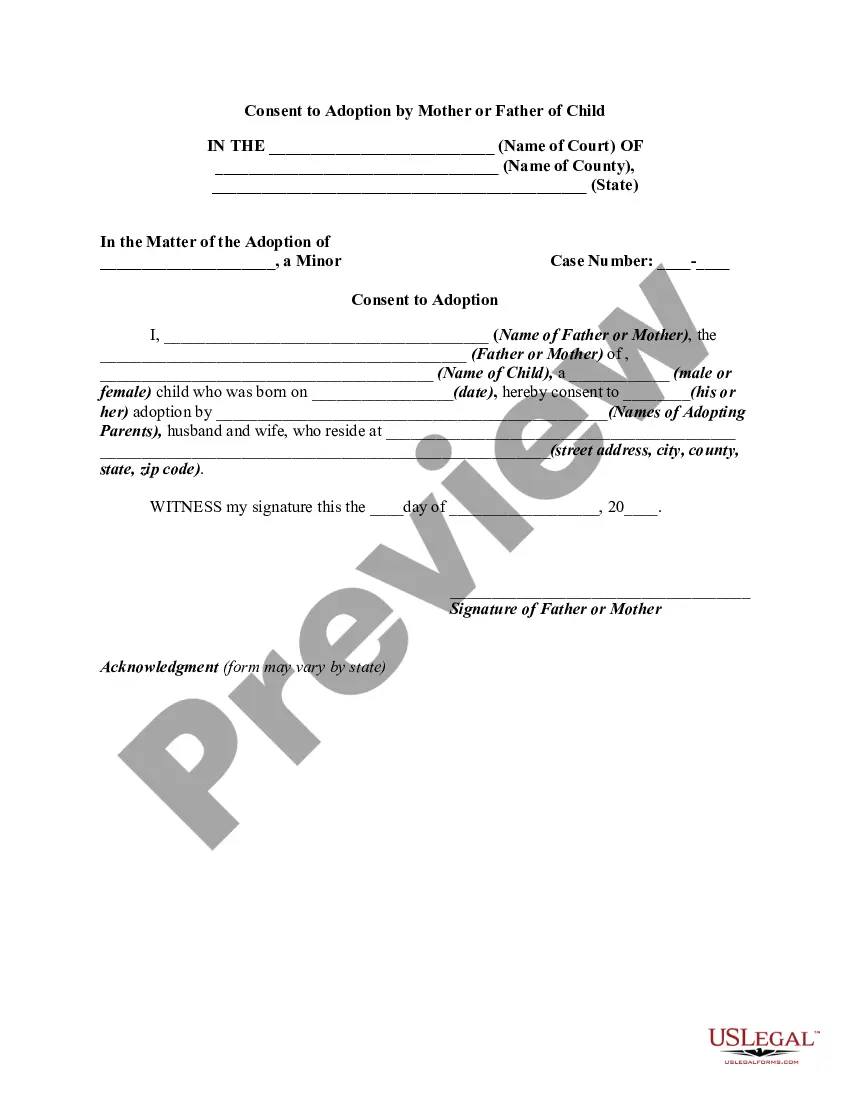
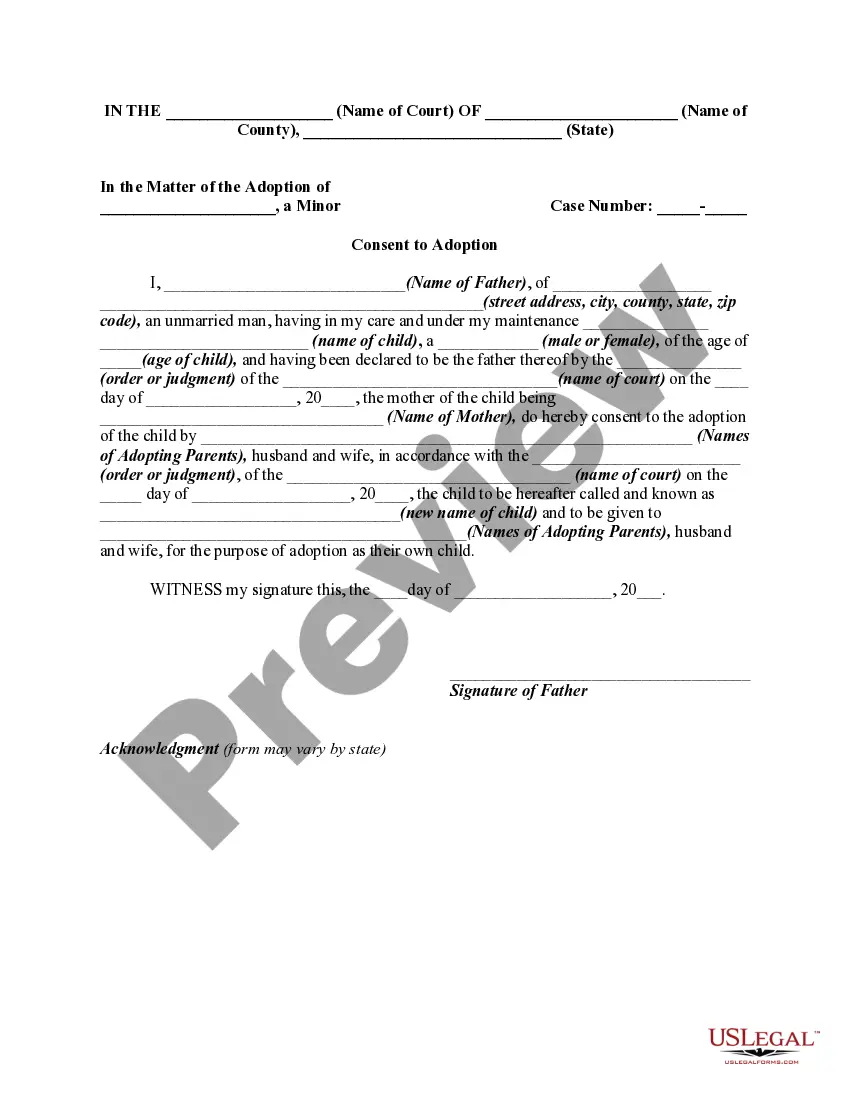
How to fill out Consent To Adoption By Biological Parents Of Child?
The Biological Child In Tagalog you see on this page is a multi-usable formal template drafted by professional lawyers in line with federal and local laws. For more than 25 years, US Legal Forms has provided individuals, organizations, and attorneys with more than 85,000 verified, state-specific forms for any business and personal scenario. It’s the quickest, most straightforward and most trustworthy way to obtain the documents you need, as the service guarantees the highest level of data security and anti-malware protection.
Acquiring this Biological Child In Tagalog will take you just a few simple steps:
- Look for the document you need and review it. Look through the file you searched and preview it or check the form description to ensure it satisfies your requirements. If it does not, use the search option to get the correct one. Click Buy Now when you have located the template you need.
- Sign up and log in. Select the pricing plan that suits you and create an account. Use PayPal or a credit card to make a quick payment. If you already have an account, log in and check your subscription to proceed.
- Get the fillable template. Choose the format you want for your Biological Child In Tagalog (PDF, Word, RTF) and download the sample on your device.
- Complete and sign the paperwork. Print out the template to complete it by hand. Alternatively, utilize an online multi-functional PDF editor to rapidly and accurately fill out and sign your form with a eSignature.
- Download your paperwork one more time. Utilize the same document again whenever needed. Open the My Forms tab in your profile to redownload any earlier saved forms.
Sign up for US Legal Forms to have verified legal templates for all of life’s circumstances at your disposal.
Form popularity
FAQ
Legitimation is a remedy by means of which those who in fact were not born in wedlock and should, therefore, be considered legitimate, it being supposed that they were born when their parents were already married. Legitimation takes place by the subsequent valid marriage of the parents of the child.
A child's birth must be registered at the Local Civil Registry office of the city or municipality where the child was born. This must be done no later than 30 days from the day the child was born; otherwise, the registration is deemed late or delayed.
The gender neutral term 'Filipinx' has gained popularity especially among Filipino-Americans as a demonym or an adjective. Since then it has been controversial, with Filipinos living in the Philippines arguing that the term 'Filipino' is already genderless.
Natural-born Filipino citizens are those who are citizens of the Philippines from birth without having to perform any act to acquire or perfect their Philippine citizenship. These are: Those whose fathers or mothers are Filipino citizens at the time of their birth; and.
In genderless languages like Tagalog, pronouns do not have a classified gender. For example, the pronoun siya (she/her, he/him, they/them) can be used to refer to anyone regardless of gender.