Bond Reduction Letter Withdrawal
Description
Get your form ready online
Our built-in tools help you complete, sign, share, and store your documents in one place.
Make edits, fill in missing information, and update formatting in US Legal Forms—just like you would in MS Word.
Download a copy, print it, send it by email, or mail it via USPS—whatever works best for your next step.
Sign and collect signatures with our SignNow integration. Send to multiple recipients, set reminders, and more. Go Premium to unlock E-Sign.
If this form requires notarization, complete it online through a secure video call—no need to meet a notary in person or wait for an appointment.
We protect your documents and personal data by following strict security and privacy standards.

Make edits, fill in missing information, and update formatting in US Legal Forms—just like you would in MS Word.

Download a copy, print it, send it by email, or mail it via USPS—whatever works best for your next step.

Sign and collect signatures with our SignNow integration. Send to multiple recipients, set reminders, and more. Go Premium to unlock E-Sign.

If this form requires notarization, complete it online through a secure video call—no need to meet a notary in person or wait for an appointment.

We protect your documents and personal data by following strict security and privacy standards.
Looking for another form?
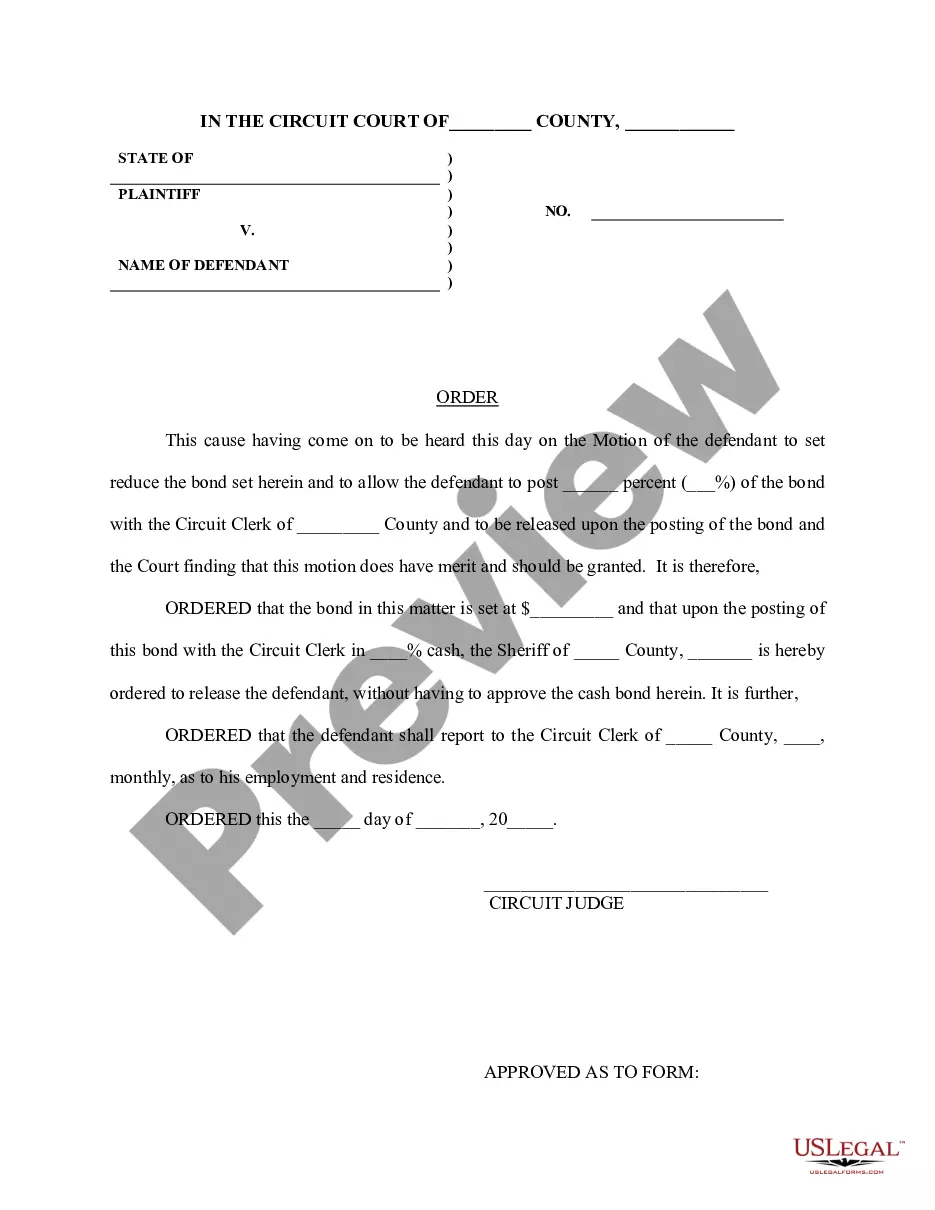
How to fill out Order To Reduce Bond?
Locating a reliable source for recent and suitable legal forms is a significant part of navigating through bureaucracy. Selecting the correct legal documents requires precision and careful consideration, which is why it's crucial to acquire samples of Bond Reduction Letter Withdrawal exclusively from trustworthy providers, such as US Legal Forms. An incorrect form will squander your time and impede your current situation. With US Legal Forms, you have minimal worries. You can access and review all pertinent information about the document’s applicability and significance to your specific situation and region.
Follow these outlined steps to complete your Bond Reduction Letter Withdrawal.
Eliminate the hassles that come with your legal paperwork. Explore the vast US Legal Forms library to discover legal templates, evaluate their relevance to your situation, and download them instantly.
- Utilize the catalog navigation or search functionality to find your template.
- Review the form’s details to ensure it aligns with your state's requirements.
- Preview the form, if available, to confirm it is the template you need.
- Return to the search and seek the appropriate template if the Bond Reduction Letter Withdrawal does not meet your needs.
- If you are confident about the form’s suitability, proceed to download it.
- For authorized users, click Log in to verify your identity and access your chosen forms in My documents.
- If you do not have an account yet, click Buy now to acquire the form.
- Select the pricing option that fits your requirements.
- Continue to the registration to finalize your order.
- Complete your purchase using a payment method (credit card or PayPal).
- Choose the file format for downloading Bond Reduction Letter Withdrawal.
- Once the form is on your device, you can modify it with the editor or print it and fill it out manually.
Form popularity
FAQ
While a bondsman has the authority to revoke your bond, they must have valid reasons, such as breach of contract or non-compliance with court orders. Understanding your binding agreement helps you navigate these potential issues. If you feel uncertain, discussing a bond reduction letter withdrawal with your bondsman may clarify your options.
A cosigner can remove themselves from a bond, but this often requires the completion of legal steps, including securing a bond reduction letter withdrawal. The bondsman may require the approval of the principal before consenting to the removal. It's best to consult with your bondsman for the right approach.
Yes, a bond can be withdrawn if specific conditions are met. Requesting a bond reduction letter withdrawal is one way to initiate this process. Both the bondsman and the relevant legal authorities must agree to the withdrawal for it to be effective.
A bond can be revoked for several reasons, including failure to appear in court or violating any terms set by the court. This revocation can lead to the loss of any bond posted. If you experience issues with your bond, consider requesting a bond reduction letter withdrawal to address potential concerns before they escalate.
When a bond is cancelled, it means the obligations under that bond are no longer valid. This can occur if the case is dismissed or if a bond reduction letter withdrawal is processed successfully. It's essential to check with your bondsman to confirm that all legal requirements have been satisfied.
Yes, a bondsman can come off your bond under certain circumstances. If you no longer need the bond or have resolved the case, you can request a bond reduction letter withdrawal. It’s important to communicate with your bondsman to understand the specific process and implications involved.
When a bond is termed as 'withdrawn,' it signifies that the bond has been formally canceled or removed from obligation. The process typically involves submitting a bond reduction letter withdrawal to your bonding agency, which acknowledges the request. Understanding this process helps you manage your financial commitments effectively. If you have questions about the next steps or implications, consulting with a legal expert can provide clarity.
Retrieving bonds can take varying lengths of time based on the bond issuer and your request type. Once a bond reduction letter withdrawal is submitted, the timeframe for getting the bonds out will depend on the issuer's policies and procedures. It is advisable to communicate regularly with your bonding company for updates. This way, you can stay proactive about the release of your bonds.
The time it takes to cancel a bond can vary depending on several factors, including the bond type and your specific circumstances. Generally, once you submit your bond reduction letter withdrawal, the cancellation process might take a few days to weeks. It's essential to follow up with your bonding company to ensure all steps are completed smoothly. Staying informed can help you manage this timeline effectively.
To exit a bond contract, you can submit a bond reduction letter withdrawal. This letter formally requests to withdraw from the obligation by outlining your reasons. It’s important to review any terms or conditions in your contract, as they may specify the process. Engaging with a legal professional can ensure you navigate this situation correctly.