Bond Reduce Motion For Summary Judgment
Description

Get your form ready online
Our built-in tools help you complete, sign, share, and store your documents in one place.
Make edits, fill in missing information, and update formatting in US Legal Forms—just like you would in MS Word.
Download a copy, print it, send it by email, or mail it via USPS—whatever works best for your next step.
Sign and collect signatures with our SignNow integration. Send to multiple recipients, set reminders, and more. Go Premium to unlock E-Sign.
If this form requires notarization, complete it online through a secure video call—no need to meet a notary in person or wait for an appointment.
We protect your documents and personal data by following strict security and privacy standards.

Make edits, fill in missing information, and update formatting in US Legal Forms—just like you would in MS Word.

Download a copy, print it, send it by email, or mail it via USPS—whatever works best for your next step.

Sign and collect signatures with our SignNow integration. Send to multiple recipients, set reminders, and more. Go Premium to unlock E-Sign.

If this form requires notarization, complete it online through a secure video call—no need to meet a notary in person or wait for an appointment.

We protect your documents and personal data by following strict security and privacy standards.
Looking for another form?






How to fill out Order To Reduce Bond?
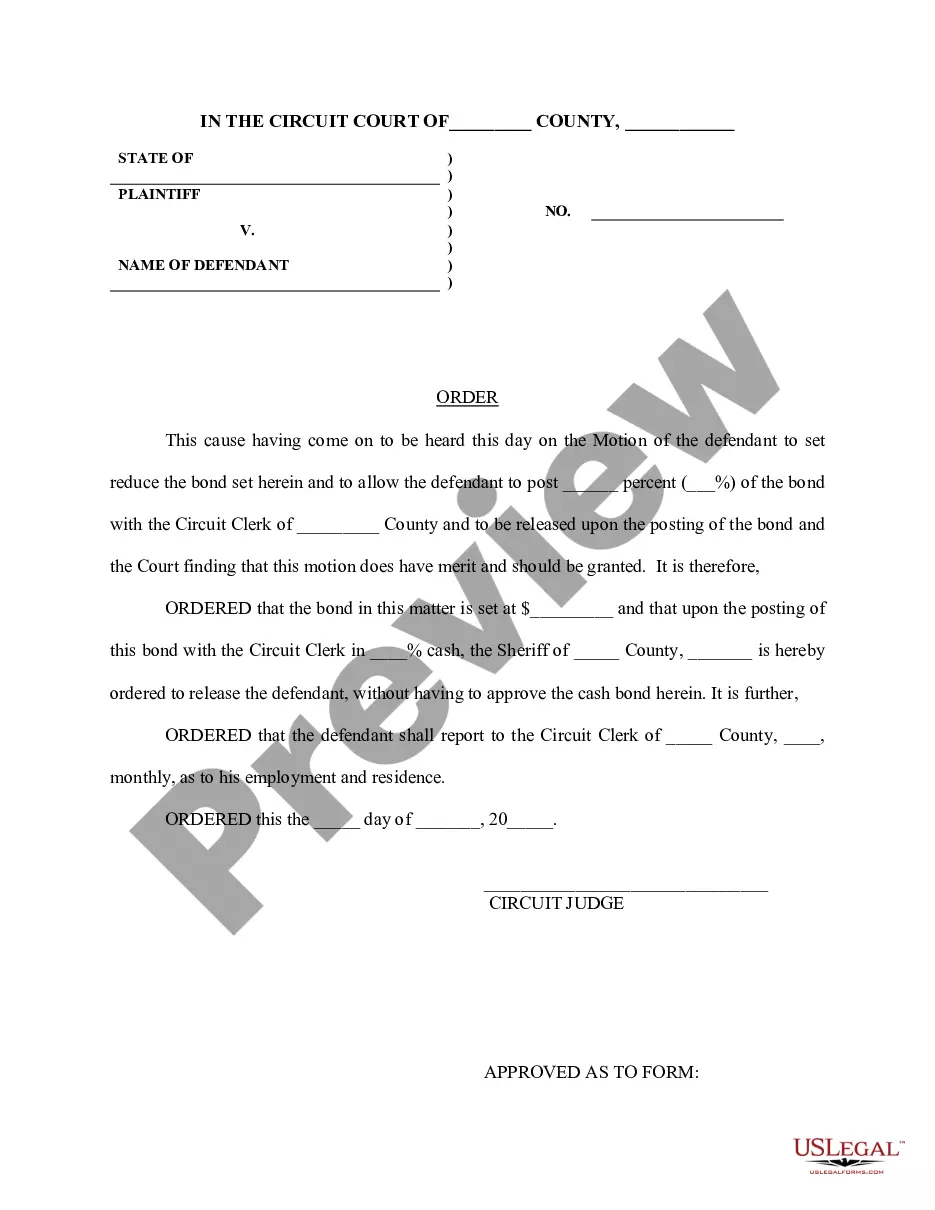
The Bond Reduce Motion For Summary Judgment available on this site is a reusable formal template created by expert attorneys in accordance with federal and local regulations.
For over 25 years, US Legal Forms has supplied individuals, businesses, and lawyers with more than 85,000 verified, state-specific documents for any business and personal situation. It’s the quickest, easiest, and most dependable way to acquire the paperwork you need, as the service ensures the utmost level of data security and anti-malware safeguards.
Choose the format you prefer for your Bond Reduce Motion For Summary Judgment (PDF, DOCX, RTF) and save the document on your device.
- Browse for the document you require and examine it.
- Review the template you searched and preview it or check the document description to confirm it meets your needs. If it doesn’t, use the search bar to locate the correct one. Click Buy Now once you have identified the template you need.
- Subscribe and Log In.
- Select the pricing plan that fits you and create an account. Make a quick payment using PayPal or a credit card. If you already possess an account, Log In and review your subscription to continue.
- Obtain the fillable template.
Form popularity
FAQ
Yes, summary judgment can be set aside under certain circumstances. If new evidence comes to light or if the judgment was based on incorrect legal reasoning, a party may request the court to reconsider the decision. Reporting inaccuracies, along with filing a Bond reduce motion for summary judgment, provides a basis for appealing such judgments. It’s essential to act promptly and seek professional legal advice when considering this option.
To successfully defeat a motion for summary judgment, you should focus on creating genuine disputes of material fact. Gather evidence that counters the claims made in the motion and present strong arguments that highlight the need for a trial. Using strategies like Bond reduce motion for summary judgment may also provide you with actionable insights into framing your defense.
Your attorney could file a Motion to Dismiss your charges if there is insufficient evidence to support a conviction. The prosecutor must prove every single element of a charge. Otherwise, there is inadequate evidence, and the court may dismiss your case.
This is done through a motion to modify bond. After filing, the motion can be granted in one of two ways: (1) by consent of the judge and the prosecutor, or (2) by a hearing in front of a judge, opposed by the prosecutor. You do not want to file a motion to modify in every situation.
A court may agree to a bond reduction based on the circumstances of the alleged criminal offense, the defendant's criminal history, their ties to the community, and whether the defendant poses a flight risk or a risk of failing to appear for pretrial hearings and trial.
Bail bonds and personal bonds are forfeited in the following manner: The name of the defendant shall be called distinctly at the courthouse door, and if the defendant does not appear within a reasonable time after such call is made, judgment shall be entered that the State of Texas recover of the defendant the amount ...
After first appearance, you can file a motion to reduce bond with your trial judge. The hearing must be "prompt." The Defense must give the prosecution at least 3 hours notice before the bond reduction motion is heard.