Discovery Criminal Case With Judge
Description
Get your form ready online
Our built-in tools help you complete, sign, share, and store your documents in one place.
Make edits, fill in missing information, and update formatting in US Legal Forms—just like you would in MS Word.
Download a copy, print it, send it by email, or mail it via USPS—whatever works best for your next step.
Sign and collect signatures with our SignNow integration. Send to multiple recipients, set reminders, and more. Go Premium to unlock E-Sign.
If this form requires notarization, complete it online through a secure video call—no need to meet a notary in person or wait for an appointment.
We protect your documents and personal data by following strict security and privacy standards.

Make edits, fill in missing information, and update formatting in US Legal Forms—just like you would in MS Word.

Download a copy, print it, send it by email, or mail it via USPS—whatever works best for your next step.

Sign and collect signatures with our SignNow integration. Send to multiple recipients, set reminders, and more. Go Premium to unlock E-Sign.

If this form requires notarization, complete it online through a secure video call—no need to meet a notary in person or wait for an appointment.

We protect your documents and personal data by following strict security and privacy standards.
Looking for another form?






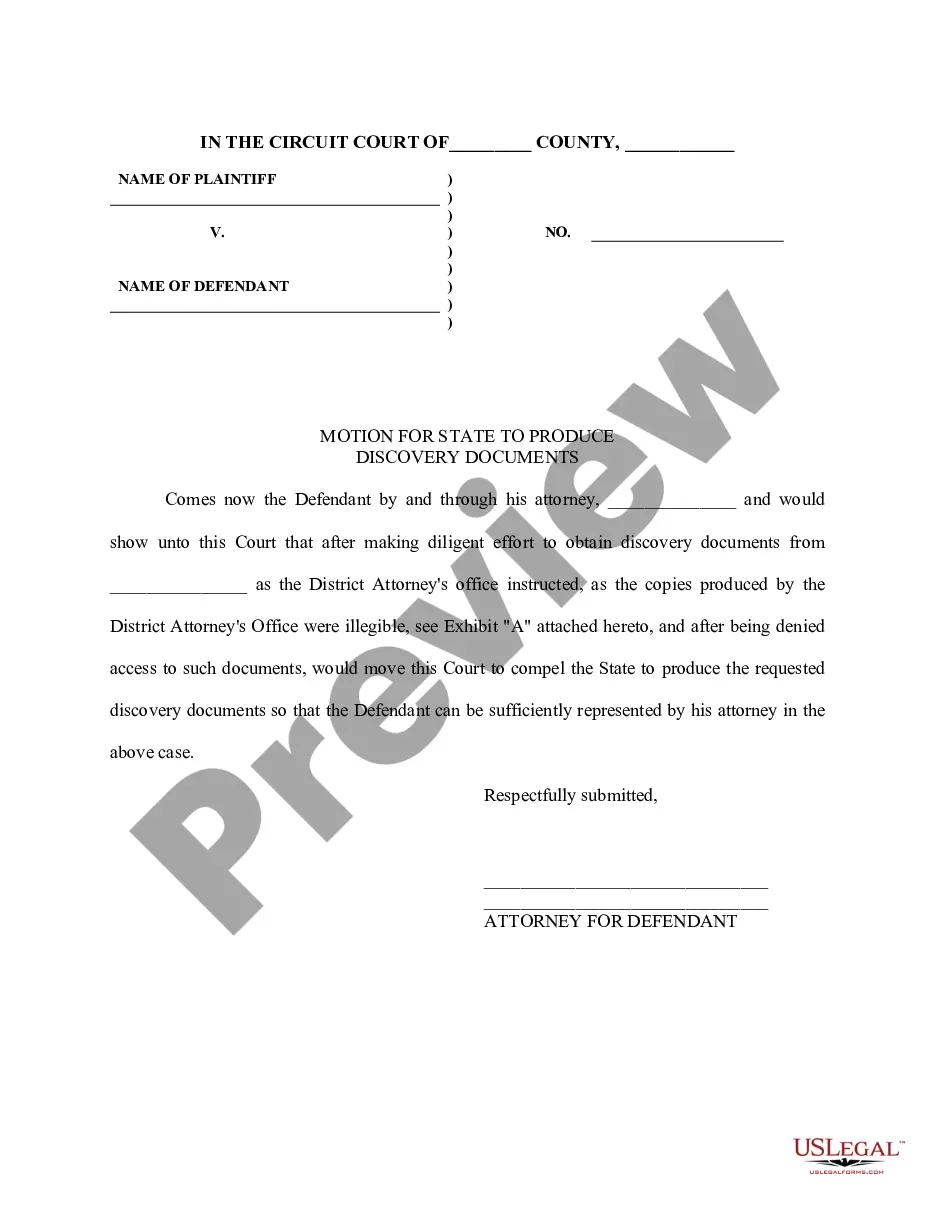
How to fill out Motion For State To Produce Discovery Document?
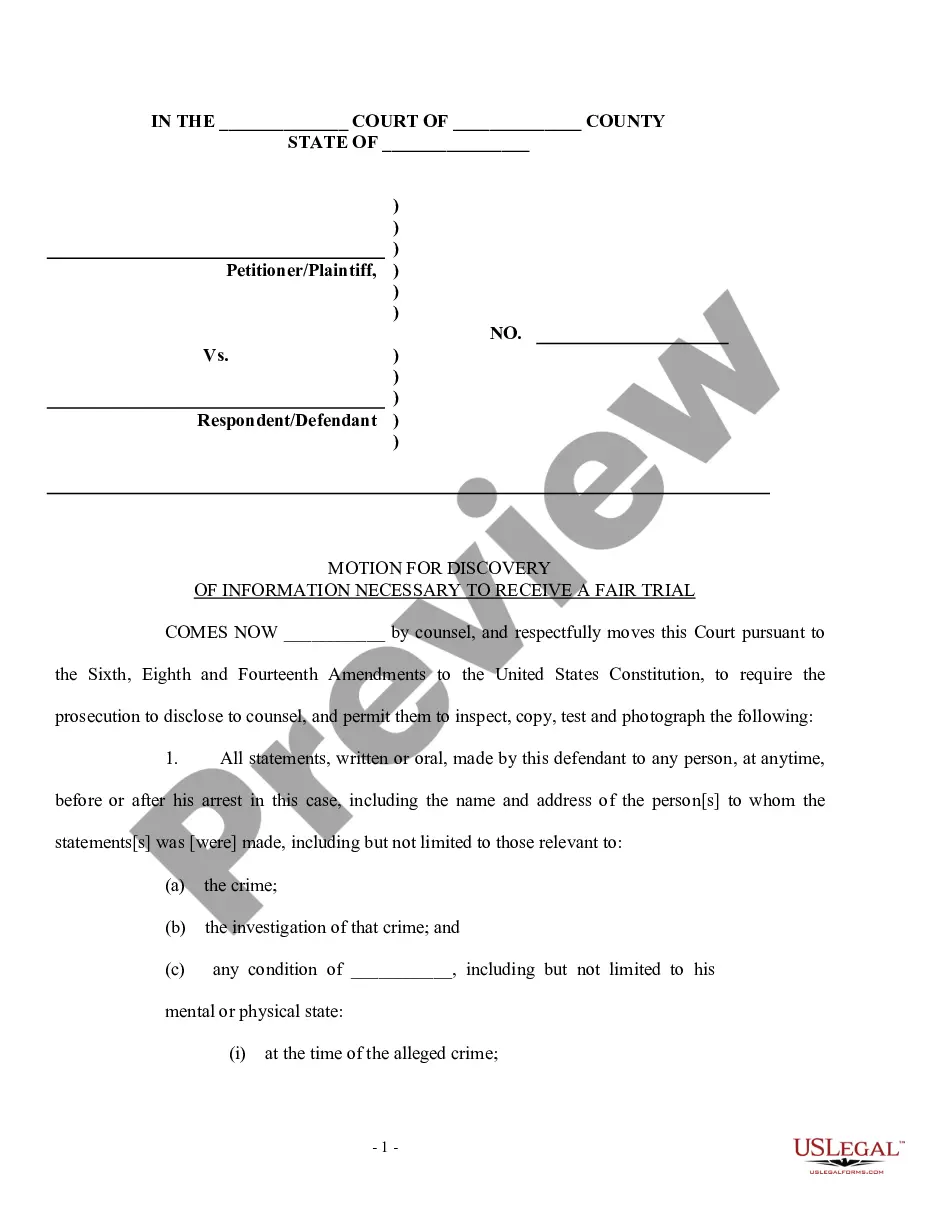
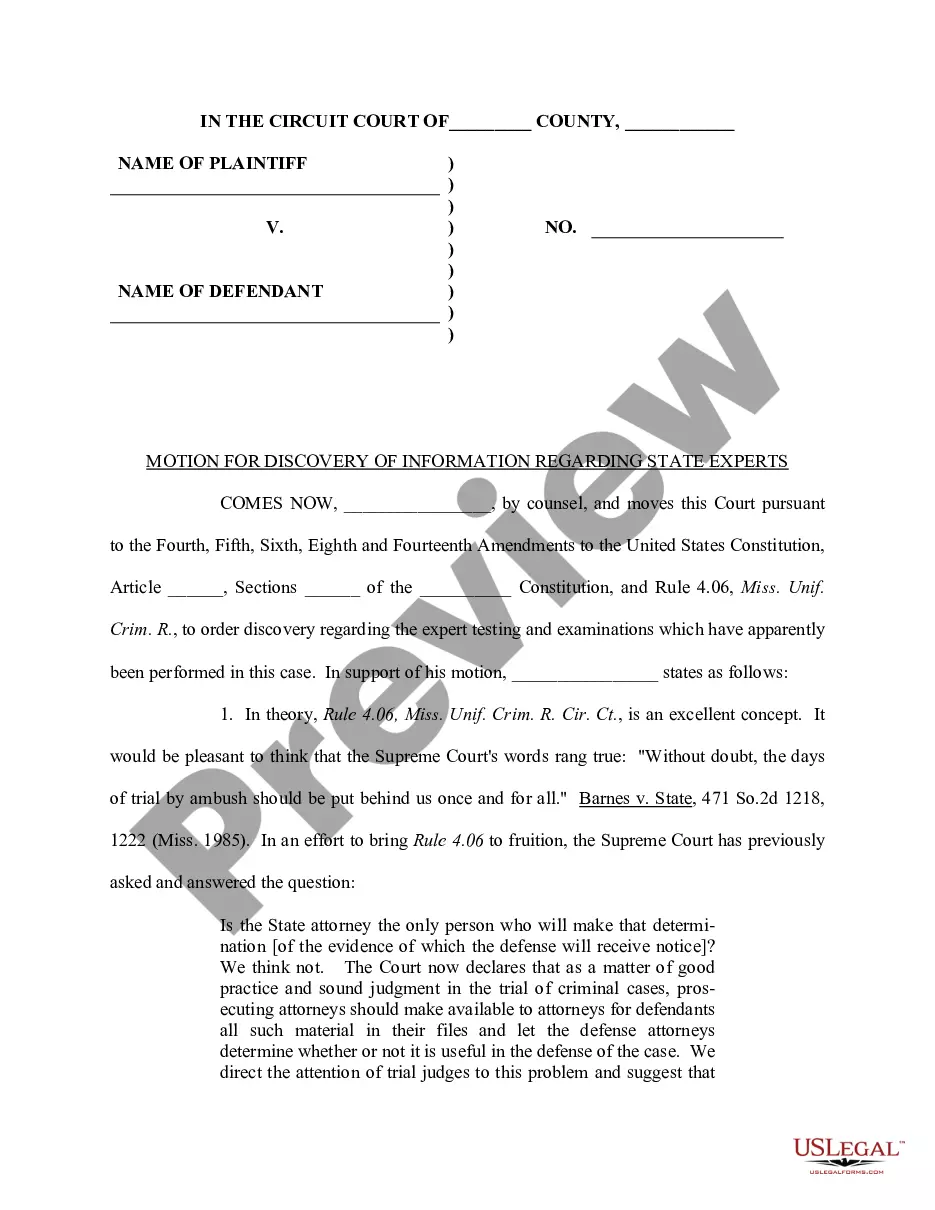
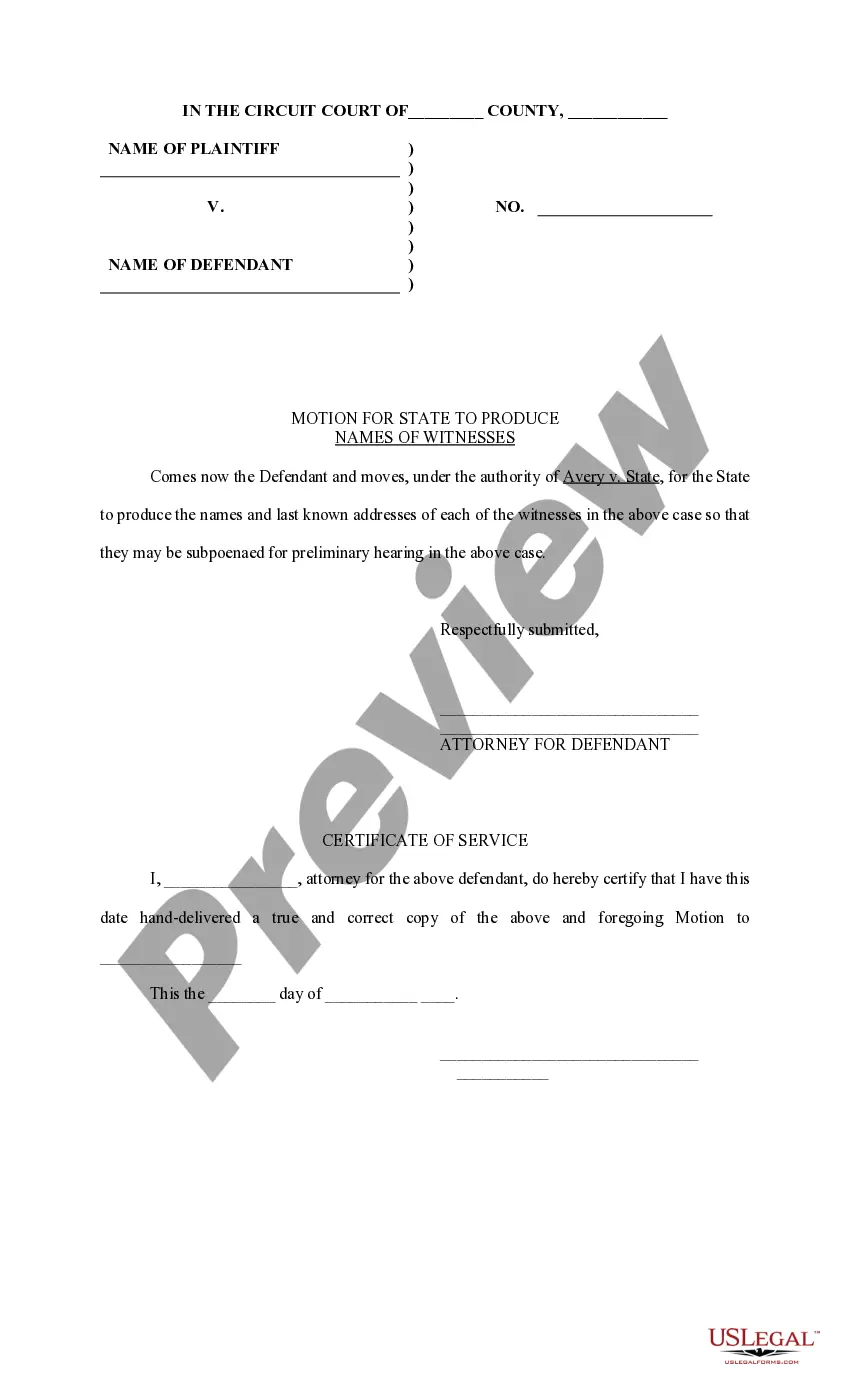
The Discovery Criminal Case With Judge displayed on this page is a reusable legal template crafted by experienced attorneys in accordance with federal and local regulations.
For over 25 years, US Legal Forms has supplied individuals, businesses, and lawyers with more than 85,000 validated, state-specific documents for any professional and personal situation. It’s the fastest, simplest, and most reliable method to acquire the paperwork you require, as the service ensures bank-level data security and anti-malware safeguards.
Select the format you prefer for your Discovery Criminal Case With Judge (PDF, Word, RTF) and download the example onto your device.
- Search for the document you need and review it.
- Browse through the file you searched and preview it or read the form description to confirm it meets your requirements. If it does not, use the search bar to find the appropriate one. Click Buy Now once you have found the template you require.
- Subscribe and Log In.
- Choose the pricing plan that fits you and create an account. Use PayPal or a credit card to make a swift payment. If you already have an account, Log In and check your subscription to proceed.
- Get the fillable template.
Form popularity
FAQ
Tips for your Examination for Discovery Inform yourself of the relevant facts. It pays to be knowledgeable about your case and the relevant facts. ... Tell the truth. ... Your evidence will be used against you. ... Listen carefully. ... Do not guess. ... Think before you speak. ... Avoid absolutes like ?Always? and ?Never? ... Verbal answers only.
Discovery, in the law of common law jurisdictions, is a pre-trial procedure in a lawsuit in which each party, through the law of civil procedure, can obtain evidence from the other party or parties by means of discovery devices such as interrogatories, requests for production of documents, requests for admissions and ...
Motion to dismiss the complaint is NOT part of the discovery process in civil litigation.
The person being examined for discovery must answer any question within his or her knowledge (or that is possible for them to find out), regarding any matter that is not privileged, relating to any matter in question in the action.
Steps Of The Discovery Process. There are four key actions in the discovery process which include interrogatories, request for documents, request for admissions, and depositions.