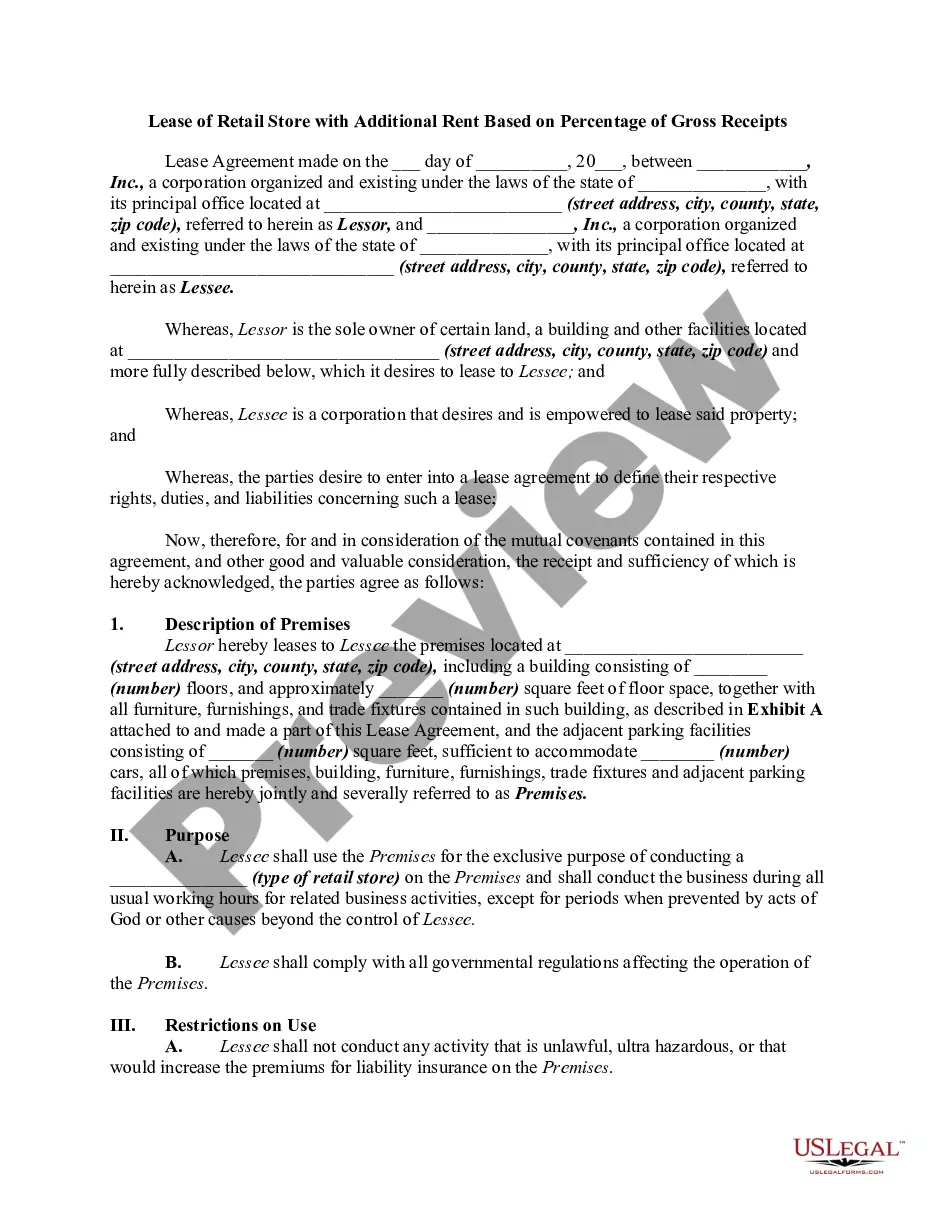
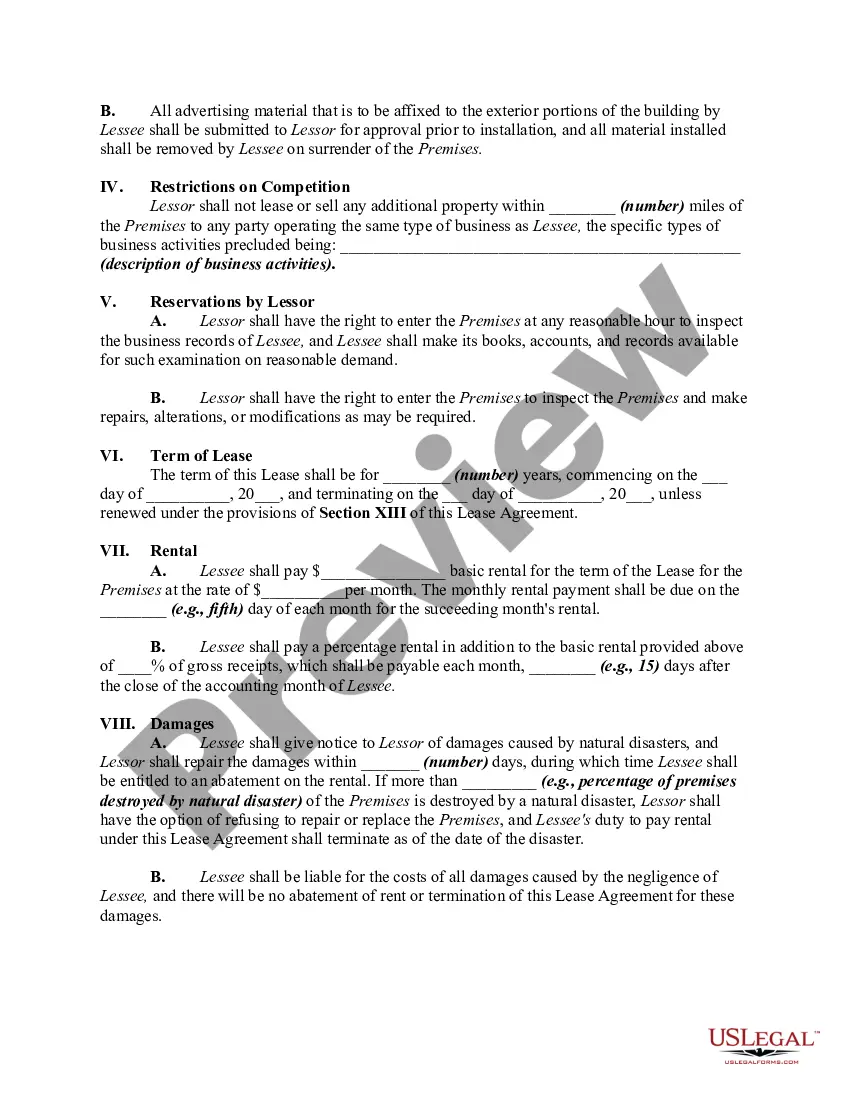
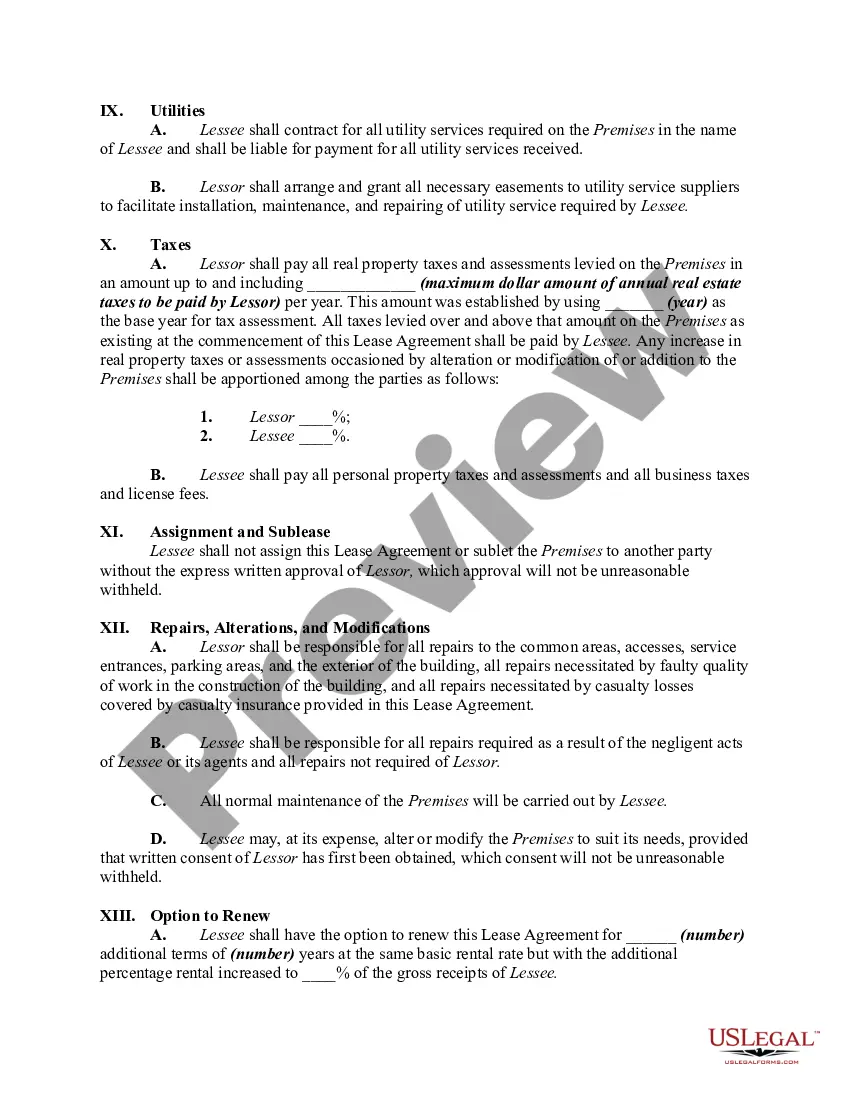
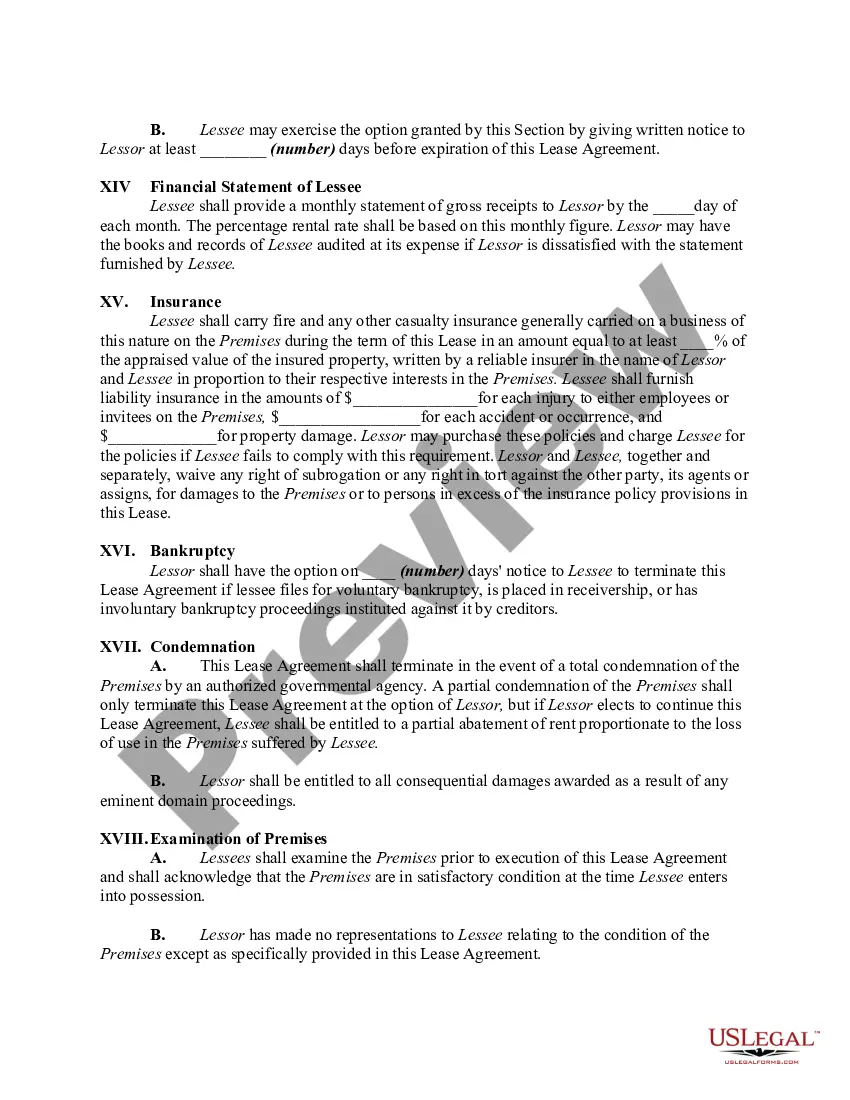
Lease With Rates
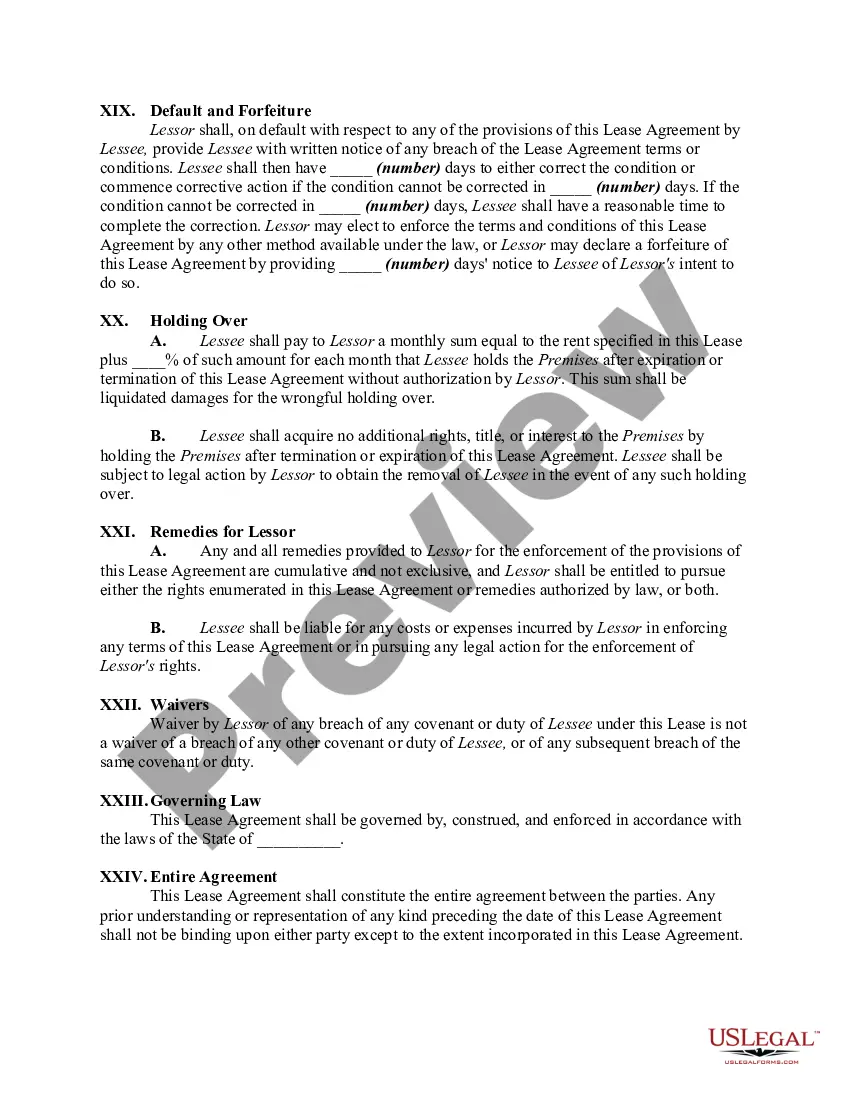
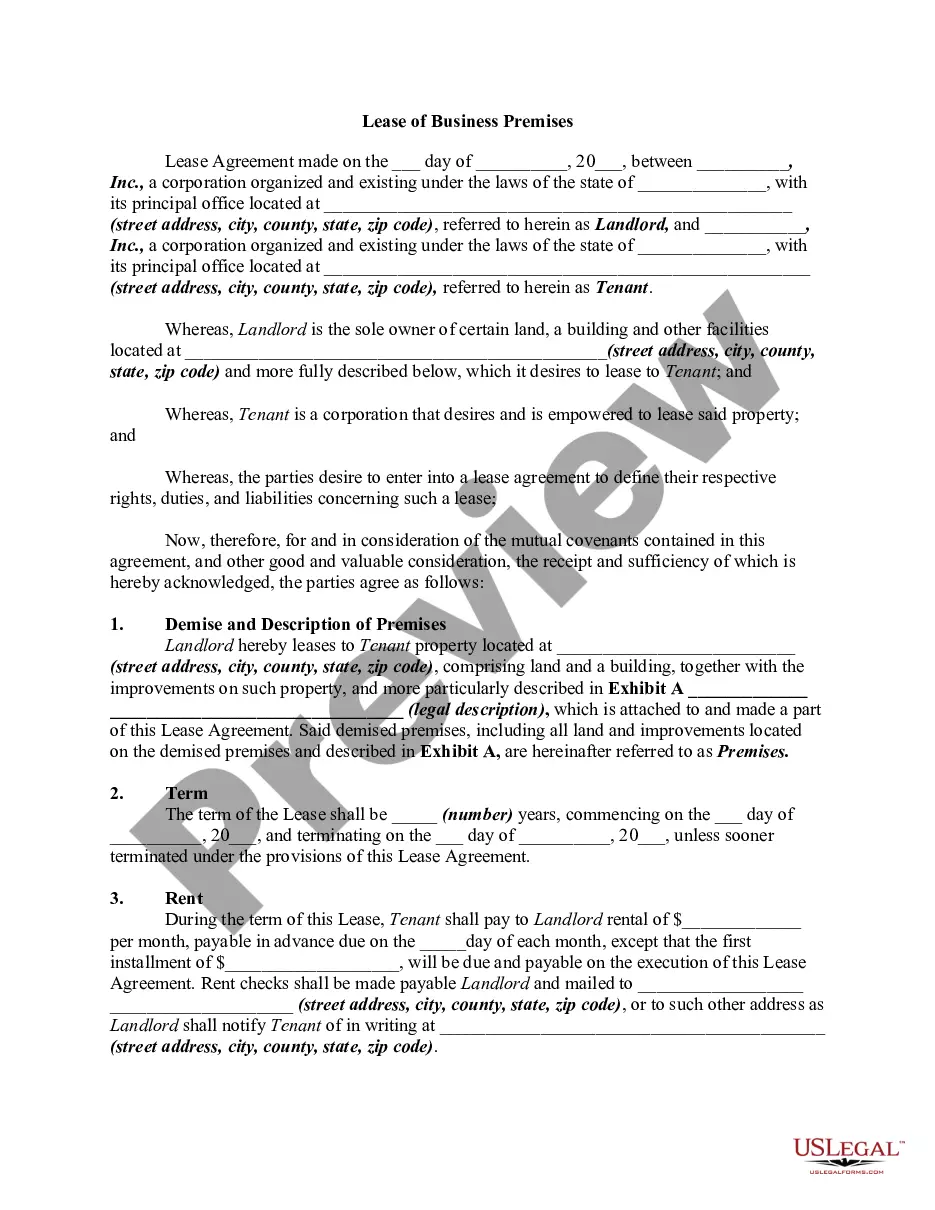
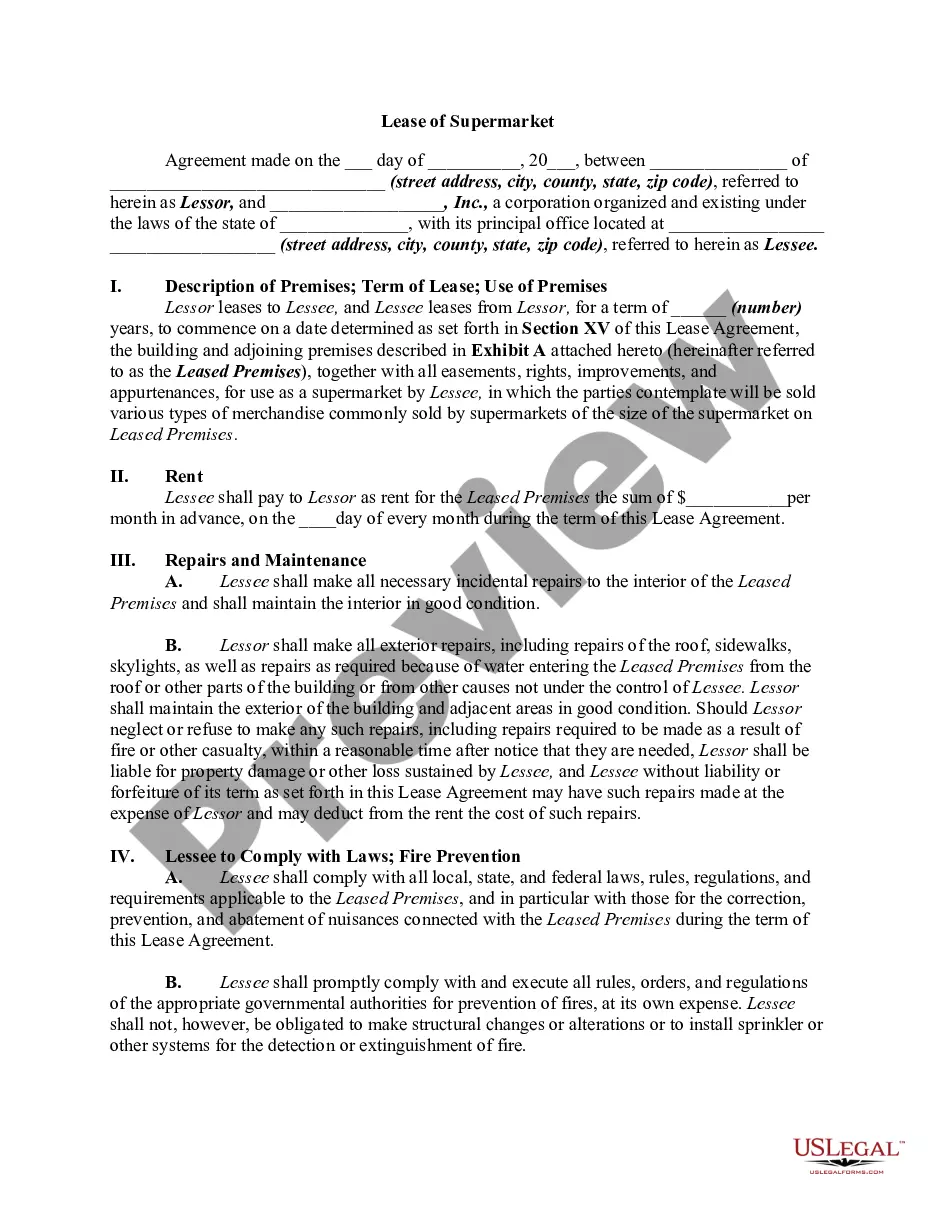
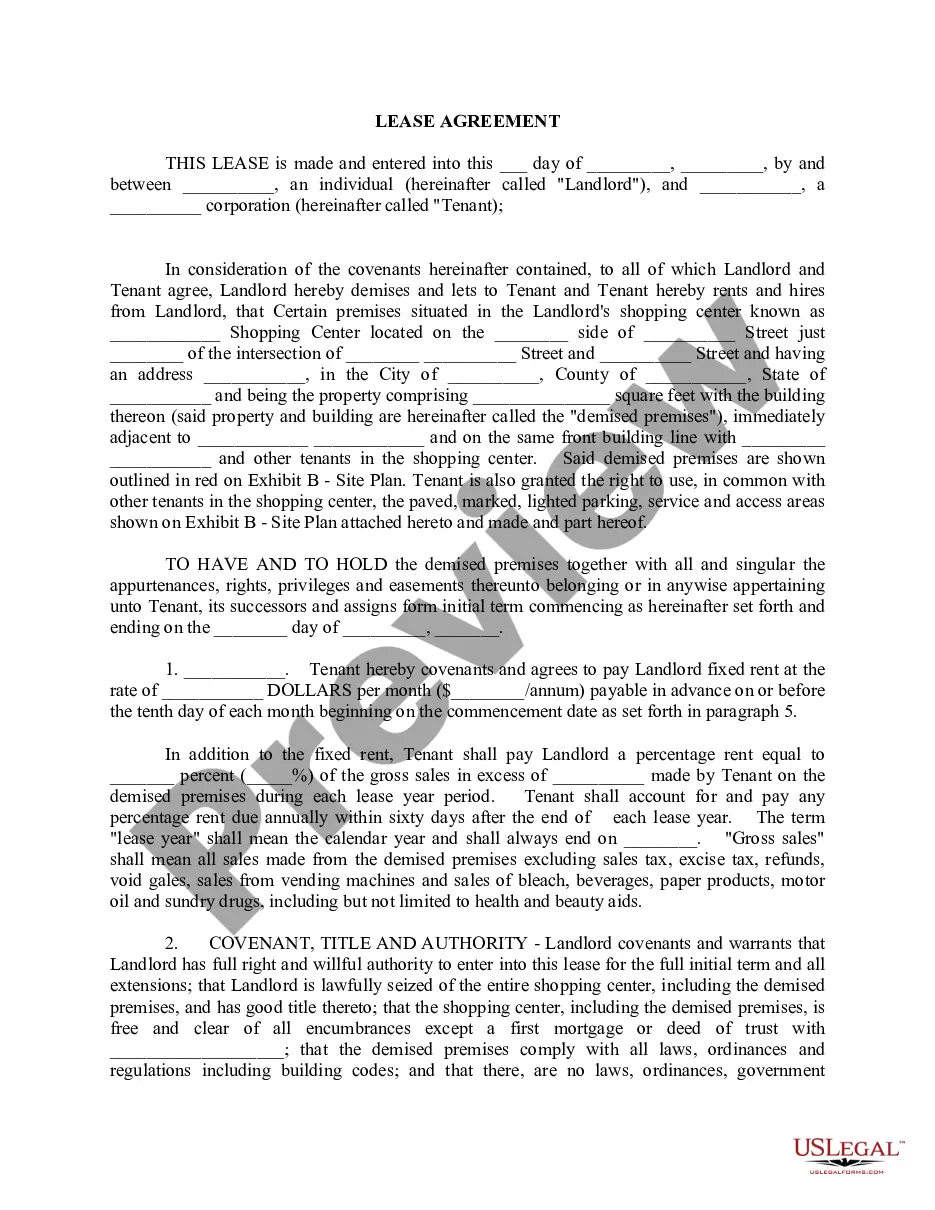
Description
Get your form ready online
Our built-in tools help you complete, sign, share, and store your documents in one place.
Make edits, fill in missing information, and update formatting in US Legal Forms—just like you would in MS Word.
Download a copy, print it, send it by email, or mail it via USPS—whatever works best for your next step.
Sign and collect signatures with our SignNow integration. Send to multiple recipients, set reminders, and more. Go Premium to unlock E-Sign.
If this form requires notarization, complete it online through a secure video call—no need to meet a notary in person or wait for an appointment.
We protect your documents and personal data by following strict security and privacy standards.

Make edits, fill in missing information, and update formatting in US Legal Forms—just like you would in MS Word.

Download a copy, print it, send it by email, or mail it via USPS—whatever works best for your next step.

Sign and collect signatures with our SignNow integration. Send to multiple recipients, set reminders, and more. Go Premium to unlock E-Sign.

If this form requires notarization, complete it online through a secure video call—no need to meet a notary in person or wait for an appointment.

We protect your documents and personal data by following strict security and privacy standards.
Looking for another form?
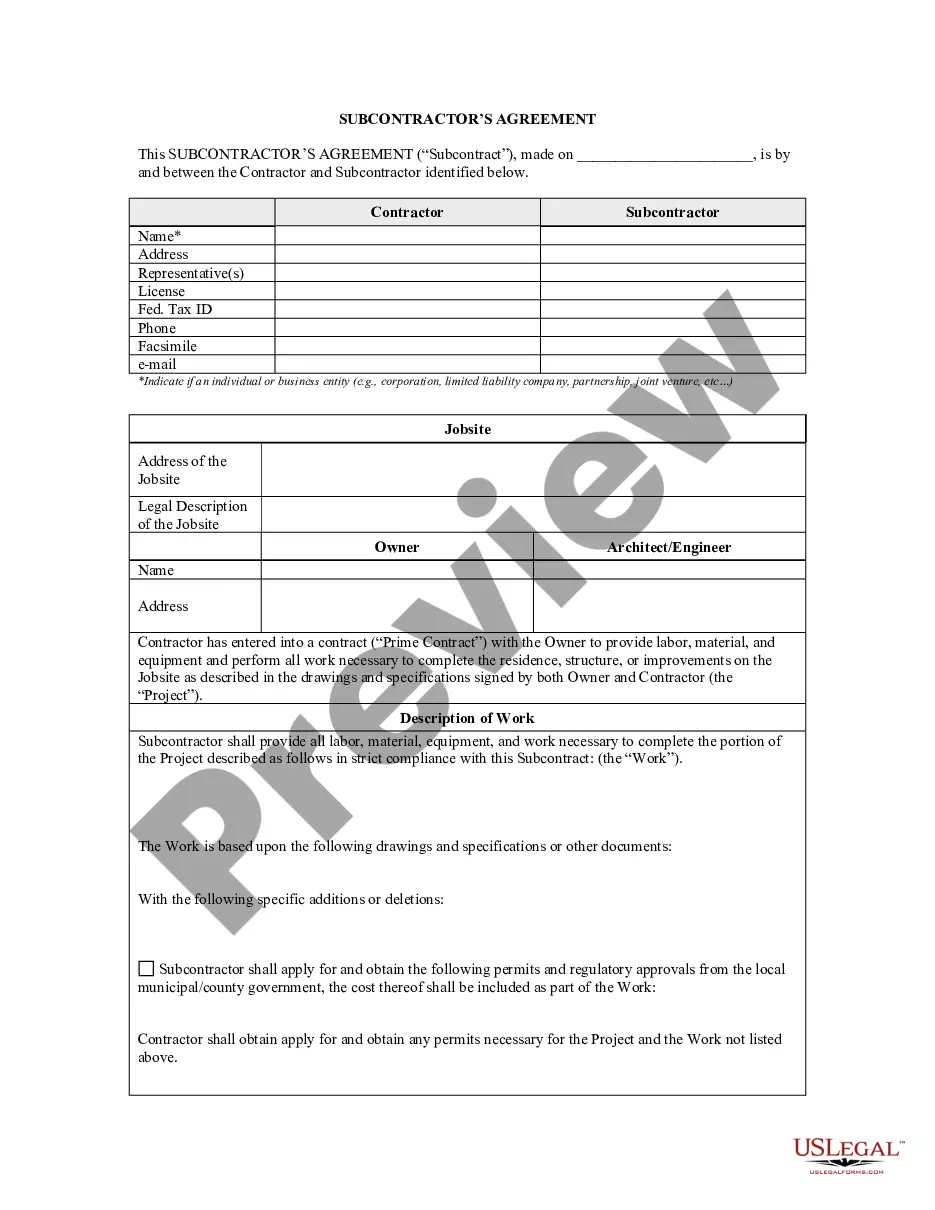







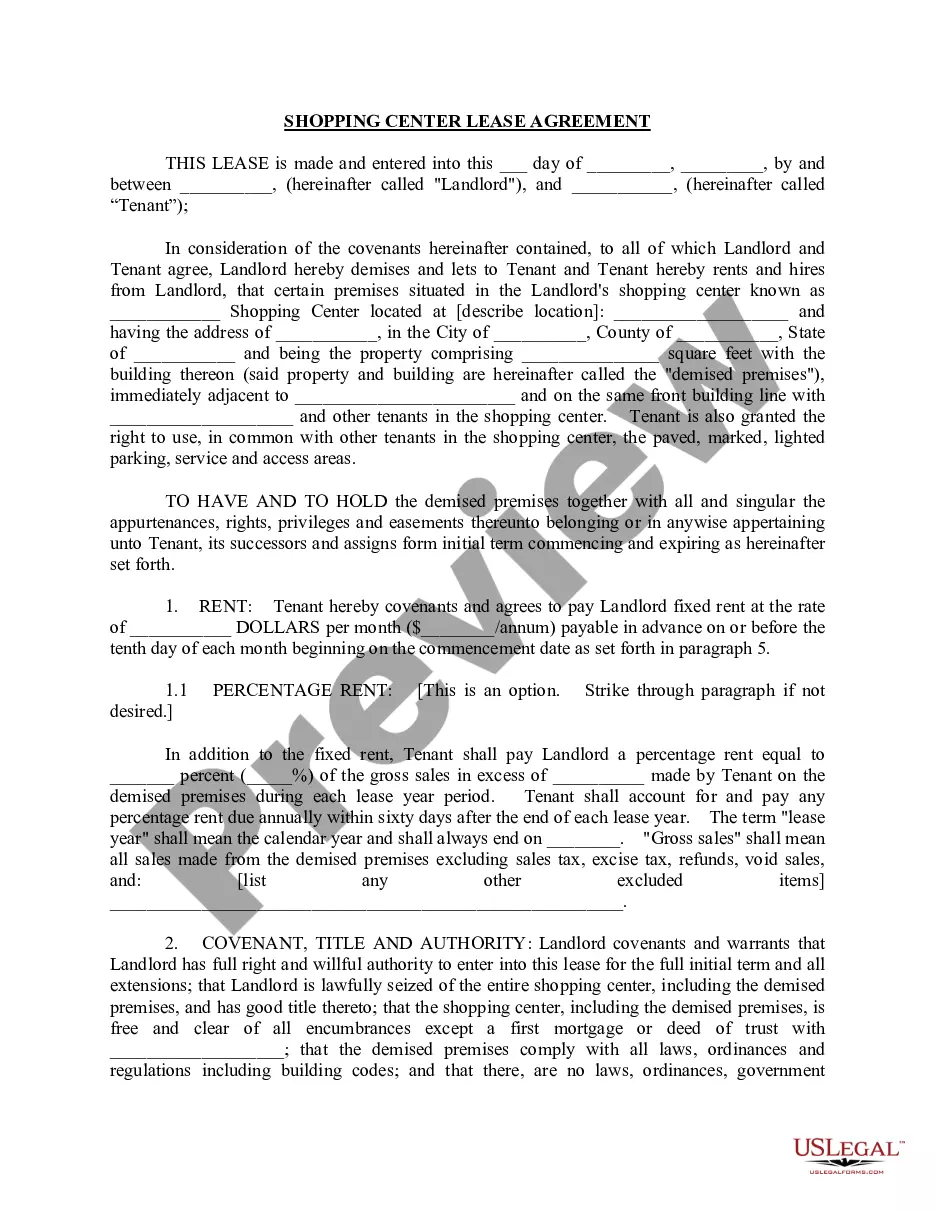
How to fill out Lease Of Retail Store With Additional Rent Based On Percentage Of Gross Receipts - Real Estate?
Managing legal documents and activities could be a lengthy addition to your entire schedule.
Lease With Rates and similar documents typically necessitate that you look for them and grasp how to fill them out correctly.
Thus, whether you are addressing financial, legal, or personal affairs, utilizing a comprehensive and accessible online repository of forms nearby will be incredibly beneficial.
US Legal Forms is the premier online source for legal templates, featuring over 85,000 state-specific forms and various resources to help you complete your documents swiftly.
Simply Log In to your account, locate Lease With Rates, and obtain it instantly from the My documents section. You can also retrieve previously downloaded forms.
- Explore the database of pertinent documents available to you with a mere click.
- US Legal Forms provides state- and county-specific forms at any time for download.
- Safeguard your document management processes with exceptional support that enables you to prepare any form within minutes without additional or hidden fees.
Form popularity
FAQ
The 1.25% rule of leasing is a guideline that suggests your monthly lease payment should not exceed 1.25% of the vehicle's MSRP. This rule can help you gauge if you're getting a fair deal when considering leases with rates. By sticking to this rule, you can manage your budget effectively while enjoying the benefits of leasing. If you need assistance navigating lease agreements, US Legal Forms offers resources to help simplify the process.
A good interest rate for a lease often reflects current market trends and your financial profile. For most consumers, an interest rate between 2% and 6% is considered favorable. When looking at leases with rates, remember that lower rates can significantly reduce your monthly payments. Additionally, using tools like US Legal Forms can help you better understand lease agreements and find competitive rates.
A good interest rate on a lease typically falls between 3% and 5% for well-qualified individuals. However, rates can vary based on credit history, the type of vehicle, and market conditions. When considering a lease with rates, it's essential to shop around and compare offers from different dealerships. This approach helps ensure you secure the best possible deal for your lease.
The 90% rule for leases generally refers to the criteria used to classify leases in accounting terms. When evaluating a lease with rates, if the present value of the lease payments is 90% or more of the asset's fair market value, it suggests the lease is a finance lease. This rule is particularly significant for businesses, as it influences balance sheet reporting and tax considerations, so understanding it is essential for making informed leasing decisions.
The 90% test for operating leases is an important guideline that helps distinguish between operating and finance leases. When you assess a lease with rates, if the present value of the lease payments does not reach 90% of the fair market value of the asset, it typically qualifies as an operating lease. This distinction affects how the lease is reported on financial statements, impacting your overall financial strategy.
The 90% rule in leasing is a vital concept when evaluating a lease with rates. This rule states that if the present value of the lease payments equals or exceeds 90% of the asset's fair market value, the lease is likely to be classified as a finance lease. This classification can lead to different accounting treatments and tax implications, making it crucial to consider when entering into a lease agreement.
To afford $3,000 in rent comfortably, you should ideally have a monthly income of at least $10,000, based on the 30% rule. This ensures that your housing costs remain manageable and do not strain your finances. When searching for a lease with rates, it's wise to consider your total income and other expenses to maintain a balanced budget. Utilizing tools from platforms like US Legal Forms can help you find the right lease agreements for your financial situation.
The 30% rule is a budgeting guideline suggesting that renters should spend no more than 30% of their gross income on housing costs. This includes rent and utility expenses, promoting financial health and reducing the risk of being house poor. Following this guideline can help you find a suitable lease with rates that fit your budget. Remember, it’s essential to assess your unique financial situation when applying this rule.
Yes, the 30% rent rule still applies as a general guideline for budgeting. Many financial experts recommend this figure to help renters maintain financial stability while leasing. However, individual circumstances may vary, and it's important to consider your personal budget and needs when assessing your lease with rates. Always evaluate your overall financial situation before committing to a rental agreement.
To calculate 30% of your income for rent, simply multiply your gross monthly income by 0.30. For example, if your monthly income is $5,000, then 30% would be $1,500. This figure helps you determine a reasonable budget for housing expenses, ensuring you can comfortably manage your lease with rates. You can use this calculation as a guideline when looking for rental properties.