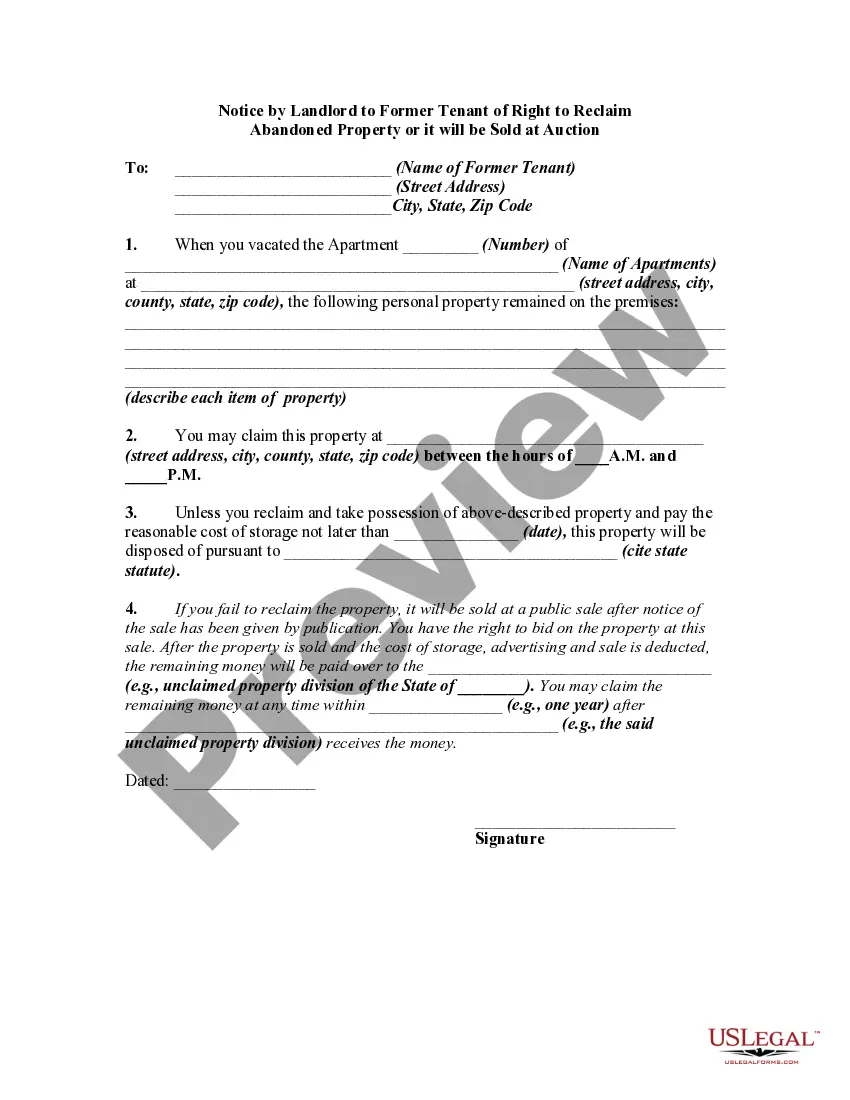
Unclaimed Property Form For Pennsylvania
Description
Get your form ready online
Our built-in tools help you complete, sign, share, and store your documents in one place.
Make edits, fill in missing information, and update formatting in US Legal Forms—just like you would in MS Word.
Download a copy, print it, send it by email, or mail it via USPS—whatever works best for your next step.
Sign and collect signatures with our SignNow integration. Send to multiple recipients, set reminders, and more. Go Premium to unlock E-Sign.
If this form requires notarization, complete it online through a secure video call—no need to meet a notary in person or wait for an appointment.
We protect your documents and personal data by following strict security and privacy standards.

Make edits, fill in missing information, and update formatting in US Legal Forms—just like you would in MS Word.

Download a copy, print it, send it by email, or mail it via USPS—whatever works best for your next step.

Sign and collect signatures with our SignNow integration. Send to multiple recipients, set reminders, and more. Go Premium to unlock E-Sign.

If this form requires notarization, complete it online through a secure video call—no need to meet a notary in person or wait for an appointment.

We protect your documents and personal data by following strict security and privacy standards.
Looking for another form?


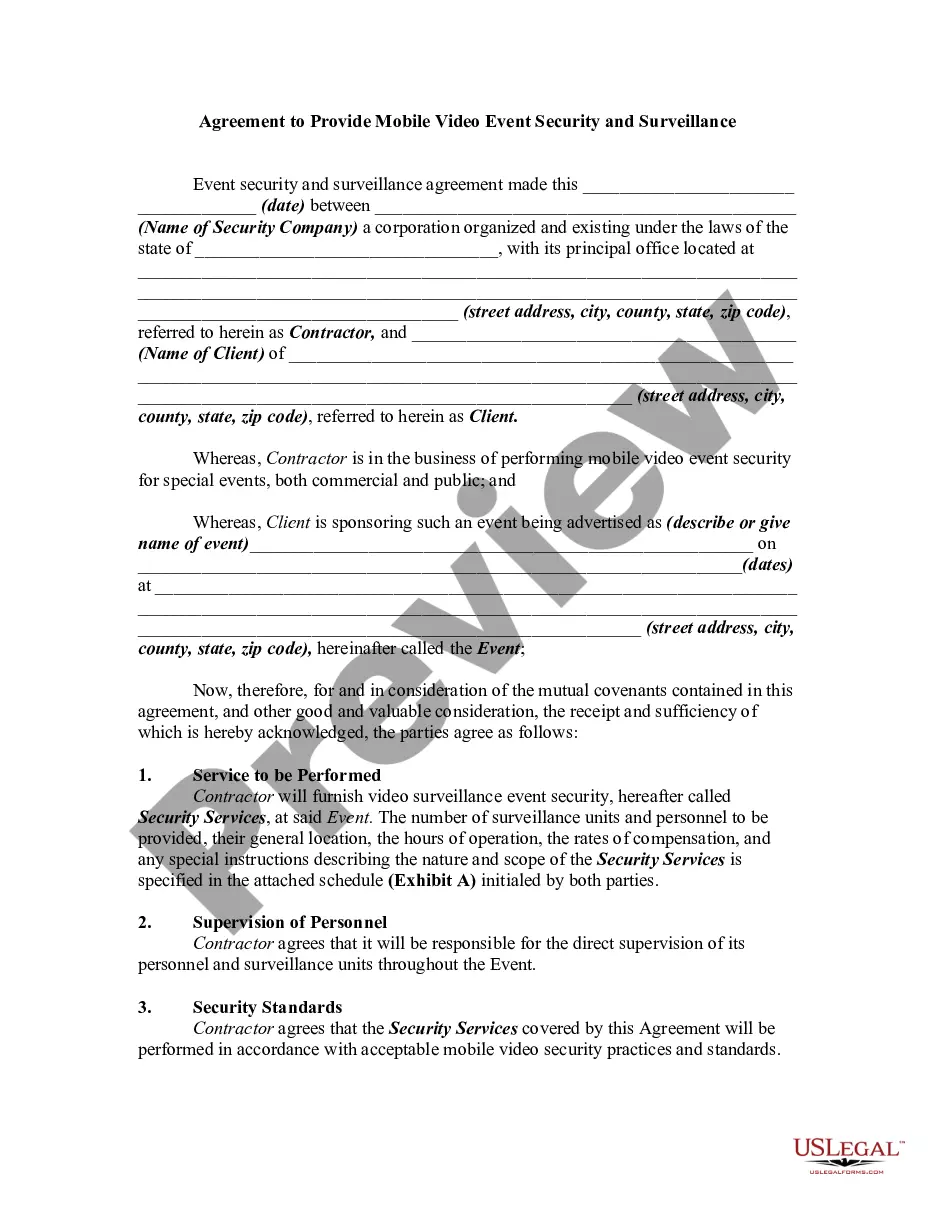
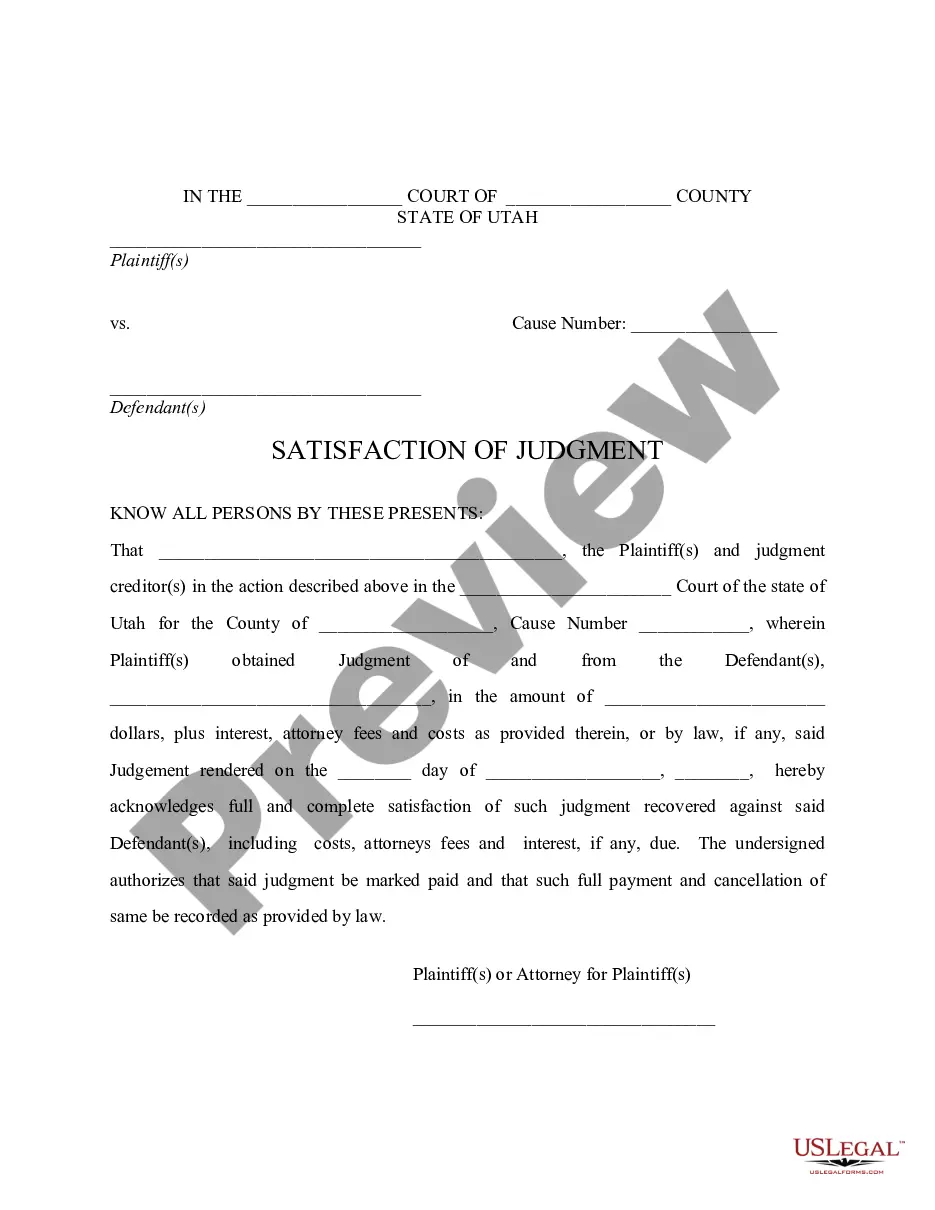


How to fill out Notice By Landlord To Former Tenant Of Right To Reclaim Abandoned Property Or It Will Be Sold At Auction - Abandonment?
Whether for professional objectives or personal affairs, everyone must confront legal circumstances at certain moments in their life.
Completing legal paperwork requires meticulous focus, starting from selecting the correct form template.
With an extensive US Legal Forms catalog available, you do not have to waste time searching for the suitable template online. Utilize the library’s straightforward navigation to locate the correct form for any circumstance.
- Obtain the needed template by utilizing the search bar or catalog navigation.
- Review the form’s details to ensure it corresponds with your situation, state, and locality.
- Click on the form’s preview to view it.
- If it is the wrong document, return to the search feature to locate the Unclaimed Property Form For Pennsylvania sample you require.
- Acquire the template when it aligns with your needs.
- If you possess a US Legal Forms account, simply click Log in to access previously saved templates in My documents.
- If you do not have an account yet, you may acquire the form by clicking Buy now.
- Choose the relevant pricing option.
- Complete the account registration form.
- Select your payment method: you may utilize a credit card or PayPal account.
- Choose the document format you desire and download the Unclaimed Property Form For Pennsylvania.
- Once it is downloaded, you are able to complete the form using editing software or print it and finish it manually.
Form popularity
FAQ
To obtain unclaimed property in Pennsylvania, begin by searching the state's unclaimed property database. Once you locate your property, you must complete the unclaimed property form for Pennsylvania, providing the necessary documentation to support your claim. After submitting the form, the state will review your information and determine your eligibility. Using a reliable platform like US Legal Forms can make this process easier, guiding you through each step.
In Pennsylvania, anyone who can provide sufficient proof of ownership can claim unclaimed property. This includes individuals, businesses, and organizations that have a legal right to the assets. To start the process, you will need to fill out the unclaimed property form for Pennsylvania, which helps the state verify your claim. By using this form, you ensure your request is processed efficiently and correctly.
Claiming deceased unclaimed property involves completing the appropriate unclaimed property form for Pennsylvania for the deceased individual's assets. Gather essential documents, such as the death certificate and proof of your relationship to the deceased. Then, follow the submission process established by the Pennsylvania Treasury to ensure your claim is processed effectively. For streamlined assistance, consider using the resources available on the USLegalForms platform, which can guide you through each step.
To submit unclaimed property in Pennsylvania, you need to complete the unclaimed property form for Pennsylvania. Visit the Pennsylvania Treasury's website for access to this form, which you can fill out online or download. After providing the necessary details, submit your form through the designated channels outlined on the website. Make sure to keep copies of your documents for your records.
To claim unclaimed property for a deceased person in Pennsylvania, you need to provide a death certificate along with proof of your relationship to the deceased. Filling out the unclaimed property form for Pennsylvania clearly and accurately is crucial for a successful claim. Consider using platforms like US Legal Forms for guidance through this process, as they provide essential resources to assist you.
To claim someone else's unclaimed property, you must first obtain their consent and gather the required documentation that supports their relationship to the property. Each claim must adhere to the unclaimed property form for Pennsylvania, which may include proof of your relationship or authority to act on their behalf. It's a straightforward process if you have the necessary records.
In Pennsylvania, the rules for unclaimed property state that property is considered unclaimed if the owner has not engaged with the asset for a specified period, usually three to five years. Businesses are mandated to report and turn over these assets to the state. Following the guidelines on the unclaimed property form for Pennsylvania ensures that your claim is processed correctly.
The four key requirements of Pennsylvania's unclaimed property law include ownership of the property, a period of inactivity that qualifies it as unclaimed, a known last address of the owner, and compliance with the reporting deadlines. These factors help to establish the legitimacy of your claim. When you use the unclaimed property form for Pennsylvania, you must ensure your submission aligns with these requirements.
Generally, Pennsylvania does not require unclaimed property forms to be notarized. However, including a notarized signature can add an extra layer of assurance in your claim. It's essential to verify the specific requirements as you fill out the unclaimed property form for Pennsylvania.
To claim funds, you must provide proper identification, such as a government-issued ID, along with any necessary documentation that proves your right to the funds. This may include bank statements or proof of ownership. Make sure you complete the unclaimed property form for Pennsylvania accurately to expedite the process.