Custody With Unmarried Parents
Description

Get your form ready online
Our built-in tools help you complete, sign, share, and store your documents in one place.
Make edits, fill in missing information, and update formatting in US Legal Forms—just like you would in MS Word.
Download a copy, print it, send it by email, or mail it via USPS—whatever works best for your next step.
Sign and collect signatures with our SignNow integration. Send to multiple recipients, set reminders, and more. Go Premium to unlock E-Sign.
If this form requires notarization, complete it online through a secure video call—no need to meet a notary in person or wait for an appointment.
We protect your documents and personal data by following strict security and privacy standards.

Make edits, fill in missing information, and update formatting in US Legal Forms—just like you would in MS Word.

Download a copy, print it, send it by email, or mail it via USPS—whatever works best for your next step.

Sign and collect signatures with our SignNow integration. Send to multiple recipients, set reminders, and more. Go Premium to unlock E-Sign.

If this form requires notarization, complete it online through a secure video call—no need to meet a notary in person or wait for an appointment.

We protect your documents and personal data by following strict security and privacy standards.
Looking for another form?






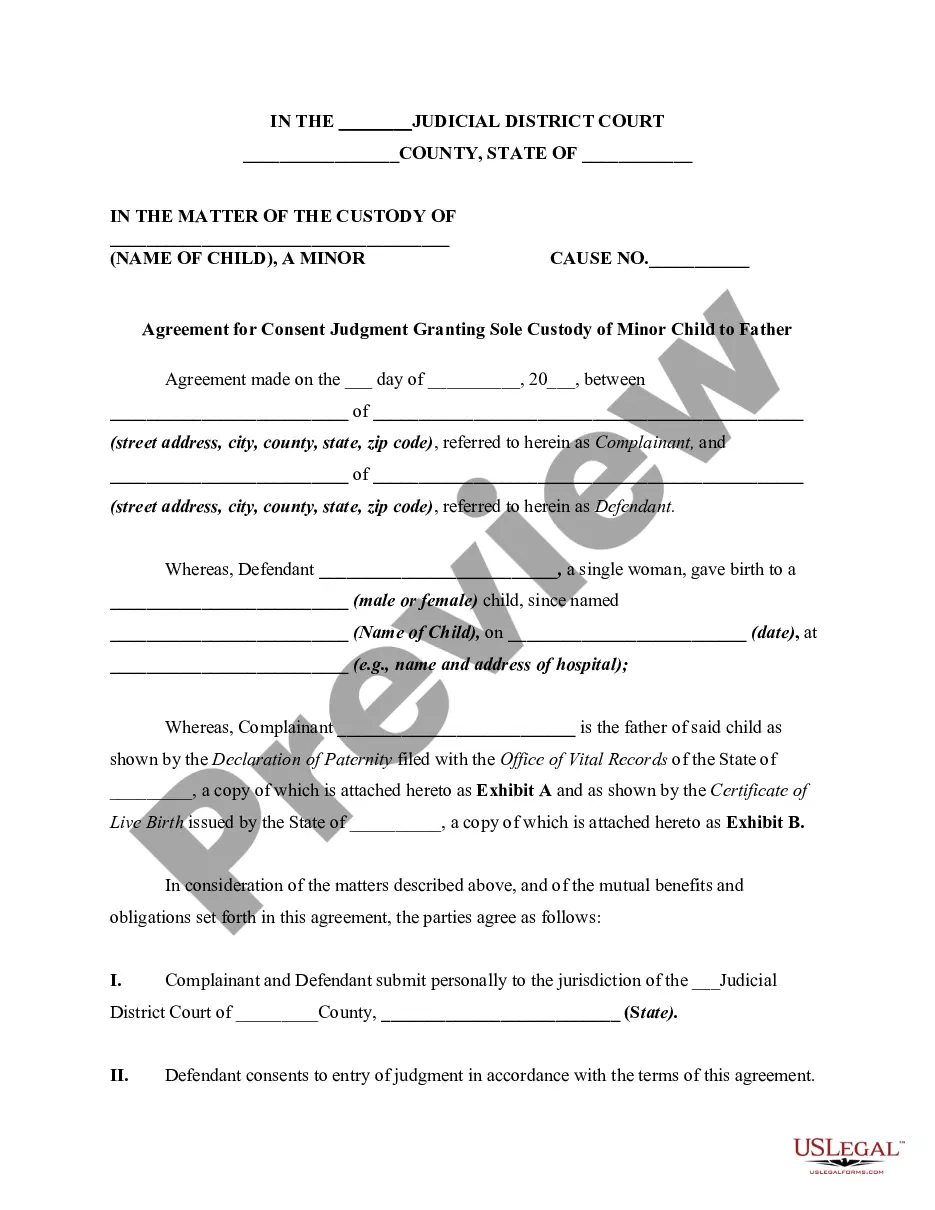
How to fill out Agreement For Consent Judgment Granting Sole Custody Of Minor Child To Father?
- If you're a returning member, log in and check your subscription status before downloading the relevant form template.
- For first-time users, start by browsing the extensive library. Use the preview mode to ensure that the form matches your needs and adheres to your local jurisdiction requirements.
- If you need a different template, utilize the Search tab to find the one that fits your situation.
- Select the document and click the Buy Now button. Choose the subscription plan that suits you best and create an account for full access.
- Proceed with payment by entering your credit card details or using your PayPal account to finalize your subscription.
- Once your purchase is complete, download the form to your device. You can find it later in the My Forms section of your profile.
US Legal Forms empowers both individuals and legal professionals to swiftly execute necessary legal documents. With a robust library of over 85,000 customizable forms, you'll find everything you need efficiently.
Get started today and ensure your custody arrangements are handled with the utmost precision and legality.
Form popularity
FAQ
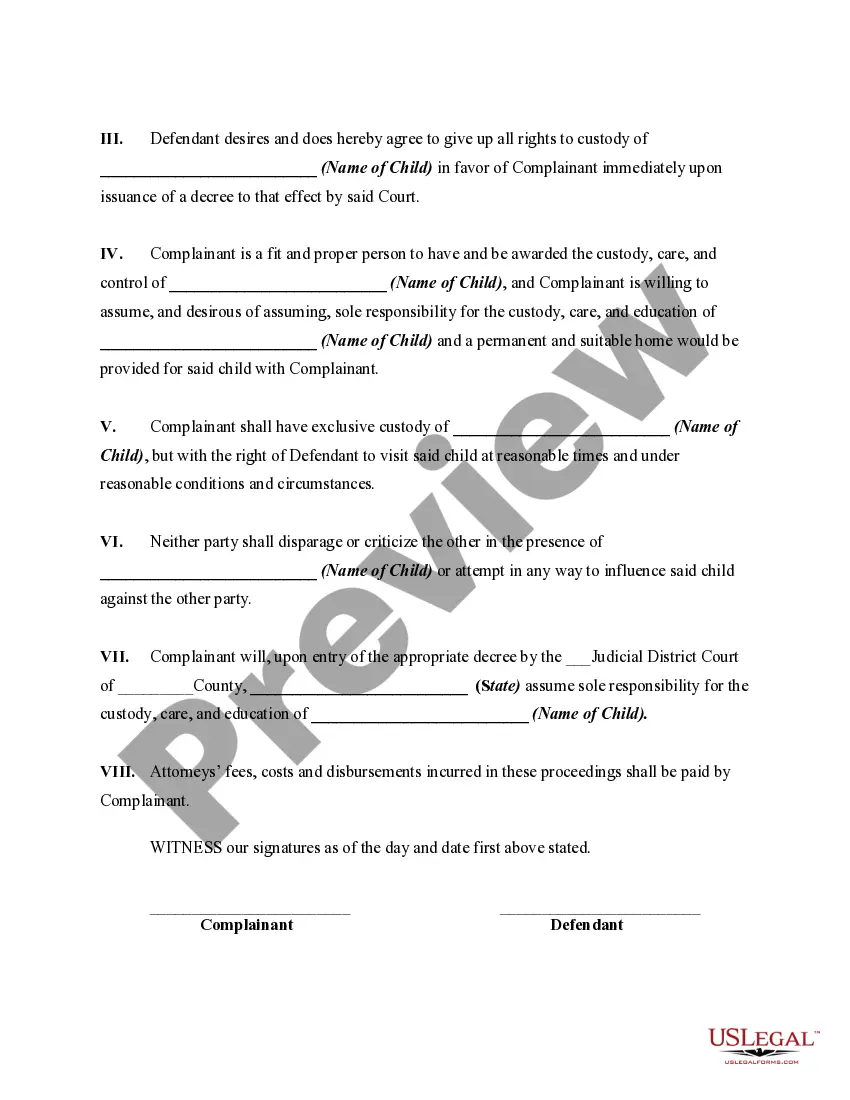
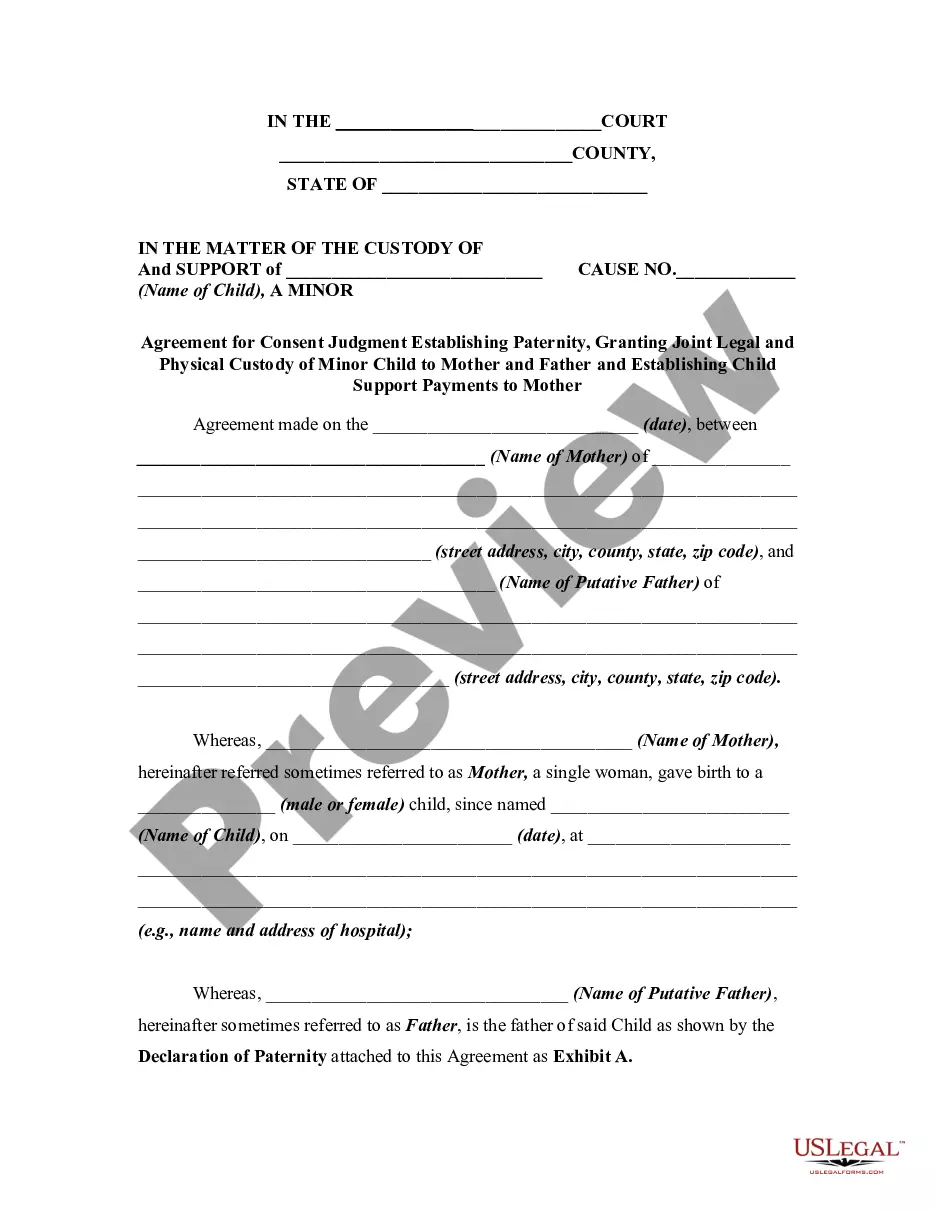
When unmarried parents live together and split, custody and child support can be contentious. Typically, both parents have equal rights, but the living arrangement can complicate claims. It's crucial for parents to reach an agreement on custody and support. Platforms like US Legal Forms offer resources to help navigate these matters effectively.
Splitting up as parents requires clear communication and planning. Start by discussing custody arrangements, living situations, and support. Consider using tools like mediation or legal assistance to ensure a fair process. Focusing on your child's well-being is essential during this transition.
When an unmarried couple with a child separates, custody becomes a crucial issue. The primary consideration is the child's best interests. Parents can negotiate custody arrangements voluntarily or seek mediation. If disagreements arise, a court may decide custody based on various factors, including the child's needs and parents' involvement.
Judges in Maryland examine several factors when determining custody with unmarried parents. They prioritize the best interest of the child, considering aspects such as parental stability, the child’s relationship with each parent, and the ability to provide a safe environment. It is crucial to demonstrate your commitment and capability as a parent throughout this process. Resources like US Legal Forms can assist you in preparing the necessary information to present your case clearly.
To build a strong custody case with unmarried parents, start by gathering relevant documentation that supports your position. This can include evidence of your relationship with the child, parenting plans, and any communications about custody arrangements. Next, consider consulting with an attorney who specializes in custody cases, as they can guide you through legal requirements and help you present your case effectively. Using platforms like US Legal Forms can also provide the necessary documents to help streamline the process.
To demonstrate your parenting capabilities to the court, provide evidence of your involvement in your child's daily life. Document your participation in school activities, healthcare decisions, and overall support. Strong, consistent communication with the other parent can also underscore your cooperative parenting approach.
During court proceedings regarding custody with unmarried parents, articulate your commitment to your child’s welfare. Discuss your lifestyle, education, and how you plan to provide stability and support. Presenting clear plans and expressing openness to co-parenting can also enhance your position.
In Texas, child custody laws for unmarried parents focus on the best interests of the child. The mother typically has initial custody rights, while fathers may seek custody through legal action. Both parents share responsibilities, so legal mediation can facilitate arrangements beneficial for the child.
During a custody hearing, refrain from making emotional outbursts or disparaging remarks about the other parent. Avoid delving into irrelevant personal grievances that do not pertain to parenting. Stay focused on demonstrating your suitability as a primary caregiver, which is crucial for winning custody.
When addressing a judge, you should emphasize your stable home life, your parenting capabilities, and your child's needs. Focus on your ability to provide proper care and support. Present any relevant evidence, such as school records or testimonials, to strengthen your case on custody with unmarried parents.