Custody For Unmarried Parents
Description

Get your form ready online
Our built-in tools help you complete, sign, share, and store your documents in one place.
Make edits, fill in missing information, and update formatting in US Legal Forms—just like you would in MS Word.
Download a copy, print it, send it by email, or mail it via USPS—whatever works best for your next step.
Sign and collect signatures with our SignNow integration. Send to multiple recipients, set reminders, and more. Go Premium to unlock E-Sign.
If this form requires notarization, complete it online through a secure video call—no need to meet a notary in person or wait for an appointment.
We protect your documents and personal data by following strict security and privacy standards.

Make edits, fill in missing information, and update formatting in US Legal Forms—just like you would in MS Word.

Download a copy, print it, send it by email, or mail it via USPS—whatever works best for your next step.

Sign and collect signatures with our SignNow integration. Send to multiple recipients, set reminders, and more. Go Premium to unlock E-Sign.

If this form requires notarization, complete it online through a secure video call—no need to meet a notary in person or wait for an appointment.

We protect your documents and personal data by following strict security and privacy standards.
Looking for another form?










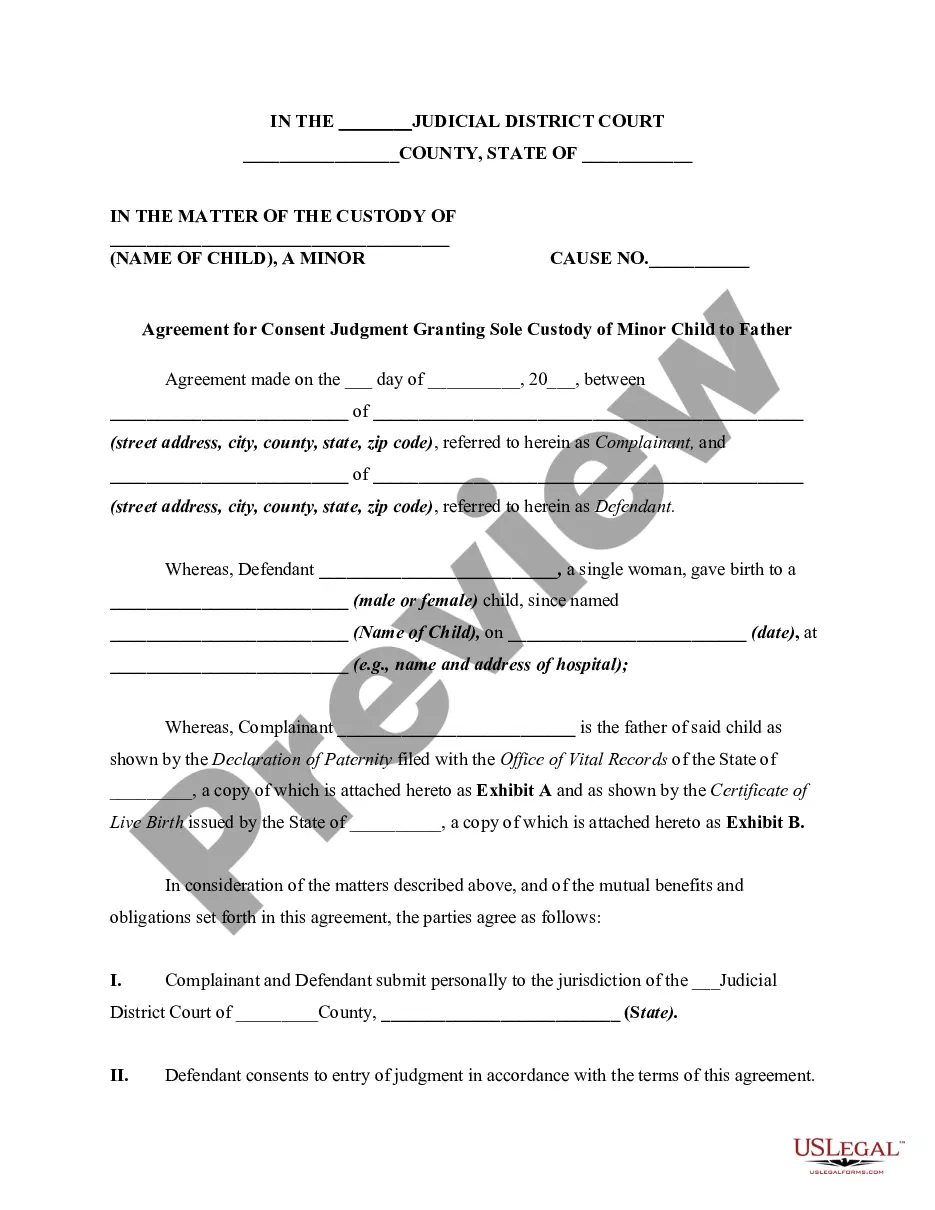
How to fill out Agreement For Consent Judgment Granting Sole Custody Of Minor Child To Father?
- If you're a returning user, simply log in to your account. Ensure your subscription is active and ready for use.
- If you're new, start by reviewing the available forms in Preview mode to ensure they fit your legal needs and comply with local requirements.
- If you need a different template, utilize the Search function to find a suitable form that addresses your specific situation.
- Proceed by selecting the form you require and click 'Buy Now.' Choose the subscription plan that best suits your needs and sign up for an account.
- Complete your purchase by entering payment information—either through credit card or PayPal.
- Once the purchase is confirmed, download the form directly to your device and access it anytime from the My Forms section of your profile.
US Legal Forms not only offers a vast library of over 85,000 editable legal forms but also provides access to premium experts for assistance, ensuring that your documents are precise and legally sound.
Take the first step toward securing your child's future by utilizing US Legal Forms today. Start your journey to effective legal documentation now!
Form popularity
FAQ
Full custody is typically granted to the parent who can provide a stable, nurturing, and supportive environment for the child. Courts often favor the parent who has been the primary caregiver or has established a strong bond with the child. To increase your chances, consider using tools from US Legal that specialize in custody for unmarried parents, ensuring you present a solid case in court.
During a custody battle, it's crucial to remain respectful and avoid inflammatory language that can paint you negatively. Steer clear of making personal attacks or blaming the other parent. Focus on the child's welfare and use constructive dialogue; this approach aligns with the goals of custody for unmarried parents and shows that you prioritize the child's needs.
In custody battles for unmarried parents, the judge assesses various factors, including the child's best interests, parenting abilities, and living conditions. While there is no clear winner, courts often favor the parent who demonstrates a commitment to co-parenting and a stable environment. Utilizing legal resources, like US Legal, can help you understand the nuances of custody for unmarried parents and prepare you better for your case.
To show the court you are a good parent, provide evidence of your involvement in your child's life. This can include documentation of their activities, school performance, and your participation in their milestones. Additionally, character references from teachers, doctors, or family can strengthen your case. The more proof you have of your commitment, the better you present in custody for unmarried parents.
The best thing to say in court is a truthful representation of your parenting abilities. Clearly outline how your child's best interests guide your decisions. By being honest and straightforward, you establish trust with the judge. Remember that showing your dedication and love for your child is key in custody cases, especially for unmarried parents.
In court, you should clearly express your desire for custody and the reasons behind it. Articulate how your living situation meets the needs of your child. Use specifics about your routine, support system, and any contributions you make to their upbringing. This information can greatly enhance your argument for custody for unmarried parents.
When speaking to a judge, emphasize your commitment to your child's well-being. Explain how you provide a stable and loving environment, showing that you prioritize their needs. Additionally, present any relevant plans you have for their education and healthcare. This approach helps demonstrate your capability for custody for unmarried parents.
During a custody hearing, it's important to avoid negative comments about the other parent. Criticizing them can reflect poorly on you. Additionally, steer clear of speaking in absolutes or making exaggerated claims. Focus on your positive attributes as a parent and present factual information that supports your case.
Unmarried fathers have specific rights concerning custody for unmarried parents, but these rights vary by state. Generally, an unmarried father may need to establish paternity to gain legal rights to custody and visitation. This process often includes filing necessary forms and potentially going to court. Utilizing platforms like USLegalForms can streamline this process, making it easier for fathers to understand their rights and take appropriate legal steps.
Building a strong child custody case requires careful preparation and documentation. Begin by gathering evidence of your positive parenting practices, including schedules, school records, and communication logs. Consider using platforms like uslegalforms to access resources and templates that can help you articulate your case effectively. Preparing thoroughly demonstrates your commitment to securing custody for unmarried parents.