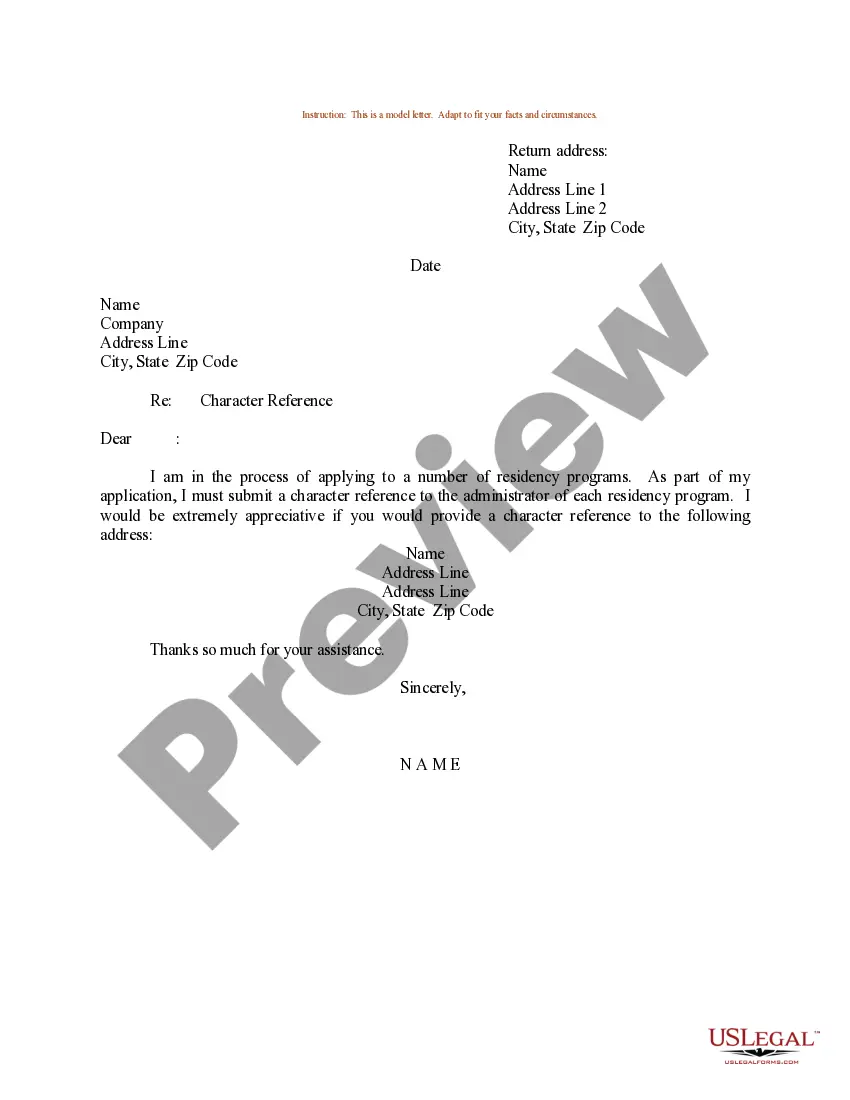
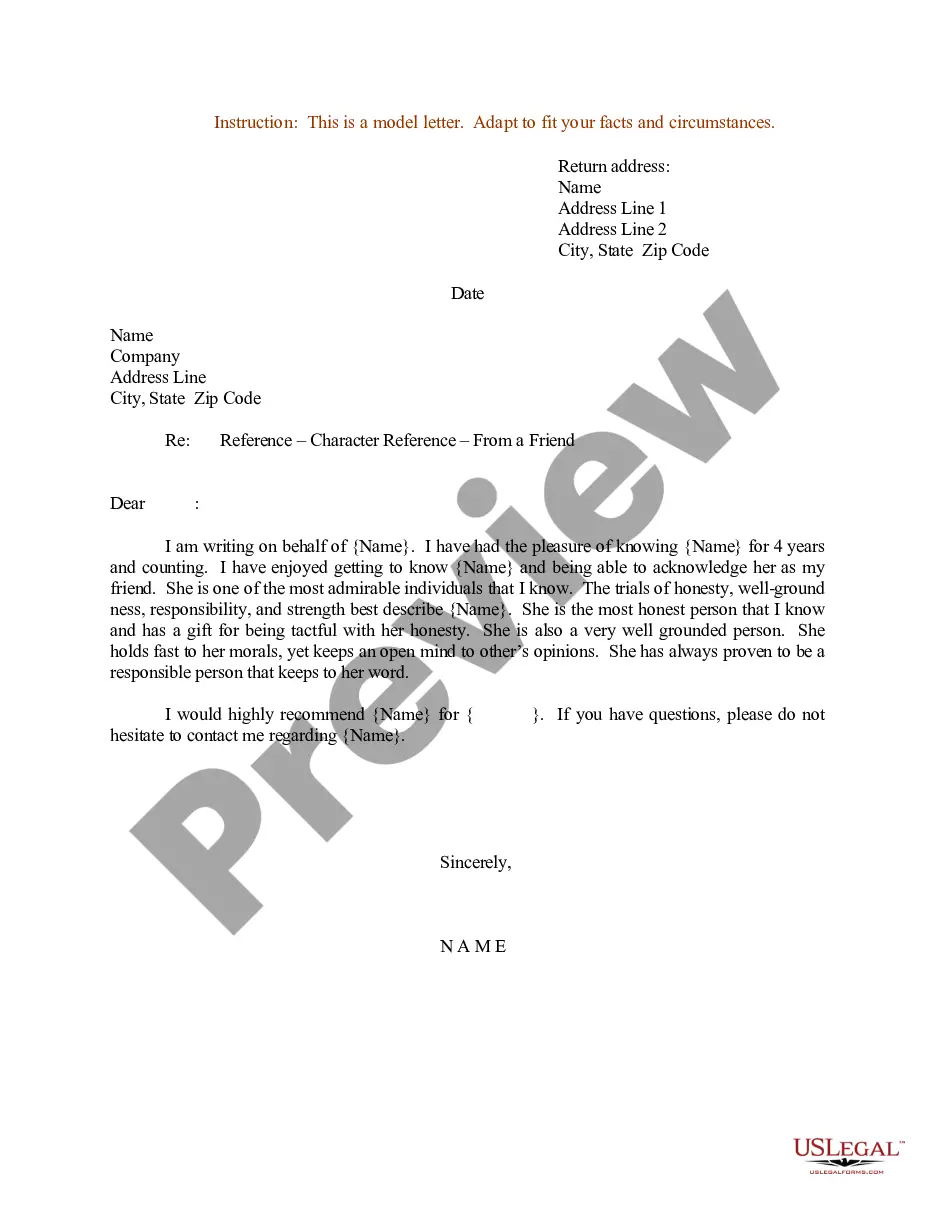
Sample Character Reference Letter For Gun Permit
Description
Get your form ready online
Our built-in tools help you complete, sign, share, and store your documents in one place.
Make edits, fill in missing information, and update formatting in US Legal Forms—just like you would in MS Word.
Download a copy, print it, send it by email, or mail it via USPS—whatever works best for your next step.
Sign and collect signatures with our SignNow integration. Send to multiple recipients, set reminders, and more. Go Premium to unlock E-Sign.
If this form requires notarization, complete it online through a secure video call—no need to meet a notary in person or wait for an appointment.
We protect your documents and personal data by following strict security and privacy standards.

Make edits, fill in missing information, and update formatting in US Legal Forms—just like you would in MS Word.

Download a copy, print it, send it by email, or mail it via USPS—whatever works best for your next step.

Sign and collect signatures with our SignNow integration. Send to multiple recipients, set reminders, and more. Go Premium to unlock E-Sign.

If this form requires notarization, complete it online through a secure video call—no need to meet a notary in person or wait for an appointment.

We protect your documents and personal data by following strict security and privacy standards.
Looking for another form?
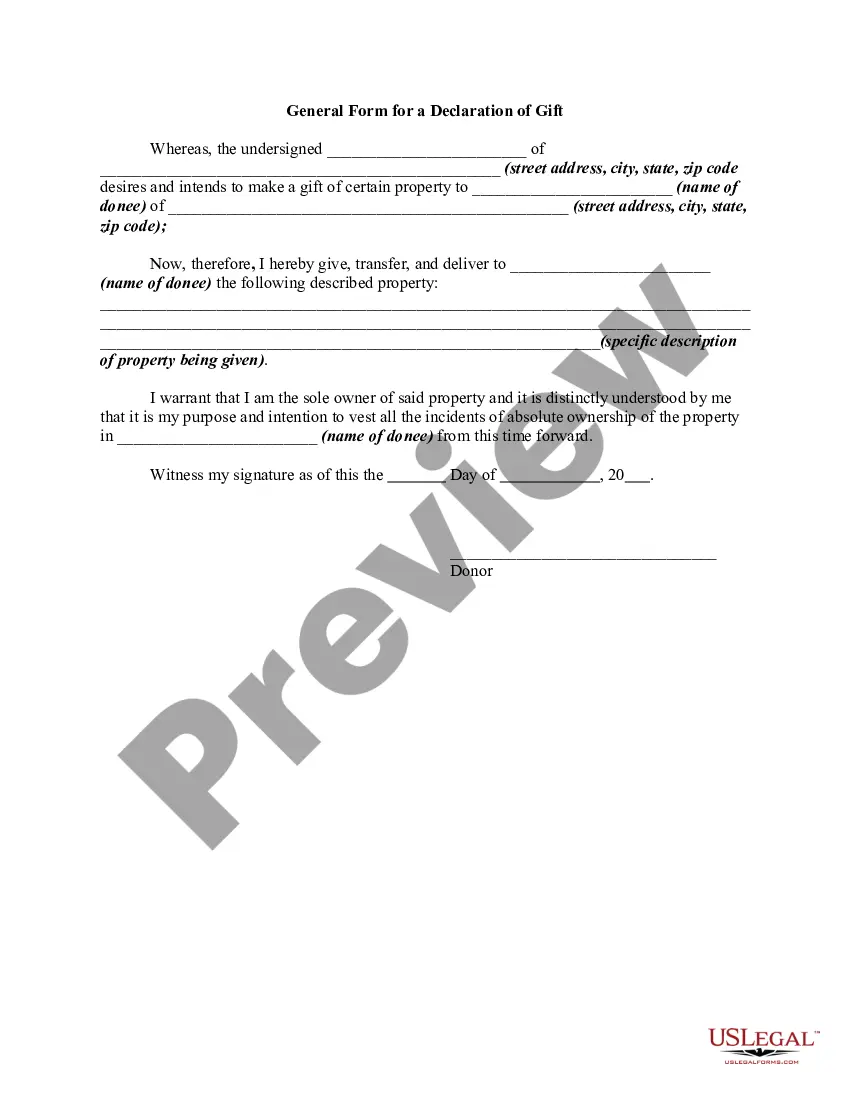
How to fill out Sample Letter For Request For Character Reference?
Legal management can be perplexing, even for well-informed professionals.
When you are looking for a Sample Character Reference Letter for Gun Permit and lack the time to devote to finding the suitable and updated version, the processes can be stressful.
US Legal Forms addresses all your requirements, ranging from personal to business documentation, all in one place.
Use advanced tools to complete and manage your Sample Character Reference Letter for Gun Permit.
Here are the steps to follow after downloading the desired form: Validate that it is the correct form by previewing it and reviewing its details.
- Gain access to a valuable repository of articles, guides, and resources tailored to your situation and needs.
- Save time and effort in searching for the necessary paperwork, utilizing US Legal Forms’ advanced search and Review feature to find Sample Character Reference Letter For Gun Permit and obtain it.
- If you possess a monthly subscription, Log In to the US Legal Forms account, locate the form, and retrieve it.
- Check the My documents tab to view the documents you have previously downloaded and manage your files as you wish.
- If this is your first experience with US Legal Forms, create an account to gain unlimited access to all the benefits of the library.
- A comprehensive online form catalog can be transformative for anyone seeking to handle these circumstances effectively.
- US Legal Forms is a leading provider in online legal documents, with over 85,000 state-specific legal forms accessible to you at any time.
- With US Legal Forms, you can access localized legal and business forms.
Form popularity
FAQ
In New York, references for a pistol permit typically include family members, friends, or colleagues who can provide insight into the applicant’s character. These references should be well-acquainted with the applicant and able to discuss their responsible behavior and temperament. Utilizing a sample character reference letter for gun permit can help your references understand what information is crucial to include. Properly chosen references can enhance the credibility of the application.
Bankruptcy Basics Process. The Discharge in Bankruptcy. Chapter 7. Liquidation Under the Bankruptcy Code. Chapter 9. Municipality Bankruptcy. Chapter 11. Reorganization Under the Bankruptcy Code. Chapter 12. Family Farmer Bankruptcy or Family Fisherman Bankruptcy. Chapter 13. Individual Debt Adjustment. Chapter 15.
Chapter 7 and Chapter 13 bankruptcy are the most commonly filed types of bankruptcy, likely because they're available to individuals. Other types of bankruptcy apply to businesses, individuals and other entities. Here's what to know about each bankruptcy option.
Chapter 7 and Chapter 13 bankruptcy are the most commonly filed types of bankruptcy, likely because they're available to individuals. Other types of bankruptcy apply to businesses, individuals and other entities. Here's what to know about each bankruptcy option.
Background. A case filed under chapter 11 of the United States Bankruptcy Code is frequently referred to as a "reorganization" bankruptcy. Usually, the debtor remains ?in possession,? has the powers and duties of a trustee, may continue to operate its business, and may, with court approval, borrow new money.
In many cases, Chapter 7 bankruptcy is a better fit than Chapter 13 bankruptcy. For instance, not only is Chapter 7 quicker, many people prefer the following two things as well: filers keep all or most of their property, and. filers don't pay creditors through a three- to five-year Chapter 13 repayment plan.
1) Straight/Liquidation - Chapter 7 only. 2) Reorganization - Chapters 9, 11, 12 and 13. Chapter 7 is for a person, company or corporation and will discharge the filing debtor in exchange for giving up assets. It is for people who can not afford to pay back their debts.
Individuals may file Chapter 7 or Chapter 13 bankruptcy, depending on the specifics of their situation. Municipalities?cities, towns, villages, taxing districts, municipal utilities, and school districts may file under Chapter 9 to reorganize.
Chapter 7 and Chapter 13 are the most common types of personal bankruptcy. Chapter 7 is also called a liquidation. It allows the filer to get rid of most of their debts without repaying anything. It works best for individuals without assets like a home.