Nominee Trust Definition For Dummies
Description
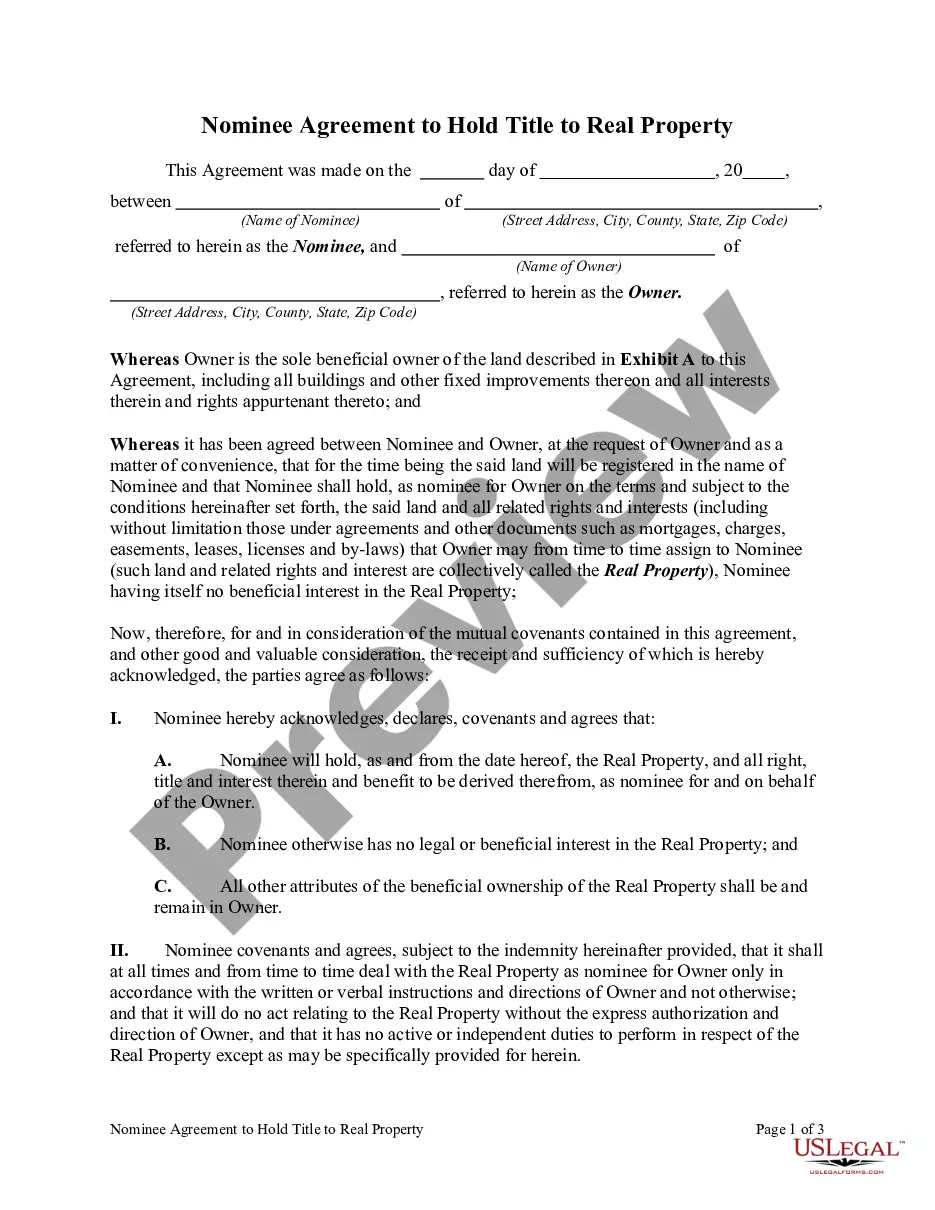
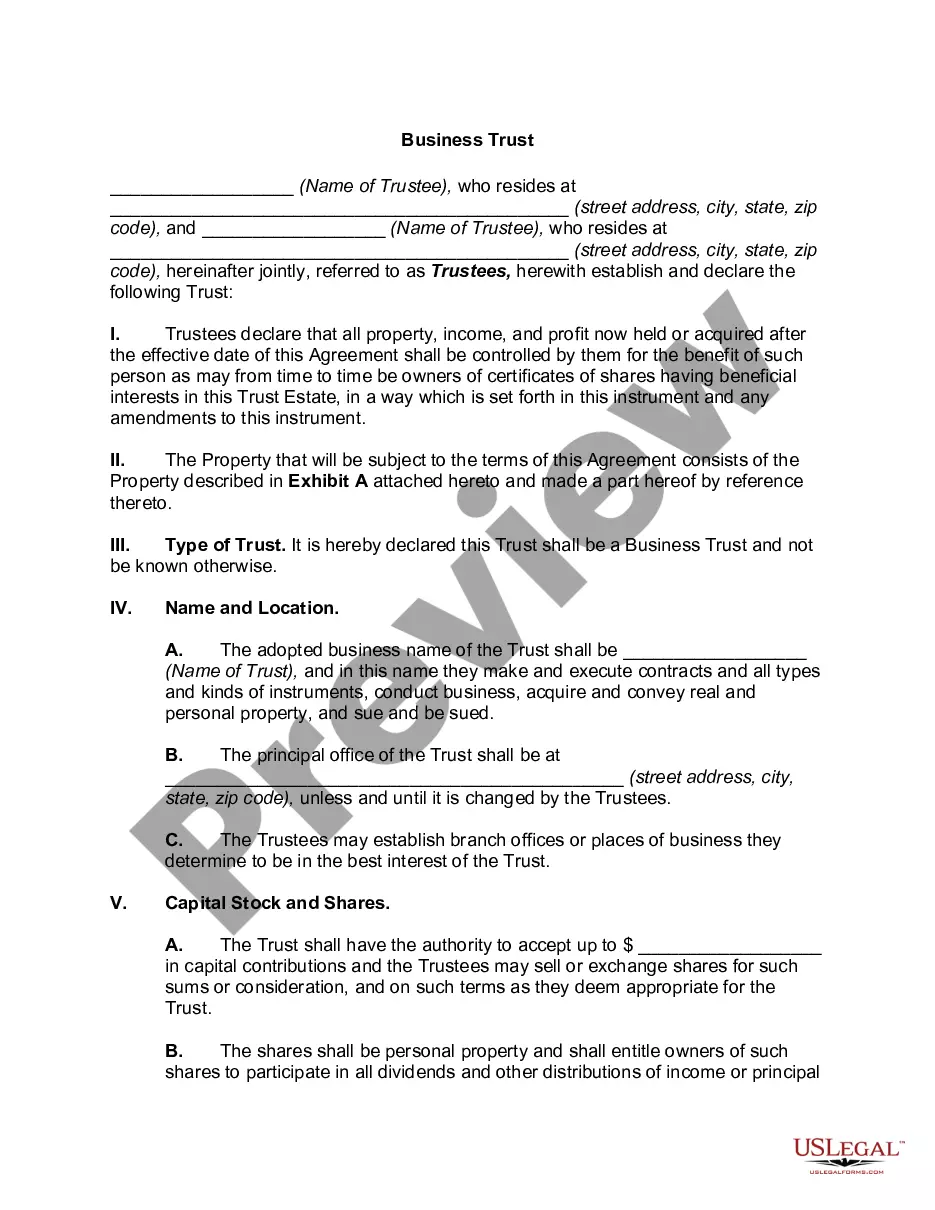
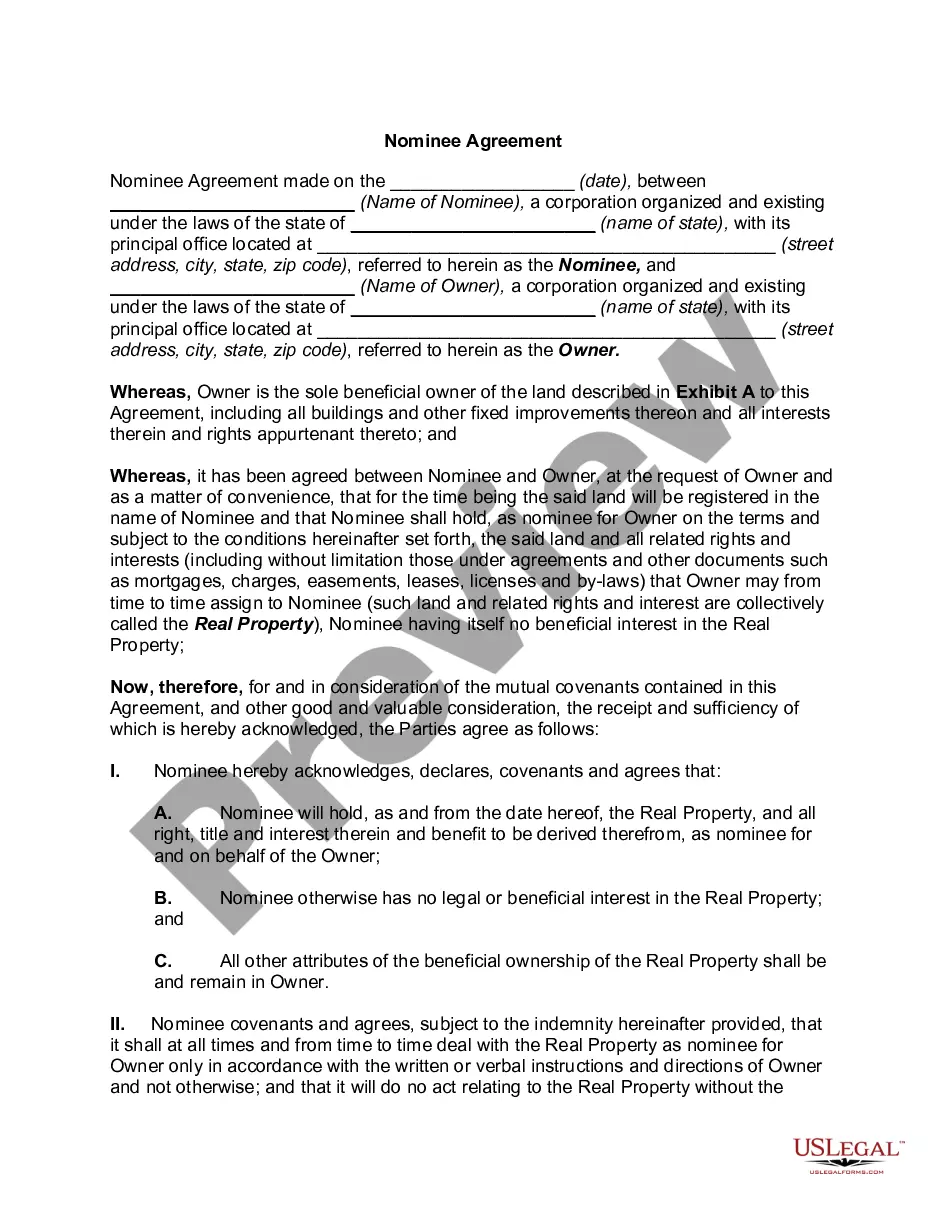

Get your form ready online
Our built-in tools help you complete, sign, share, and store your documents in one place.
Make edits, fill in missing information, and update formatting in US Legal Forms—just like you would in MS Word.
Download a copy, print it, send it by email, or mail it via USPS—whatever works best for your next step.
Sign and collect signatures with our SignNow integration. Send to multiple recipients, set reminders, and more. Go Premium to unlock E-Sign.
If this form requires notarization, complete it online through a secure video call—no need to meet a notary in person or wait for an appointment.
We protect your documents and personal data by following strict security and privacy standards.

Make edits, fill in missing information, and update formatting in US Legal Forms—just like you would in MS Word.

Download a copy, print it, send it by email, or mail it via USPS—whatever works best for your next step.

Sign and collect signatures with our SignNow integration. Send to multiple recipients, set reminders, and more. Go Premium to unlock E-Sign.

If this form requires notarization, complete it online through a secure video call—no need to meet a notary in person or wait for an appointment.

We protect your documents and personal data by following strict security and privacy standards.
Looking for another form?

How to fill out Nominee Trust?
Regardless of whether it is for professional reasons or personal matters, everyone must face legal issues at some point in their life.
Completing legal documents requires careful consideration, starting with selecting the correct form model.
With an extensive US Legal Forms library available, you never need to waste time searching for the right template online. Use the library's straightforward navigation to find the suitable form for any circumstance.
- For instance, if you select an incorrect version of a Nominee Trust Definition For Dummies, it will be rejected upon submission.
- Thus, it is essential to have a reliable source for legal documents like US Legal Forms.
- If you need to obtain a Nominee Trust Definition For Dummies template, follow these straightforward steps.
- Acquire the template you need by using the search box or browsing the catalog.
- Examine the form’s details to ensure it fits your situation, state, and county.
- Click on the form’s preview to view it.
- If it is not the right form, return to the search tool to find the Nominee Trust Definition For Dummies sample you require.
- Retrieving the file when it satisfies your needs.
- If you have a US Legal Forms account, just click Log in to access previously saved forms in My documents.
- If you do not have an account, you can obtain the form by clicking Buy now.
- Choose the right pricing option.
- Complete the profile registration form.
- Select your payment method: utilize a credit card or PayPal account.
- Choose the file format you prefer and download the Nominee Trust Definition For Dummies.
- Once downloaded, you can fill out the form using editing software or print it to complete it by hand.
Form popularity
FAQ
Furthermore, there are recurring administrative costs such as trustee fees, tax preparation fees, and legal fees. Ongoing Record-Keeping: Trusts also require meticulous record-keeping and can be complex to understand and manage. There is a strict legal framework that must be adhered to, which can be daunting for many.
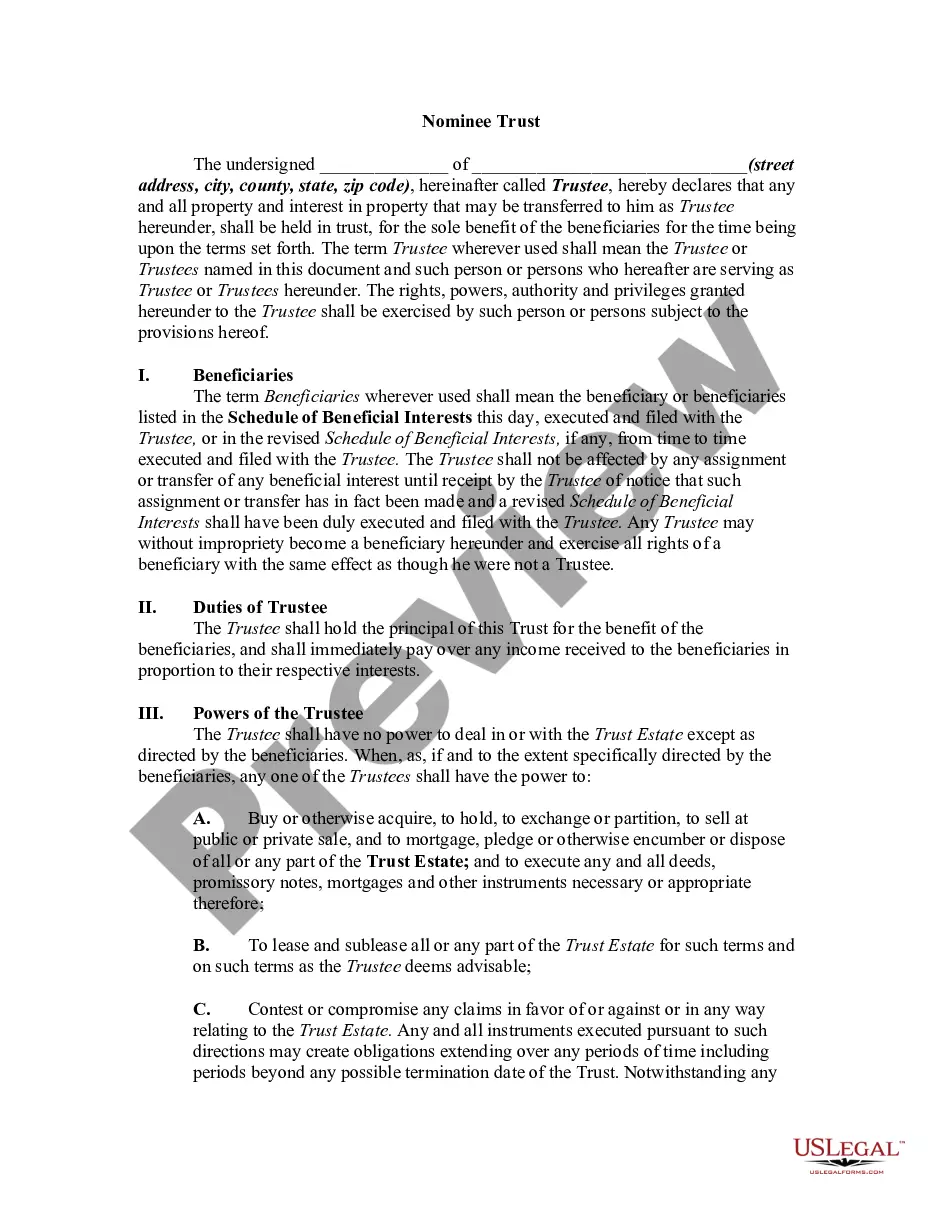
Hear this out loud PauseA nominee trust is a legal arrangement whereby a person, termed the settlor, appoints another person, termed the "nominee" or "trustee", to be the owner of the legal title to some property.
Hear this out loud PauseIn a Nominee Trust the beneficiaries direct the trustee and may even serve as the trustee. Also, unlike an irrevocable trust, the beneficiaries of an NT may terminate the trust at any time and take full ownership of the trust property as tenants in common.
Hear this out loud PauseUnlike a real trust, where the power and duty to appropriately control the trust property lies with the trustee, in a nominee trust the beneficiaries actually retain all decision-making power. In fact, the trustee is really just an agent of the beneficiaries, who essentially act as the principal.
Hear this out loud PauseHow do trusts work? A trust is a fiduciary1 relationship in which one party (the Grantor) gives a second party2 (the Trustee) the right to hold title to property or assets for the benefit of a third party (the Beneficiary). The trustee, in turn, explains the terms and conditions of the trust to the beneficiary.