California Trust Probate Code With Irrevocable
Description
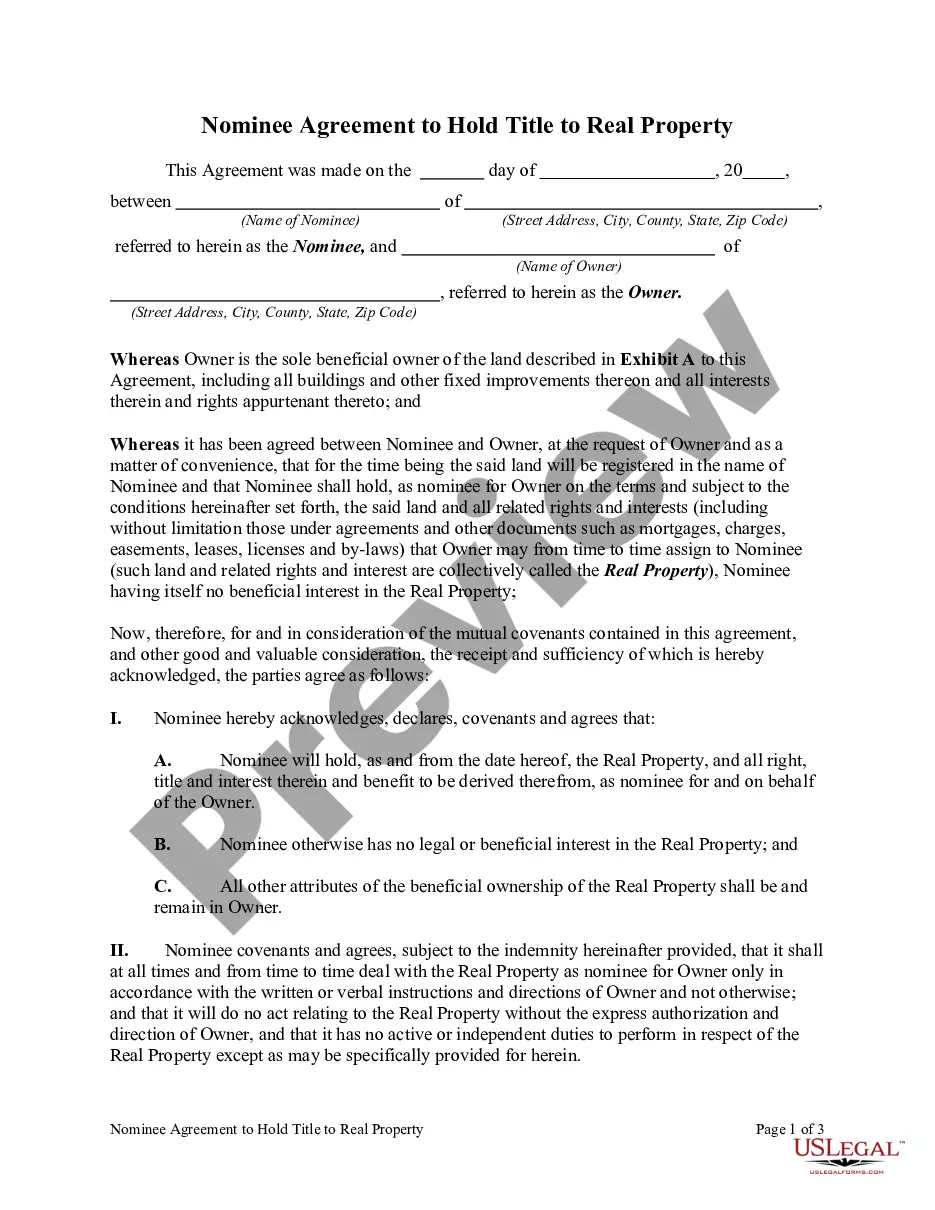
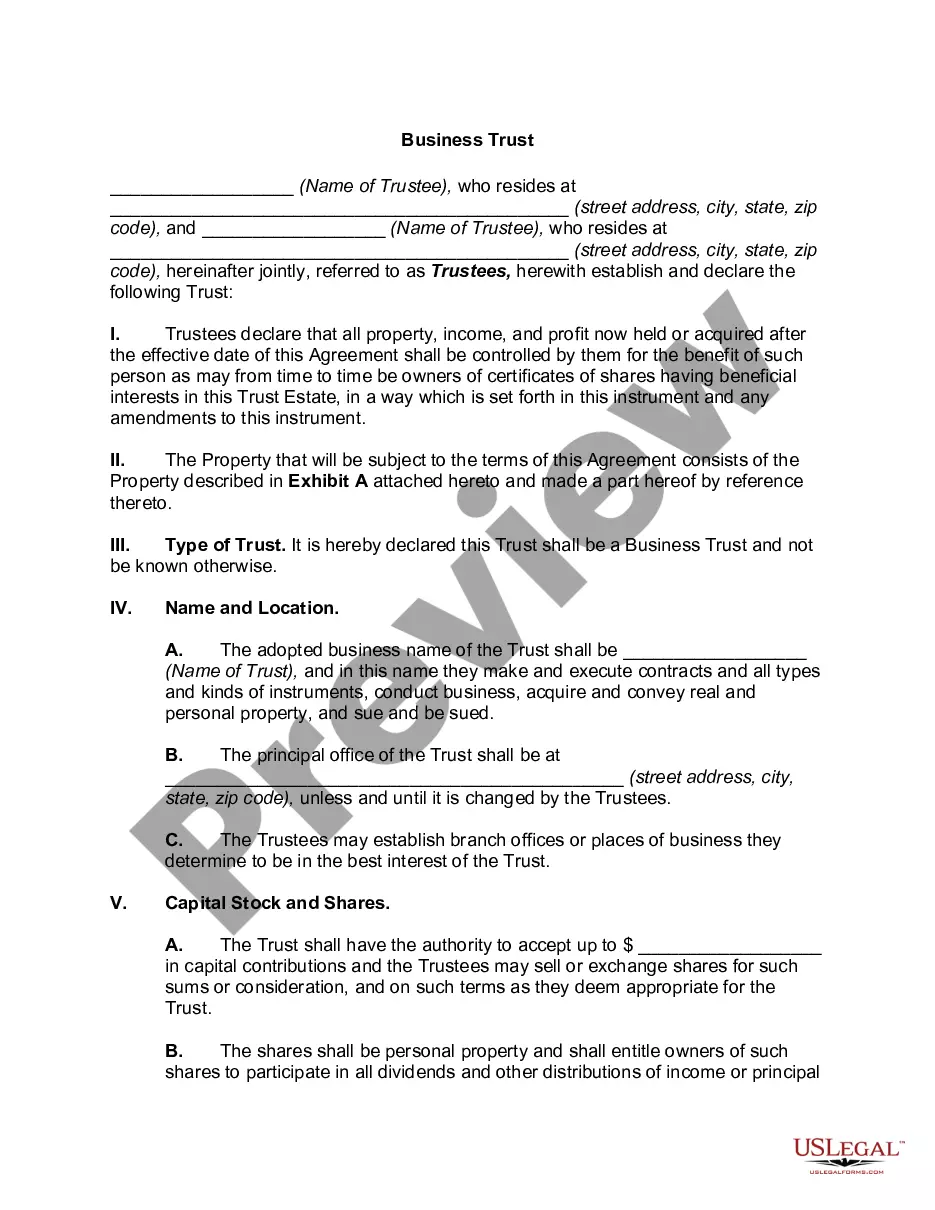
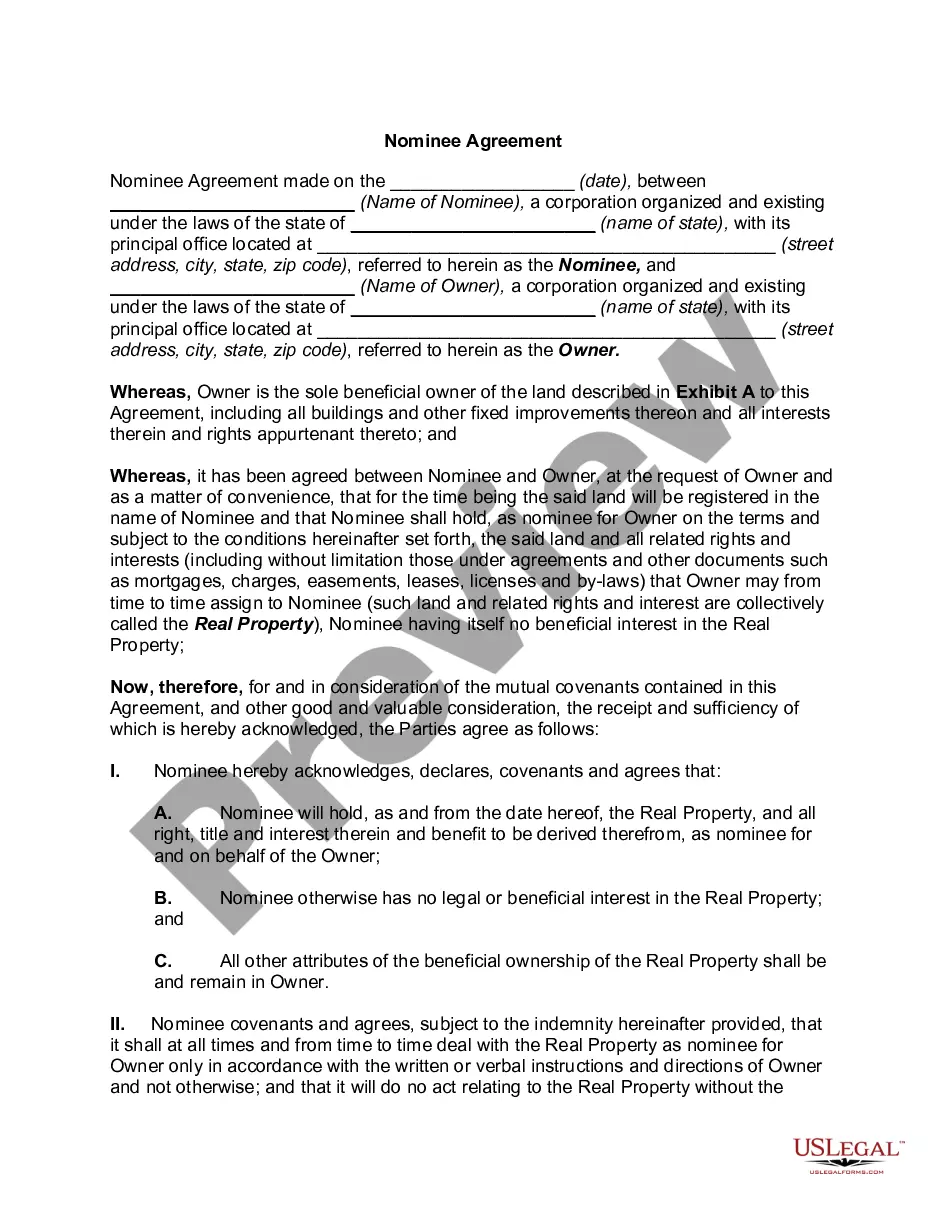
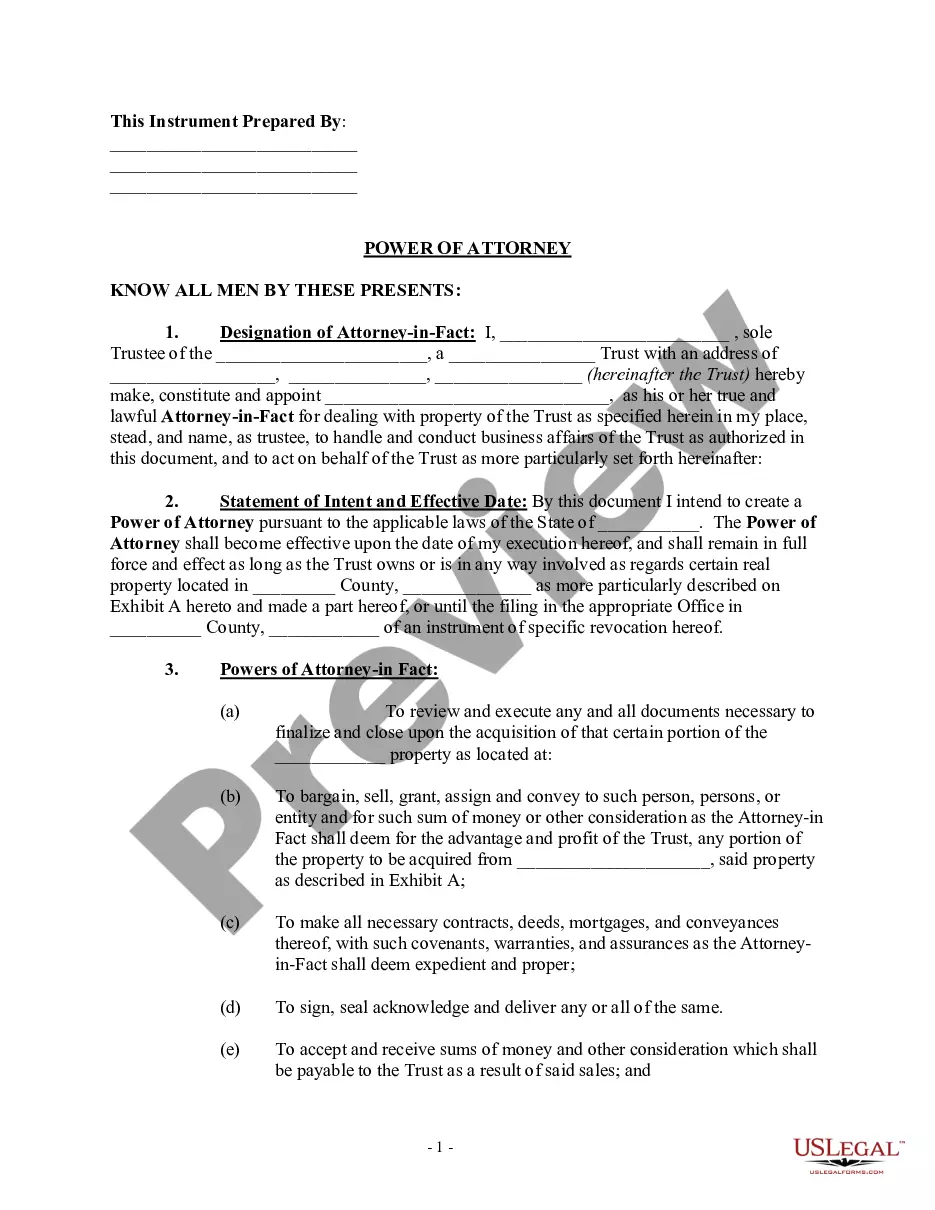
Get your form ready online
Our built-in tools help you complete, sign, share, and store your documents in one place.
Make edits, fill in missing information, and update formatting in US Legal Forms—just like you would in MS Word.
Download a copy, print it, send it by email, or mail it via USPS—whatever works best for your next step.
Sign and collect signatures with our SignNow integration. Send to multiple recipients, set reminders, and more. Go Premium to unlock E-Sign.
If this form requires notarization, complete it online through a secure video call—no need to meet a notary in person or wait for an appointment.
We protect your documents and personal data by following strict security and privacy standards.

Make edits, fill in missing information, and update formatting in US Legal Forms—just like you would in MS Word.

Download a copy, print it, send it by email, or mail it via USPS—whatever works best for your next step.

Sign and collect signatures with our SignNow integration. Send to multiple recipients, set reminders, and more. Go Premium to unlock E-Sign.

If this form requires notarization, complete it online through a secure video call—no need to meet a notary in person or wait for an appointment.

We protect your documents and personal data by following strict security and privacy standards.
Looking for another form?

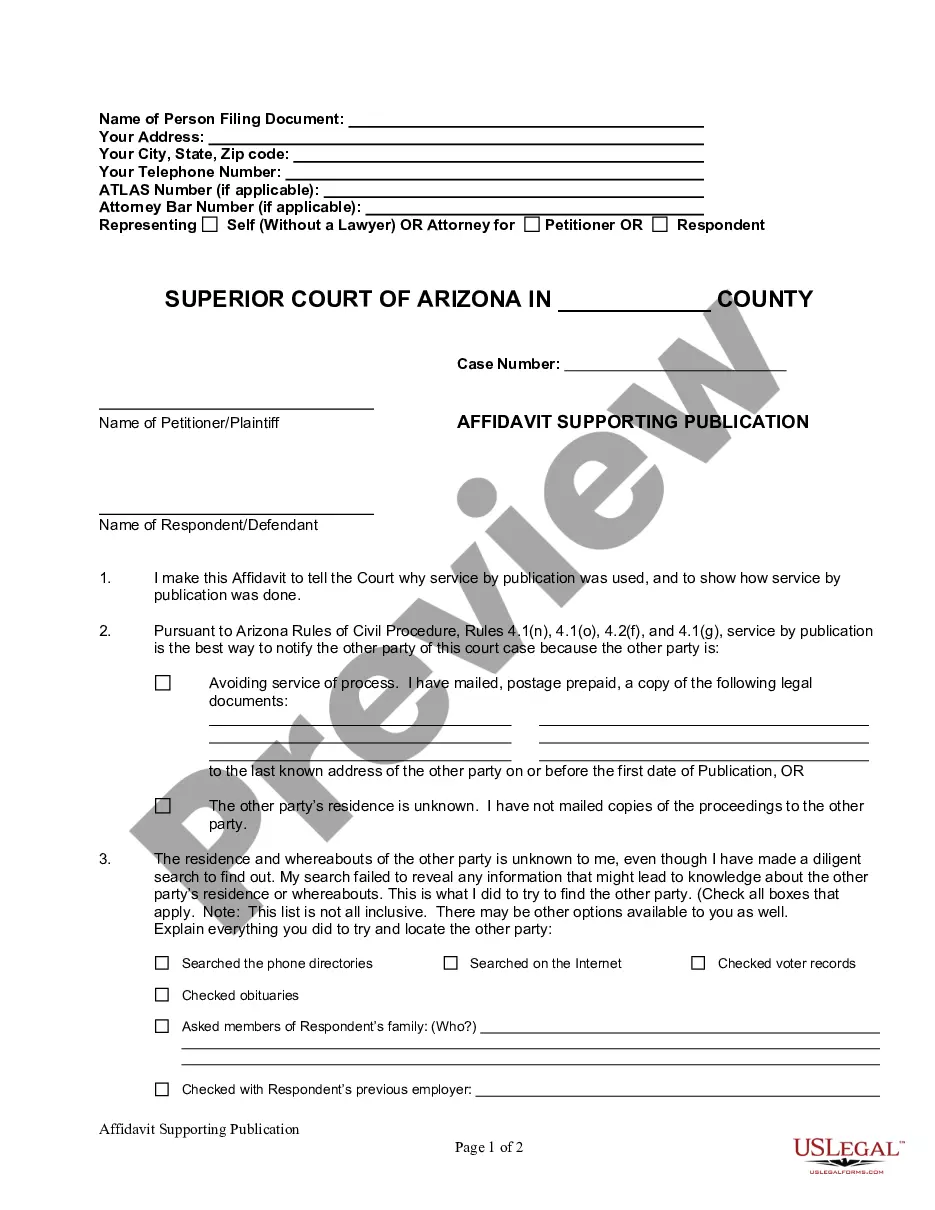

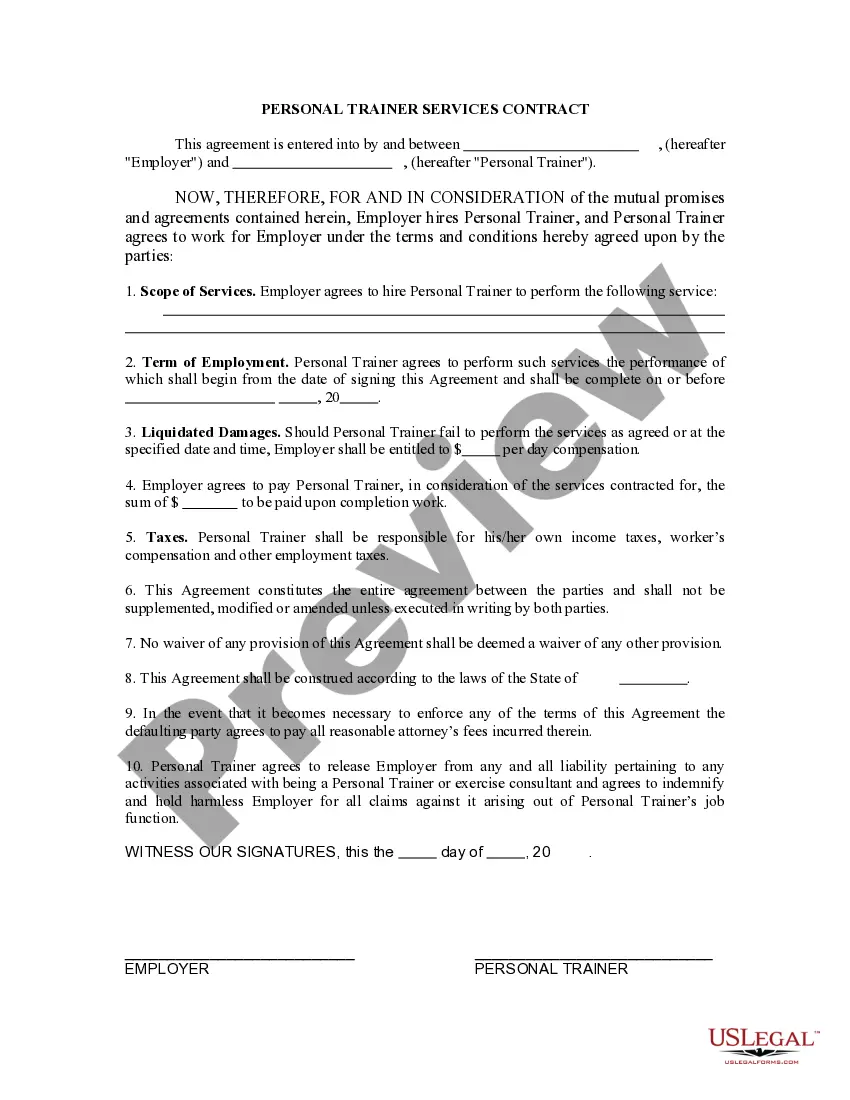


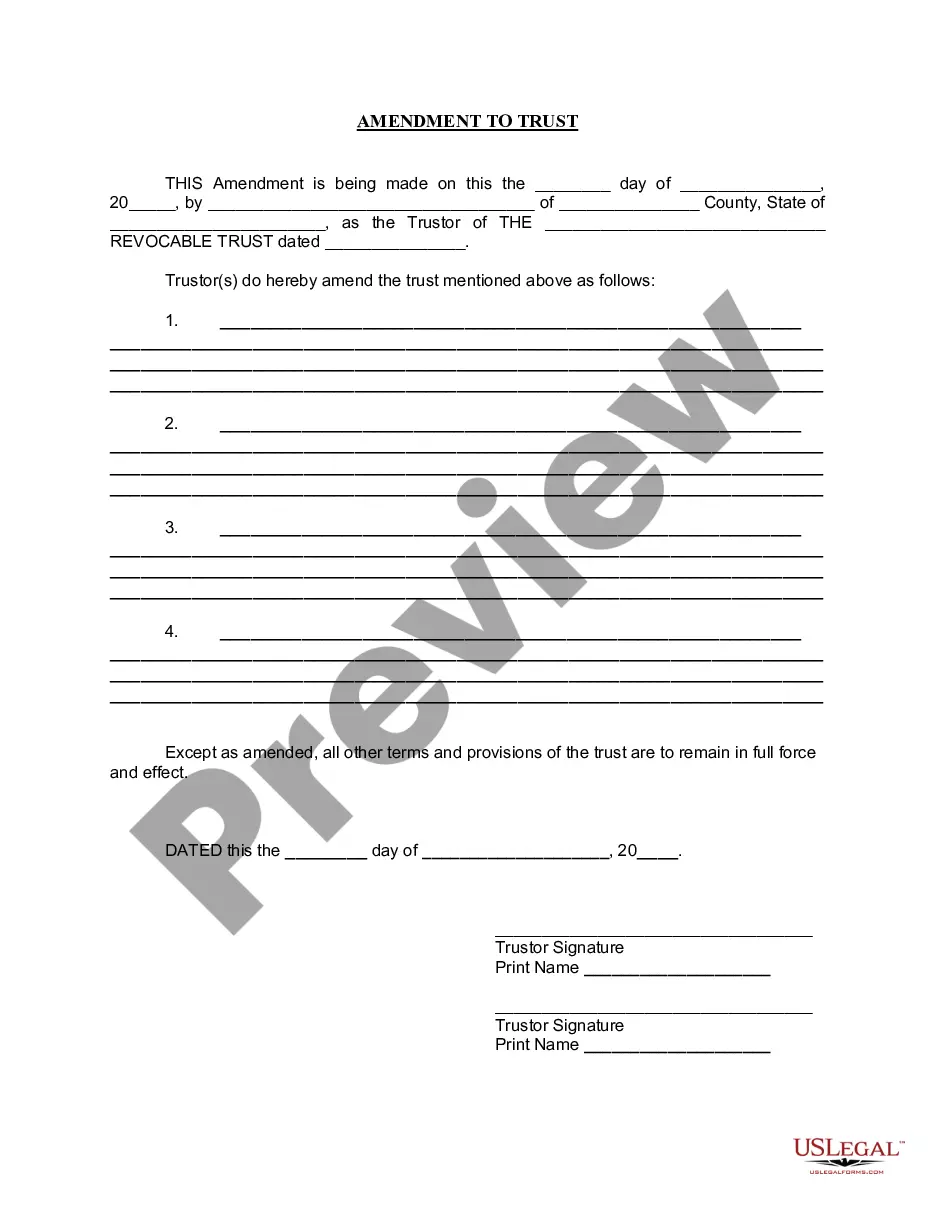


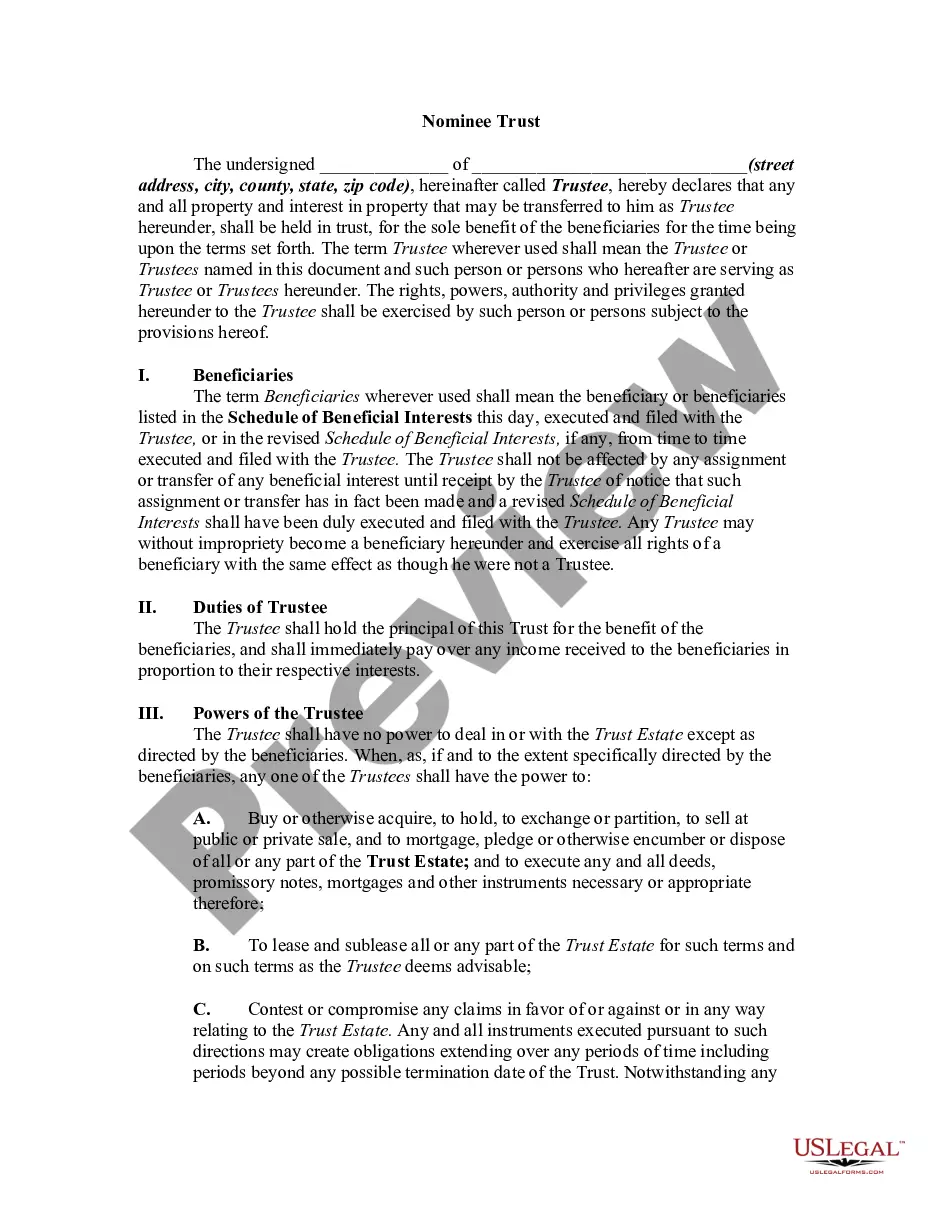
How to fill out Nominee Trust?
Whether for corporate reasons or personal matters, everyone must confront legal issues at some point in their lives. Completing legal documentation requires meticulous attention, starting with selecting the correct form template.
For example, if you select an incorrect variant of the California Trust Probate Code With Irrevocable, it will be rejected upon submission. Thus, it is essential to have a reliable source of legal documents like US Legal Forms.
With a comprehensive US Legal Forms catalog available, you won’t need to waste time searching for the appropriate template online. Utilize the library’s user-friendly navigation to find the right form for any situation.
- Obtain the template you need by using the search box or browsing the catalog.
- Review the form’s details to ensure it corresponds to your situation, state, and county.
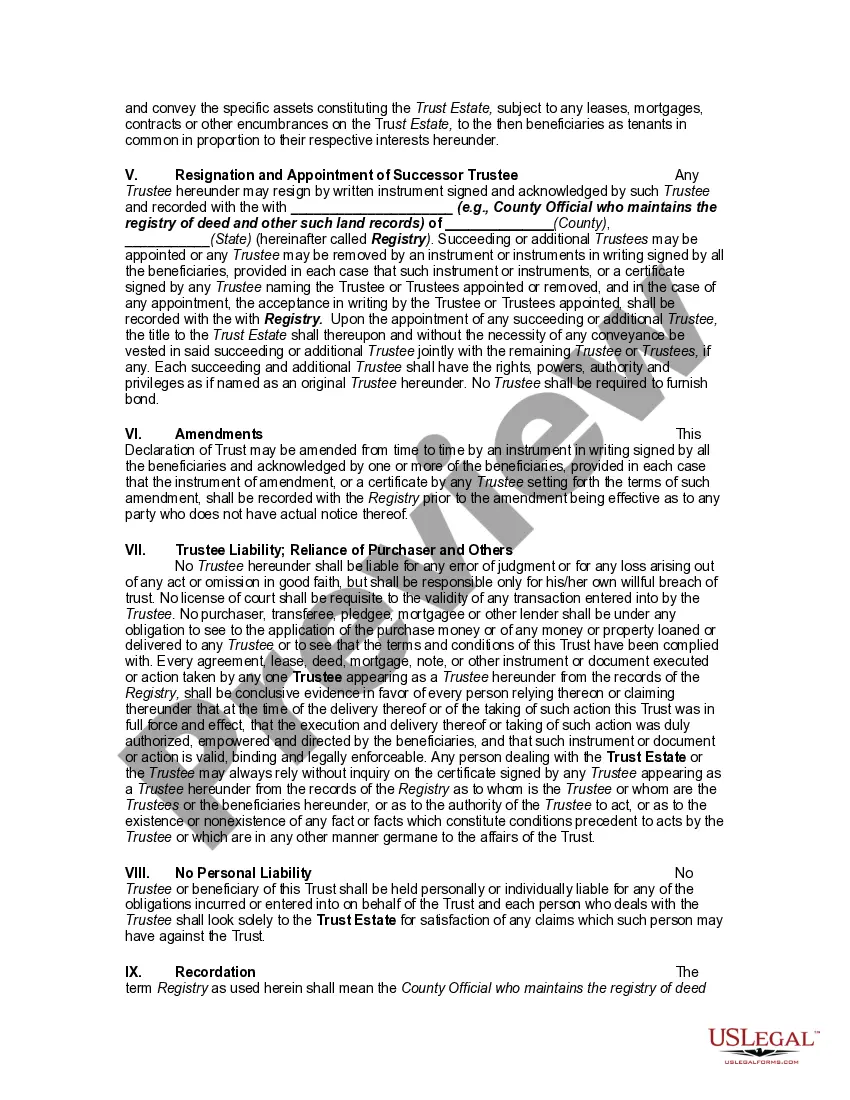
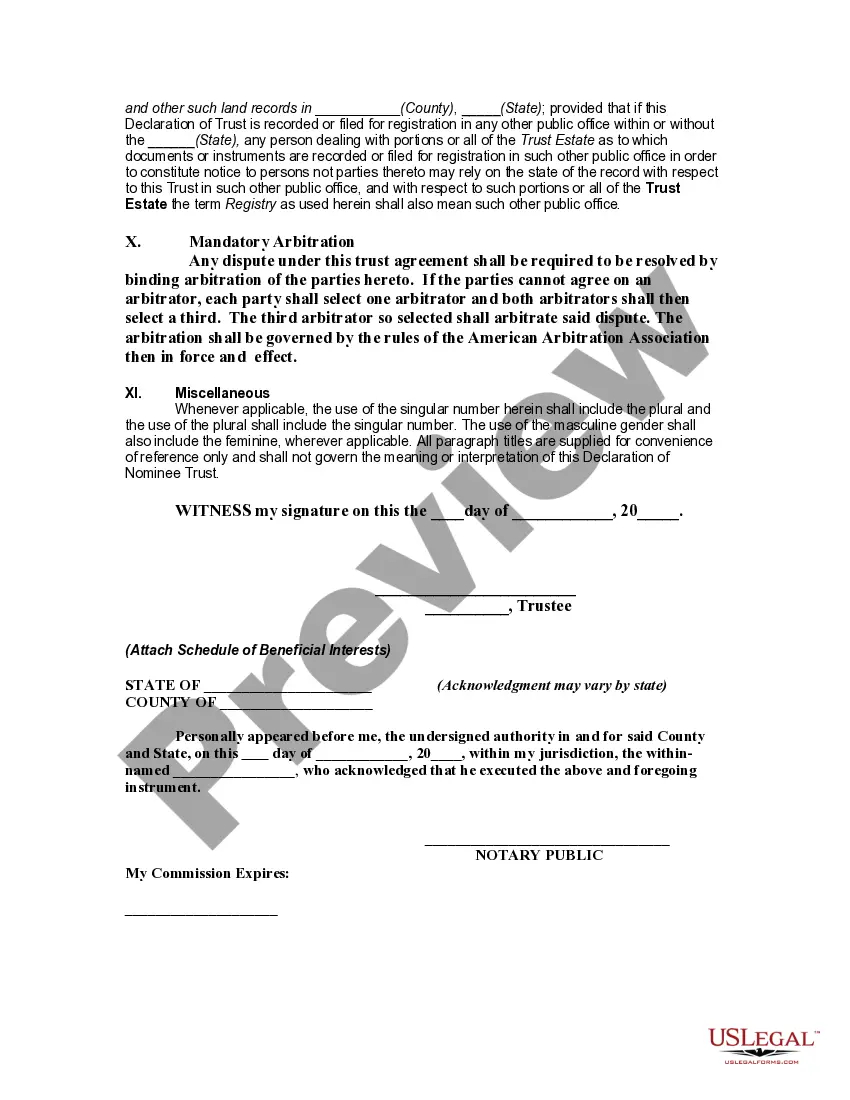
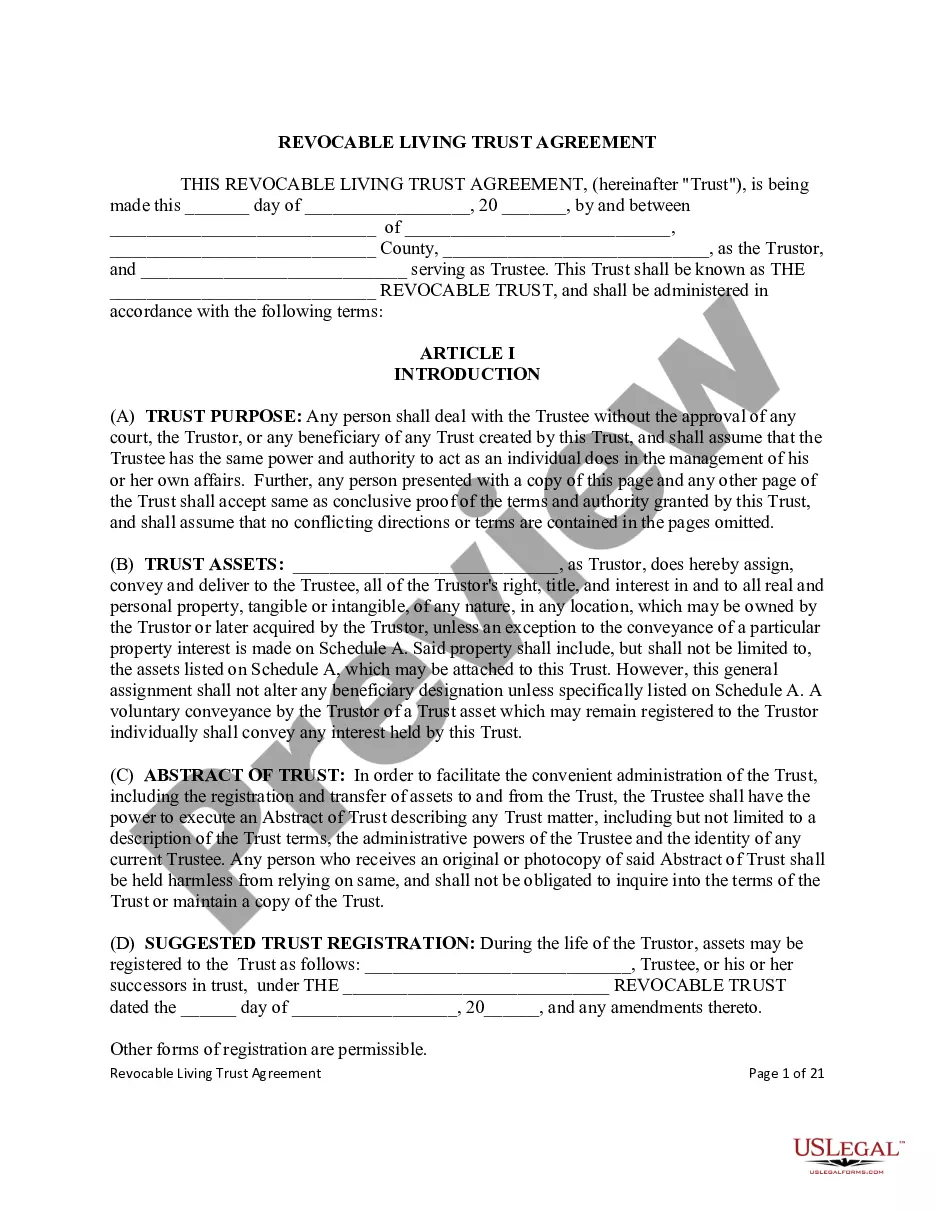
- Access the form’s preview to examine it.
- If it is not the correct form, return to the search tool to locate the California Trust Probate Code With Irrevocable sample you need.
- Download the file if it fits your specifications.
- If you possess a US Legal Forms account, simply click Log in to access previously saved documents in My documents.
- If you do not have an account yet, you can download the form by clicking Buy now.
- Select the appropriate pricing plan.
- Complete the account registration form.
- Choose your payment method: use a credit card or PayPal.
- Select the desired file format and download the California Trust Probate Code With Irrevocable.
- Once it is downloaded, you can fill out the form using editing software or print it and complete it manually.
Form popularity
FAQ
Unless the assets are included in the taxable estate of the original owner (or ?grantor?), the basis doesn't reset. To get the step-up in basis, the assets in the irrevocable trust now must be included in the taxable estate at the time of the grantor's death.
While irrevocable trusts are generally fixed and cannot be changed once they're set up, California law does allow for modifications under certain circumstances. This process typically involves obtaining consent from all beneficiaries or seeking court approval.
Section 16061.5 - Beneficiaries provided copy of terms of irrevocable trust (a) A trustee shall provide a true and complete copy of the terms of the irrevocable trust, or irrevocable portion of the trust, to each of the following: (1) Any beneficiary of the trust who requests it, and to any heir of a deceased settlor ...
Assets placed under an irrevocable trust are protected from the reach of a divorcing spouse, creditors, business partners, or any unscrupulous legal intent. Assets like home, jewelry, art collection, and other valuables placed in the trust are guarded against anyone seeking litigation against you.
Irrevocable trust comes in handy as it helps protect the assets, acquire benefits from the state and reduce taxes on the estate. Under the California irrevocable trust law, once the transfer starts, all the transaction details become public information and are registered with the county clerk.