Credit Card Debt Forgiveness Death
Description
Get your form ready online
Our built-in tools help you complete, sign, share, and store your documents in one place.
Make edits, fill in missing information, and update formatting in US Legal Forms—just like you would in MS Word.
Download a copy, print it, send it by email, or mail it via USPS—whatever works best for your next step.
Sign and collect signatures with our SignNow integration. Send to multiple recipients, set reminders, and more. Go Premium to unlock E-Sign.
If this form requires notarization, complete it online through a secure video call—no need to meet a notary in person or wait for an appointment.
We protect your documents and personal data by following strict security and privacy standards.

Make edits, fill in missing information, and update formatting in US Legal Forms—just like you would in MS Word.

Download a copy, print it, send it by email, or mail it via USPS—whatever works best for your next step.

Sign and collect signatures with our SignNow integration. Send to multiple recipients, set reminders, and more. Go Premium to unlock E-Sign.

If this form requires notarization, complete it online through a secure video call—no need to meet a notary in person or wait for an appointment.

We protect your documents and personal data by following strict security and privacy standards.
Looking for another form?
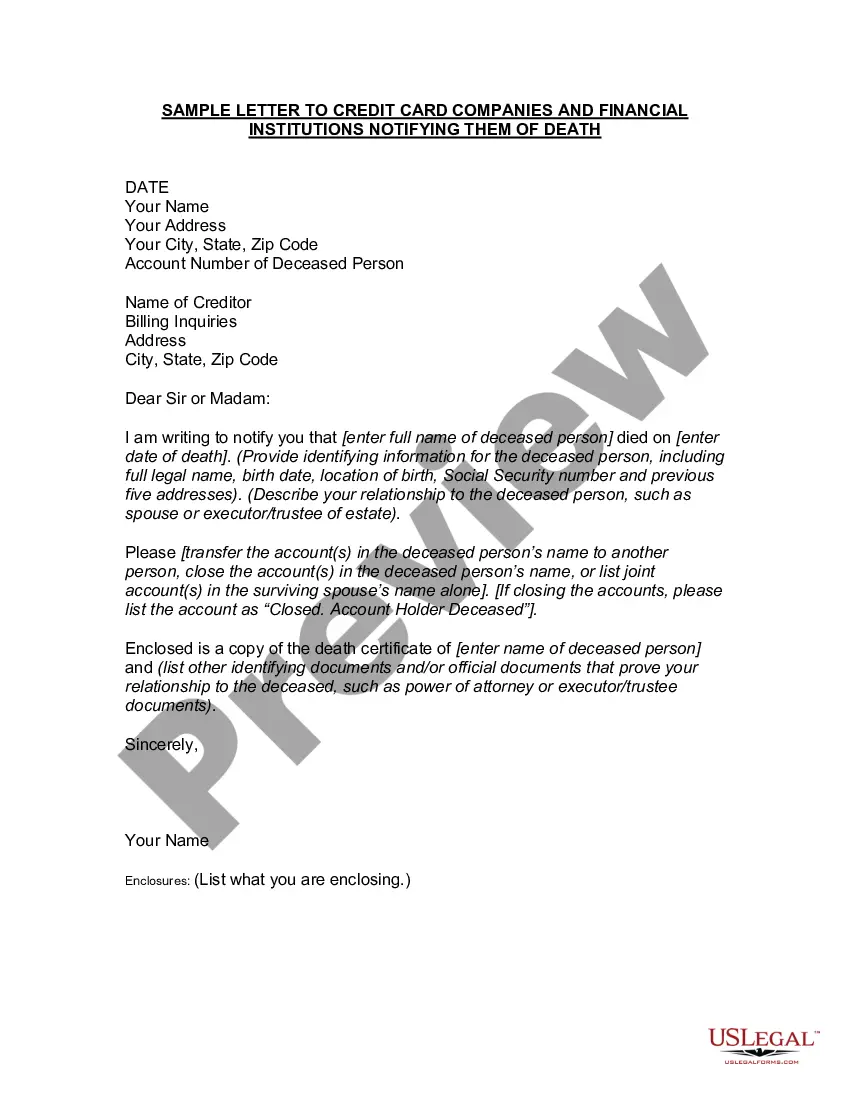
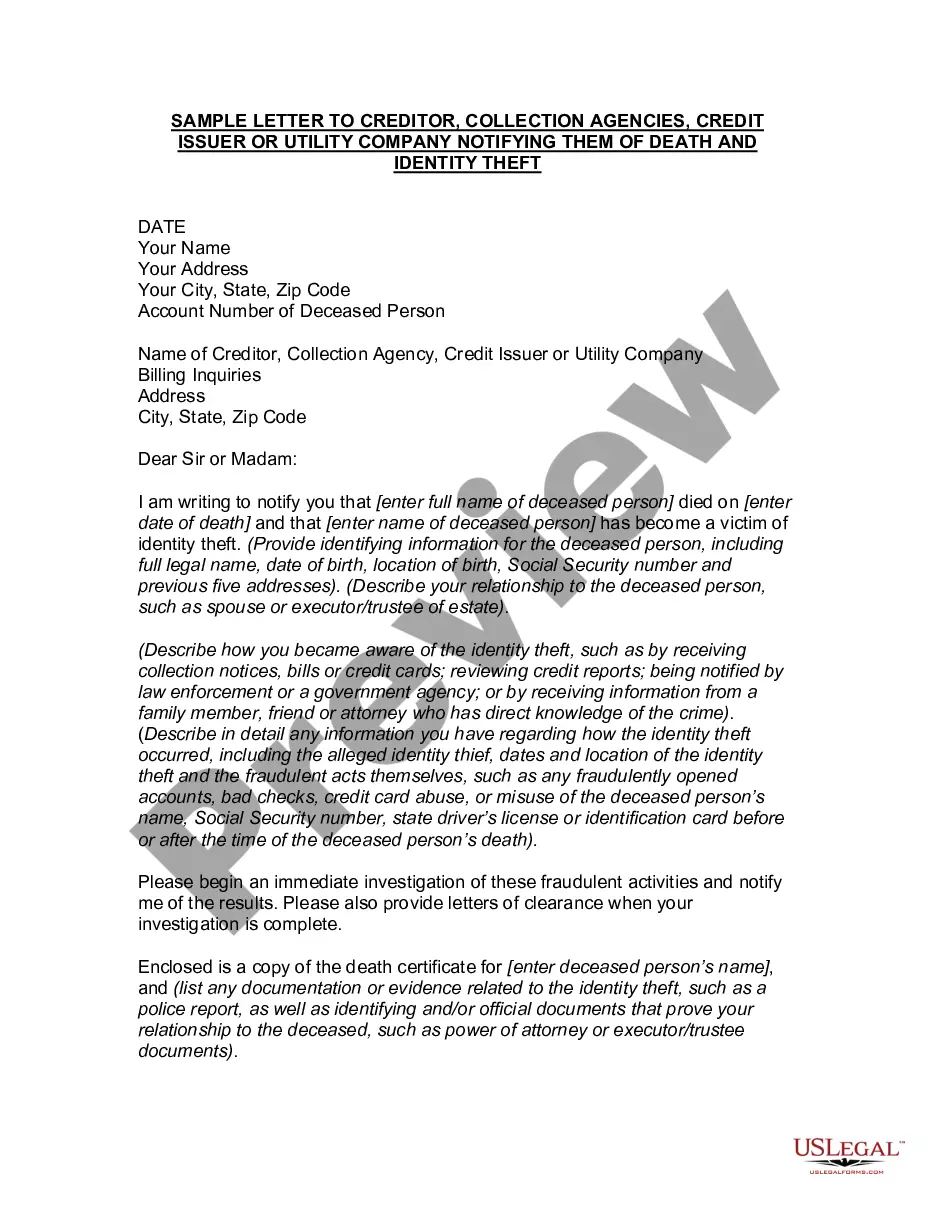
How to fill out Letter To Credit Card Companies And Financial Institutions Notifying Them Of Death?
The Credit Card Debt Forgiveness Document you see on this page is a versatile legal template created by expert lawyers in accordance with federal and state laws.
For over 25 years, US Legal Forms has supplied individuals, businesses, and legal practitioners with more than 85,000 validated, state-specific templates for every professional and personal need. It’s the fastest, easiest, and most trustworthy way to source the documents you require, as the service ensures the utmost level of data security and malware protection.
Subscribe to US Legal Forms to have verified legal templates for every aspect of life readily available.
- Search for the document you need and review it.
- Browse through the sample you searched for and preview it or check the form details to ensure it meets your needs. If it doesn’t, utilize the search bar to find the correct one. Click Buy Now once you have found the template you require.
- Register and sign in.
- Select the pricing plan that best fits your needs and create an account. Use PayPal or a credit card for a quick transaction. If you already possess an account, Log In and check your subscription to proceed.
- Obtain the editable template.
- Select the format you prefer for your Credit Card Debt Forgiveness Document (PDF, DOCX, RTF) and download the sample onto your device.
- Fill out and sign the documents.
- Print the template to complete it by hand. Alternatively, utilize an online multi-functional PDF editor to quickly and accurately fill in and sign your form with a valid signature.
- Download your documents once more.
- Re-use the same document anytime you need. Access the My documents tab in your profile to re-download any forms you have previously downloaded.
Form popularity
FAQ
To negotiate credit card debt after death, first gather all relevant information about the deceased's debts and assets. Reach out to the credit card companies to discuss potential debt forgiveness options. Presenting a death certificate and any pertinent estate details can help streamline the negotiation. Using US Legal Forms can assist you in understanding your rights and options during this sensitive time.
Negotiating credit card debt for someone who has passed involves contacting the credit card issuer directly. You will need to provide a death certificate along with information about the deceased's estate. This can facilitate discussions about debt forgiveness options. US Legal Forms provides resources that can guide you through this negotiation process effectively.
Yes, typically a death certificate is required to cancel the credit cards of a deceased individual. This document proves the account holder’s passing to the credit card company. Presenting this certificate can help initiate the credit card debt forgiveness death process. Consider using services like US Legal Forms to simplify this procedure.
Yes, you should notify the credit card company once a cardholder passes away. This step is important because it can help with credit card debt forgiveness death processes. The company needs this information to update their records and prevent any future charges. Additionally, informing them can initiate the process for settling any outstanding debts under the applicable legal guidelines.
When a parent dies, the responsibility for their debt typically falls on their estate. Generally, children are not personally liable for their parent’s credit card debt unless they are co-signers. If the estate has enough assets, the debts will be settled using those funds. In cases where there are insufficient assets, surviving family members may benefit from credit card debt forgiveness death, preventing further financial burden.
Negotiating credit card debt after a person's death can be a challenging yet necessary step. A personal representative of the deceased's estate should contact the creditors and inform them of the death. They can then discuss options for settling the debt, including potential credit card debt forgiveness death if the estate cannot cover the outstanding amounts. Using platforms like US Legal Forms can guide you through the negotiation process and help you manage this sensitive issue.
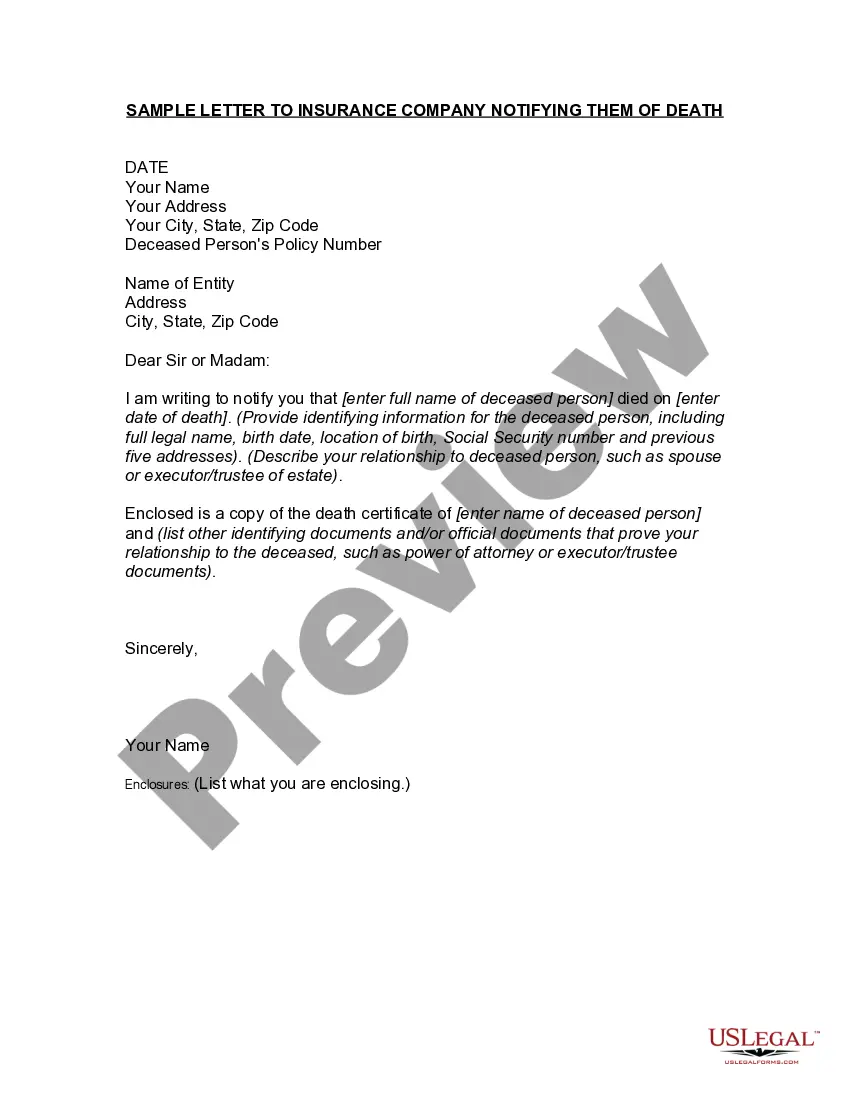
To inform credit card companies of a person's death, you should reach out directly to customer service. Typically, you will need to provide a copy of the death certificate. This process can help clarify responsibilities regarding the outstanding credit card debt, leading to the proper steps for handling financial obligations after death.
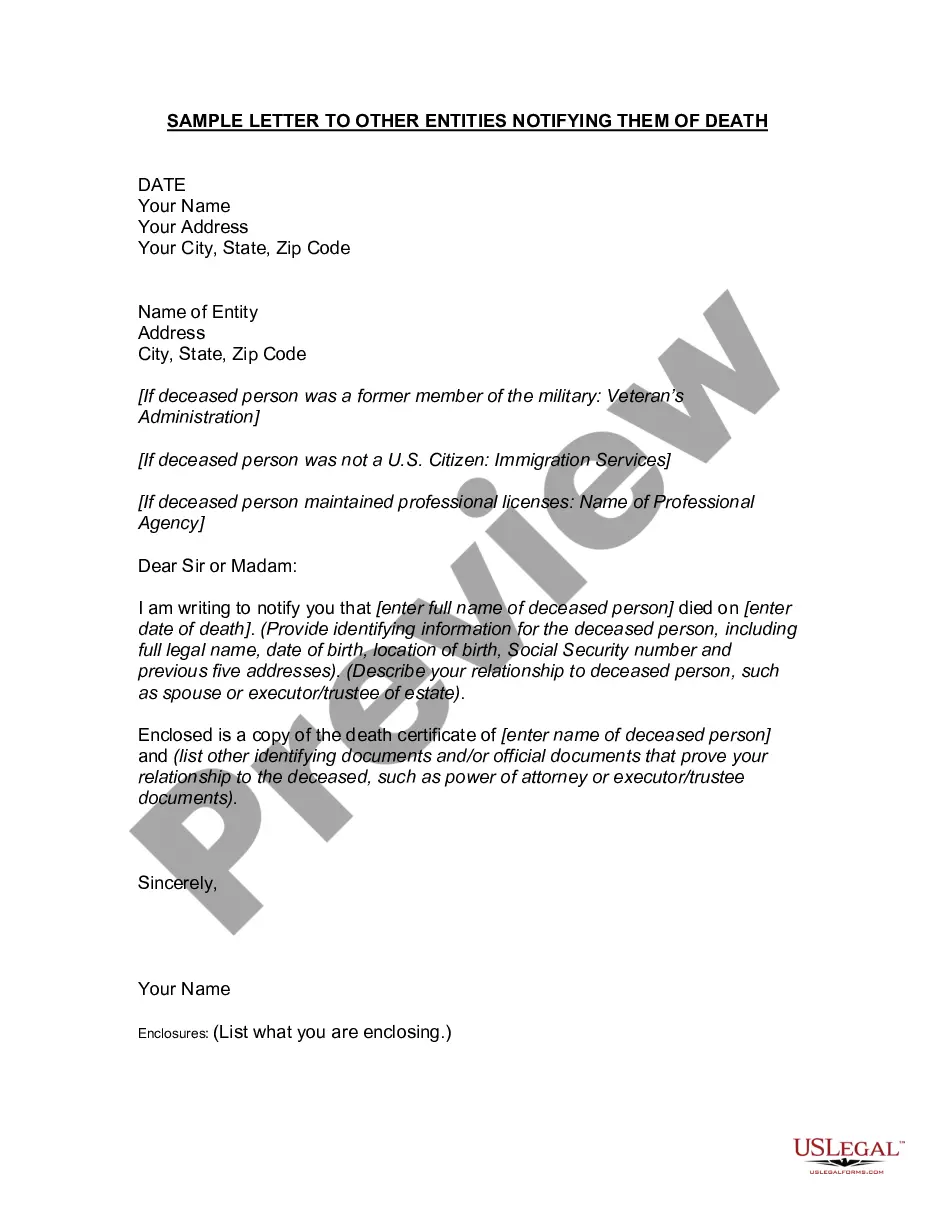
Some debts may not be forgiven upon death, such as federal student loans, certain tax obligations, and mortgages, unless specified otherwise. Secured debts often remain attached to the assets they were used to obtain. It’s essential to know the distinctions, as managing finances during these times may include working through these issues.
To pursue credit card debt forgiveness after death, you typically need to handle the estate's finances. It involves reviewing the deceased's assets, debts, and the state’s probate process. If debts exceed assets, the remaining credit card balances may be written off, but consulting a financial expert or legal advisor can clarify your options.
Credit card companies may not actively forgive debt after death, but certain circumstances can lead to cancellation. For instance, if the estate lacks sufficient assets to cover the debt, the credit card company might choose not to pursue repayment. Understanding how credit card debt forgiveness death impacts your situation can help you navigate these challenges.