Shared Driveway Laws In Massachusetts
Description
Get your form ready online
Our built-in tools help you complete, sign, share, and store your documents in one place.
Make edits, fill in missing information, and update formatting in US Legal Forms—just like you would in MS Word.
Download a copy, print it, send it by email, or mail it via USPS—whatever works best for your next step.
Sign and collect signatures with our SignNow integration. Send to multiple recipients, set reminders, and more. Go Premium to unlock E-Sign.
If this form requires notarization, complete it online through a secure video call—no need to meet a notary in person or wait for an appointment.
We protect your documents and personal data by following strict security and privacy standards.

Make edits, fill in missing information, and update formatting in US Legal Forms—just like you would in MS Word.

Download a copy, print it, send it by email, or mail it via USPS—whatever works best for your next step.

Sign and collect signatures with our SignNow integration. Send to multiple recipients, set reminders, and more. Go Premium to unlock E-Sign.

If this form requires notarization, complete it online through a secure video call—no need to meet a notary in person or wait for an appointment.

We protect your documents and personal data by following strict security and privacy standards.
Looking for another form?







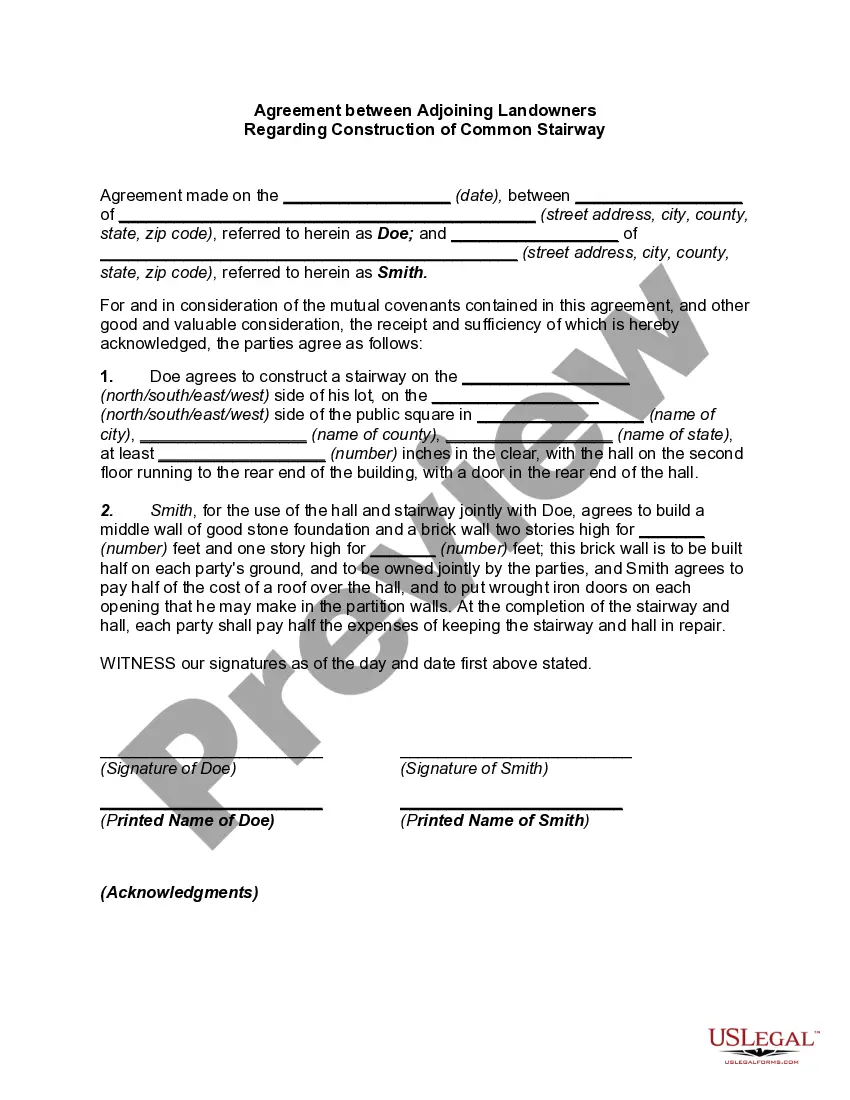
How to fill out Agreement Between Adjoining Owners Creating Easement For Common Driveway?
Acquiring samples of legal documents that comply with federal and state regulations is crucial, and the internet provides numerous choices.
However, why squander time looking for the accurately formatted Shared Driveway Laws In Massachusetts template online when the US Legal Forms digital library already compiles such documents in one location.
US Legal Forms is the most extensive online legal repository with more than 85,000 fillable documents created by lawyers for various business and personal scenarios.
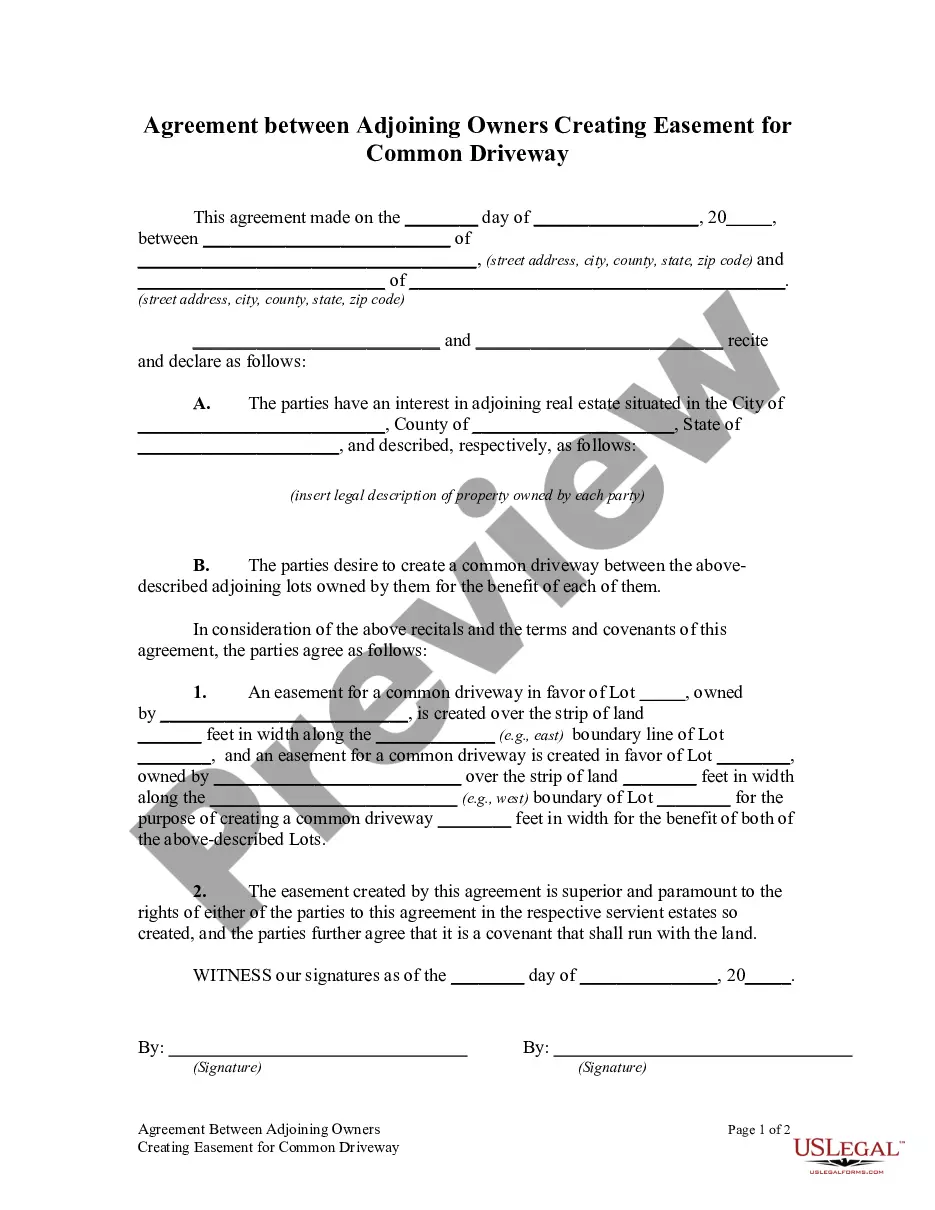
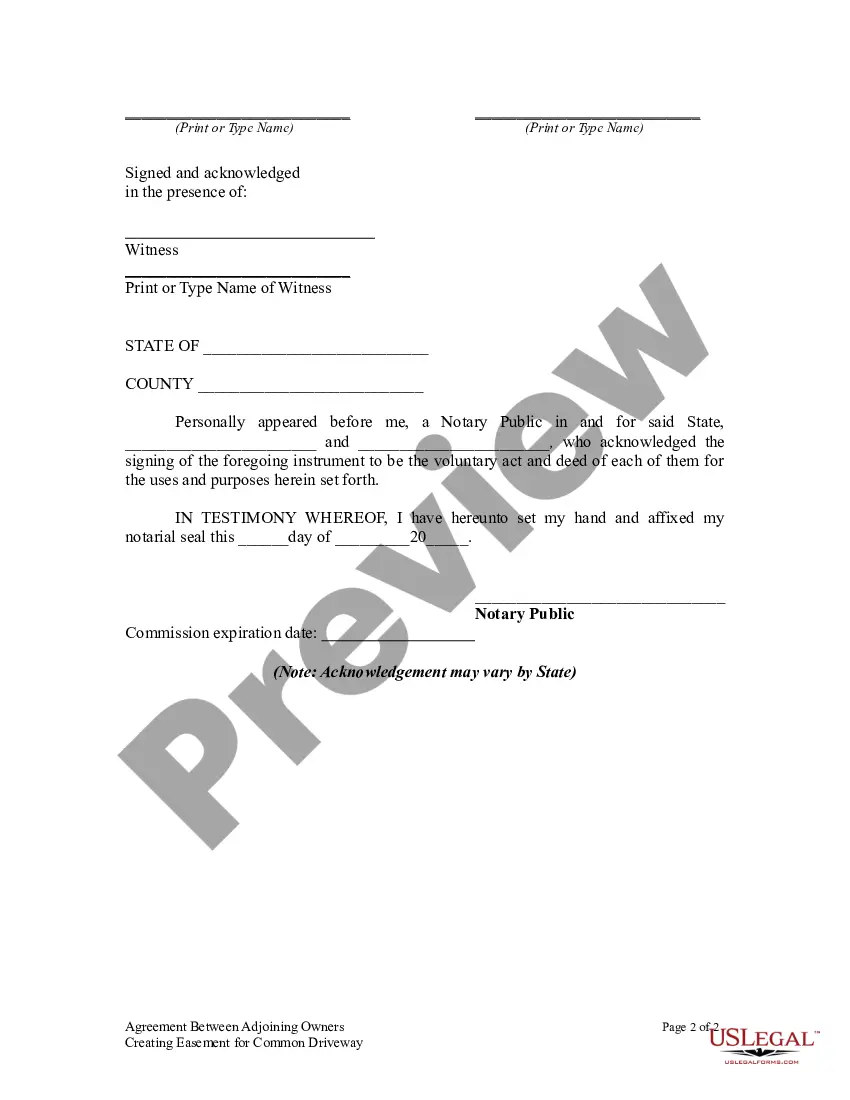
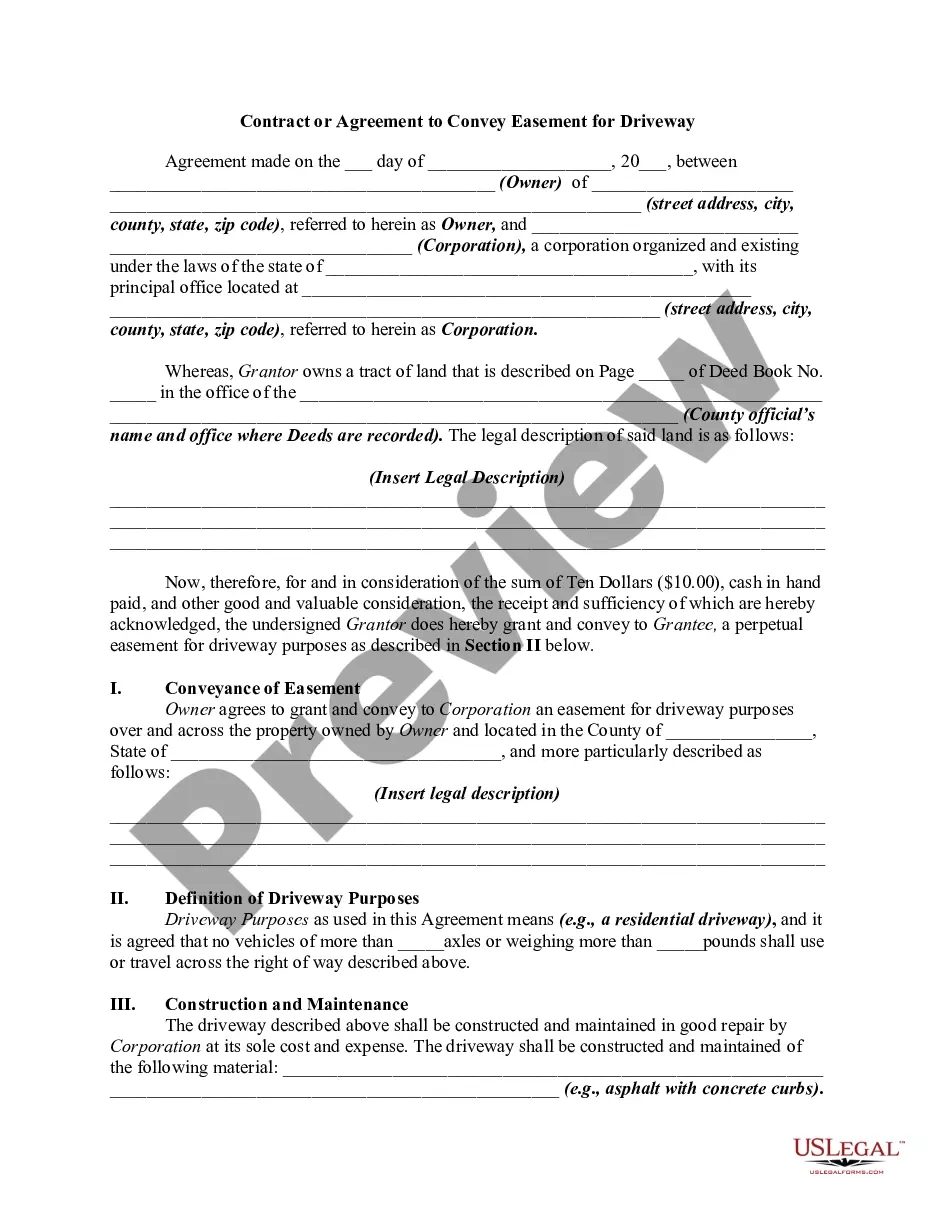
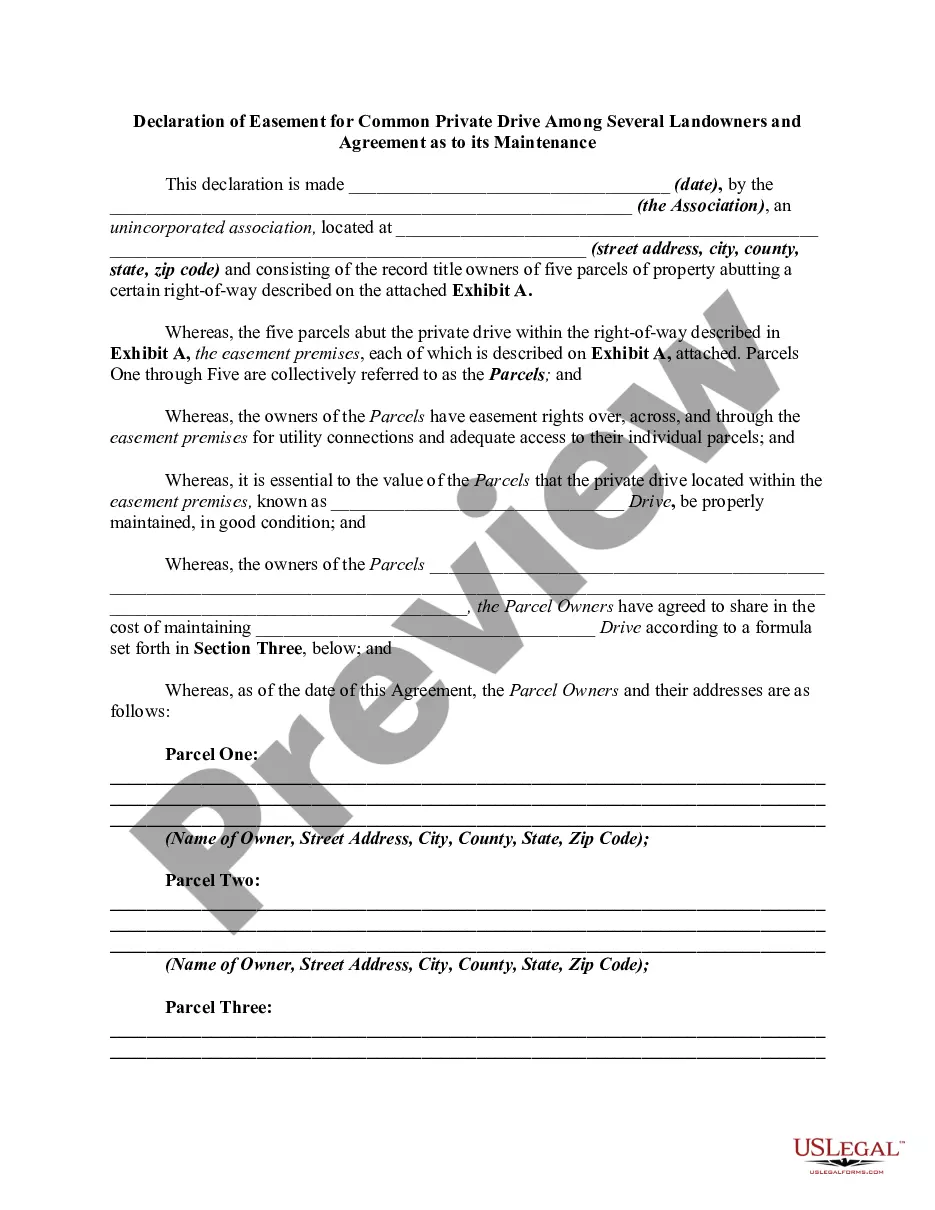
Explore the template using the Preview feature or the text outline to ensure it meets your requirements.
- They are simple to navigate, with all documents organized by state and intended use.
- Our experts stay informed about legislative modifications, ensuring that your form is always current and compliant when obtaining a Shared Driveway Laws In Massachusetts from our site.
- Acquiring a Shared Driveway Laws In Massachusetts is straightforward and fast for both existing and new clients.
- If you have an account with an active subscription, Log In and save the document sample you require in your desired format.
- If you are a newcomer to our website, follow the steps outlined below.
Form popularity
FAQ
Indiana statute restricts lien waivers. The state prohibits unconditional lien waivers, as long as they are not advance lien waivers. State law prohibits the waiver of the right to file a lien prior to payment for the labor. Contracts requiring a party to waive their claims under a payment bond are prohibited.
Indiana mechanics lien law requires parties who do not have a direct contract with the owner to provide preliminary notice. Sending this notice is required in order to preserve their lien rights. The notice required is called a Preliminary Notice to Owner of Mechanic's Lien Rights.
About Indiana Notice of Intent to Lien Form No one wants to be forced to file a mechanics lien, and this document gives all of the parties involved one final chance to take care of the payment issues on a project. This form advises the party that a lien will be filed if payment is not received within 10 days.
PREPARING THE INDIANA MECHANICS LIEN Every mechanics lien typically must contain the owner's name, a general description of the property and location, the name of the hiring party, the first and last date of work a description of the work performed, and the amount of money owed.
Yes. Indiana law presumes that homeowners are ignorant of subcontractors' or materials suppliers' rights to file mechanic's liens on the homes.
Within sixty (60) days of the last day the contractor or supplier, described in A., provided labor, materials or equipment on the job site, the contractor or supplier must file a NOTICE OF LIEN with the Recorder's Office in the County where the project is located.
Indiana law requires that your lien claim must be sworn to or verified and contain the following information: The amount claimed. Your name and address. The owner's name and address. The legal description, street, and number (if any) of the property.