Dividend Corporation Shareholder Formula
Description
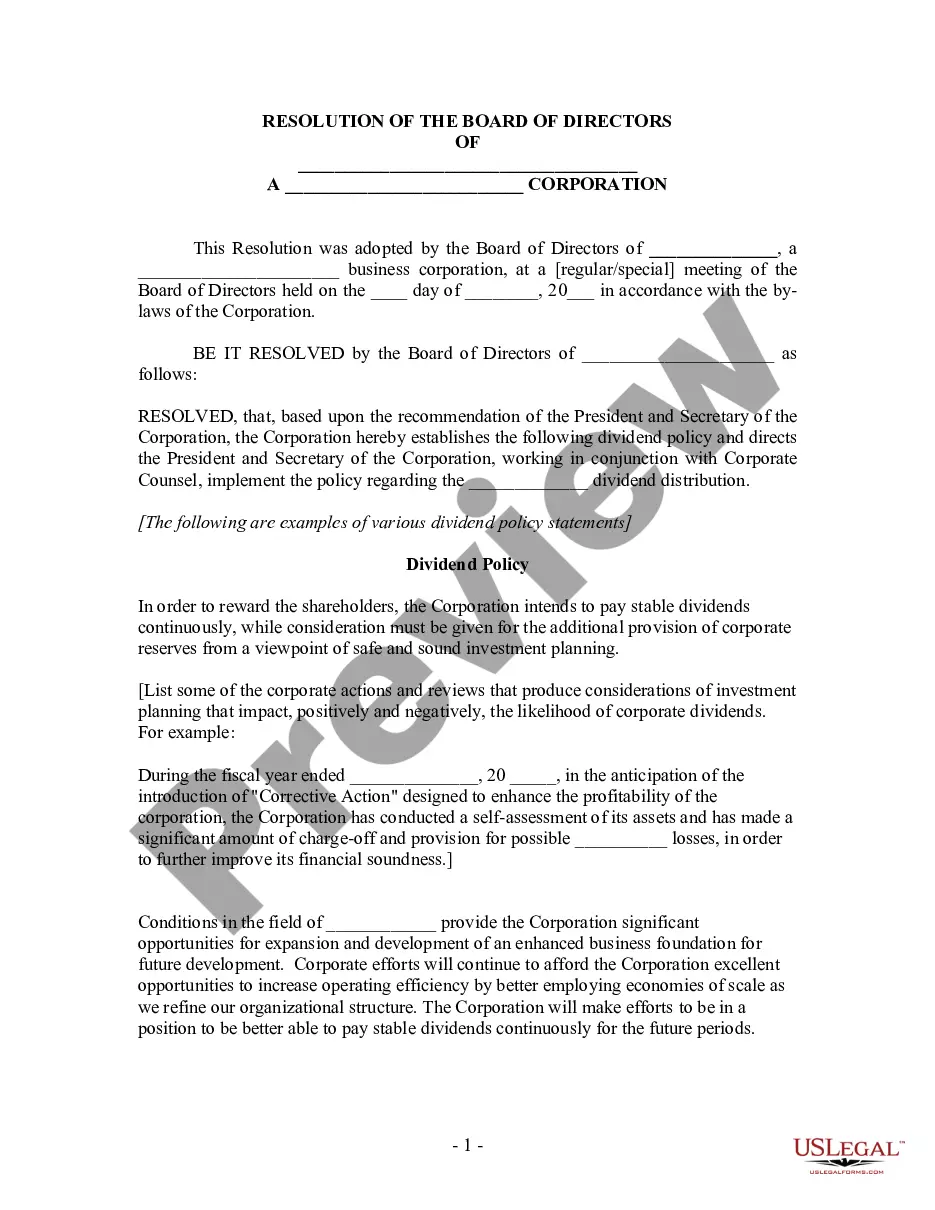
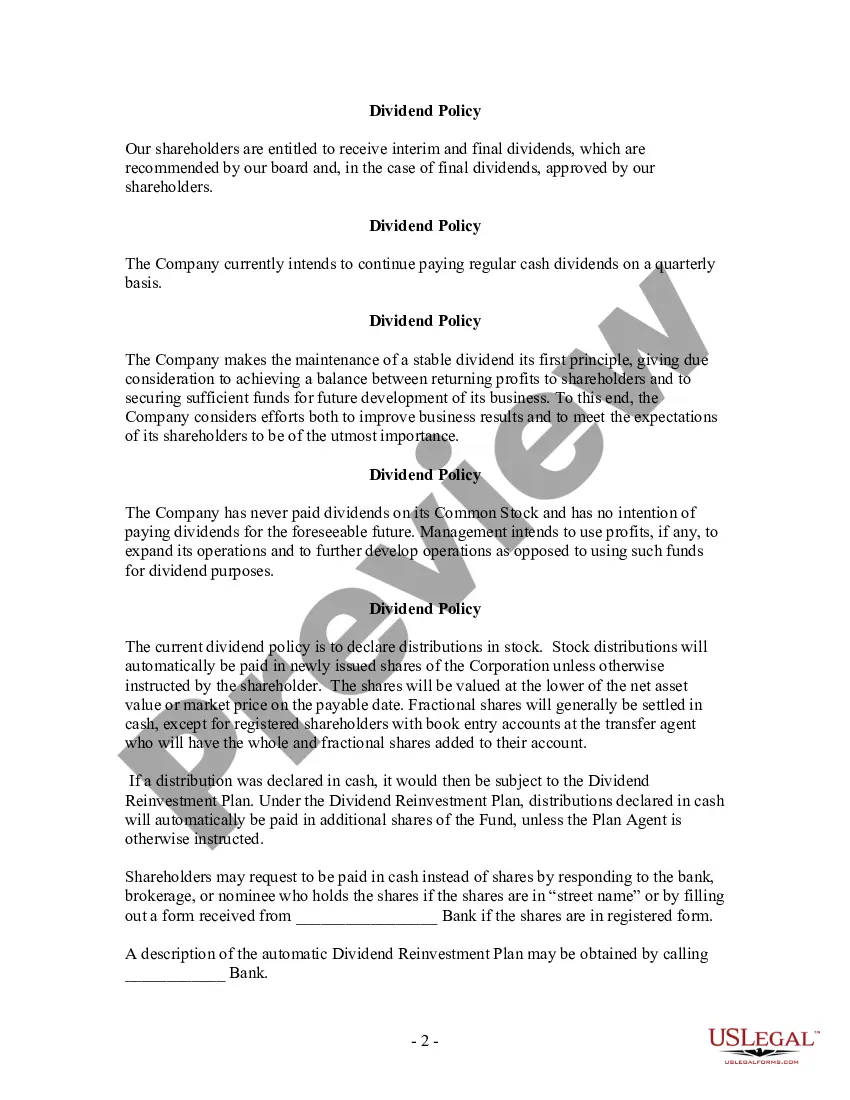
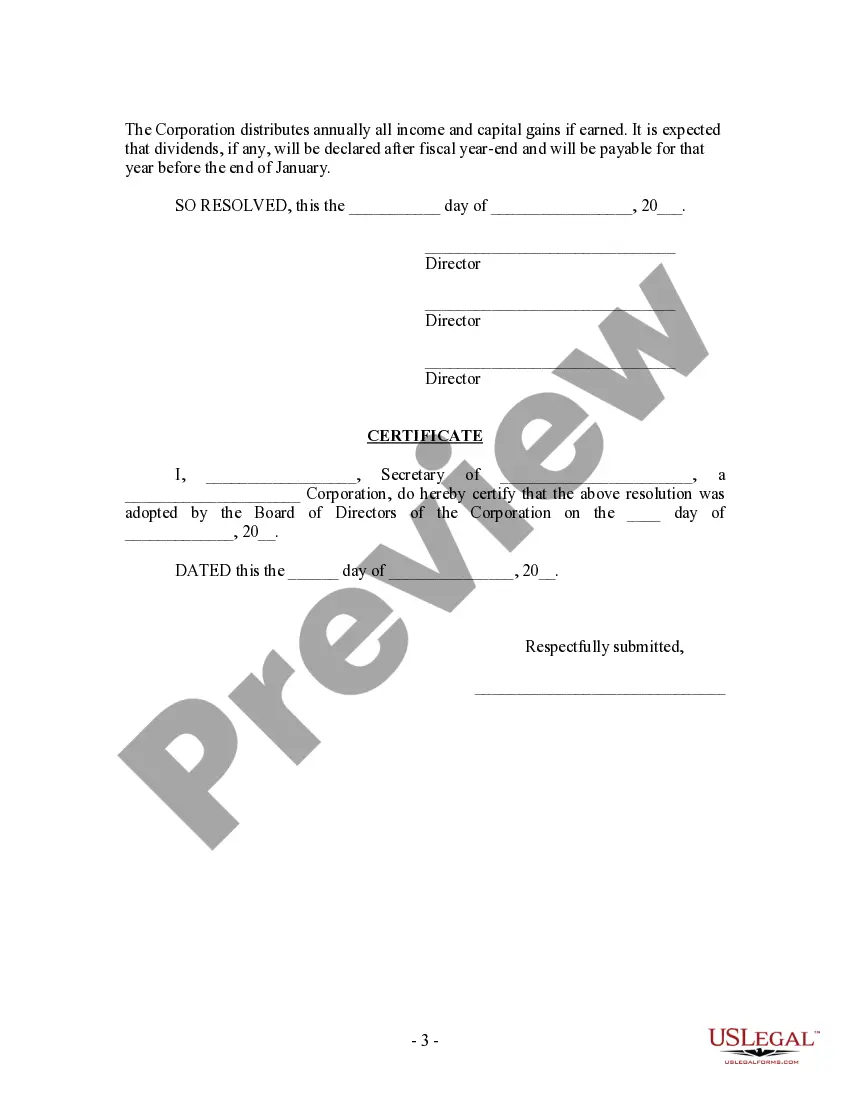
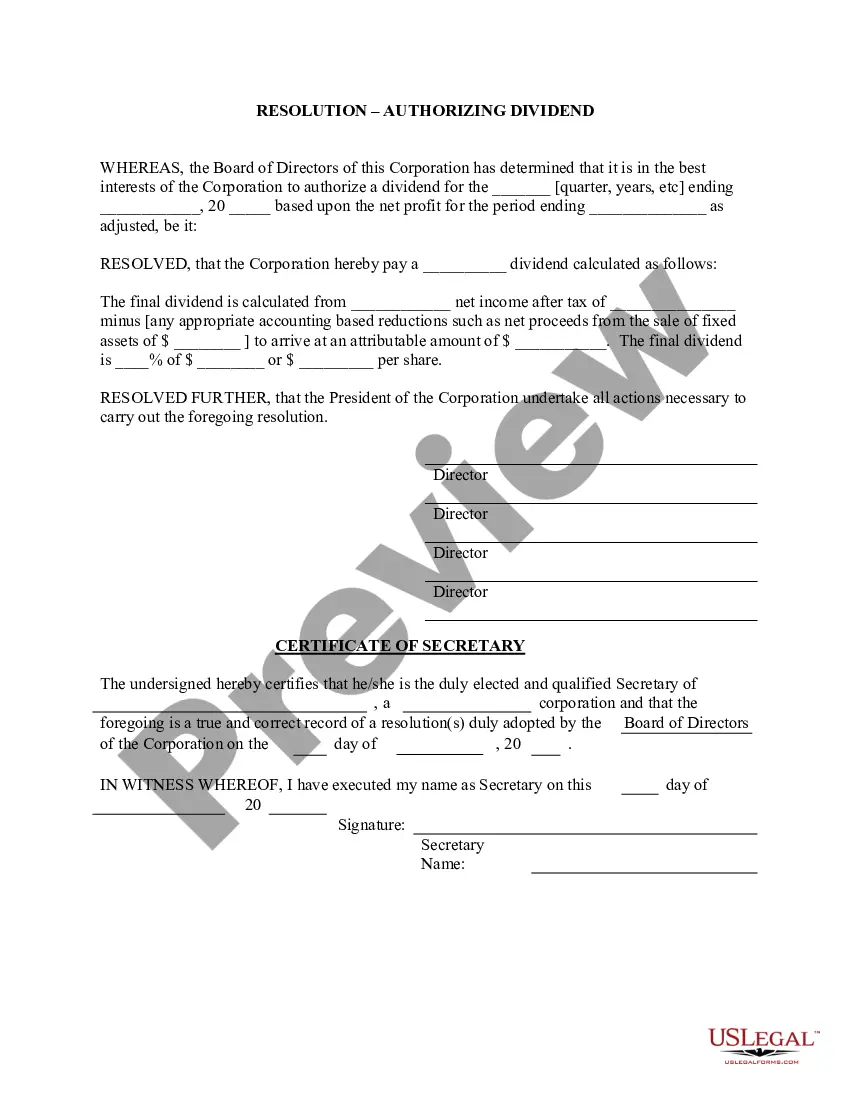




How to fill out Dividend Policy - Resolution Form - Corporate Resolutions?
It’s no secret that you can’t become a legal expert overnight, nor can you learn how to quickly prepare Dividend Corporation Shareholder Formula without the need of a specialized set of skills. Putting together legal documents is a time-consuming process requiring a certain education and skills. So why not leave the preparation of the Dividend Corporation Shareholder Formula to the professionals?
With US Legal Forms, one of the most comprehensive legal template libraries, you can access anything from court paperwork to templates for in-office communication. We understand how crucial compliance and adherence to federal and local laws are. That’s why, on our website, all templates are location specific and up to date.
Here’s start off with our platform and get the document you require in mere minutes:
- Discover the document you need with the search bar at the top of the page.
- Preview it (if this option available) and check the supporting description to figure out whether Dividend Corporation Shareholder Formula is what you’re looking for.
- Begin your search again if you need any other template.
- Register for a free account and choose a subscription option to buy the form.
- Pick Buy now. Once the transaction is complete, you can download the Dividend Corporation Shareholder Formula, complete it, print it, and send or send it by post to the designated people or entities.
You can re-gain access to your documents from the My Forms tab at any time. If you’re an existing customer, you can simply log in, and locate and download the template from the same tab.
Regardless of the purpose of your documents-be it financial and legal, or personal-our platform has you covered. Try US Legal Forms now!
Form popularity
FAQ
Formula and Calculation of Dividend Payout Ratio The dividend payout ratio can be calculated as the yearly dividend per share divided by the earnings per share (EPS), or equivalently, the dividends divided by net income (as shown below).
Calculating dividends per share Once you have the total dividends, converting that to per-share is a matter of dividing it by shares outstanding, also found in the annual report. Here is the formula for dividends per share: Total dividends ÷ shares outstanding = dividends per share.
Dividend per share is the company's total annual dividend payment, divided by the total number of shares outstanding.
Dividend Formula: Dividend = Divisor x Quotient + Remainder. It is just the reverse process of division. In the example above we first divided the dividend by divisor and subtracted the multiple with the dividend. That means, we first divided and then subtracted.