Corporate Dividend Policy With Any
Description
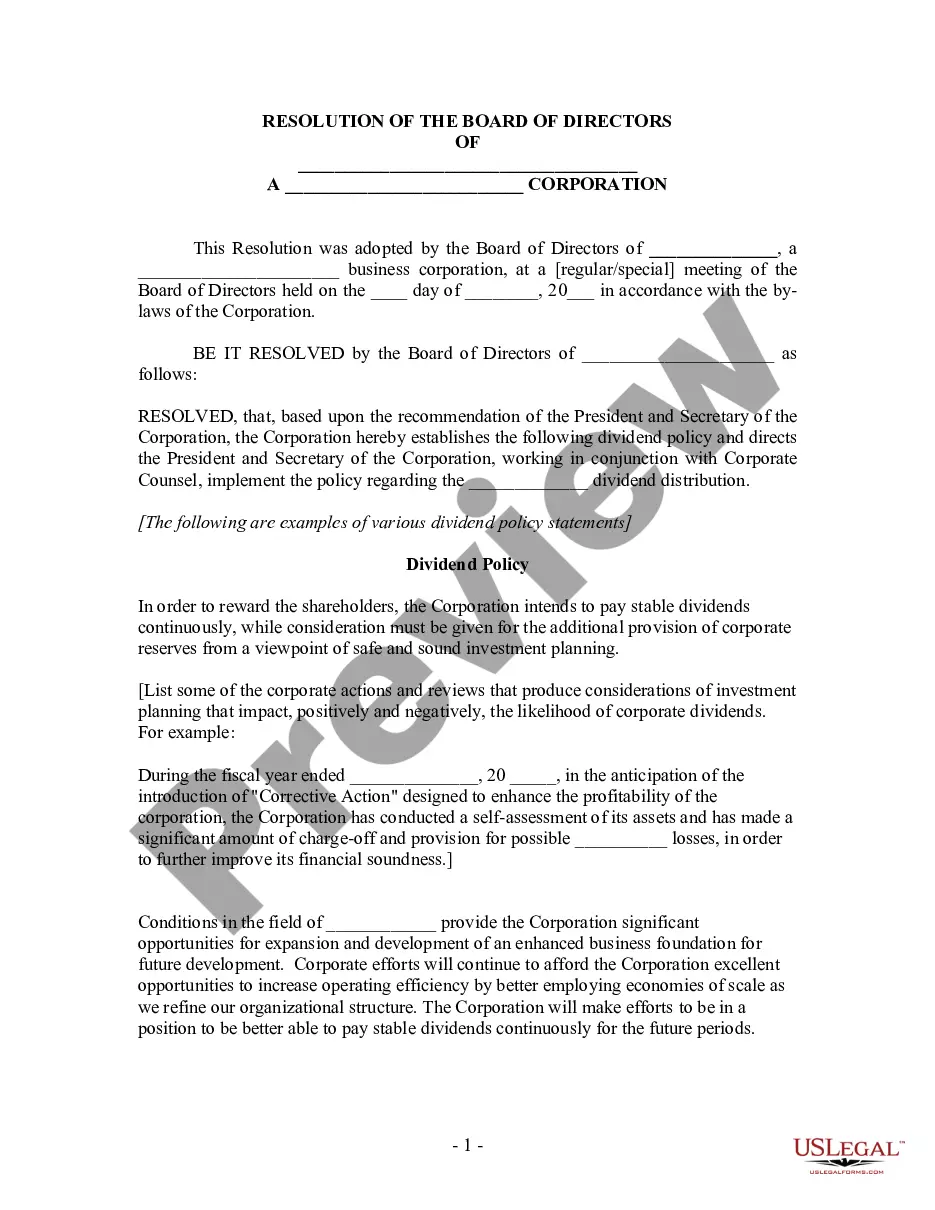
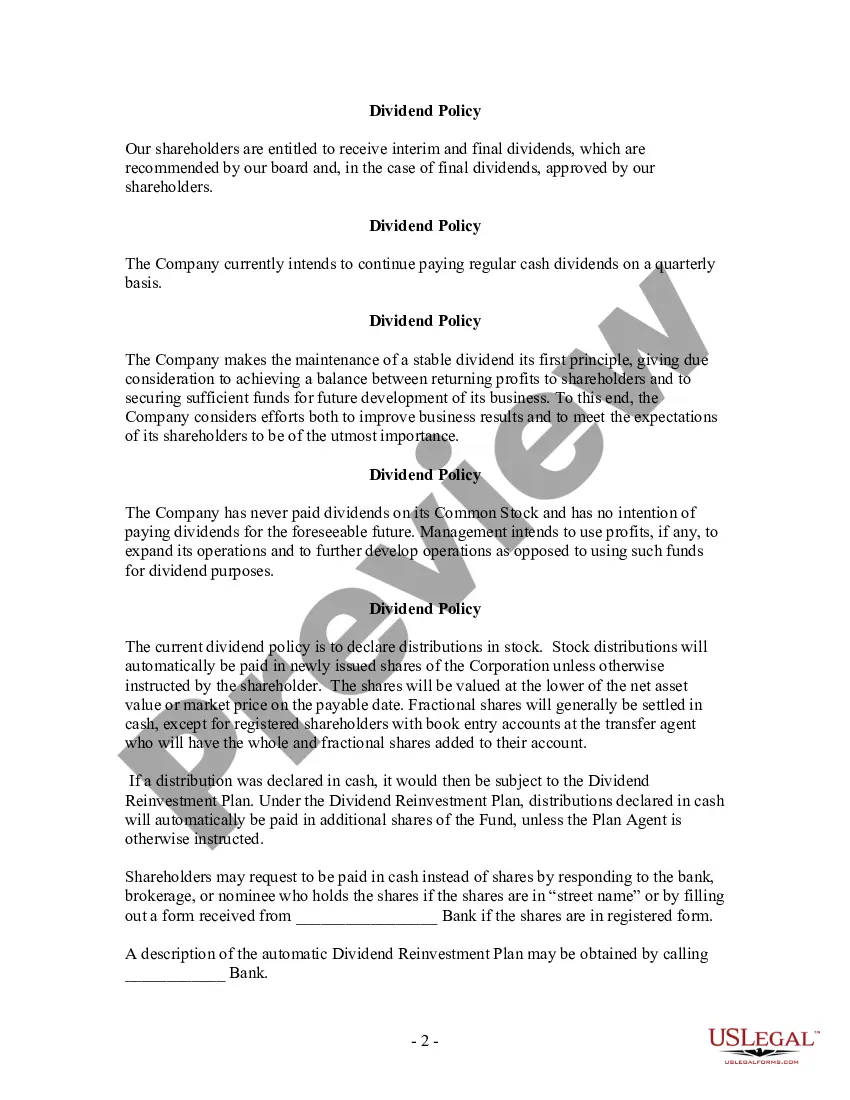
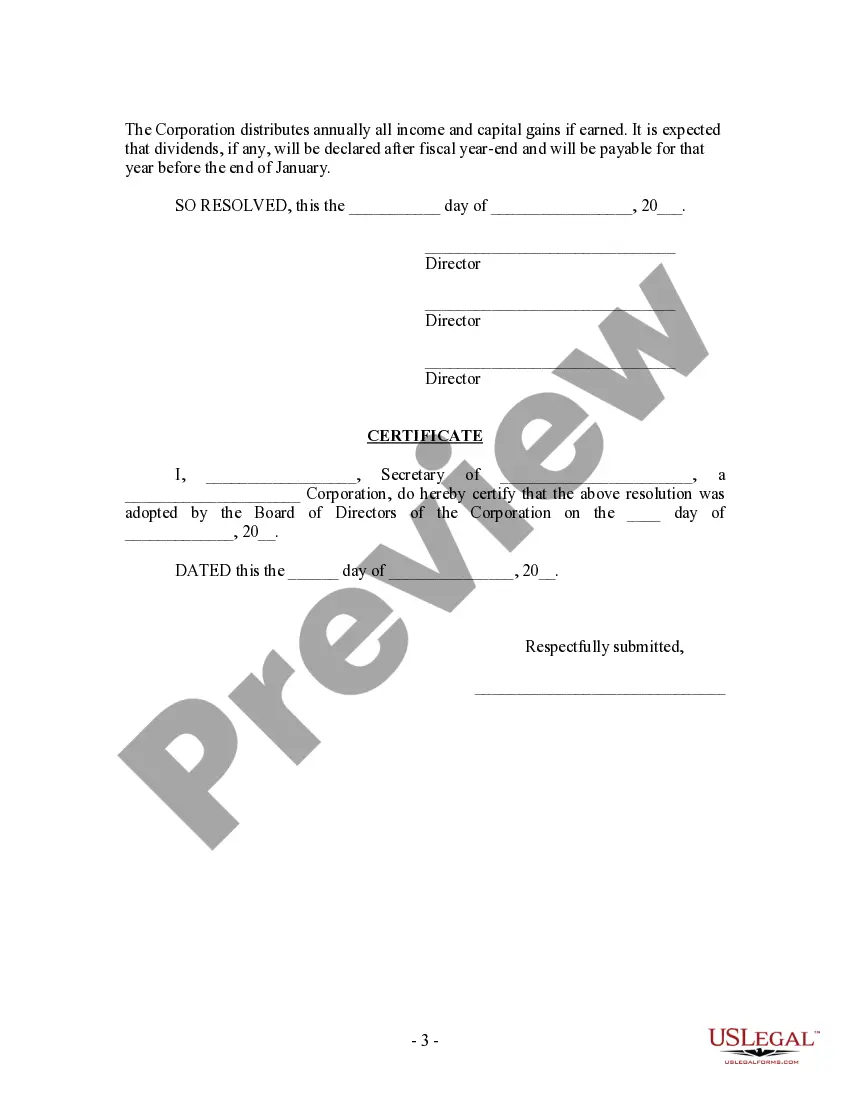
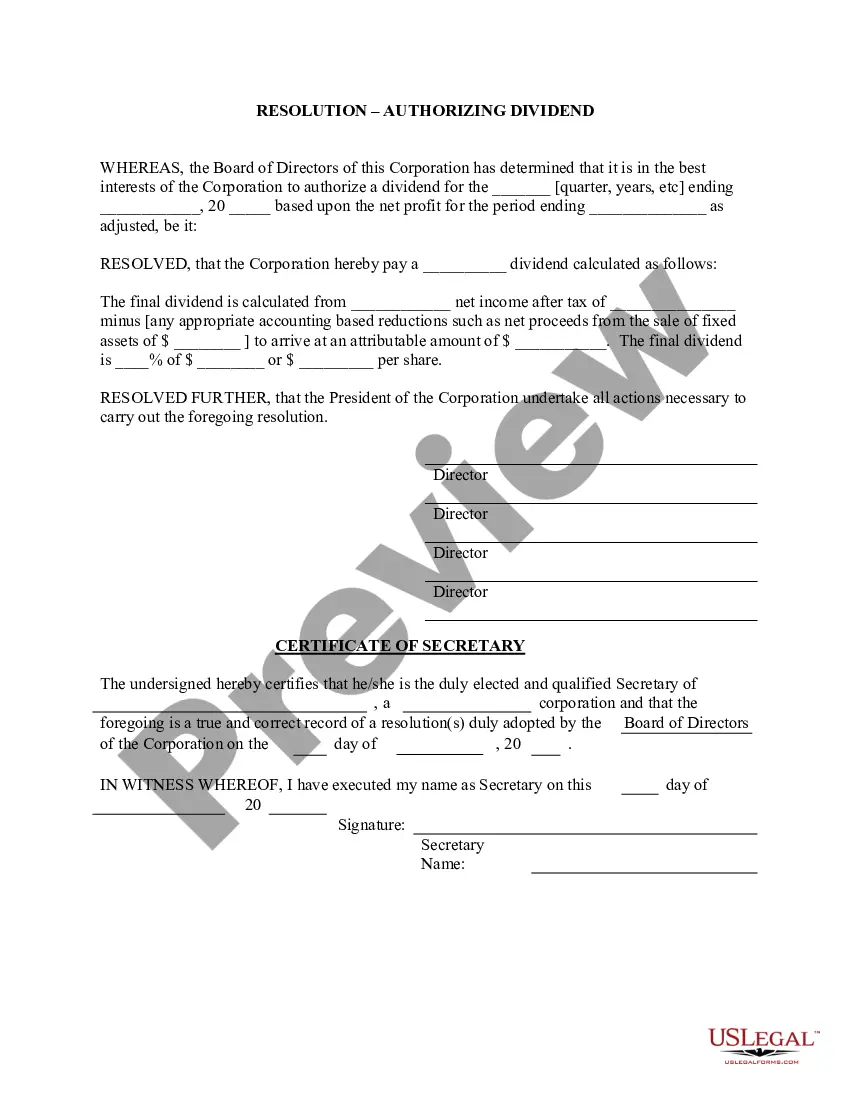
Get your form ready online
Our built-in tools help you complete, sign, share, and store your documents in one place.
Make edits, fill in missing information, and update formatting in US Legal Forms—just like you would in MS Word.
Download a copy, print it, send it by email, or mail it via USPS—whatever works best for your next step.
Sign and collect signatures with our SignNow integration. Send to multiple recipients, set reminders, and more. Go Premium to unlock E-Sign.
If this form requires notarization, complete it online through a secure video call—no need to meet a notary in person or wait for an appointment.
We protect your documents and personal data by following strict security and privacy standards.

Make edits, fill in missing information, and update formatting in US Legal Forms—just like you would in MS Word.

Download a copy, print it, send it by email, or mail it via USPS—whatever works best for your next step.

Sign and collect signatures with our SignNow integration. Send to multiple recipients, set reminders, and more. Go Premium to unlock E-Sign.

If this form requires notarization, complete it online through a secure video call—no need to meet a notary in person or wait for an appointment.

We protect your documents and personal data by following strict security and privacy standards.
Looking for another form?

How to fill out Dividend Policy - Resolution Form - Corporate Resolutions?
Whether for business purposes or for personal affairs, everybody has to deal with legal situations at some point in their life. Filling out legal documents needs careful attention, starting with choosing the correct form sample. For example, when you select a wrong version of a Corporate Dividend Policy With Any, it will be turned down once you send it. It is therefore crucial to have a reliable source of legal documents like US Legal Forms.
If you have to obtain a Corporate Dividend Policy With Any sample, follow these simple steps:
- Find the template you need by using the search field or catalog navigation.
- Examine the form’s description to make sure it fits your case, state, and region.
- Click on the form’s preview to view it.
- If it is the wrong document, get back to the search function to find the Corporate Dividend Policy With Any sample you require.
- Get the file if it matches your requirements.
- If you have a US Legal Forms profile, just click Log in to access previously saved documents in My Forms.
- If you don’t have an account yet, you may download the form by clicking Buy now.
- Select the correct pricing option.
- Complete the profile registration form.
- Choose your payment method: use a credit card or PayPal account.
- Select the document format you want and download the Corporate Dividend Policy With Any.
- When it is saved, you are able to fill out the form with the help of editing software or print it and complete it manually.
With a large US Legal Forms catalog at hand, you never need to spend time looking for the right template across the web. Take advantage of the library’s straightforward navigation to find the right form for any occasion.
Form popularity
FAQ
First is a regular dividend policy, the second is an irregular dividend policy, the third is a stable dividend policy, and lastly no dividend policy. The stable dividend policy is further divided into per share constant dividend, pay-out ratio constant, stable dividend plus extra dividend.
A stable dividend policy is the easiest and most commonly used. The goal of this policy is to provide shareholders with a steady and predictable dividend payout each year, which is what most investors seek. Investors receive a dividend regardless of whether earnings are up or down.
When outlining a dividend policy, a company should first analyze its needs. Failing to do so might result in an impractical, unsustainable policy or one that is not in the best long-term interest of shareholders and the company. The capital allocation policy should ultimately align with the company's strategic vision.
There are no hard and fast rules when it comes to creating a dividend policy, but most include a company objective, intention and strategic vision, and a declaration of a dividend. Effective policies are flexible so that they can respond to business cycles but firm enough to manage shareholder expectations.
2. Stable dividend policy. Under the stable dividend policy, the percentage of profits paid out as dividends is fixed. For example, if a company sets the payout rate at 6%, it is the percentage of profits that will be paid out regardless of the amount of profits earned for the financial year.