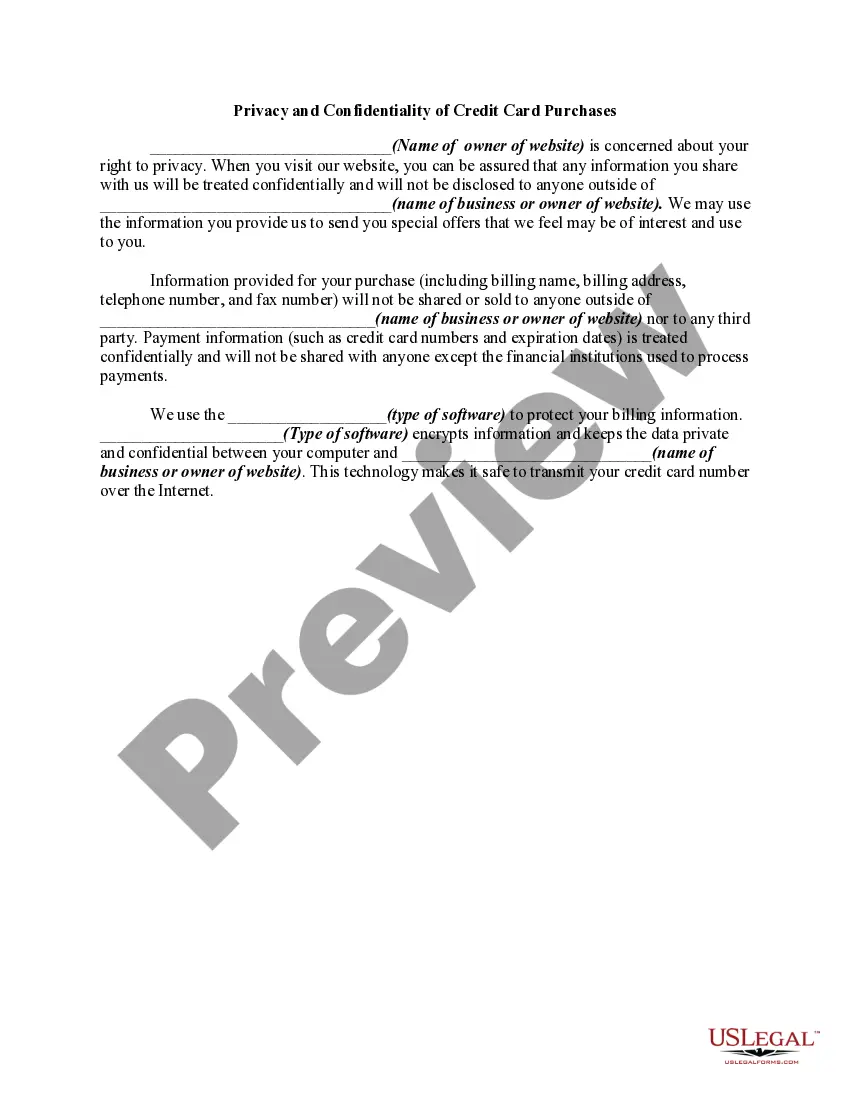
Privacy Confidentiality Statement With Multiple Conditions
Description
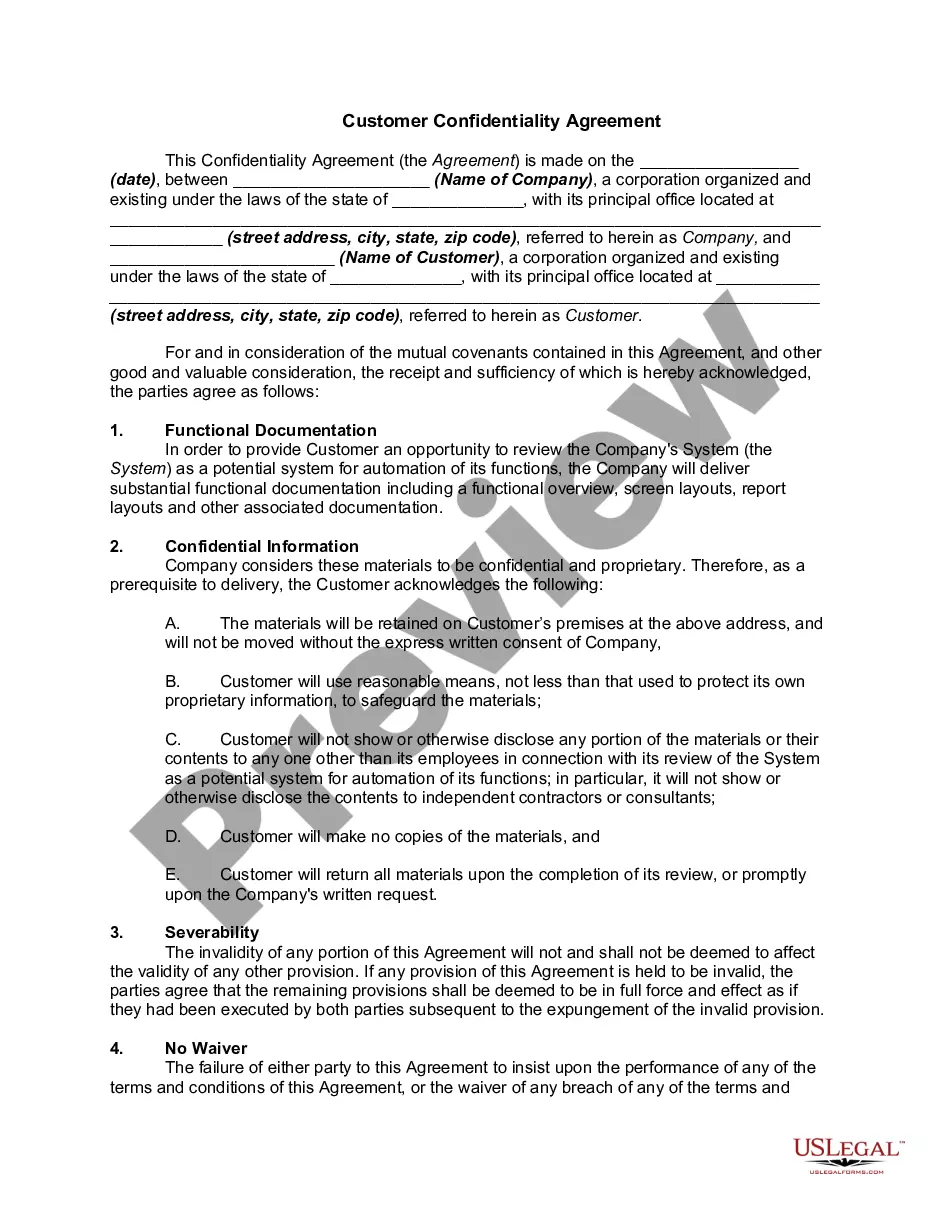
Get your form ready online
Our built-in tools help you complete, sign, share, and store your documents in one place.
Make edits, fill in missing information, and update formatting in US Legal Forms—just like you would in MS Word.
Download a copy, print it, send it by email, or mail it via USPS—whatever works best for your next step.
Sign and collect signatures with our SignNow integration. Send to multiple recipients, set reminders, and more. Go Premium to unlock E-Sign.
If this form requires notarization, complete it online through a secure video call—no need to meet a notary in person or wait for an appointment.
We protect your documents and personal data by following strict security and privacy standards.

Make edits, fill in missing information, and update formatting in US Legal Forms—just like you would in MS Word.

Download a copy, print it, send it by email, or mail it via USPS—whatever works best for your next step.

Sign and collect signatures with our SignNow integration. Send to multiple recipients, set reminders, and more. Go Premium to unlock E-Sign.

If this form requires notarization, complete it online through a secure video call—no need to meet a notary in person or wait for an appointment.

We protect your documents and personal data by following strict security and privacy standards.
Looking for another form?
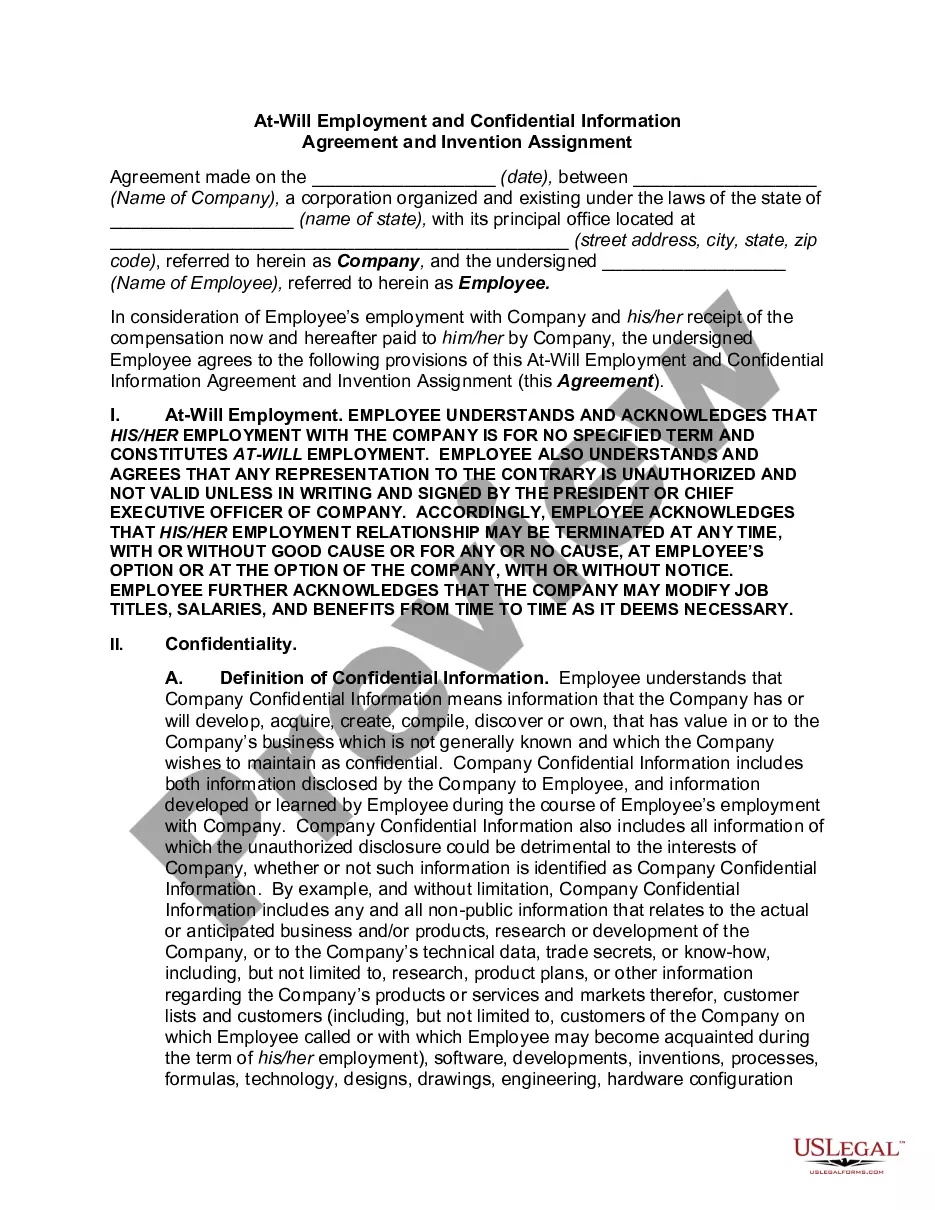
How to fill out Privacy And Confidentiality Of Credit Card Purchases?
Whether for corporate objectives or personal matters, everyone eventually encounters legal issues in their lifetime.
Completing legal forms requires meticulous consideration, starting with selecting the correct form template.
With an extensive US Legal Forms catalog available, you never have to waste time searching for the correct template online. Utilize the library’s intuitive navigation to find the suitable form for any scenario.
- Locate the form you require by using the search bar or browsing the catalog.
- Review the form’s details to confirm it fits your circumstances, state, and county.
- Click on the form’s preview to assess it.
- If it is the wrong document, return to the search feature to find the Privacy Confidentiality Statement With Multiple Conditions template you need.
- Download the template if it meets your requirements.
- If you already possess a US Legal Forms account, click Log in to access previously stored documents in My documents.
- If you do not have an account yet, you may acquire the form by clicking Buy now.
- Select the suitable pricing option.
- Fill out the account registration form.
- Choose your payment method: you can utilize a credit card or PayPal account.
- Select the document format you prefer and download the Privacy Confidentiality Statement With Multiple Conditions.
- Once it is saved, you can fill out the form using editing software or print it and complete it by hand.
Form popularity
FAQ
The confidentiality clause in terms and conditions outlines how sensitive information shared between parties will be handled. It typically includes commitments to protect confidential information from unauthorized disclosure. This clause serves as a critical component of any agreement, ensuring that both parties understand their responsibilities. For a comprehensive privacy confidentiality statement with multiple conditions, you can refer to the resources available at uslegalforms.
An example of a privacy and confidentiality statement includes a declaration that informs users how their personal information will be collected, used, and protected. It should specify the type of data collected, the purpose of data collection, and how long the data will be stored. By including this information, you create a transparent environment that builds trust. Consider using uslegalforms to access templates for a privacy confidentiality statement with multiple conditions tailored to your needs.
To write a confidentiality disclaimer, start by clearly stating the purpose of the document and the information it covers. Include definitions of confidential information and specify the obligations of both parties regarding this information. Additionally, ensure you outline any limitations and the duration of confidentiality. A well-structured privacy confidentiality statement with multiple conditions can enhance the effectiveness of your disclaimer.
Creating a privacy confidentiality statement with multiple conditions involves a few key steps. First, clearly define the information that will be kept confidential, such as personal data or business secrets. Next, specify the conditions under which this information can be disclosed, ensuring you cover various scenarios. For an effective and legally sound statement, consider using the resources provided by US Legal Forms, which offers customizable templates to help you craft a comprehensive privacy confidentiality statement tailored to your needs.
structured disclaimer might read, 'The information provided in this document is confidential and may only be shared with designated individuals.' This type of statement clearly indicates how the information should be treated. A privacy confidentiality statement with multiple conditions can provide added layers of protection. For tailored disclaimers, consider using resources from US Legal Forms.
A concise confidentiality statement could be, 'This document contains confidential information and is intended for authorized users only.' It’s important to be straightforward and to the point. Incorporating a privacy confidentiality statement with multiple conditions can help clarify the limitations on using the information. You can find examples and templates that suit your needs on US Legal Forms.
A confidentiality disclaimer can be a simple statement like, 'The contents of this message are confidential and intended solely for the individual named.' This sets a clear expectation for the recipient. Including a privacy confidentiality statement with multiple conditions in your communications ensures that your message is protected. Utilizing templates from platforms like US Legal Forms can help you craft effective disclaimers.
To communicate that information is confidential, you can say, 'This information is private and should not be shared without permission.' It’s important to be clear and respectful. By using phrases like 'for your eyes only' or 'this is not for public disclosure,' you emphasize the importance of confidentiality. A well-crafted privacy confidentiality statement with multiple conditions can further reinforce this message.