Special Needs Trust Oregon Withdrawal
Description


Get your form ready online
Our built-in tools help you complete, sign, share, and store your documents in one place.
Make edits, fill in missing information, and update formatting in US Legal Forms—just like you would in MS Word.
Download a copy, print it, send it by email, or mail it via USPS—whatever works best for your next step.
Sign and collect signatures with our SignNow integration. Send to multiple recipients, set reminders, and more. Go Premium to unlock E-Sign.
If this form requires notarization, complete it online through a secure video call—no need to meet a notary in person or wait for an appointment.
We protect your documents and personal data by following strict security and privacy standards.

Make edits, fill in missing information, and update formatting in US Legal Forms—just like you would in MS Word.

Download a copy, print it, send it by email, or mail it via USPS—whatever works best for your next step.

Sign and collect signatures with our SignNow integration. Send to multiple recipients, set reminders, and more. Go Premium to unlock E-Sign.

If this form requires notarization, complete it online through a secure video call—no need to meet a notary in person or wait for an appointment.

We protect your documents and personal data by following strict security and privacy standards.
Looking for another form?




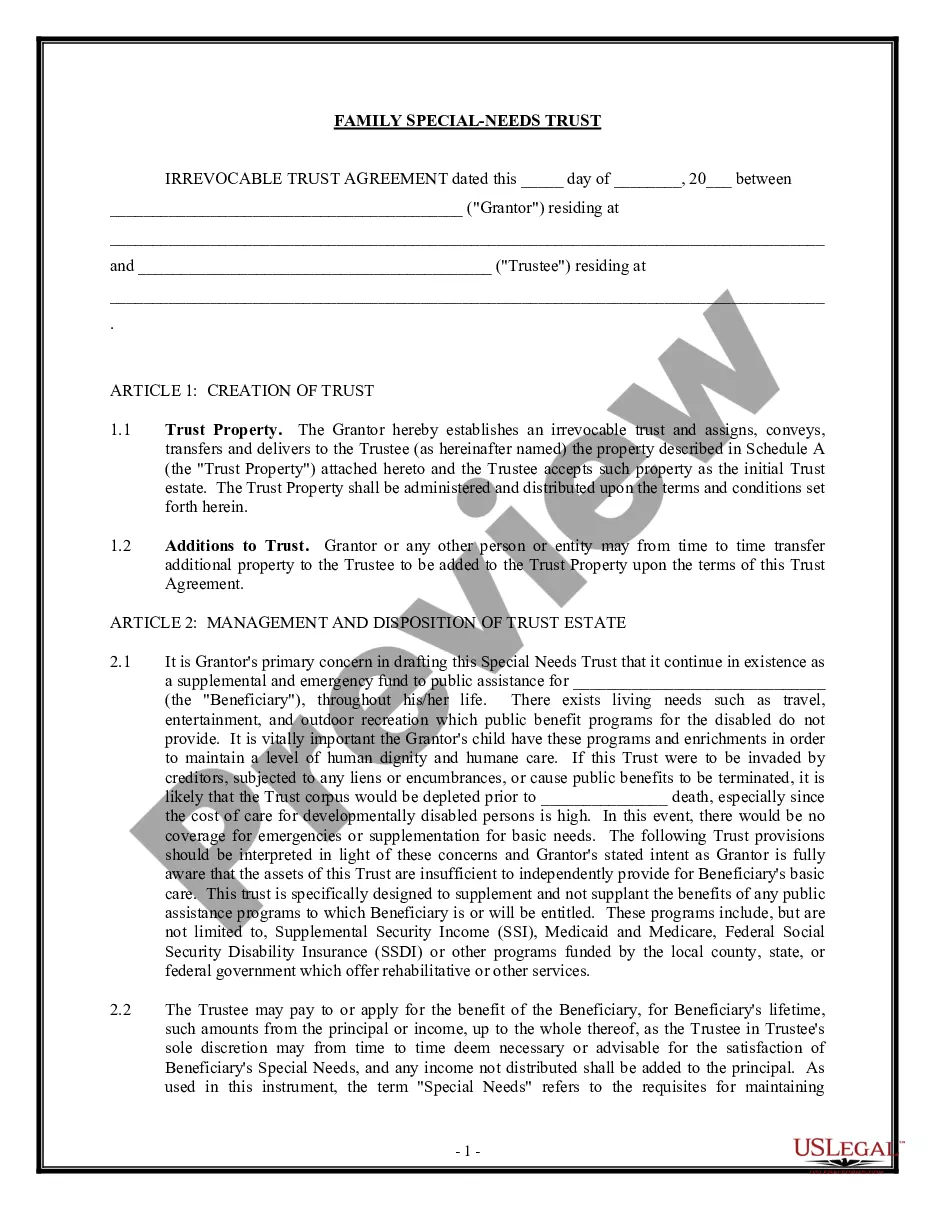
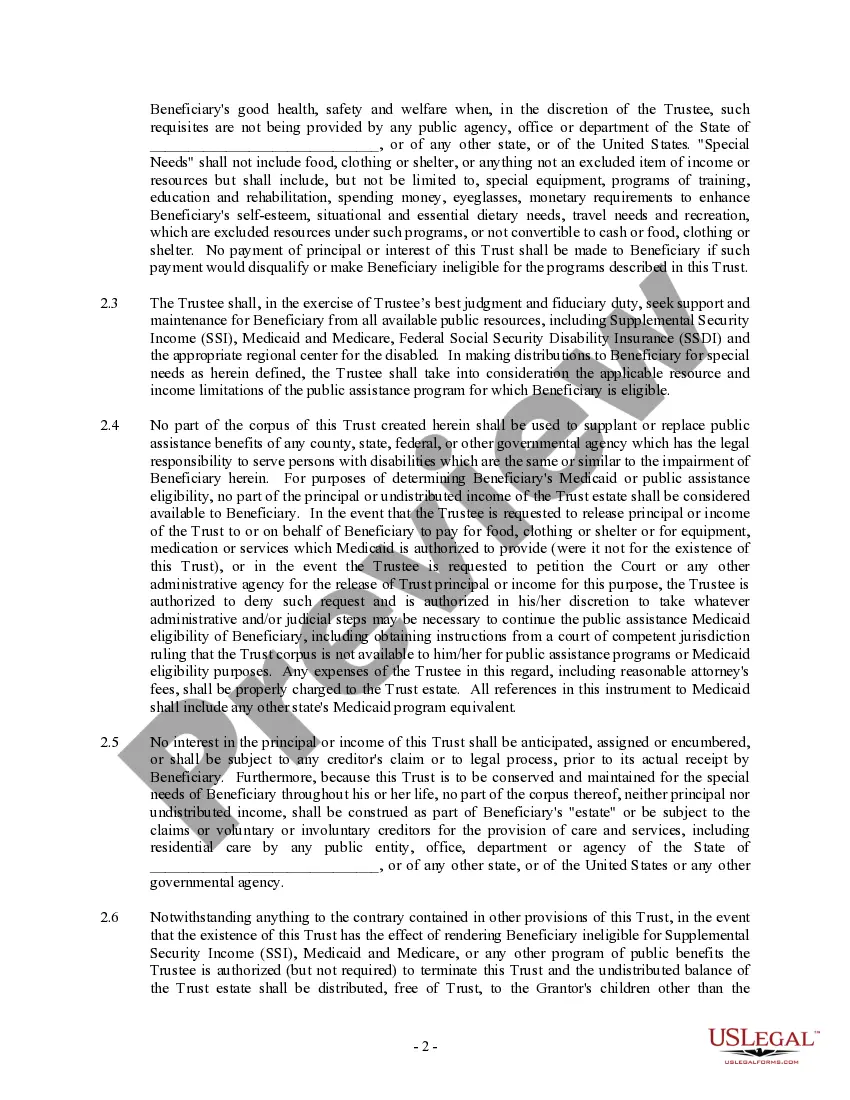
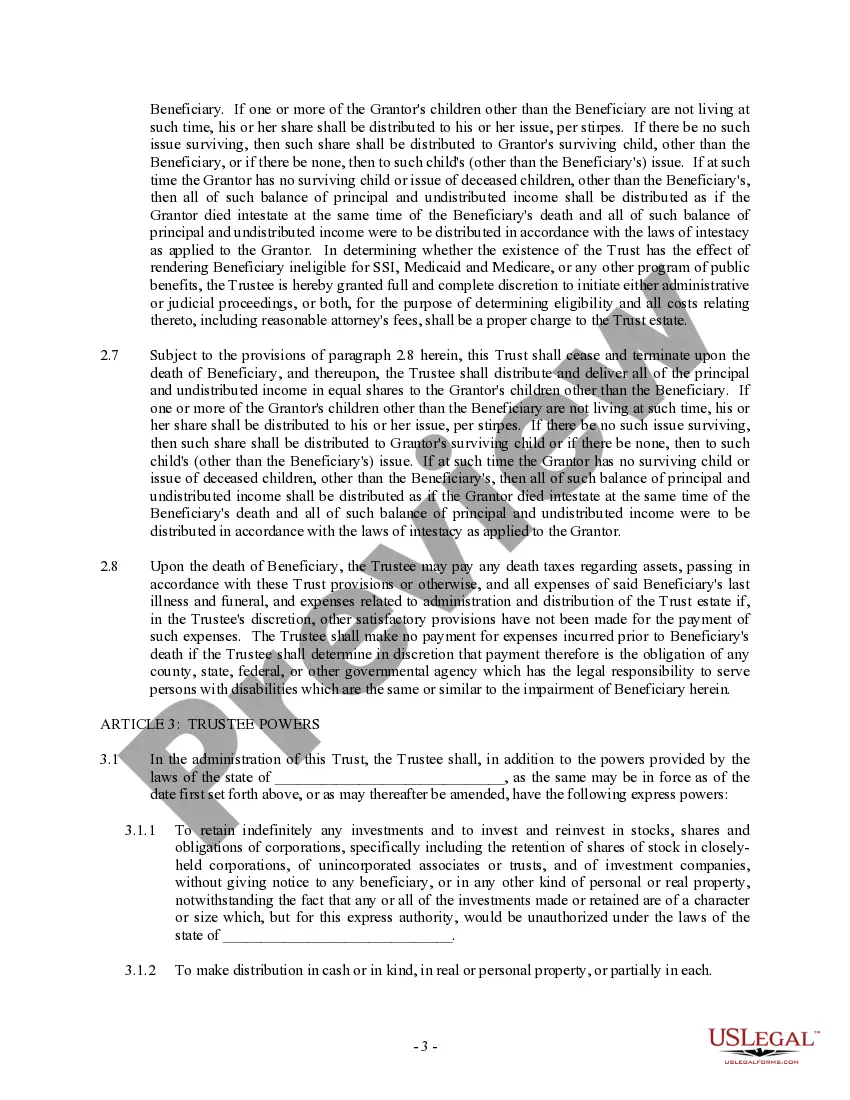
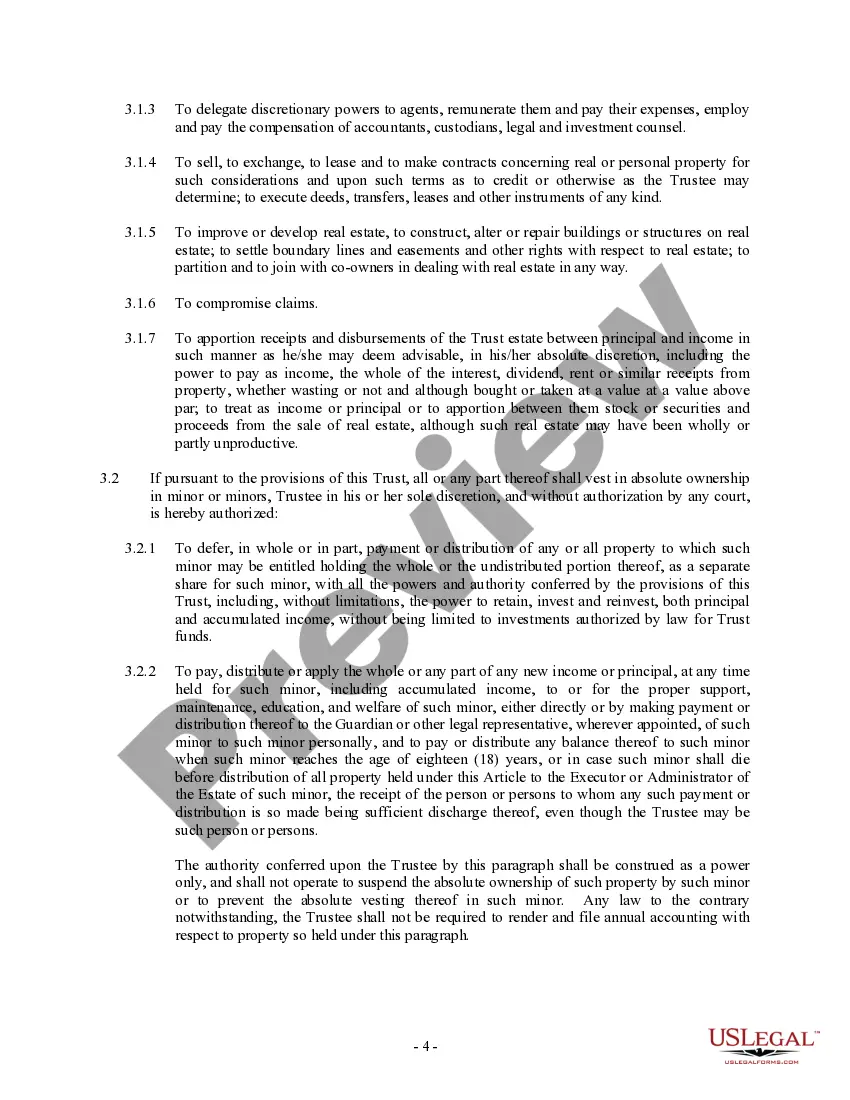
How to fill out Trust Agreement - Family Special Needs?
It's clear that you cannot transform into a legal expert instantly, nor can you master the swift drafting of Special Needs Trust Oregon Withdrawal without a specific background in the field.
Drafting legal documents is a lengthy endeavor that necessitates certain education and expertise. So why not entrust the preparation of the Special Needs Trust Oregon Withdrawal to the professionals.
With US Legal Forms, one of the most extensive legal document collections, you can discover everything from court filings to templates for internal company communications. We acknowledge the importance of compliance with federal and state regulations.
You can reacquire access to your documents from the My documents section anytime. If you are an existing client, you can simply Log In and find and download the template from the same section.
Regardless of the nature of your documents—whether financial, legal, or personal—our platform is here to assist you. Give US Legal Forms a try today!
- Find the document you require using the search bar located at the top of the page.
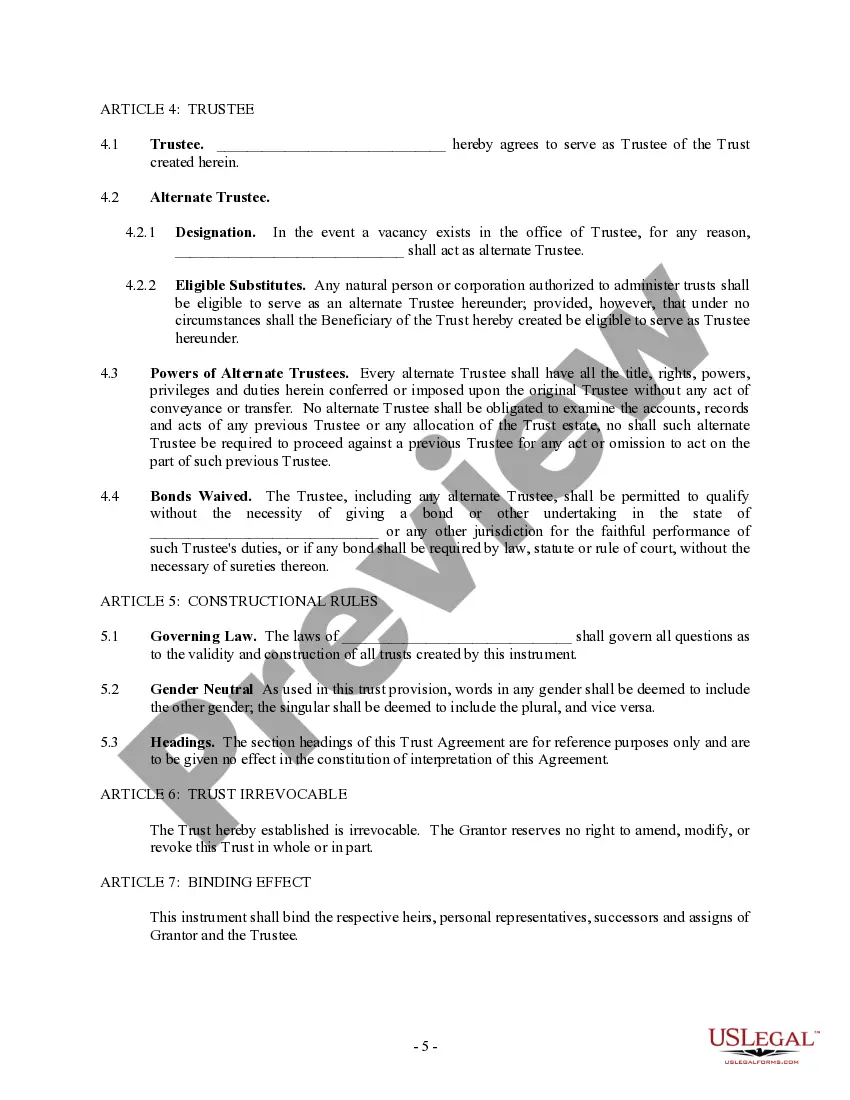
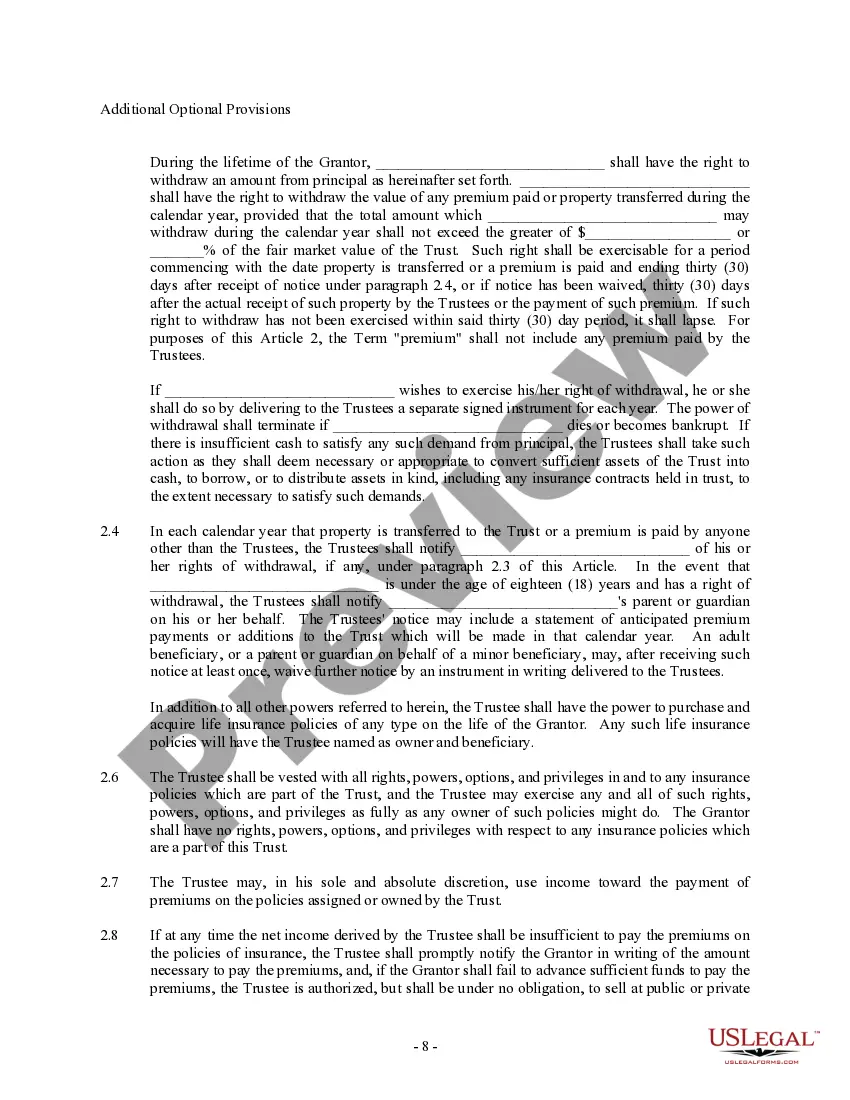
- Preview it (if this feature is available) and review the accompanying description to see if Special Needs Trust Oregon Withdrawal meets your requirements.
- If you need a different document, restart your search.
- Create a free account and choose a subscription plan to acquire the form.
- Click Buy now. After completing the payment, you can download the Special Needs Trust Oregon Withdrawal, fill it out, print it, and send it to the relevant individuals or organizations.
Form popularity
FAQ
The Trustee simply transfers all assets to the beneficiary. Distribution is also fairly easy if the trust document identifies all assets and specific amounts to be paid to each beneficiary. Distributions by percentages are a little more complicated as the Trustee should first establish the estate's fair market value.
The trustee works in very close contact with the beneficiary and/or their caregiver to manage the trust and its financial distributions to pay for these things. The main takeaway regarding distribution of SNT funds is this: The beneficiary never sees the money directly, but the money is used to pay for their needs.
While the permissible distributions depend on what types of public benefits are being received, generally a supplemental needs trust may make distributions for the beneficiary's education, recreation, counseling, and supplemental medical services.
Tax Forms Required for Distributions Trustees will need to submit a completed 1041 form (i.e., a trust income tax return) to the IRS in order to deduct from the trust's taxable income the income it distributed to beneficiaries.
Income from a QDisT is reported on Internal Revenue Service (IRS) Form 1041, with a unique Employer Identification Number (EIN), while distributions to the beneficiary will be taxed on their own Form 1040 tax return.