Sample Trust Financial Statements With Non Controlling Interest
Description



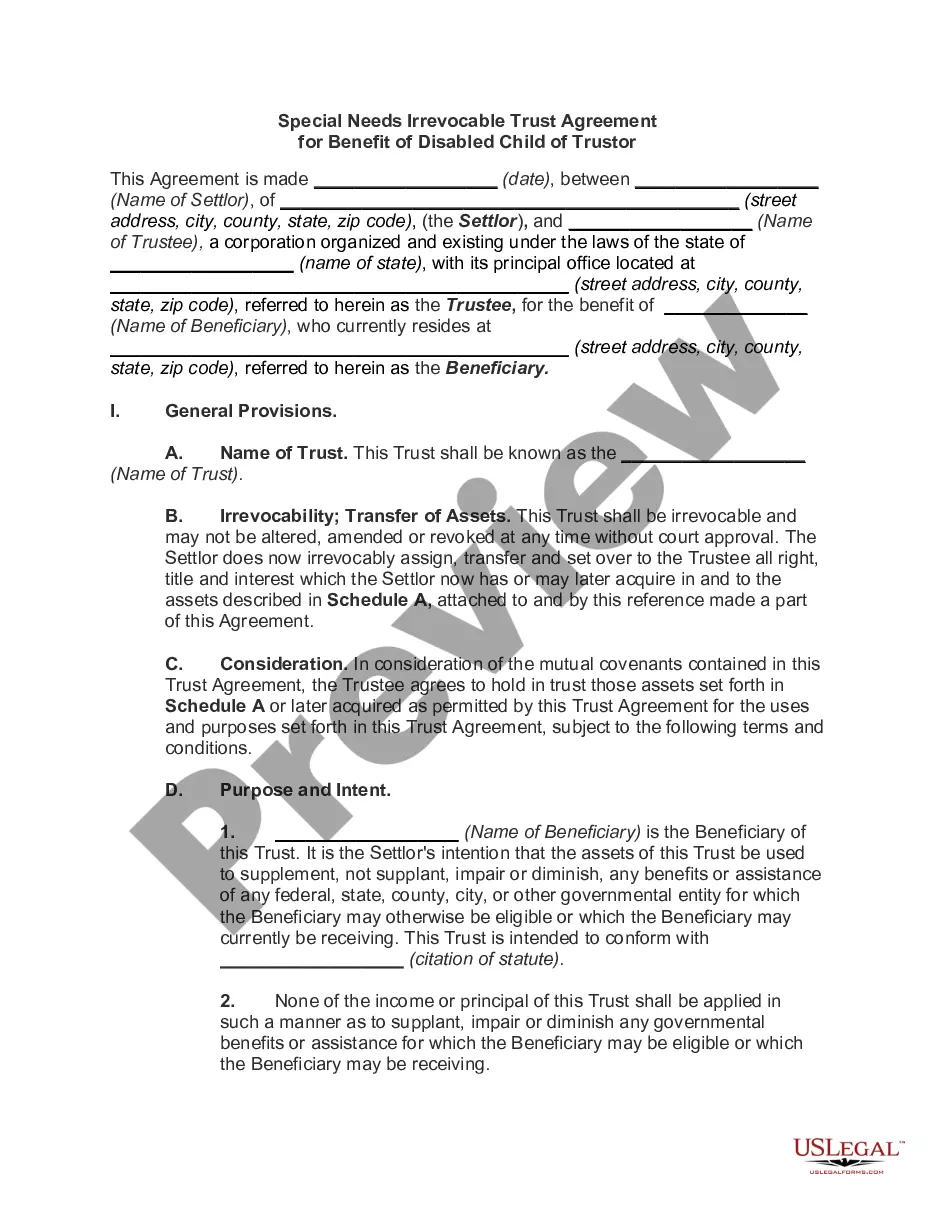
Get your form ready online
Our built-in tools help you complete, sign, share, and store your documents in one place.
Make edits, fill in missing information, and update formatting in US Legal Forms—just like you would in MS Word.
Download a copy, print it, send it by email, or mail it via USPS—whatever works best for your next step.
Sign and collect signatures with our SignNow integration. Send to multiple recipients, set reminders, and more. Go Premium to unlock E-Sign.
If this form requires notarization, complete it online through a secure video call—no need to meet a notary in person or wait for an appointment.
We protect your documents and personal data by following strict security and privacy standards.

Make edits, fill in missing information, and update formatting in US Legal Forms—just like you would in MS Word.

Download a copy, print it, send it by email, or mail it via USPS—whatever works best for your next step.

Sign and collect signatures with our SignNow integration. Send to multiple recipients, set reminders, and more. Go Premium to unlock E-Sign.

If this form requires notarization, complete it online through a secure video call—no need to meet a notary in person or wait for an appointment.

We protect your documents and personal data by following strict security and privacy standards.
Looking for another form?










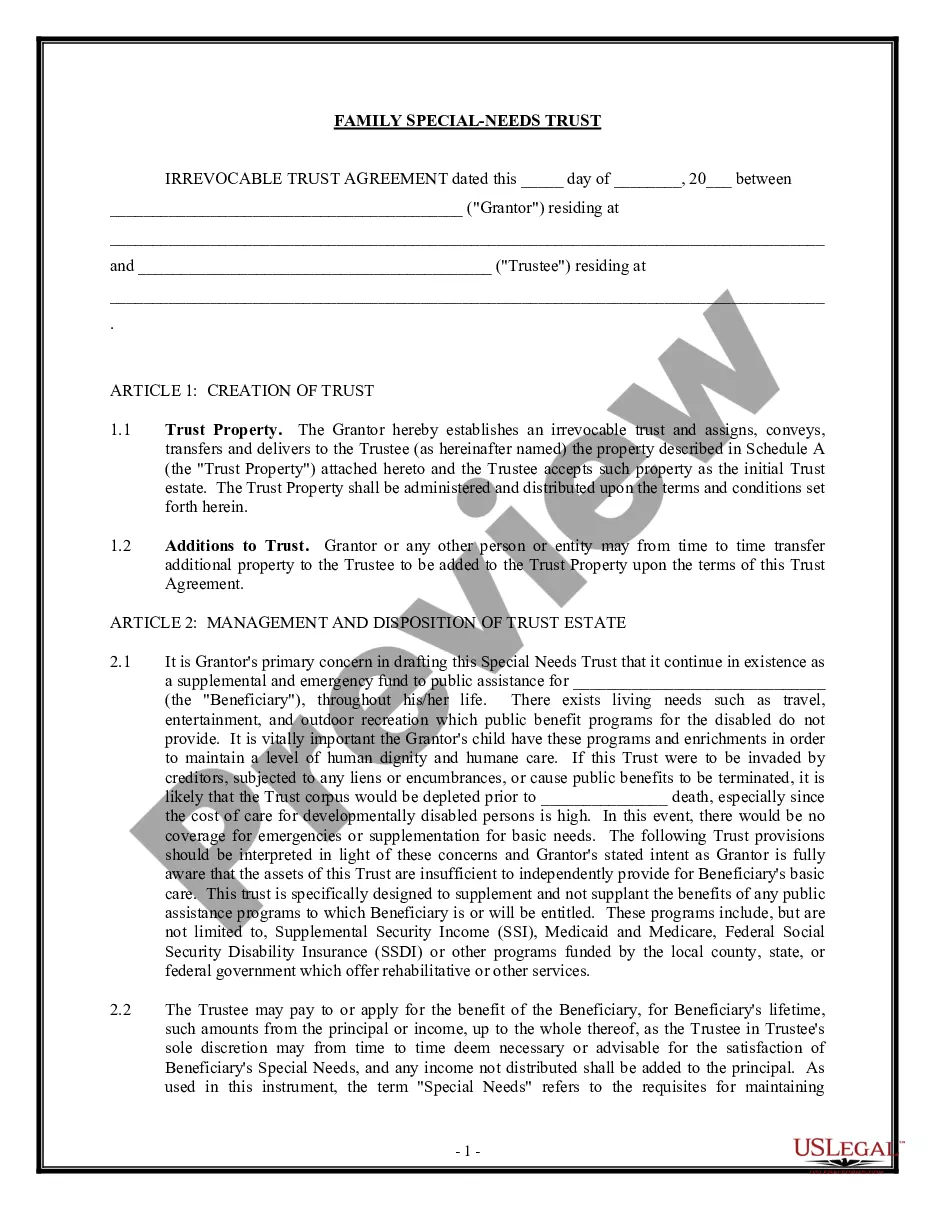
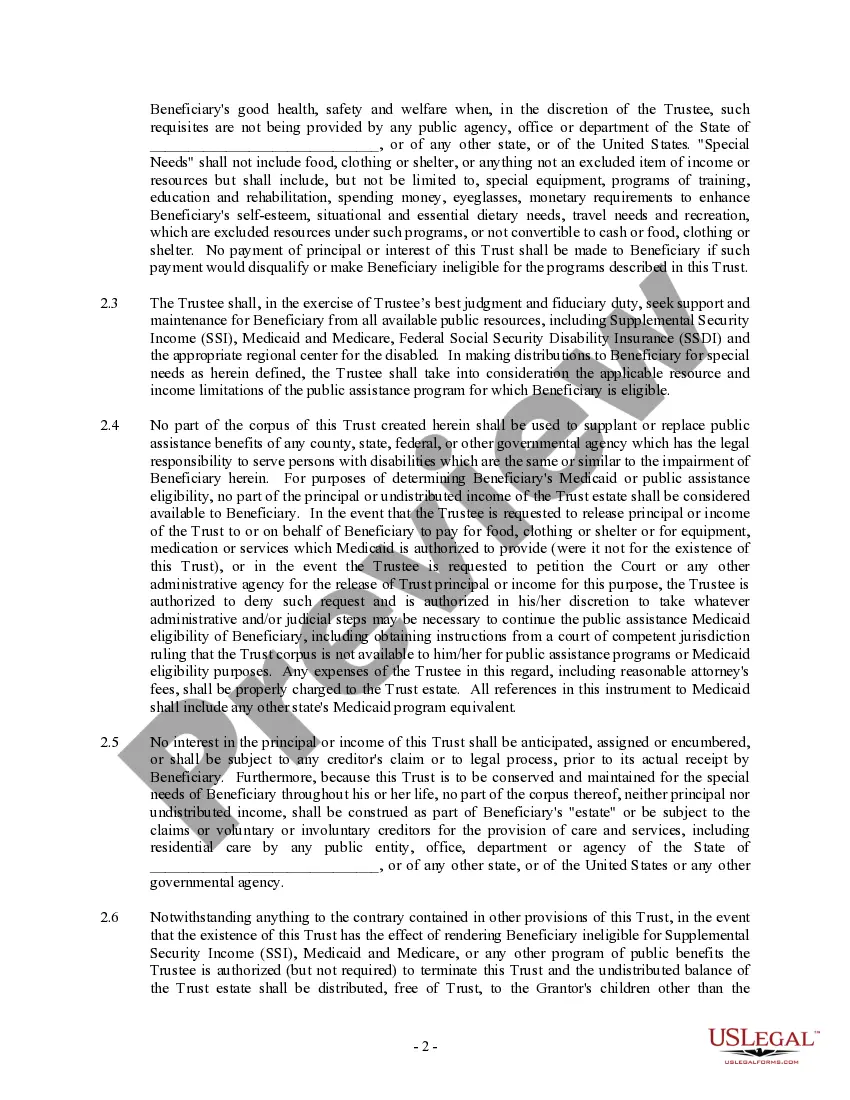
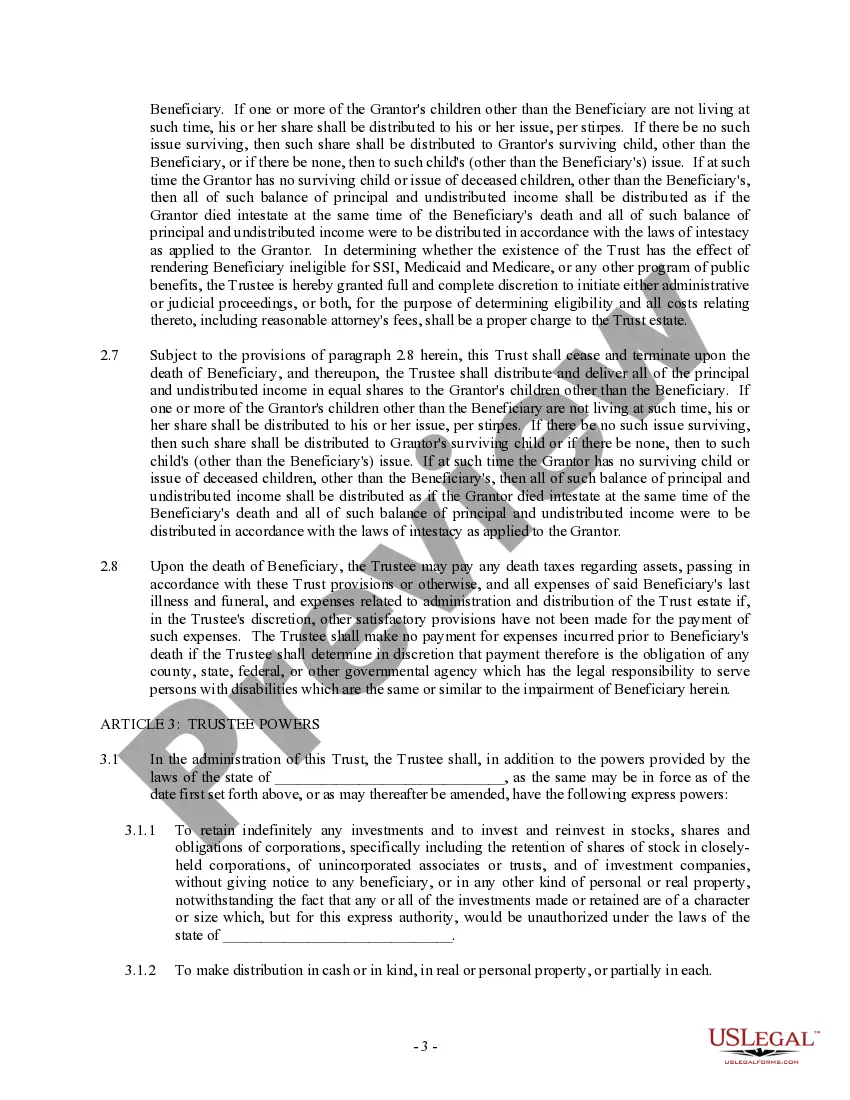
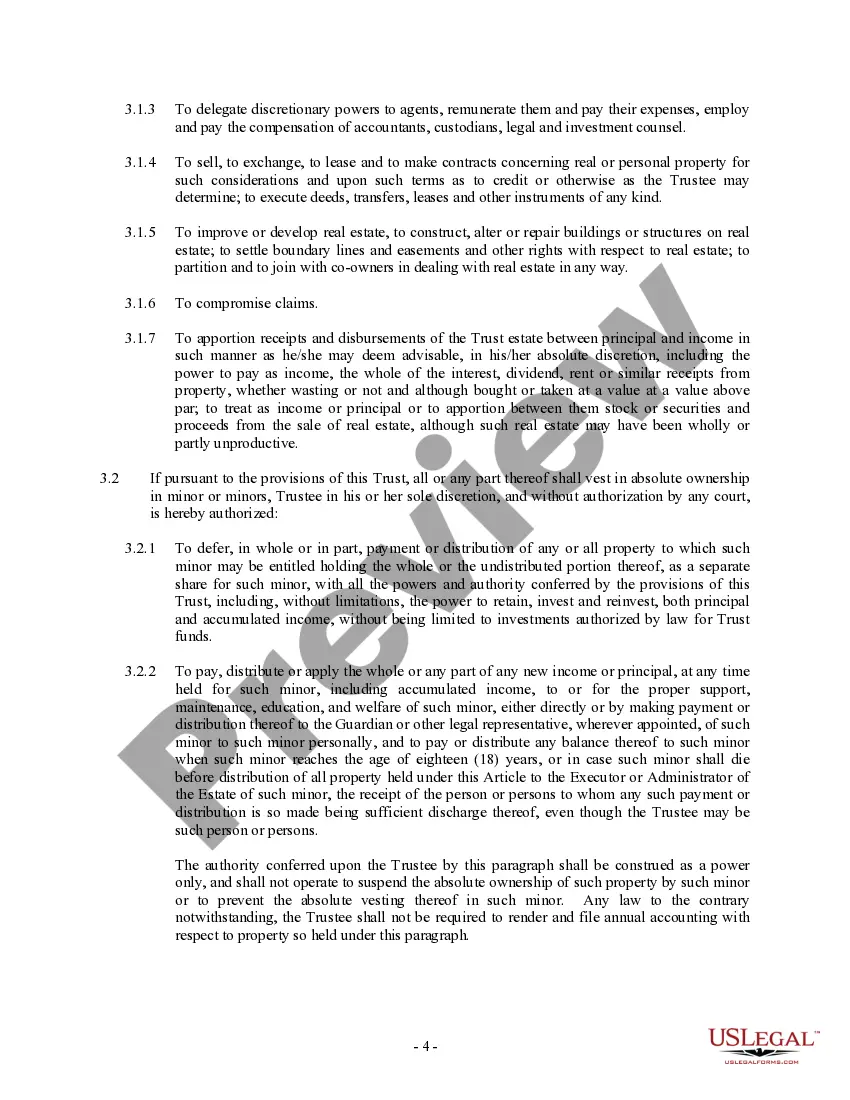
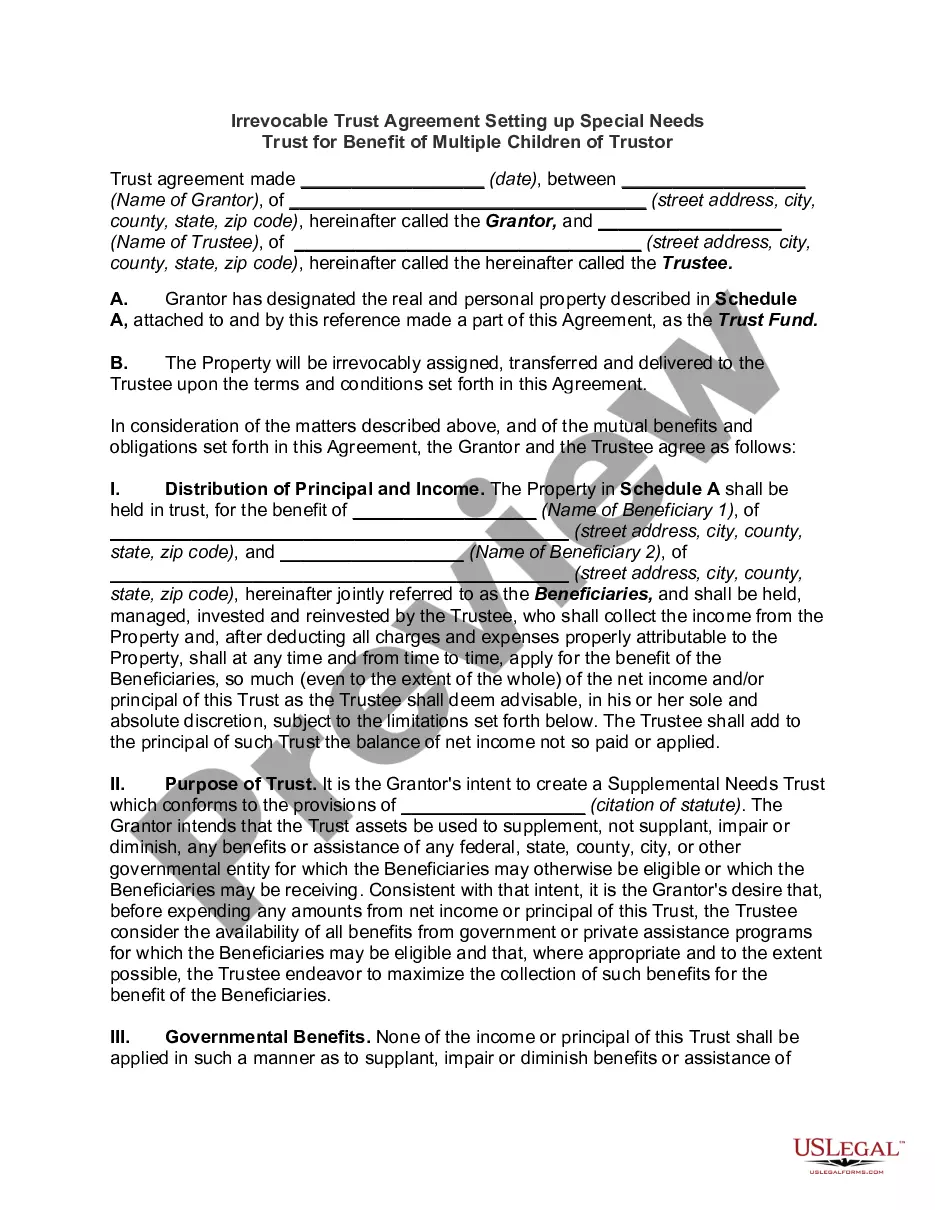
How to fill out Trust Agreement - Family Special Needs?
Legal management can be exasperating, even for seasoned professionals.
When you are looking for a Sample Trust Financial Statements With Non Controlling Interest and lack the time to invest in locating the accurate and updated edition, the process can be taxing.
Access a knowledge base of articles, guides, and reference materials pertinent to your circumstances and necessities.
Conserve energy and time trying to find the forms you require, and utilize US Legal Forms’ sophisticated search and Review feature to find Sample Trust Financial Statements With Non Controlling Interest and obtain it.
Opt for Buy Now when you are prepared. Choose a subscription plan. Select the format you prefer, and Download, complete, sign, print, and dispatch your document. Leverage the US Legal Forms online catalogue, backed by 25 years of expertise and trustworthiness. Revolutionize your daily document management into a seamless and user-friendly process today.
- If you hold a monthly subscription, Log Into your US Legal Forms account, search for the document, and acquire it.
- Check the My documents tab to review the documents you have previously downloaded and manage your files as desired.
- If this is your initial experience with US Legal Forms, create an account and gain unlimited access to all benefits of the library.
- After downloading the form you need, verify that it is the right document by reviewing it and examining its description.
- Confirm that the sample is permissible in your state or county.
- Access state- or county-tailored legal and business documents.
- US Legal Forms encompasses any requirements you may have, from personal to corporate paperwork, all in one location.
- Utilize cutting-edge tools to complete and manage your Sample Trust Financial Statements With Non Controlling Interest.
Form popularity
FAQ
NCI, or non-controlling interest, reported on the balance sheet represents the equity stake in a subsidiary that the parent company does not own. This value reflects the portion of the subsidiary's net assets owned by other shareholders. Incorporating this into financial statements helps provide a more comprehensive view of total assets. Sample trust financial statements with non-controlling interest serve as valuable examples to clarify this reporting.
NCI is reported on the balance sheet as a separate line item within the equity section. This segregation ensures that stakeholders understand the extent of minority ownership in subsidiaries. To see this clearly, you can refer to sample trust financial statements with non-controlling interest, which outline how NCI appears alongside other equity categories. Proper reporting of NCI is essential for creating a transparent financial overview.
The formula for calculating non-controlling interest on a balance sheet typically involves multiplying the total subsidiary equity by the percentage not owned by the parent. For instance, if a subsidiary has total equity of $1 million and the parent owns 70%, the NCI would be $300,000. By utilizing sample trust financial statements with non-controlling interest, you can better illustrate these calculations effectively. This formula helps provide a clear view of total ownership.
Non-controlling interest impacts financial statements by influencing equity representation and income reporting. It affects the balance sheet by reflecting the share of subsidiary ownership not fully held by the parent company. By reviewing sample trust financial statements with non-controlling interest, you can see the implications of NCI on both net income and equity positions. Understanding this can aid significantly in financial analysis.
An example of non-controlling interest can be found in a company holding 70% of a subsidiary. The remaining 30% is owned by other investors, representing non-controlling interest. This interest is often reported on financial statements, demonstrating the importance of transparency. When reviewing sample trust financial statements with non-controlling interest, these examples become clearer.
Financial statements with minority interest include any reports that highlight the share of a subsidiary not owned by the parent company. These statements provide an overview of how this interest impacts overall financial health. Utilizing sample trust financial statements with non-controlling interest can help you illustrate these dynamics. It is essential to present these interests clearly to offer a complete financial picture.
To show minority interest on the income statement, you need to report it separately after net income. This representation clarifies how much of the total income belongs to non-controlling interests. By using sample trust financial statements with non-controlling interest, you can effectively demonstrate this allocation to stakeholders. Each entry should reflect the portion attributable to minority shareholders, ensuring transparency.
Finding non-controlling interest in financial statements involves reviewing the equity section of your sample trust financial statements with non-controlling interest. Look for ownership percentages that indicate less than fifty percent control of a subsidiary. You can also consult the notes within the financial statements, which often provide detailed explanations of ownership structures. By understanding these details, you can accurately report and analyze non-controlling interests.
Non-controlling interest can be found in the equity section of the balance sheet, typically recorded as a separate line item. This positioning allows investors and analysts to differentiate between ownership interest and minority holdings. Understanding where NCI lies can help you make sense of your sample trust financial statements with non-controlling interest. For assistance, platforms like USLegalForms can provide templates and guidance for proper reporting.
On the income statement, non-controlling interest is shown as a deduction from net income, reflecting the share of profits allocated to minority shareholders. This clarification is vital for stakeholders analyzing financial performance, especially when reviewing sample trust financial statements with non-controlling interest. Recognizing the financial influence of NCI helps users grasp overall company performance.