Sample Trust Financial Statements For Nonprofits
Description



Get your form ready online
Our built-in tools help you complete, sign, share, and store your documents in one place.
Make edits, fill in missing information, and update formatting in US Legal Forms—just like you would in MS Word.
Download a copy, print it, send it by email, or mail it via USPS—whatever works best for your next step.
Sign and collect signatures with our SignNow integration. Send to multiple recipients, set reminders, and more. Go Premium to unlock E-Sign.
If this form requires notarization, complete it online through a secure video call—no need to meet a notary in person or wait for an appointment.
We protect your documents and personal data by following strict security and privacy standards.

Make edits, fill in missing information, and update formatting in US Legal Forms—just like you would in MS Word.

Download a copy, print it, send it by email, or mail it via USPS—whatever works best for your next step.

Sign and collect signatures with our SignNow integration. Send to multiple recipients, set reminders, and more. Go Premium to unlock E-Sign.

If this form requires notarization, complete it online through a secure video call—no need to meet a notary in person or wait for an appointment.

We protect your documents and personal data by following strict security and privacy standards.
Looking for another form?








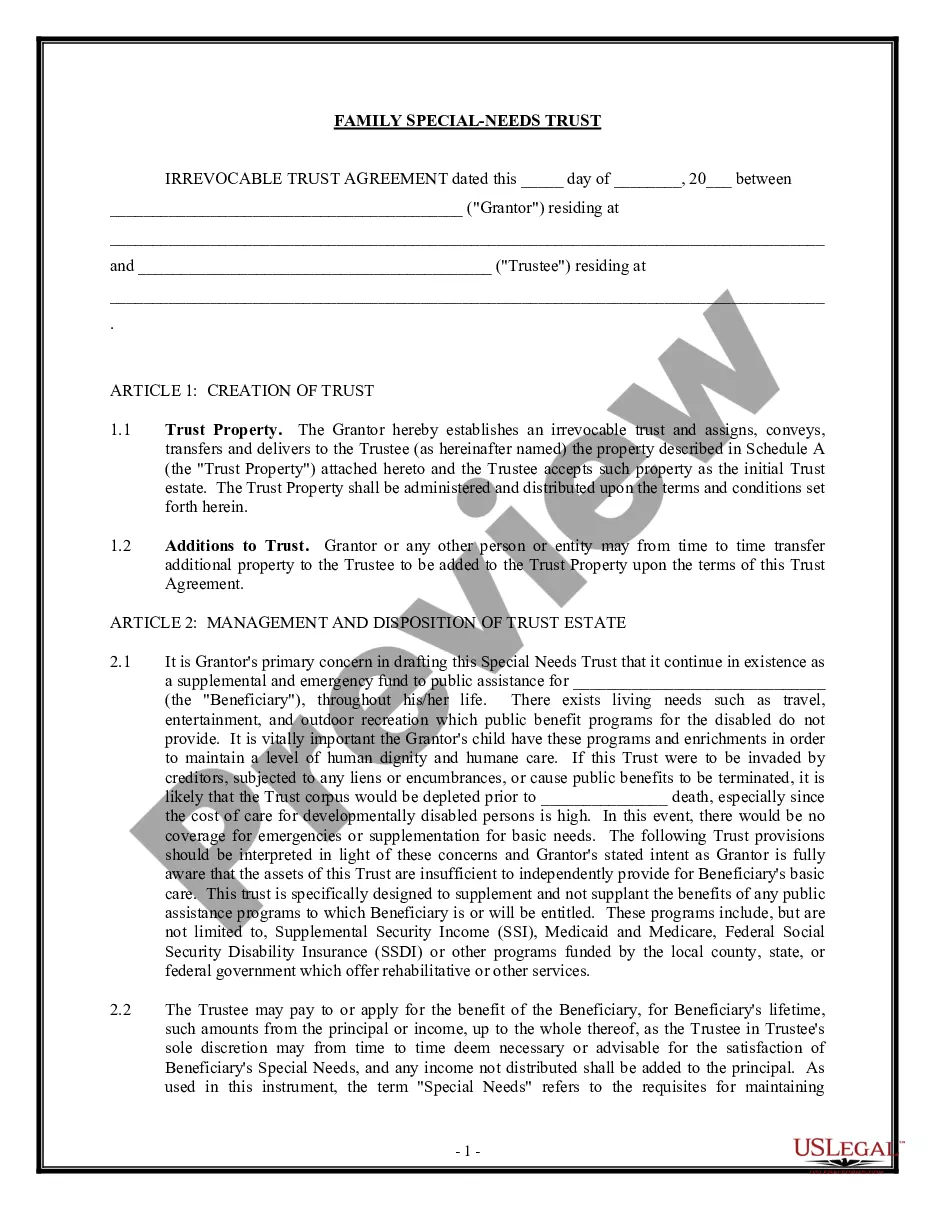
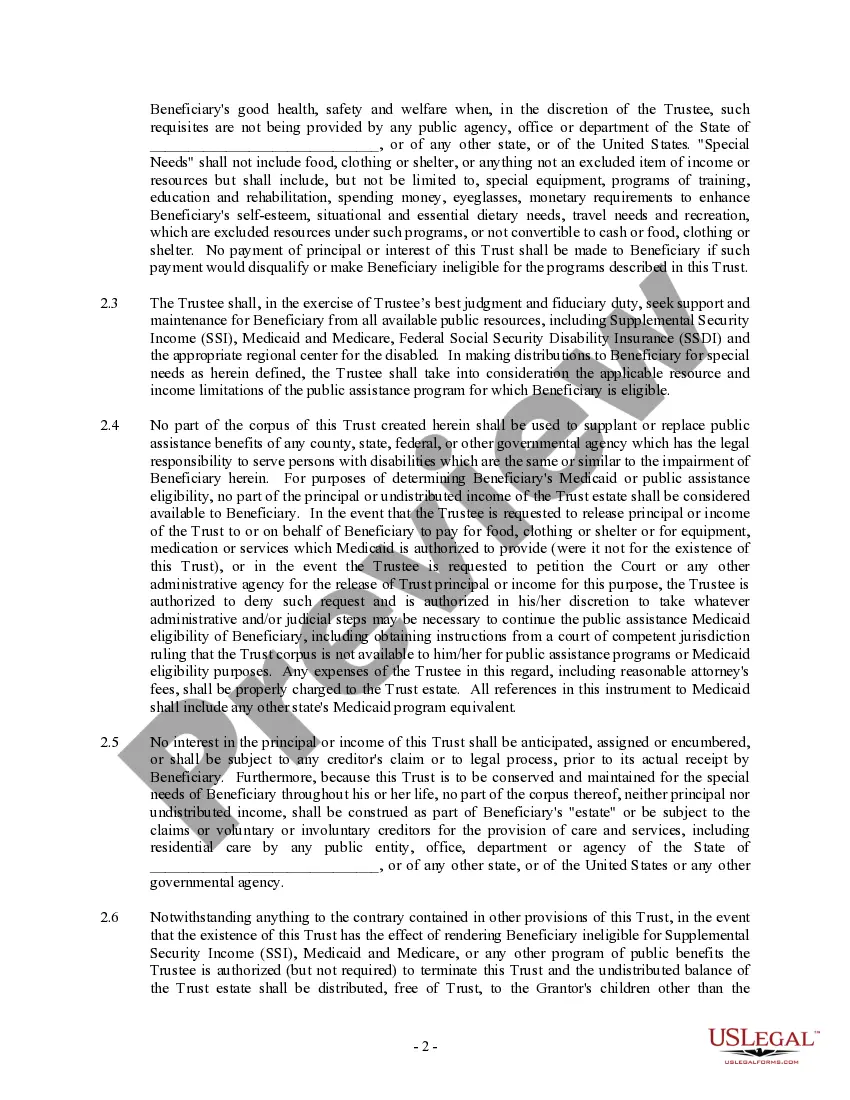
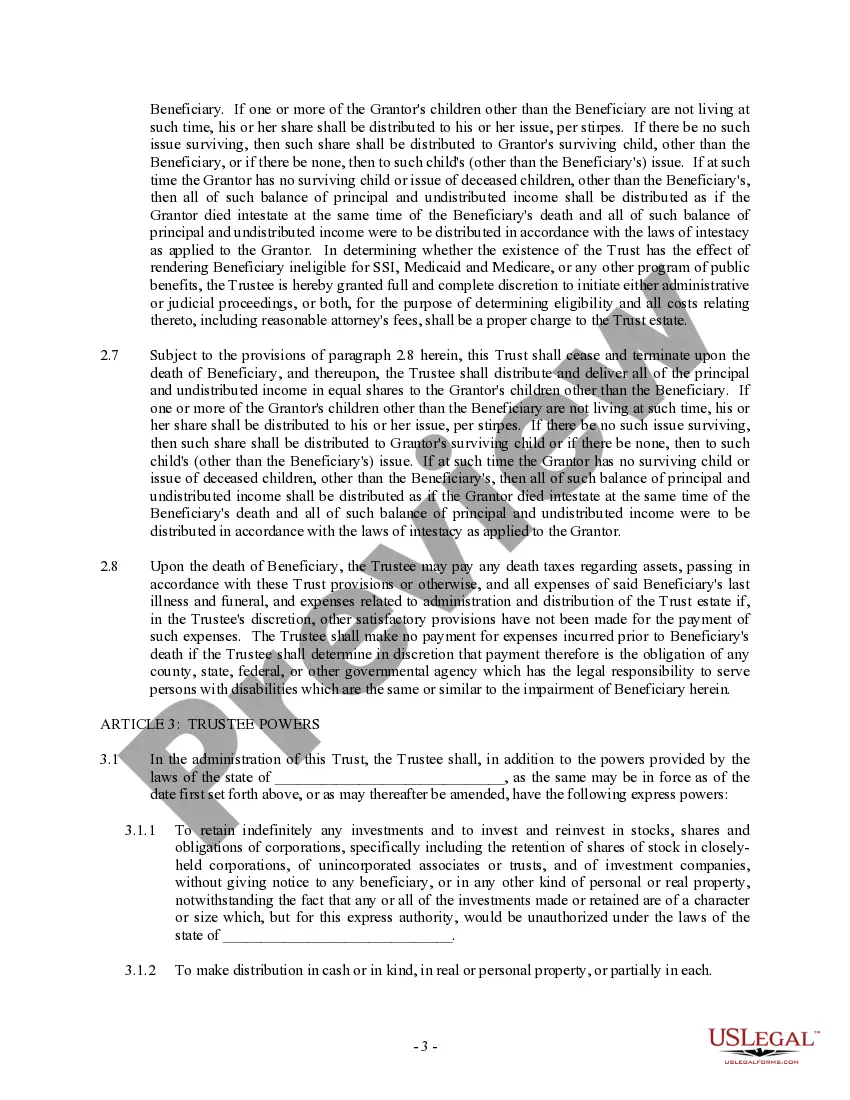
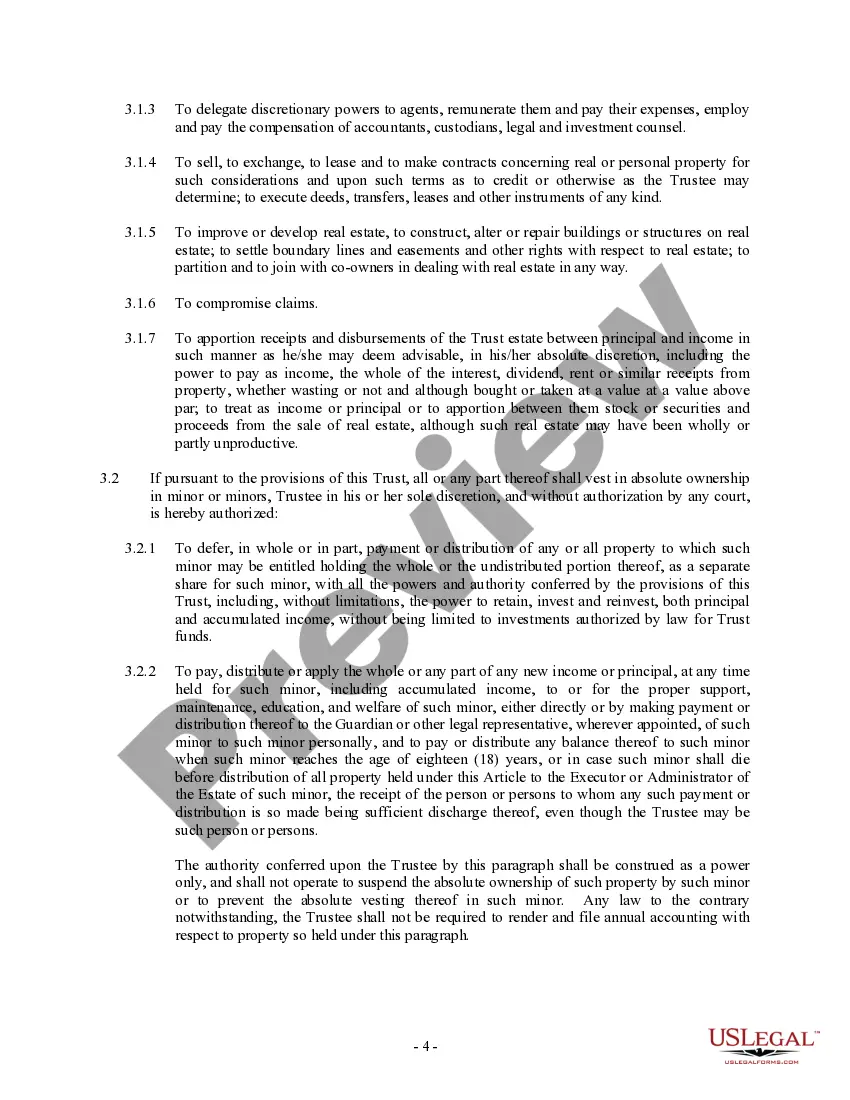
How to fill out Trust Agreement - Family Special Needs?
Creating legal documents from the beginning can frequently be daunting.
Certain situations may require extensive research and significant financial investment.
If you’re looking for a simpler and more economical approach to producing Sample Trust Financial Statements For Nonprofits or any other documents without unnecessary complications, US Legal Forms is readily available to assist you.
Our online repository of over 85,000 current legal forms encompasses nearly every aspect of your financial, legal, and personal affairs. With just a few clicks, you can swiftly obtain state- and county-specific forms meticulously prepared for you by our legal experts.
Ensure the selected form adheres to your state and county regulations. Select the appropriate subscription to purchase the Sample Trust Financial Statements For Nonprofits. Download the document, then complete, validate, and print it out. US Legal Forms enjoys a solid reputation and over 25 years of expertise. Join us now and simplify the document completion process!
- Utilize our website whenever you require a trustworthy and dependable service to swiftly find and download the Sample Trust Financial Statements For Nonprofits.
- If you’re already familiar with our website and have an existing account, simply Log In to your account, find the template, and download it or retrieve it anytime from the My documents section.
- No account? No problem. Setting one up takes only minutes, allowing you to explore the library.
- Before jumping straight into downloading the Sample Trust Financial Statements For Nonprofits, consider these suggestions.
- Review the document preview and descriptions to ensure you are accessing the correct document.
Form popularity
FAQ
When preparing financial statements for a nonprofit organization, start by defining your accounting period and ensuring all financial transactions are accurately recorded. Next, compile the core financial documents like the balance sheet and income statement, focusing on presenting clear and comprehensive data. Utilizing sample trust financial statements for nonprofits can streamline this process and help you achieve a professional and compliant final product.
To prepare a financial statement for a nonprofit organization, gather all financial records, including income, expenses, and asset details. Organize the information into a coherent format, ensuring clarity and accuracy. Using frameworks like sample trust financial statements for nonprofits can provide guidance and help ensure compliance with financial reporting standards, thereby enhancing overall transparency.
The 33% rule for nonprofits helps organizations understand their financial health by stating that they should aim to cover at least one-third of their total expenses through earned income, such as service fees or product sales. This method encourages sustainability and relies less on donations or grants. By ensuring that finances are well-managed, nonprofits can achieve long-term stability, making sample trust financial statements for nonprofits easier to prepare and understand.
Yes, a trust typically needs to prepare financial statements, especially when it involves managing assets for beneficiaries. Sample trust financial statements for nonprofits can help maintain transparency and accountability, ensuring that all financial activities are clearly documented. These statements provide a comprehensive view of the trust's financial position, making it easier for trustees to fulfill their fiduciary duties. By utilizing platforms like US Legal Forms, you can access templates and resources to create accurate and compliant financial statements tailored for nonprofit trusts.
The income statement, balance sheet, and statement of cash flows are required financial statements. These three statements are informative tools that traders can use to analyze a company's financial strength and provide a quick picture of a company's financial health and underlying value.
The four essential nonprofit financial statements are statements of financial position, activities, cash flows, and functional expenses.
Your nonprofit's liabilities and assets must balance. Net assets are any assets left over after subtracting your liabilities. Your net assets can be from the current and previous operating years and include anything that holds value. Nonprofits don't have to list net assets line by line.
The components of a non-profit income statement include revenue, expenses, gains, and losses. Revenue: Includes all sources of income for the organization, such as donations, grants, and program fees. Expenses: Include all costs associated with running the organization, such as salaries, rent, and supplies.
Your nonprofit's liabilities and assets must balance. Net assets are any assets left over after subtracting your liabilities. Your net assets can be from the current and previous operating years and include anything that holds value. Nonprofits don't have to list net assets line by line.