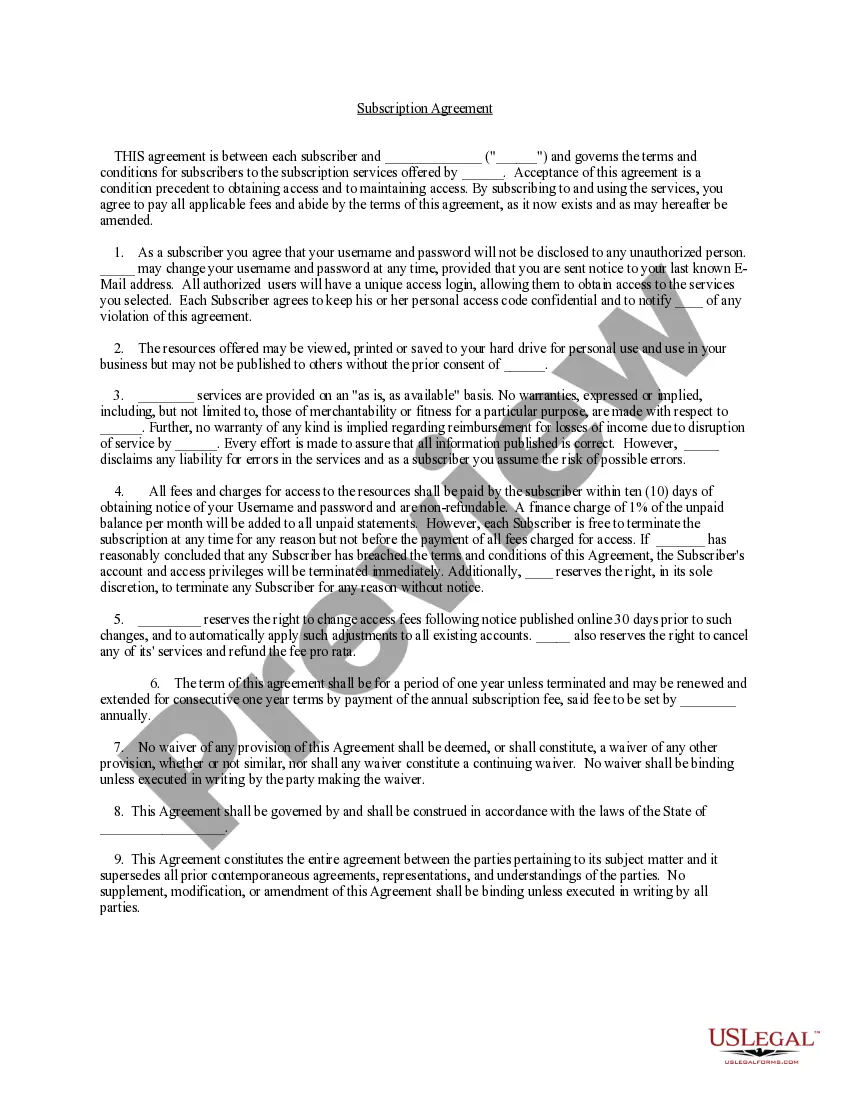
Subscription Agreement For Future Equity
Description

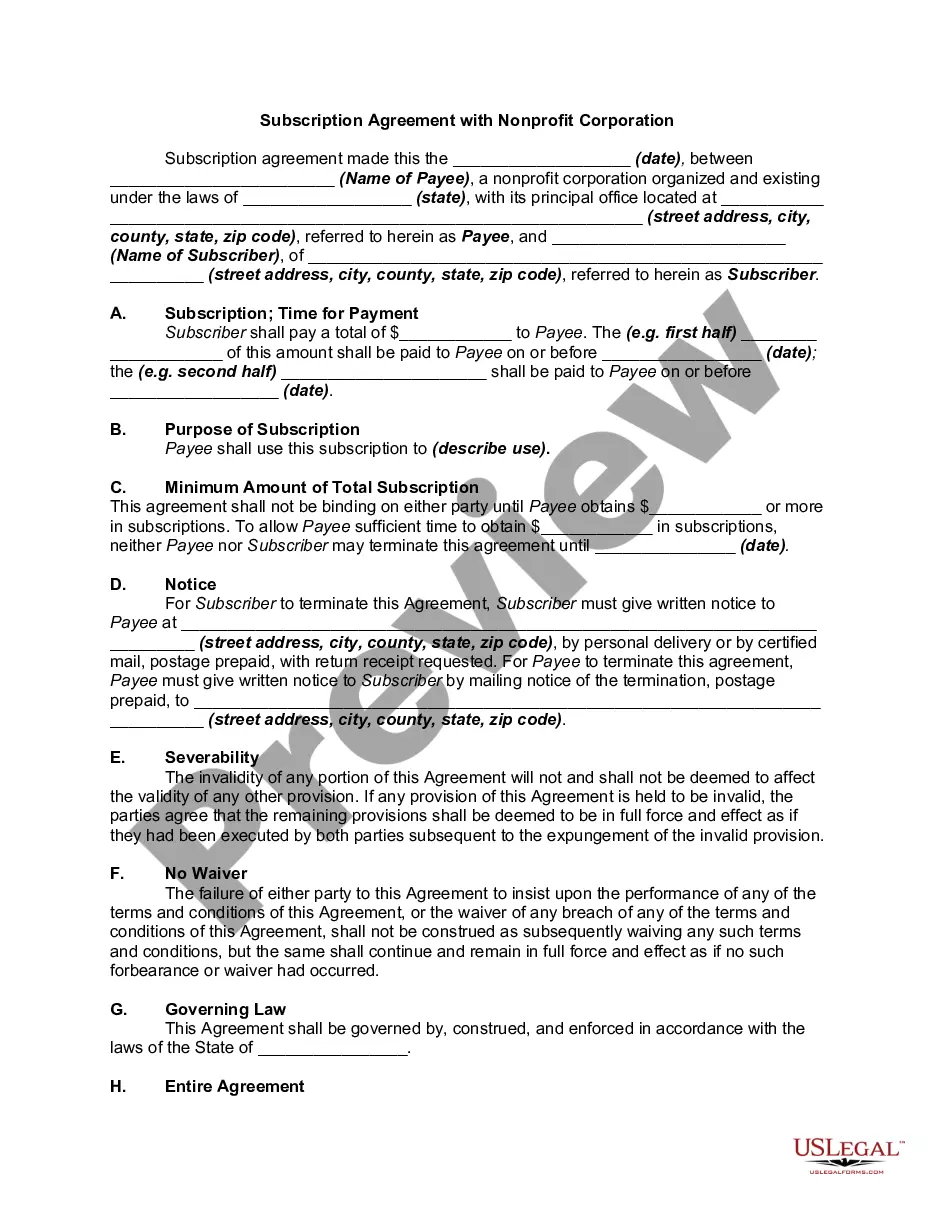
Get your form ready online
Our built-in tools help you complete, sign, share, and store your documents in one place.
Make edits, fill in missing information, and update formatting in US Legal Forms—just like you would in MS Word.
Download a copy, print it, send it by email, or mail it via USPS—whatever works best for your next step.
Sign and collect signatures with our SignNow integration. Send to multiple recipients, set reminders, and more. Go Premium to unlock E-Sign.
If this form requires notarization, complete it online through a secure video call—no need to meet a notary in person or wait for an appointment.
We protect your documents and personal data by following strict security and privacy standards.

Make edits, fill in missing information, and update formatting in US Legal Forms—just like you would in MS Word.

Download a copy, print it, send it by email, or mail it via USPS—whatever works best for your next step.

Sign and collect signatures with our SignNow integration. Send to multiple recipients, set reminders, and more. Go Premium to unlock E-Sign.

If this form requires notarization, complete it online through a secure video call—no need to meet a notary in person or wait for an appointment.

We protect your documents and personal data by following strict security and privacy standards.
Looking for another form?






How to fill out Subscription Agreement?
Individuals typically link legal documentation with something complex that only an expert can manage.
In some respects, this is accurate, as composing a Subscription Agreement For Future Equity requires substantial expertise in subject matter requirements, including local and state laws.
Nevertheless, thanks to US Legal Forms, processes have become more straightforward: pre-designed legal templates for various life and business scenarios tailored to state regulations are compiled in one online directory and are now accessible to all.
All templates in our collection are reusable: once acquired, they remain saved in your profile. You can access them anytime as needed through the My documents tab. Explore all the benefits of utilizing the US Legal Forms platform. Subscribe now!
- US Legal Forms offers over 85,000 current forms organized by state and area of application, making it easy to find a Subscription Agreement For Future Equity or any specific template in just minutes.
- Existing users with an active subscription should Log In to their account and select Download to access the form.
- New users need to create an account and subscribe prior to downloading any documentation.
- Follow this detailed guide to secure the Subscription Agreement For Future Equity.
- Examine the page content thoroughly to confirm it meets your requirements.
- Read the form description or check it using the Preview feature.
- Search for another template using the Search field above if the previous one isn't suitable.
- Hit Buy Now once you pinpoint the right Subscription Agreement For Future Equity.
- Choose a pricing plan that aligns with your requirements and financial plan.
- Set up an account or Log In to advance to the payment page.
- Make your subscription payment using PayPal or your credit card.
- Select the format for your template and click Download.
- Print your document or upload it to an online editor for quicker completion.
Form popularity
FAQ
The subscription agreement details all the information about the transaction, such as the number of shares and price, and confidentiality provisions. Some agreements include a specified rate of return that investors are guaranteed to receive.
Equity Subscription Agreement means any agreement that may be entered into in connection with the Financing Agreements or otherwise, under which a Developer is to subscribe for additional shares to contribute additional capital to the Project Company, or to lend or otherwise advance funds to the Project Company.
The following steps describe how writing subscription agreements works:Decide to get your subscription agreements in writing.Ensure your subscription agreements are simple.Identify the agreement principals and investors correctly.Write down all key details of the transaction.Set the consideration obligations in stone.More items...
A well organized and well-structured subscription agreement will include the details about the transaction, the number of shares being sold and the price per share, and any legally binding confidentiality agreements and clauses.
A simple agreement for future equity (SAFE) is an agreement between an investor and a company that provides rights to the investor for future equity in the company similar to a warrant, except without determining a specific price per share at the time of the initial investment.