Agreement Water Well With Bucket
Description

Get your form ready online
Our built-in tools help you complete, sign, share, and store your documents in one place.
Make edits, fill in missing information, and update formatting in US Legal Forms—just like you would in MS Word.
Download a copy, print it, send it by email, or mail it via USPS—whatever works best for your next step.
Sign and collect signatures with our SignNow integration. Send to multiple recipients, set reminders, and more. Go Premium to unlock E-Sign.
If this form requires notarization, complete it online through a secure video call—no need to meet a notary in person or wait for an appointment.
We protect your documents and personal data by following strict security and privacy standards.

Make edits, fill in missing information, and update formatting in US Legal Forms—just like you would in MS Word.

Download a copy, print it, send it by email, or mail it via USPS—whatever works best for your next step.

Sign and collect signatures with our SignNow integration. Send to multiple recipients, set reminders, and more. Go Premium to unlock E-Sign.

If this form requires notarization, complete it online through a secure video call—no need to meet a notary in person or wait for an appointment.

We protect your documents and personal data by following strict security and privacy standards.
Looking for another form?
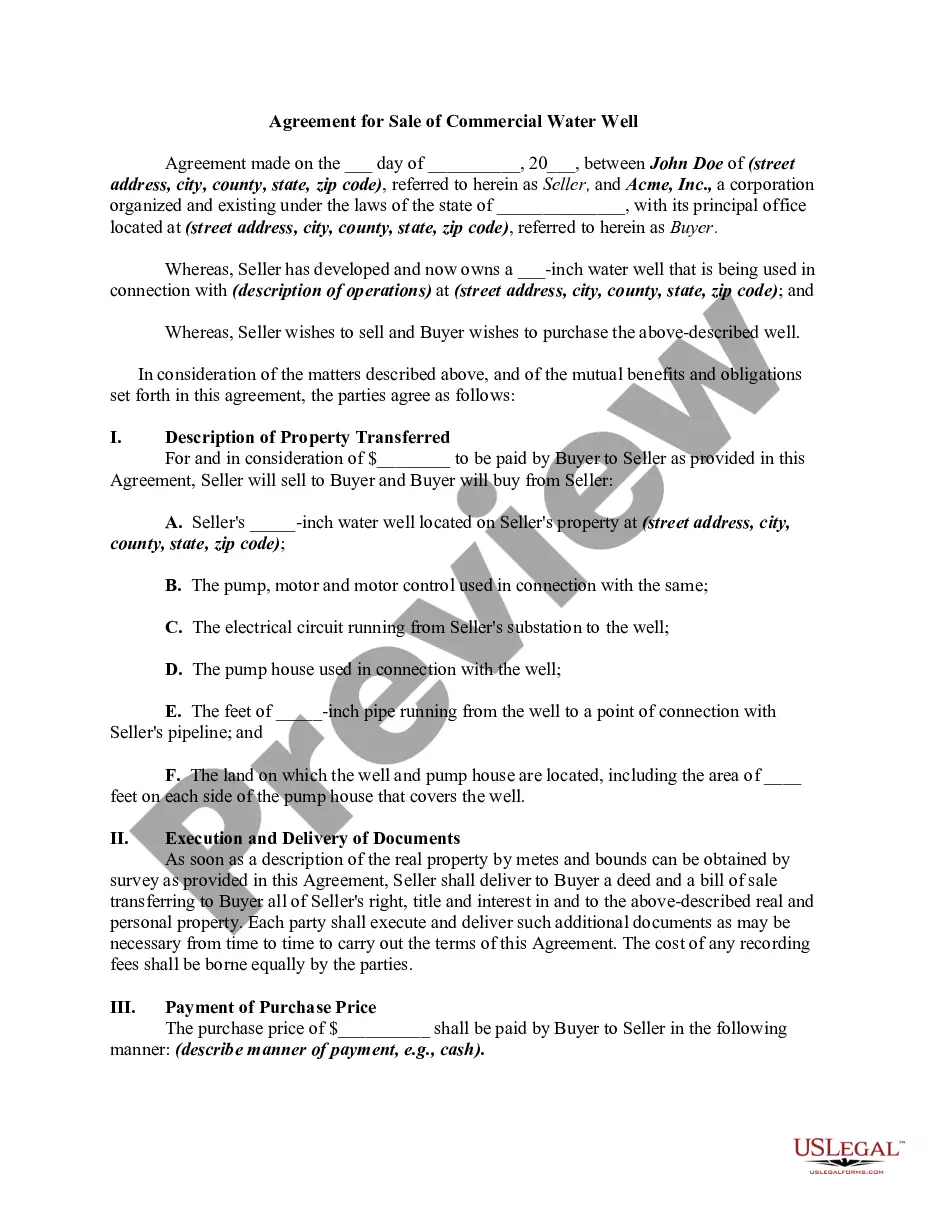
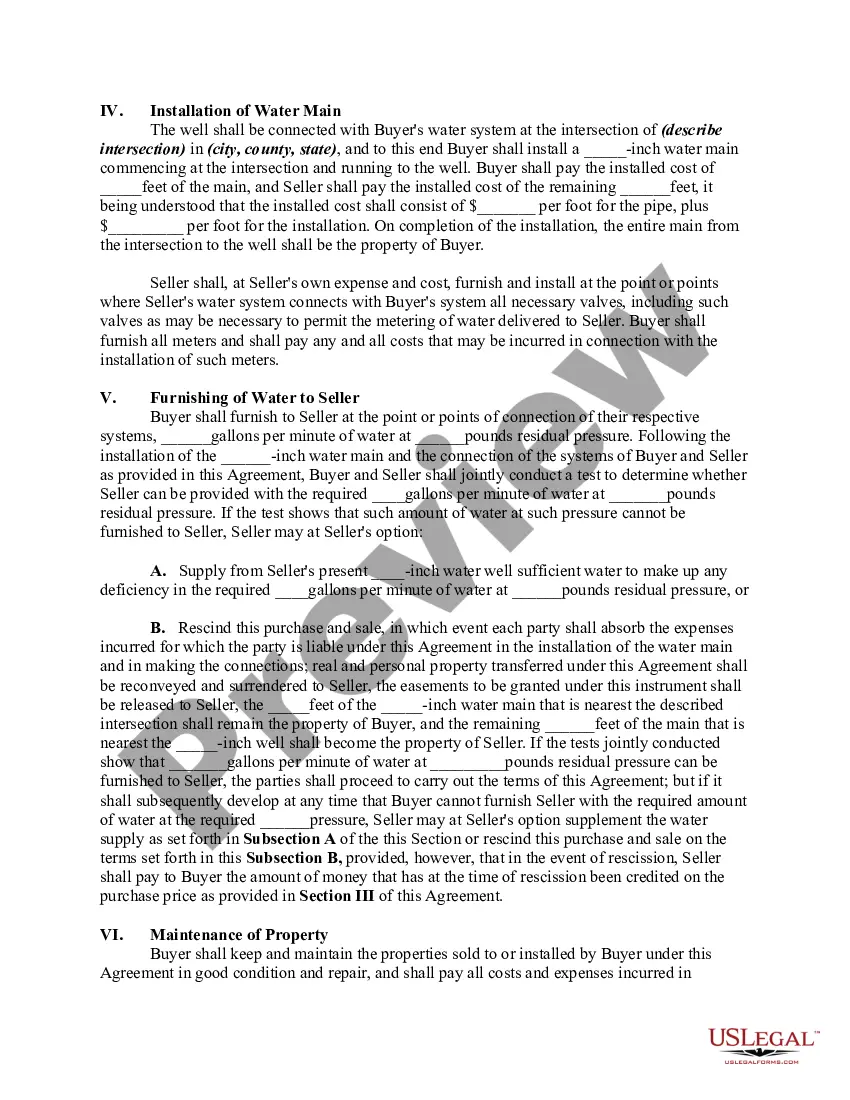
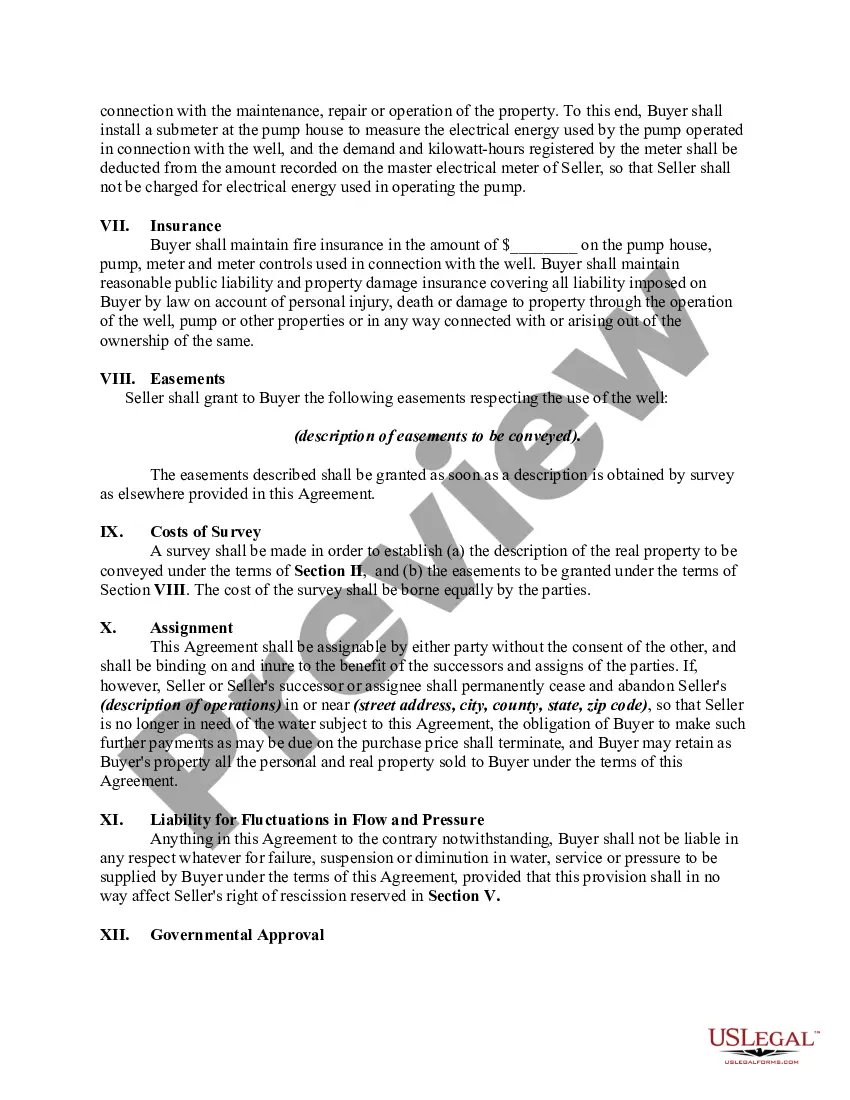
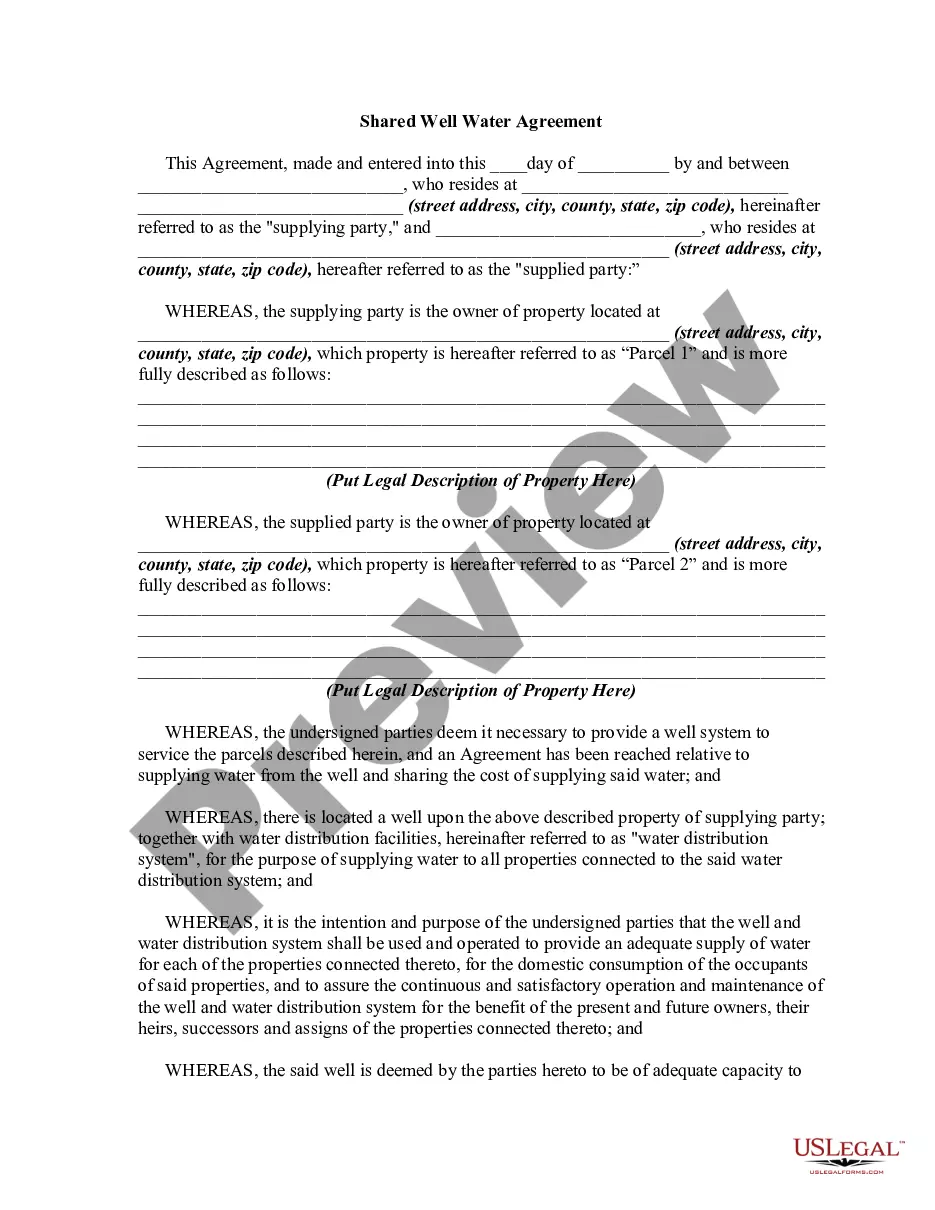
How to fill out Agreement For Sale Of Commercial Water Well?
How to acquire expert legal documents that align with your state laws and create the Agreement Water Well With Bucket without resorting to an attorney.
Numerous online services offer templates to address various legal matters and formalities.
However, it may require time to discover which samples meet both your needs and legal criteria.
If you do not have an account with US Legal Forms, follow the guide below: Examine the webpage you've opened and see if the document suits your requirements.
- US Legal Forms is a trusted service that assists you in locating official documents created in compliance with the latest state law updates and saves you money on legal fees.
- US Legal Forms is not a typical online library; it is a repository of over 85,000 verified templates for different business and personal scenarios.
- All documents are categorized by area and state to streamline your search process and make it more efficient.
- Additionally, it integrates with robust tools for PDF editing and electronic signatures, enabling users with a Premium subscription to easily complete their documents online.
- Obtaining the necessary paperwork requires minimal effort and time.
- If you already possess an account, Log In and verify that your subscription is active.
- Download the Agreement Water Well With Bucket by clicking the relevant button next to the file name.
Form popularity
FAQ
Well-plugging stepsMeasure the dimensions of the well.Remove all obstructing materials from the well.Disinfect the well by adding household bleach.Fill the well with plugging materials.Remove the upper 3 feet of the well casing.Fill the final 3 feet with topsoil and mound.
That said, a typical minimum acceptable well yield is 3 gallons per minute; some lenders want to see 5 gpm; And some authorities will accept lower well yields, down to 2 gpm provided that 1,500 gallons or a similar quantity of on-site water storage is also provided.
Multiply the length of water column in feet by the gallon volume per given diameter. For example, a 4-inch-diameter well has 0.65 gallons of water per foot and a 6-inch diameter well has 1.47 gallons per foot.
The Water Well Board suggests that a minimum water supply capacity for domestic internal household use should be at least 600 gallons of water within a two-hour period once each day. This is equivalent to a flow rate of 5 gallons per minute (gpm) for two hours.
5 gpm (two fixtures running simultaneously at 2.5 gpm) is a good estimate of peak demand, for the typical household. Water wells that reliably yield 5 gpm should be able to meet peak and daily needs for most residences. Wells yielding less than 5 gpm, however, are sometimes the only water source available.