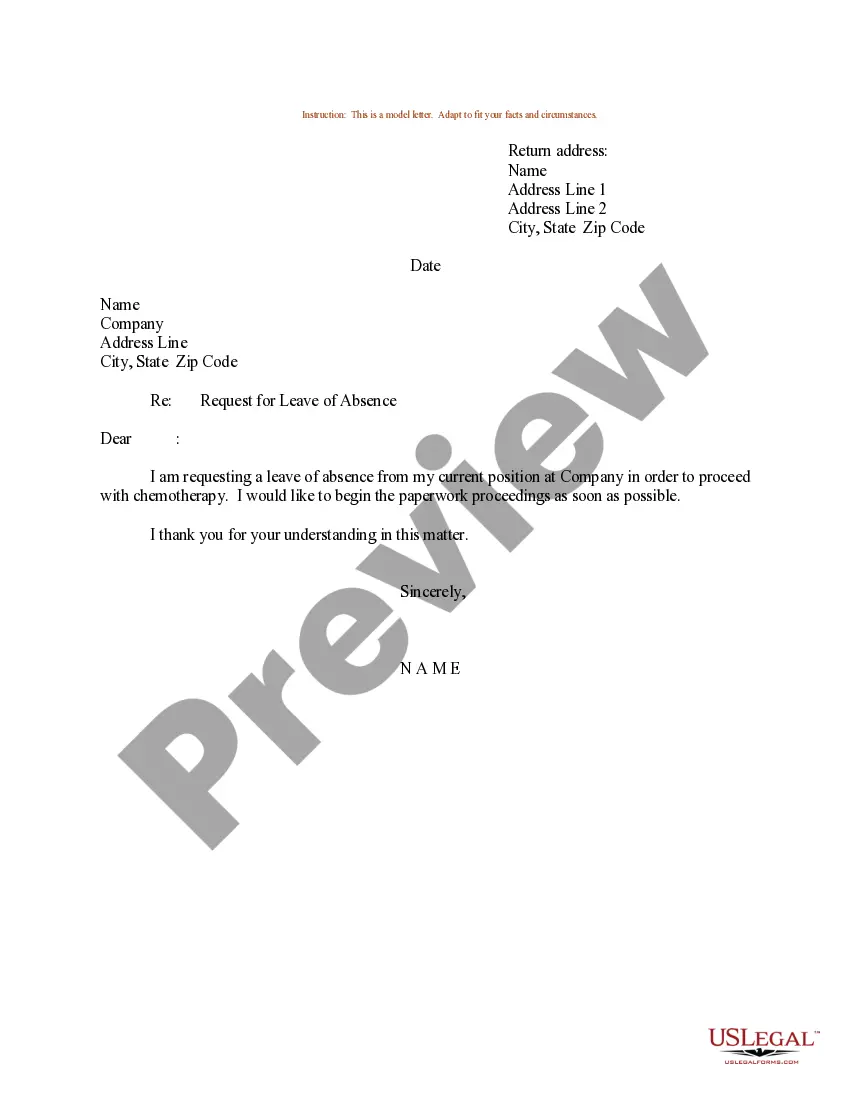
Leave Absence Personal Reasons With Leave
Description
Get your form ready online
Our built-in tools help you complete, sign, share, and store your documents in one place.
Make edits, fill in missing information, and update formatting in US Legal Forms—just like you would in MS Word.
Download a copy, print it, send it by email, or mail it via USPS—whatever works best for your next step.
Sign and collect signatures with our SignNow integration. Send to multiple recipients, set reminders, and more. Go Premium to unlock E-Sign.
If this form requires notarization, complete it online through a secure video call—no need to meet a notary in person or wait for an appointment.
We protect your documents and personal data by following strict security and privacy standards.

Make edits, fill in missing information, and update formatting in US Legal Forms—just like you would in MS Word.

Download a copy, print it, send it by email, or mail it via USPS—whatever works best for your next step.

Sign and collect signatures with our SignNow integration. Send to multiple recipients, set reminders, and more. Go Premium to unlock E-Sign.

If this form requires notarization, complete it online through a secure video call—no need to meet a notary in person or wait for an appointment.

We protect your documents and personal data by following strict security and privacy standards.
Looking for another form?

How to fill out Leave Of Absence For Personal Reasons?
- If you already have an account, log in to access your downloaded forms. Ensure your subscription is active; renew if necessary.
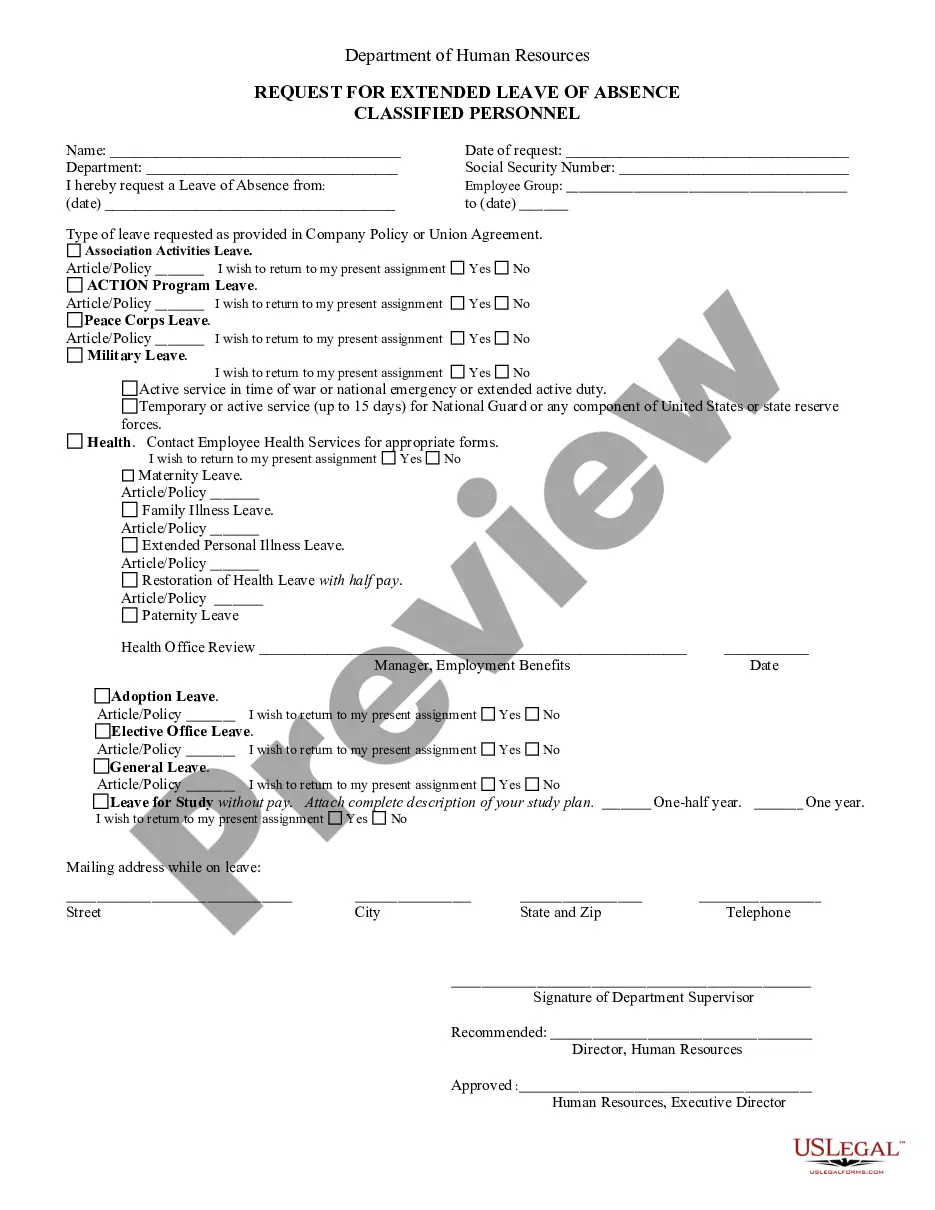
- For first-time users, start by checking the Preview mode and form description to confirm that the document matches your needs and adheres to local rules.
- If you need a different template, use the Search tab to find other documents that may suit your requirements better.
- Proceed to purchase the desired form by clicking 'Buy Now' and selecting your preferred subscription plan. Create an account to access the full library.
- Complete your purchase using credit card or PayPal. Once payment is confirmed, you can download the form.
- Save the form to your device and access it anytime from the My Forms section in your profile.
Utilizing US Legal Forms empowers you to create legally sound documents quickly, with the convenience of a user-friendly platform at your disposal.
Don't hesitate to start your journey today with US Legal Forms. Explore the vast collection of legal documents and ensure your form is completed accurately!
Form popularity
FAQ
When explaining that you left for personal reasons, you can say something like, 'I had to leave the position due to personal commitments that required my immediate attention.' This statement is clear and maintains professionalism. You can assure potential employers that your personal matters have been resolved, allowing you to focus on new opportunities.
To convey personal reasons professionally for leave, consider using phrases like 'I need to attend to some personal matters that require my attention.' This approach keeps your message straightforward and respectful. If you need to give more context, you can briefly explain the type of personal issue without going into unnecessary detail.
A personal reason for leave of absence typically involves issues like family matters, health concerns, or personal development pursuits. These are significant enough to require your attention away from work. It’s essential to communicate this clearly to your employer, as they will appreciate your honesty while you manage your responsibilities.
When discussing time off for personal matters, you can simply say you are taking a leave of absence for personal reasons. This provides clarity and maintains professionalism. It ensures that your employer understands you are prioritizing personal needs while staying respectful of workplace policies.
To ask for a personal leave of absence, start by reviewing your company's policy and preparing your request in advance. Approach your supervisor or HR personnel directly, and explain your situation briefly while highlighting the reasons for your leave absence personal reasons with leave. Be sincere and ensure you’re clear about the duration and expected return date, showing your commitment to your role.
It is perfectly okay to ask for unpaid leave, especially when you need time for personal reasons. Communicating your needs effectively often leads to a supportive discussion with your employer. Many workplaces understand the importance of work-life balance and may accommodate leave absence personal reasons with leave, facilitating a healthier work environment for everyone.
Yes, you can take unpaid leave for personal reasons, but the specifics depend on your employer’s policies and your particular situation. Many companies provide options for leave absence personal reasons with leave, allowing employees to focus on their personal needs without financial penalties. It's wise to review your employee handbook or consult your HR department to understand your rights and responsibilities regarding unpaid leave.
To request leave for personal reasons, you should draft a request that includes the dates you plan to be away and a brief description of your situation. Ensure your tone is professional and respectful, and consider notifying HR if that is the protocol your company follows. Utilizing resources from US Legal Forms can help streamline this process with reliable templates.
To request a leave of absence for personal reasons, begin by drafting a formal request detailing your situation and the duration of the leave required. You might consider using the US Legal Forms platform, which provides templates tailored to leave applications. Submitting a clear and concise request can aid in a smoother approval process.
A valid reason for leave of absence from work can include personal matters such as family issues, health concerns, or other pressing life events. These reasons are often understood and accepted by employers. It's important to communicate openly about your situation to ensure your request is well received.