Sole Proprietorship For Consulting
Description
Get your form ready online
Our built-in tools help you complete, sign, share, and store your documents in one place.
Make edits, fill in missing information, and update formatting in US Legal Forms—just like you would in MS Word.
Download a copy, print it, send it by email, or mail it via USPS—whatever works best for your next step.
Sign and collect signatures with our SignNow integration. Send to multiple recipients, set reminders, and more. Go Premium to unlock E-Sign.
If this form requires notarization, complete it online through a secure video call—no need to meet a notary in person or wait for an appointment.
We protect your documents and personal data by following strict security and privacy standards.

Make edits, fill in missing information, and update formatting in US Legal Forms—just like you would in MS Word.

Download a copy, print it, send it by email, or mail it via USPS—whatever works best for your next step.

Sign and collect signatures with our SignNow integration. Send to multiple recipients, set reminders, and more. Go Premium to unlock E-Sign.

If this form requires notarization, complete it online through a secure video call—no need to meet a notary in person or wait for an appointment.

We protect your documents and personal data by following strict security and privacy standards.
Looking for another form?


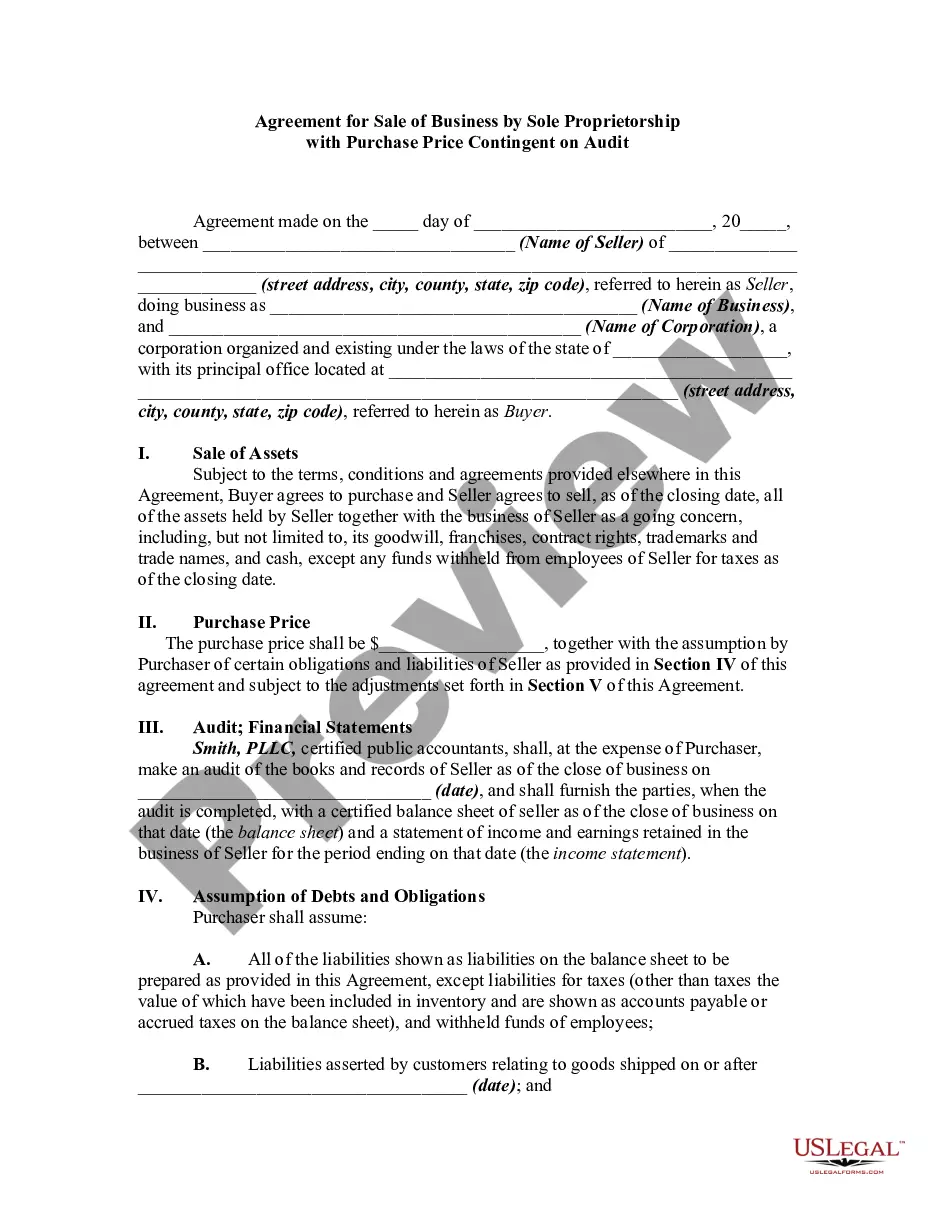
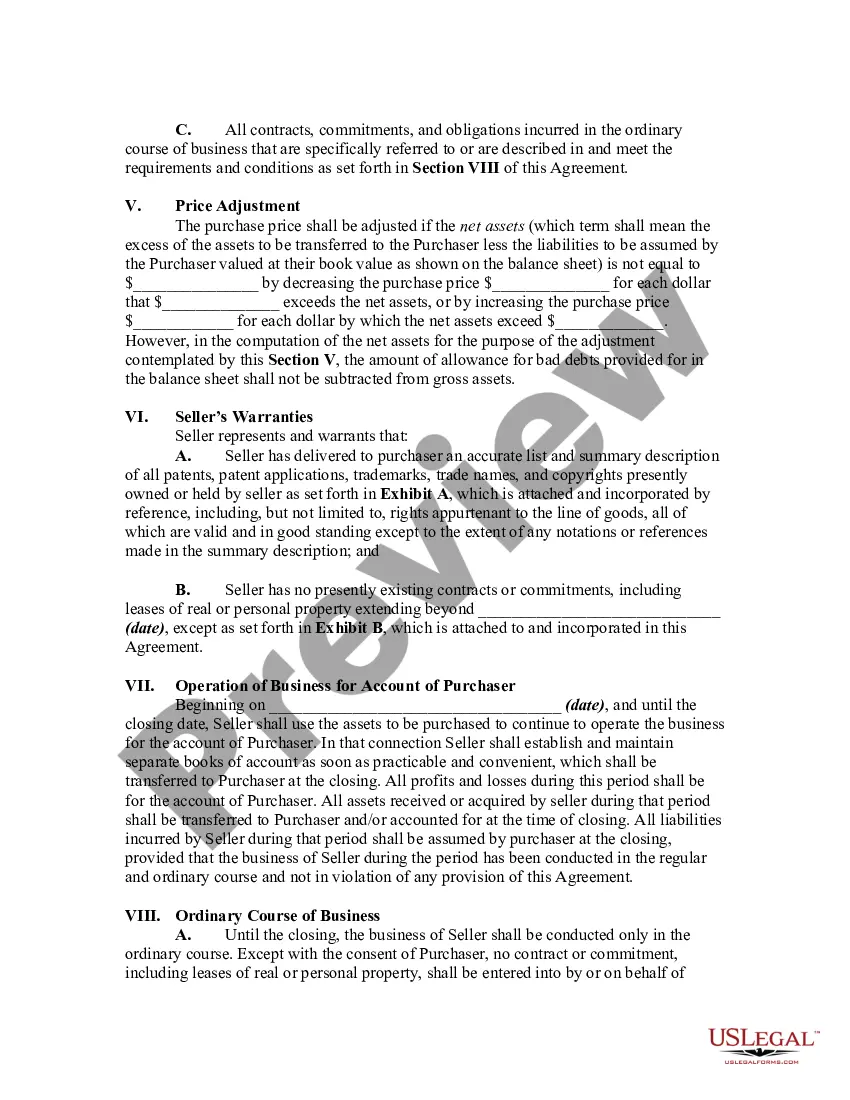
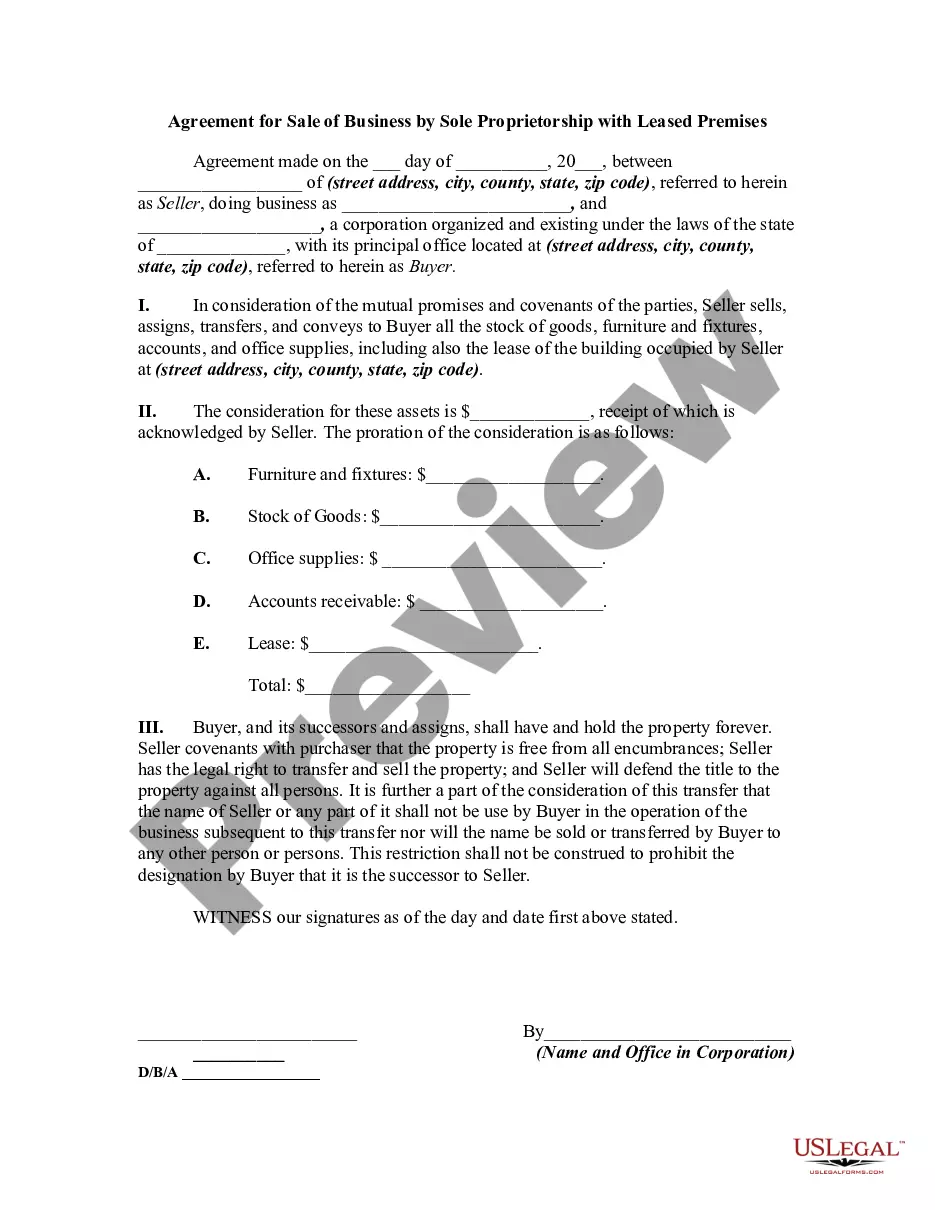
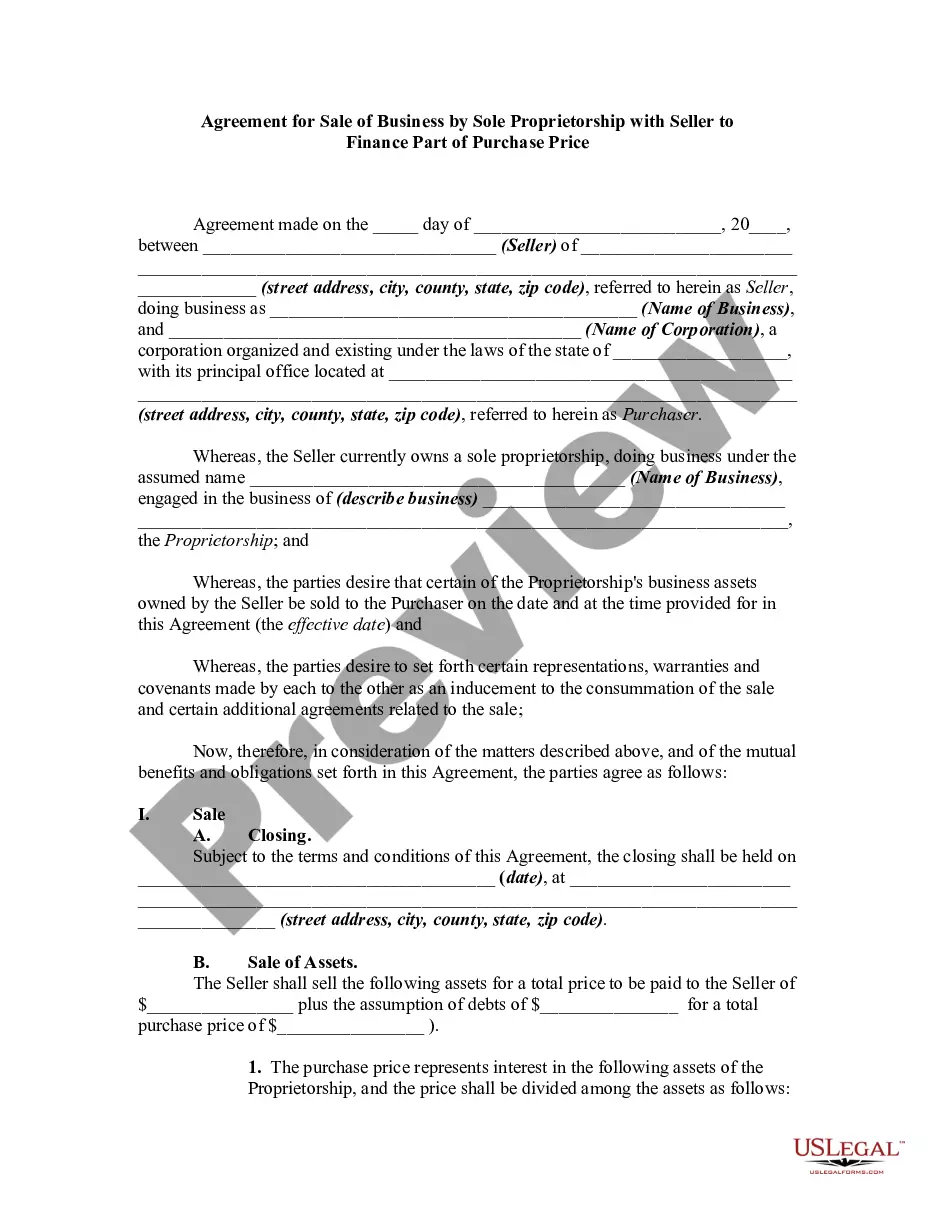
How to fill out Agreement For Sale Of Business By Sole Proprietorship With Purchase Price Contingent On Audit?
- Visit the US Legal Forms website and sign in to your account if you're a returning user. If not, create a new account for access.
- Browse the extensive form library to locate the specific sole proprietorship document that aligns with your consulting requirements.
- Once you find the right form, review its preview and ensure it satisfies your local legal requirements.
- Select the 'Buy Now' option and decide on a subscription plan that suits your needs.
- Complete your payment using a credit card or PayPal to finalize your subscription.
- Download the form to your device, allowing you to fill it out at your convenience and access it anytime through your My Forms menu.
In conclusion, US Legal Forms is an excellent choice for anyone looking to establish a sole proprietorship for consulting. With their vast library and expert assistance, you can ensure your documents are completed accurately and legally.
Get started today by visiting US Legal Forms and streamline your consulting business setup!
Form popularity
FAQ
Forming an LLC for your consulting business can be a wise decision if you seek liability protection and enhanced credibility. While a sole proprietorship for consulting simplifies the setup process, an LLC provides a shield against personal liability for business debts. Evaluating your future goals, client interactions, and risk factors will help you decide. Uslegalforms offers resources to assist you in this important decision.
The best entity for a consulting business often depends on your unique circumstances. While a sole proprietorship for consulting offers ease of operation, some may prefer an LLC for added liability protection. Assessing your risk factors, business goals, and tax considerations can help you make an informed choice. Consulting with uslegalforms can provide you with valuable insights tailored to your situation.
Certainly, a consultant can operate as a sole proprietor. This means you will conduct your consulting services without forming a separate legal entity. While this setup can be beneficial for simplicity, it's important to be aware of potential liabilities involved. You can protect your interests by understanding your obligations and exploring platforms like uslegalforms for guidance.
Yes, a consulting business can absolutely be a sole proprietorship. This structure gives you the freedom to operate independently while also keeping your administrative tasks manageable. As long as you follow local regulations, you can enjoy the benefits of running your consulting business without the complexities of a formal business entity. It's an accessible option for many consultants.
Choosing a business structure for consulting often comes down to your specific needs and goals. A sole proprietorship for consulting allows you to have a simple setup with fewer formalities. This structure works well for solo practitioners who prefer flexibility and direct engagement with clients. Consider your client base and growth plans to determine what works best for you.
Yes, you can be a consultant without forming an LLC. A sole proprietorship for consulting is an easy and straightforward way to start your business. You have full control over your operations and retain all profits. However, consider the legal responsibilities and personal liability that come with this structure.
Sole proprietorship for consulting has several disadvantages to consider. First, personal liability is a significant risk, as you are personally responsible for business debts. Second, securing financing can be challenging, as banks often prefer more formal structures. Third, the business may struggle with credibility if larger clients prefer dealing with LLCs. Fourth, it may be harder to establish partnerships or bring in co-owners. Finally, your business could face tax limitations compared to an LLC, where you might take advantage of more deductions.
Many consultants operate as sole proprietors, especially when starting their business. This structure allows them to work independently and keep things straightforward. However, as their client base grows and their income increases, they may want to consider forming an LLC for added protection. Overall, being a sole proprietor can fit well for consulting but evaluate your risks and growth goals.
Choosing between a sole proprietorship for consulting and forming an LLC depends on your specific needs. A sole proprietorship is simpler and less costly to set up, offering complete control. However, an LLC adds a layer of protection for your personal assets and may provide tax benefits. Evaluating your business goals will help you make an informed decision.
Transitioning from a sole proprietorship for consulting to an LLC is advisable when your business starts generating higher revenue or taking on liability. This change protects your personal assets from business debts and lawsuits. If you plan to expand, hire employees, or seek investors, it makes sense to consider forming an LLC. Overall, this shift can provide greater credibility and attract more clients.