Business Turnover For Audit
Description
Get your form ready online
Our built-in tools help you complete, sign, share, and store your documents in one place.
Make edits, fill in missing information, and update formatting in US Legal Forms—just like you would in MS Word.
Download a copy, print it, send it by email, or mail it via USPS—whatever works best for your next step.
Sign and collect signatures with our SignNow integration. Send to multiple recipients, set reminders, and more. Go Premium to unlock E-Sign.
If this form requires notarization, complete it online through a secure video call—no need to meet a notary in person or wait for an appointment.
We protect your documents and personal data by following strict security and privacy standards.

Make edits, fill in missing information, and update formatting in US Legal Forms—just like you would in MS Word.

Download a copy, print it, send it by email, or mail it via USPS—whatever works best for your next step.

Sign and collect signatures with our SignNow integration. Send to multiple recipients, set reminders, and more. Go Premium to unlock E-Sign.

If this form requires notarization, complete it online through a secure video call—no need to meet a notary in person or wait for an appointment.

We protect your documents and personal data by following strict security and privacy standards.
Looking for another form?
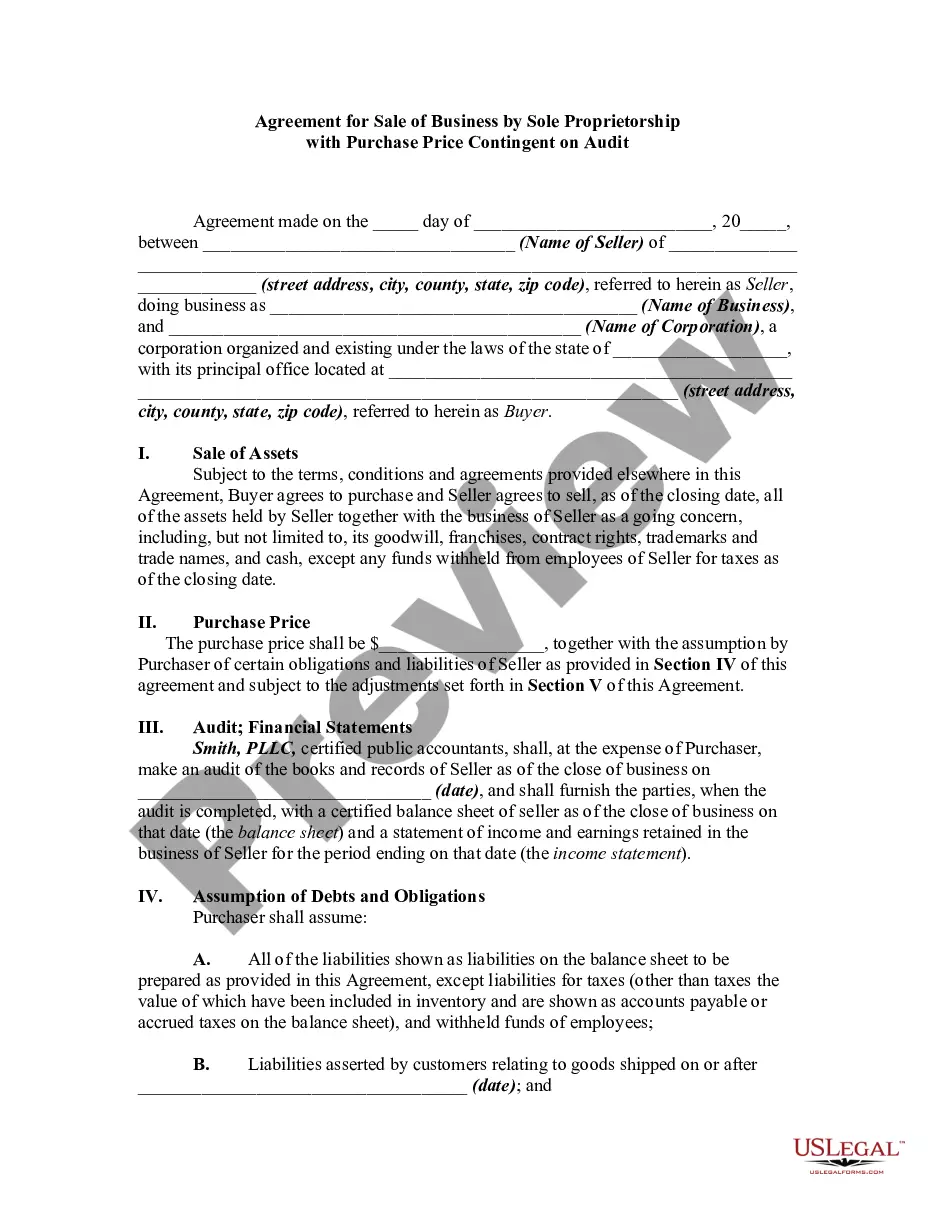
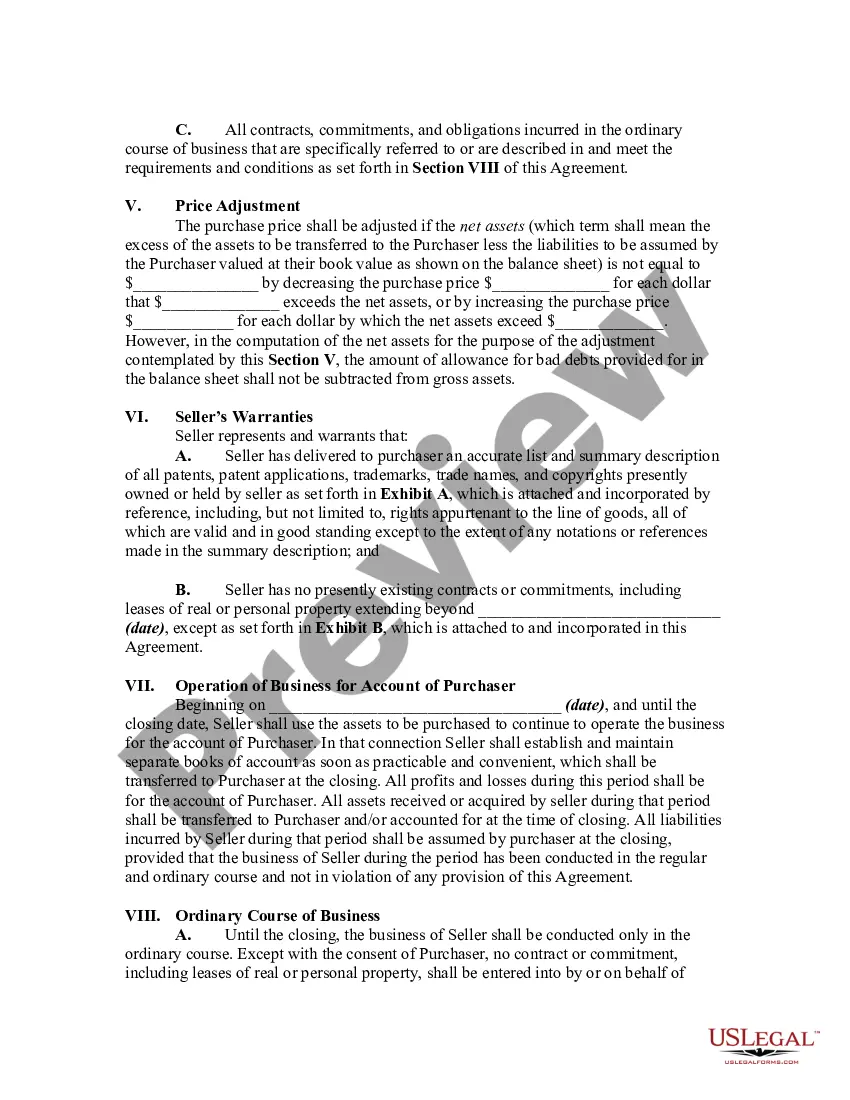
How to fill out Agreement For Sale Of Business By Sole Proprietorship With Purchase Price Contingent On Audit?
- Start by logging into your existing US Legal Forms account. Click on the Download button next to the required template, ensuring your subscription remains active. If it has expired, follow the renewal steps based on your payment plan.
- For first-time users, explore the Preview mode to review the form description. Confirm that the selected template meets your legal obligations and is suitable for your jurisdiction.
- If adjustments are needed, utilize the Search feature to find the correct form that meets your specifications. Once you have the proper template, continue to the next step.
- Proceed to purchase the document by selecting the Buy Now option, and choose a subscription plan that fits your needs. An account registration is necessary to access the full library.
- Complete your payment using your credit card or PayPal, ensuring that you receive confirmation of your subscription.
- Finally, download the form to your device, where you can easily complete it and access it anytime via the My Forms section of your profile.
In conclusion, utilizing US Legal Forms significantly enhances the efficiency of managing your business turnover audits. With a wealth of resources at your fingertips, you can ensure accuracy and compliance effortlessly.
Ready to simplify your auditing process? Start your journey with US Legal Forms today!
Form popularity
FAQ
To calculate your business turnover, start by adding all your sales, service income, and other revenue streams for a specified period. Don't forget to exclude any returns or discounts, as these can distort your true revenue figures. Keeping organized records will help you accurately determine your business turnover for audit and financial assessments.
Calculating turnover in an audit report involves compiling all revenue figures, ensuring you categorize them correctly. You will need to include sales, service income, and any other revenue-generating activities. Presenting this information accurately reflects your business turnover for audit purposes and aids in the audit's efficiency.
The option turnover limit for a tax audit refers to the threshold of total turnover beyond which a tax audit is mandatory. As per the Income Tax Act, when your business turnover exceeds ₹1 crore, you must ensure proper calculations and documentation. This limit applies to businesses that need to report their comprehensive business turnover for audit.
To calculate turnover for a tax audit, you must sum all revenue generated from your business activities during the fiscal year. This includes income from sales, services, and any other sources. Keep in mind that distinguishing between various income types is essential, as it helps ensure accurate reporting for your business turnover for audit purposes.
To report a business for audit, you can contact the relevant tax authorities or regulatory agencies in your area. Provide clear and detailed information about the business's financial practices, including any discrepancies you've noticed regarding their business turnover for audit. Utilizing platforms like US Legal Forms simplifies the process and helps you navigate the necessary steps.
Turnover limits for audit may change based on local regulations or industry standards, but many authorities consider $1 million as a common threshold. Businesses near this turnover mark should regularly assess their financial practices to ensure compliance. Keeping track of your business turnover for audit can help you establish a reliable framework for financial management.
Several factors can trigger an IRS audit for small businesses, including inconsistencies in reported income, excessive deductions, and claims of large losses against high business turnover. Additionally, businesses with unusually high turnover compared to their industry peers may draw scrutiny. Staying vigilant about your business turnover for audit can help you address red flags before they lead to an audit.
In many states, businesses with a turnover exceeding $1 million are often required to have audited accounts. This requirement helps ensure financial credibility and assists stakeholders in making informed decisions. By tracking your business turnover for audit purposes, you can enhance your reputation and attract potential investors.
The turnover for audit typically depends on the size and complexity of your business operations. Many experts suggest that businesses with gross revenues over $1 million should consider formal audits. Monitoring your business turnover for audit helps maintain transparency, strengthens financial practices, and prepares your business for growth.
The turnover limit for internal audit can vary based on organizational policies and legal regulations. Generally, businesses should consider internal audits when their revenue exceeds certain figures, which simplifies monitoring financial performance. Keeping your business turnover for audit in check ensures compliance and drives better decision-making.