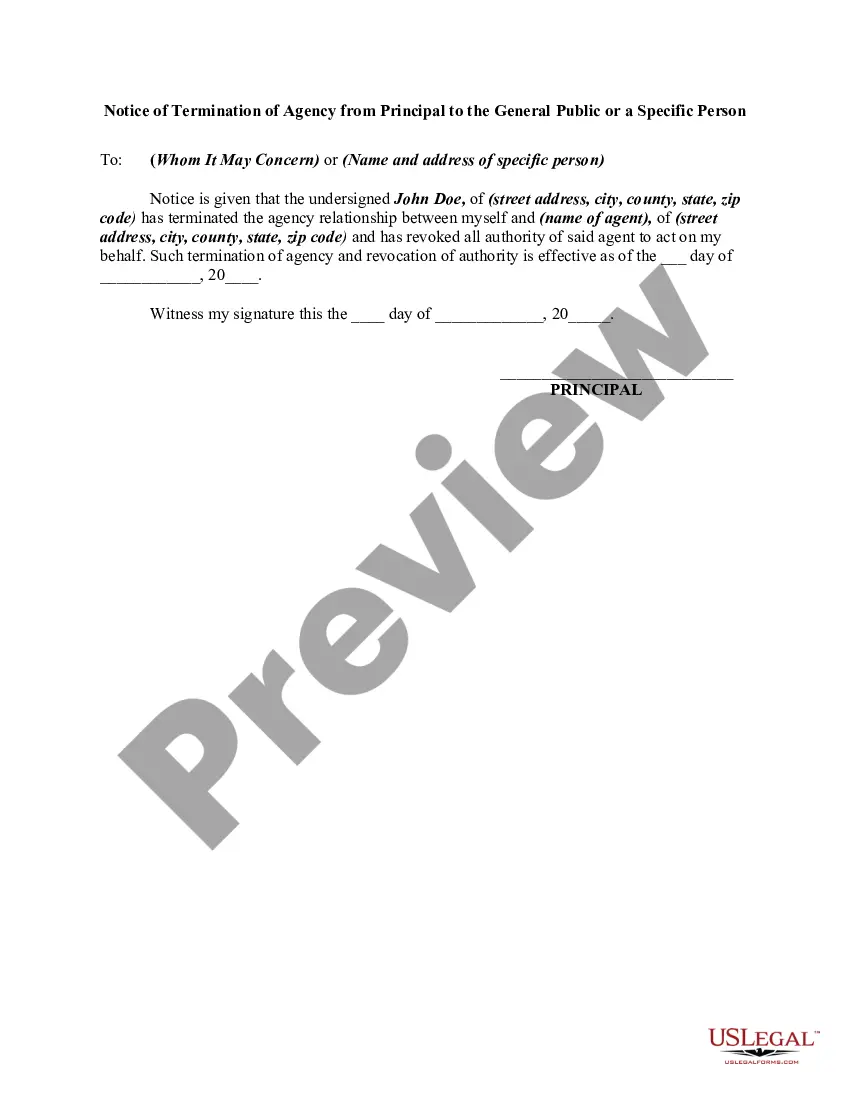
Termination Agency To Withdraw
Description
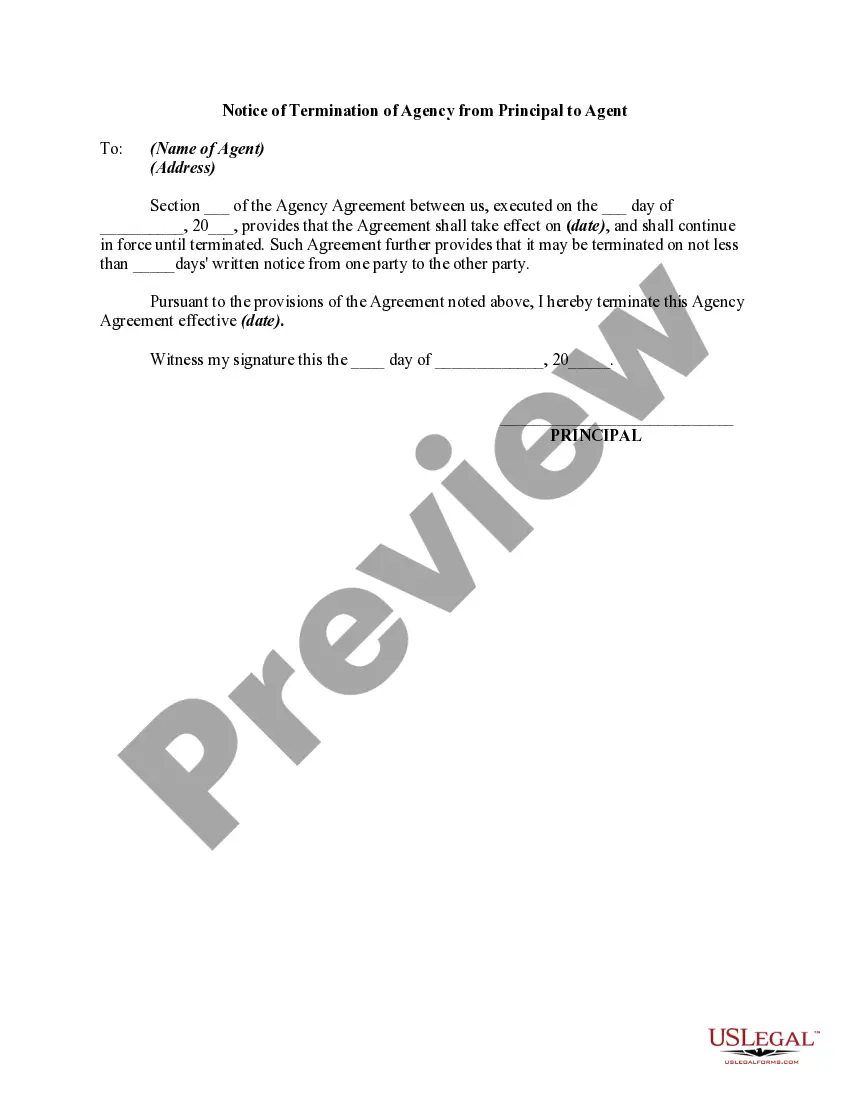
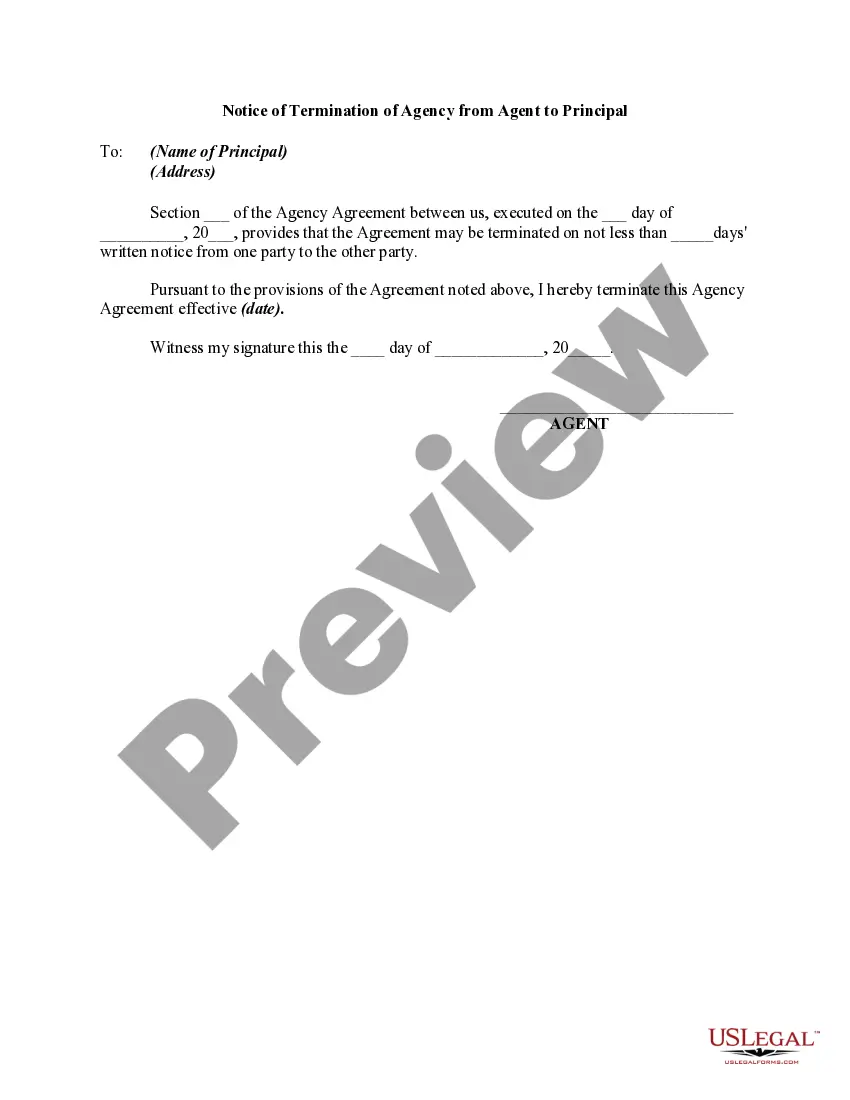
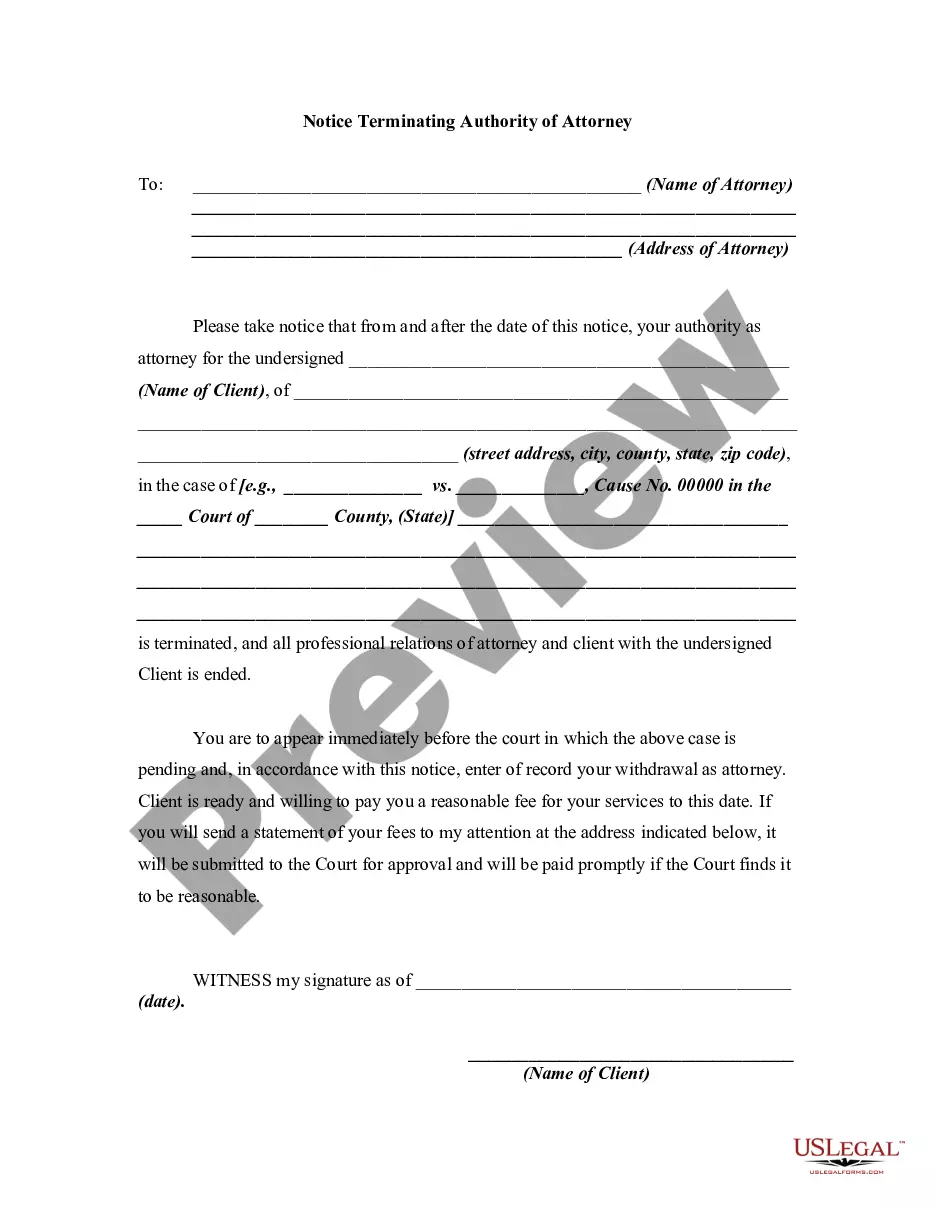
How to fill out Notice Of Termination Of Agency From Principal To The General Public Or A Specific Person?
It’s widely acknowledged that you cannot transform into a legal authority instantly, nor can you swiftly ascertain how to efficiently prepare Termination Agency To Withdraw without possessing a specialized expertise.
Drafting legal documents is a lengthy undertaking necessitating specific education and competencies. So why not entrust the assembly of the Termination Agency To Withdraw to the experts.
With US Legal Forms, one of the broadest legal template repositories, you can locate everything from court papers to templates for intra-office correspondence.
You can regain access to your documents from the My documents section whenever necessary. If you’re already a client, you can simply Log In, and find and download the template from the same section.
Regardless of the intent behind your forms—whether it’s related to finance and legality, or personal matters—our website has you sorted. Experience US Legal Forms today!
- Identify the document you require using the search bar at the top of the page.
- View it (if this option is available) and review the supporting description to determine if Termination Agency To Withdraw meets your needs.
- Start your search again if you’re in need of another template.
- Create a free account and select a subscription plan to acquire the form.
- Click Buy now. Once the purchase is completed, you can obtain the Termination Agency To Withdraw, fill it out, print it, and send or mail it to the specified parties or organizations.
Form popularity
FAQ
Withdrawing money from your 401(k) is not the same thing as cashing out. You can do a 401(k) withdrawal while you're still employed at the company that sponsors your 401(k), but you can only cash out your 401(k) from previous employers. Learn what do with your 401(k) after changing jobs.
Termination Distribution means a scheduled distribution of part or all of a Participant's vested Account on or after the Participant's Separation from Service.
Typically, you can't close an employer-sponsored 401k while you're still working there. You could elect to suspend payroll deductions but would lose the pre-tax benefits and any employer matches. In some cases, if your employer allows, you can make an in-service withdrawal if you've reached the age of 59 ½.
Who Files a Form U5? Entitled system users at broker-dealer and investment adviser firms are required to file Forms U5 on behalf of registered representatives and investment adviser representatives. The form must disclose why an individual left the firm and other certain events.
If you get terminated from your job, you have the ability to cash out the money in your 401(k) even if you haven't reached 59 1/2 years of age. This includes any money you've contributed and any vested contributions from your employer -- plus any investment profits your account has generated.