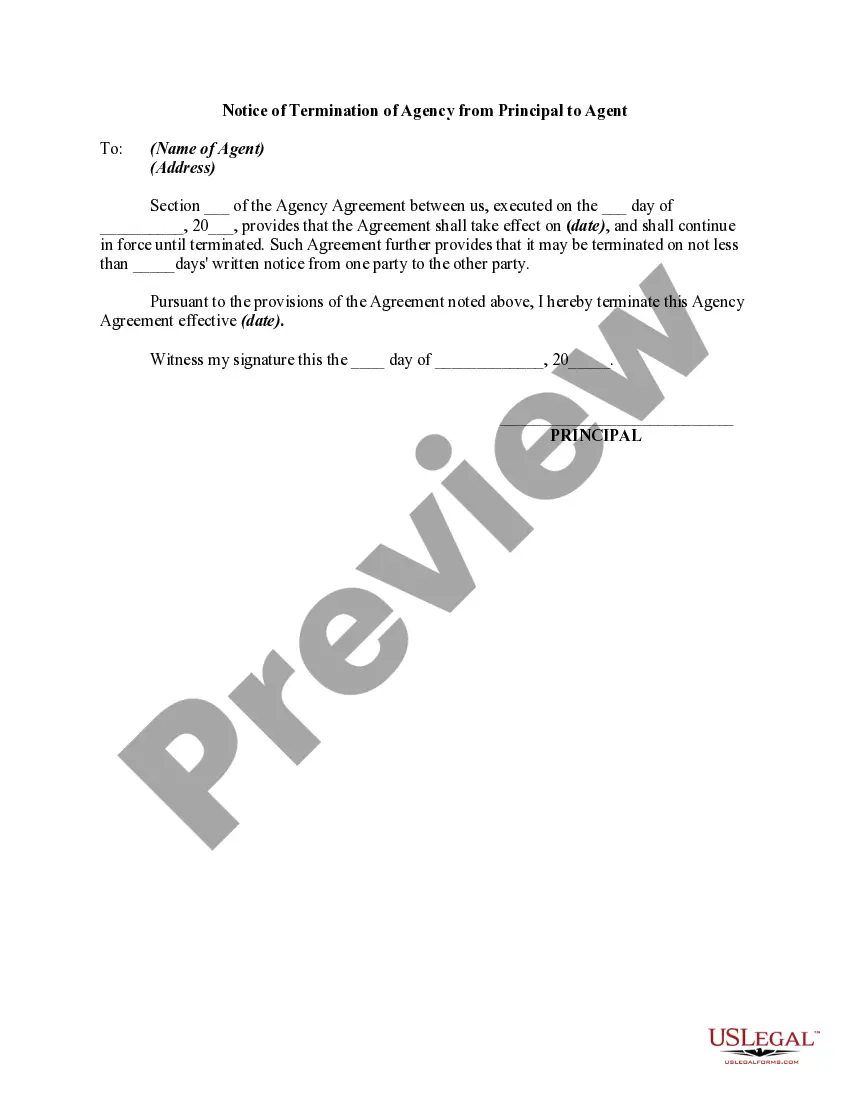
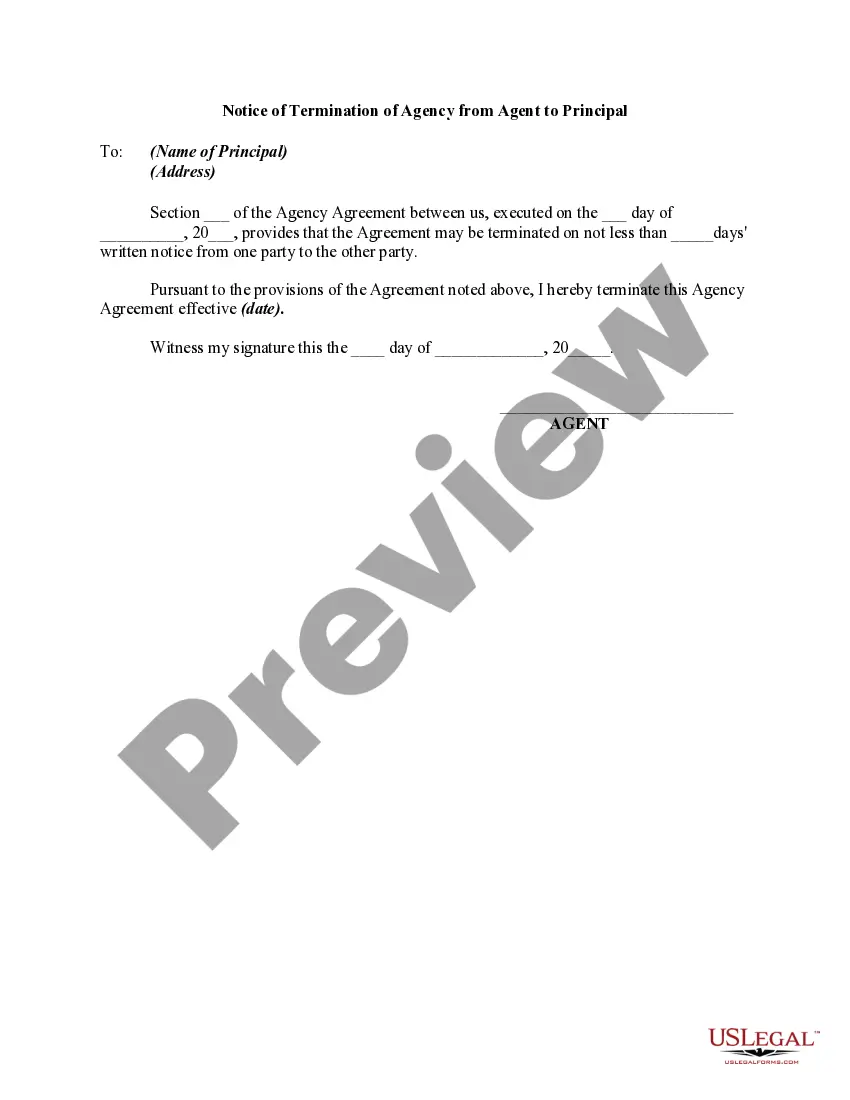
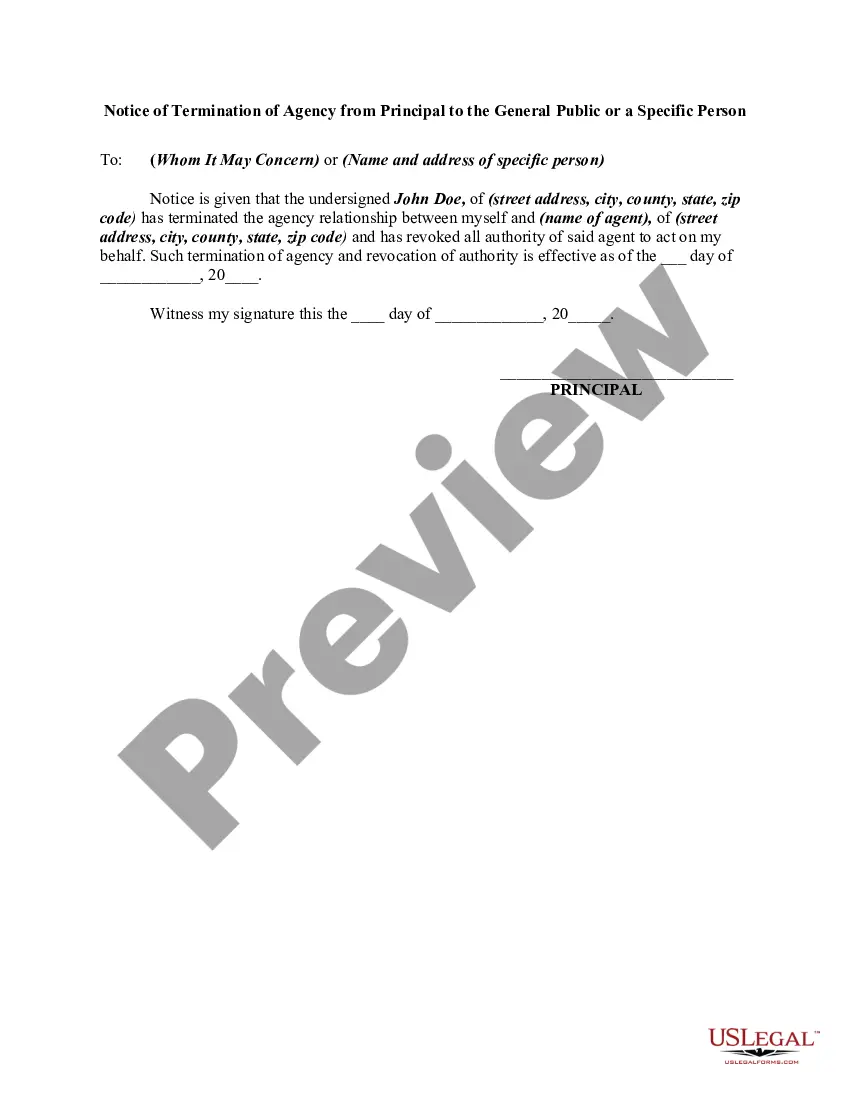
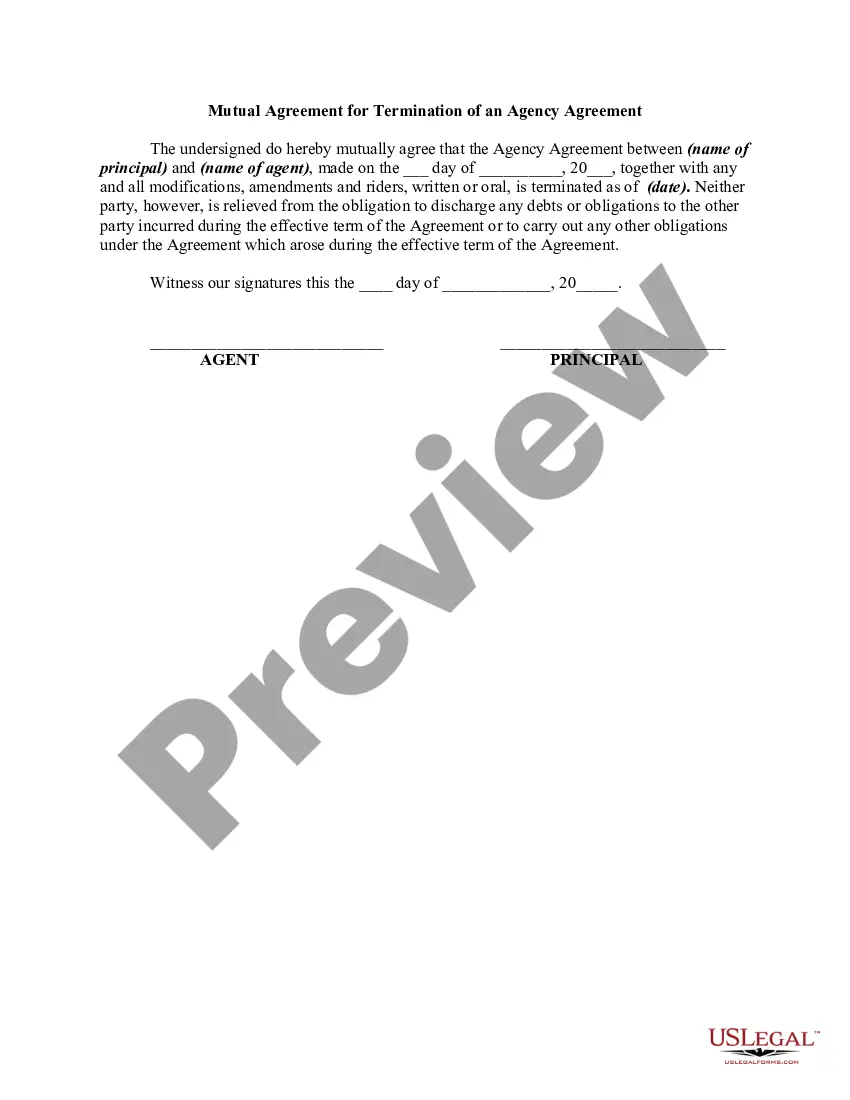
Principal Agent
Description
Get your form ready online
Our built-in tools help you complete, sign, share, and store your documents in one place.
Make edits, fill in missing information, and update formatting in US Legal Forms—just like you would in MS Word.
Download a copy, print it, send it by email, or mail it via USPS—whatever works best for your next step.
Sign and collect signatures with our SignNow integration. Send to multiple recipients, set reminders, and more. Go Premium to unlock E-Sign.
If this form requires notarization, complete it online through a secure video call—no need to meet a notary in person or wait for an appointment.
We protect your documents and personal data by following strict security and privacy standards.

Make edits, fill in missing information, and update formatting in US Legal Forms—just like you would in MS Word.

Download a copy, print it, send it by email, or mail it via USPS—whatever works best for your next step.

Sign and collect signatures with our SignNow integration. Send to multiple recipients, set reminders, and more. Go Premium to unlock E-Sign.

If this form requires notarization, complete it online through a secure video call—no need to meet a notary in person or wait for an appointment.

We protect your documents and personal data by following strict security and privacy standards.
Looking for another form?

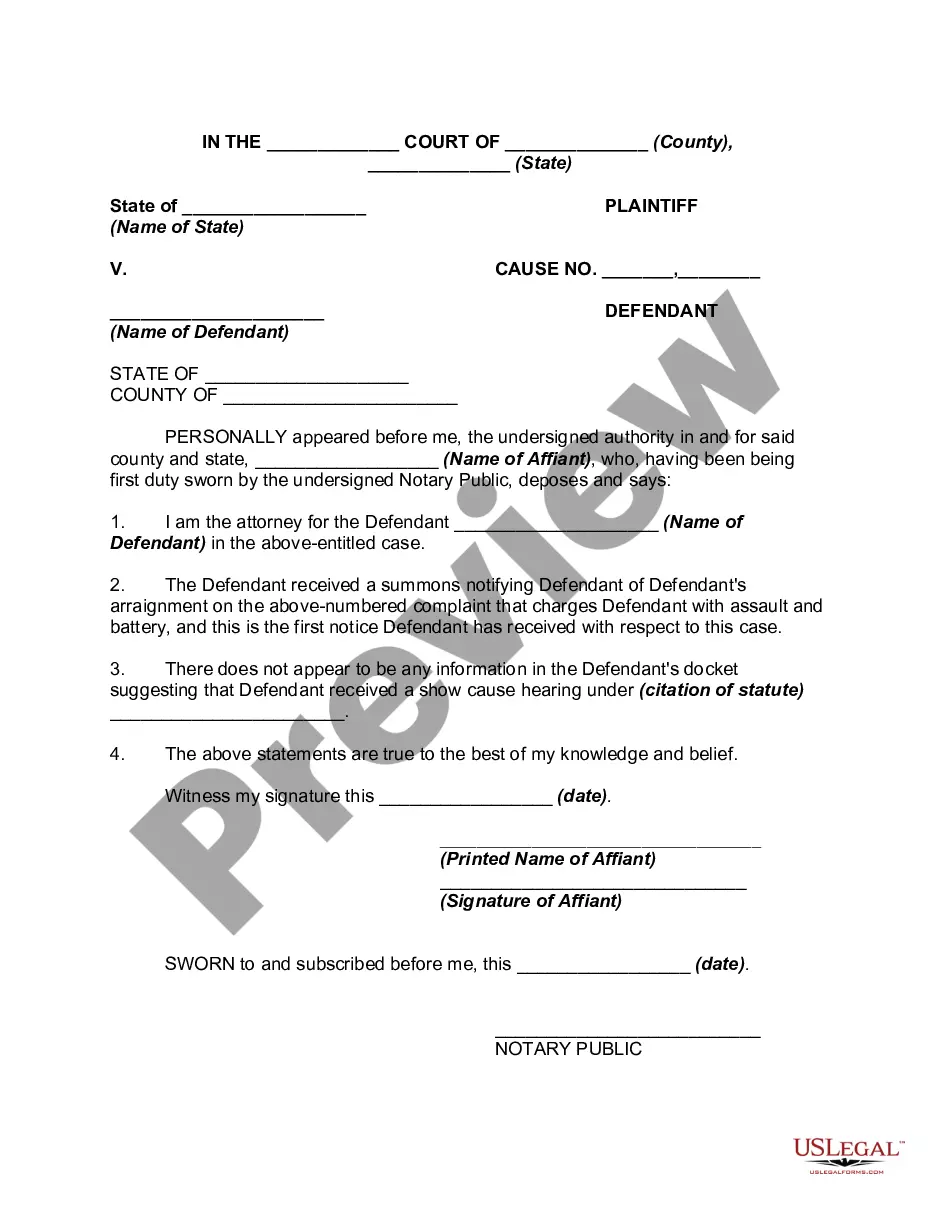
How to fill out Notice Of Termination Of Agency From Principal To Agent?
Locating a reliable source for acquiring the latest and pertinent legal samples is half the battle of managing bureaucracy.
Identifying the appropriate legal documents requires precision and meticulousness, which is why it is crucial to source Principal Agent samples solely from credible providers, such as US Legal Forms.
Eliminate the inconvenience associated with your legal paperwork. Explore the extensive US Legal Forms catalog to discover legal samples, verify their applicability to your scenario, and download them instantly.
- Utilize the library navigation or search bar to locate your template.
- Examine the description of the form to verify if it aligns with the stipulations of your state and county.
- Review the form preview, if available, to ensure the form is indeed the one you seek.
- Return to your search and look for the suitable document if the Principal Agent does not meet your needs.
- If you are confident about the form’s relevance, proceed to download it.
- As a registered user, click Log in to verify and access your chosen forms in My documents.
- If you lack an account, click Buy now to purchase the form.
- Select the pricing option that aligns with your needs.
- Complete the registration to finalize your acquisition.
- Finish your purchase by choosing a payment method (credit card or PayPal).
- Choose the document format for downloading Principal Agent.
- Once you have the form on your device, you can modify it with the editor or print it and complete it manually.
Form popularity
FAQ
documented reallife example of the principalagent problem can be seen in the banking sector, particularly during the financial crises. Banks (agents) are often incentivized to take higher risks to boost their profits, which may not align with the interests of their depositors (principals) seeking security. This mismatch can lead to disastrous outcomes, emphasizing the need for robust regulatory frameworks to bridge the gap between principals and agents.
A classic example of a principal-agent relationship is that of a homeowner and a real estate agent. The homeowner acts as the principal, while the agent represents their interests in selling the property. Each party has distinct roles, with the homeowner expecting the agent to act in their best interest. This relationship illustrates the dynamics of trust and agency in real estate transactions.
If one co-tenant is leaving in a periodic term, they can end their own tenancy under a periodic agreement by giving a 21- day termination notice to the landlord and each other co-tenant. Once they vacate the premises by the date in the notice, they are no longer a tenant under the agreement.
If a co-tenant leaves during the tenancy, they will need to get their share of the bond from the tenant moving in, or those remaining. They must also complete a Change of bond contributors (Form 6), and lodge it with the RTA. If all the tenants move out they need to complete a Refund of rental bond (Form 4).
If the co-renter is moving out without being replaced by another renter, they must negotiate with the remaining renters and the rental provider to have their name removed from the rental agreement.
70-24-441. Termination by landlord or tenant. (1) The landlord or the tenant may terminate a week-to-week tenancy by a written notice given to the other at least 7 days before the termination date specified in the notice.
Provide a written request: Prepare a formal written request to remove a name from the lease. In the letter, explain the reasons for the request and provide any supporting documentation, such as a signed agreement from the remaining tenant or proof of a terminated relationship.
Generally, a rental agreement is terminated, by either the landlord or the tenant, with a 30-day written notice (unless the parties have agreed to a longer notice period); this is known as a Tenancy at Will.
Your landlord must give you 30 days notice to terminate your rental agreement, unless the landlord alleges some violation that allows for shorter notice. For example, if you are behind on rent, the landlord could give you a 3 day notice to pay or vacate.
I wish to inform you that I will be terminating my lease on [date you plan to terminate]. This letter provides the necessary notice of [required notice] as outlined in the lease. I will move out my belongings and return my keys to [address of property management office] by [date you plan to terminate].