Joint Tenants Right To Survivorship
Description

Get your form ready online
Our built-in tools help you complete, sign, share, and store your documents in one place.
Make edits, fill in missing information, and update formatting in US Legal Forms—just like you would in MS Word.
Download a copy, print it, send it by email, or mail it via USPS—whatever works best for your next step.
Sign and collect signatures with our SignNow integration. Send to multiple recipients, set reminders, and more. Go Premium to unlock E-Sign.
If this form requires notarization, complete it online through a secure video call—no need to meet a notary in person or wait for an appointment.
We protect your documents and personal data by following strict security and privacy standards.

Make edits, fill in missing information, and update formatting in US Legal Forms—just like you would in MS Word.

Download a copy, print it, send it by email, or mail it via USPS—whatever works best for your next step.

Sign and collect signatures with our SignNow integration. Send to multiple recipients, set reminders, and more. Go Premium to unlock E-Sign.

If this form requires notarization, complete it online through a secure video call—no need to meet a notary in person or wait for an appointment.

We protect your documents and personal data by following strict security and privacy standards.
Looking for another form?






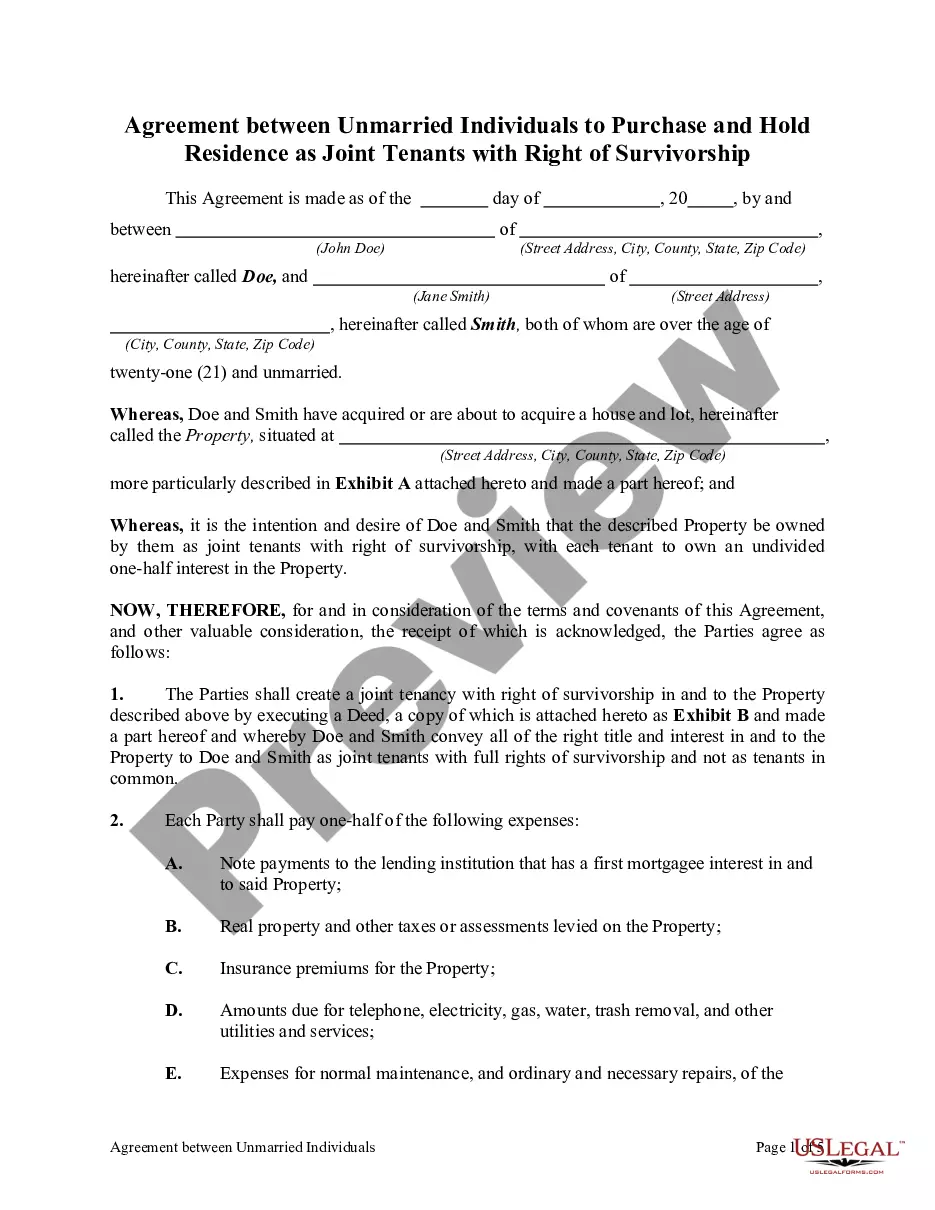
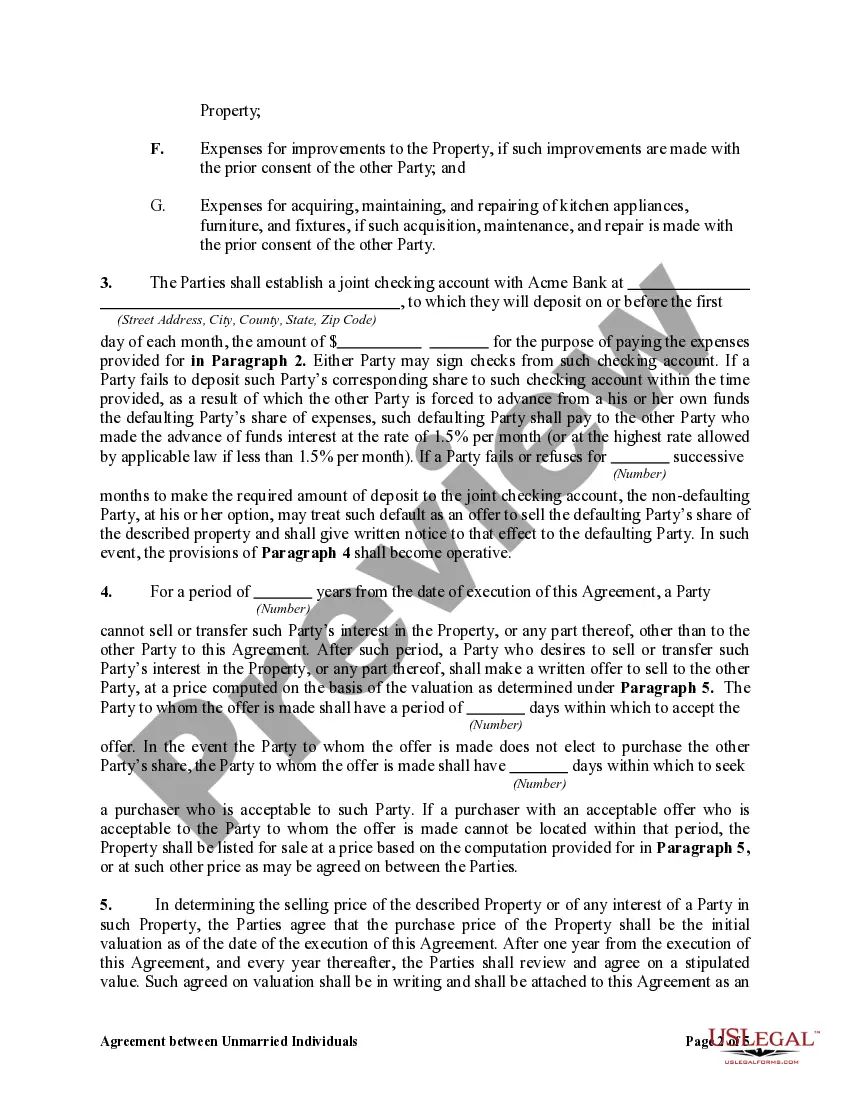
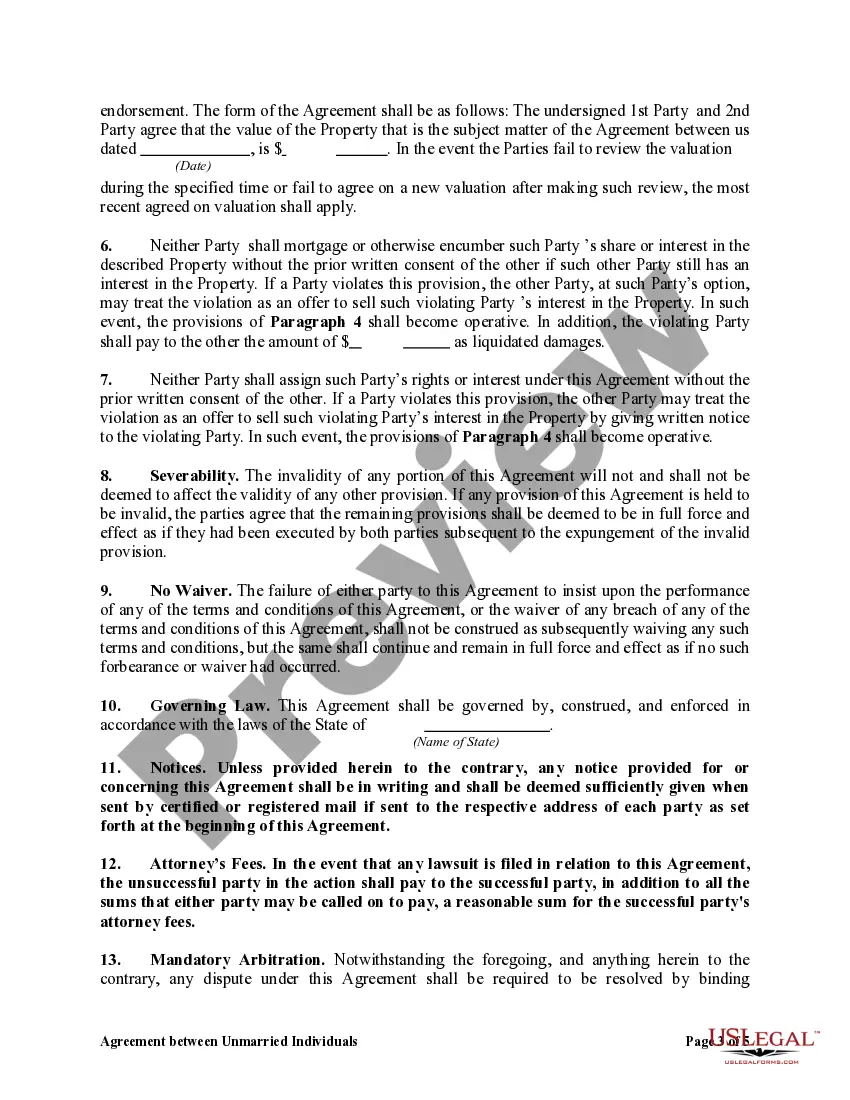
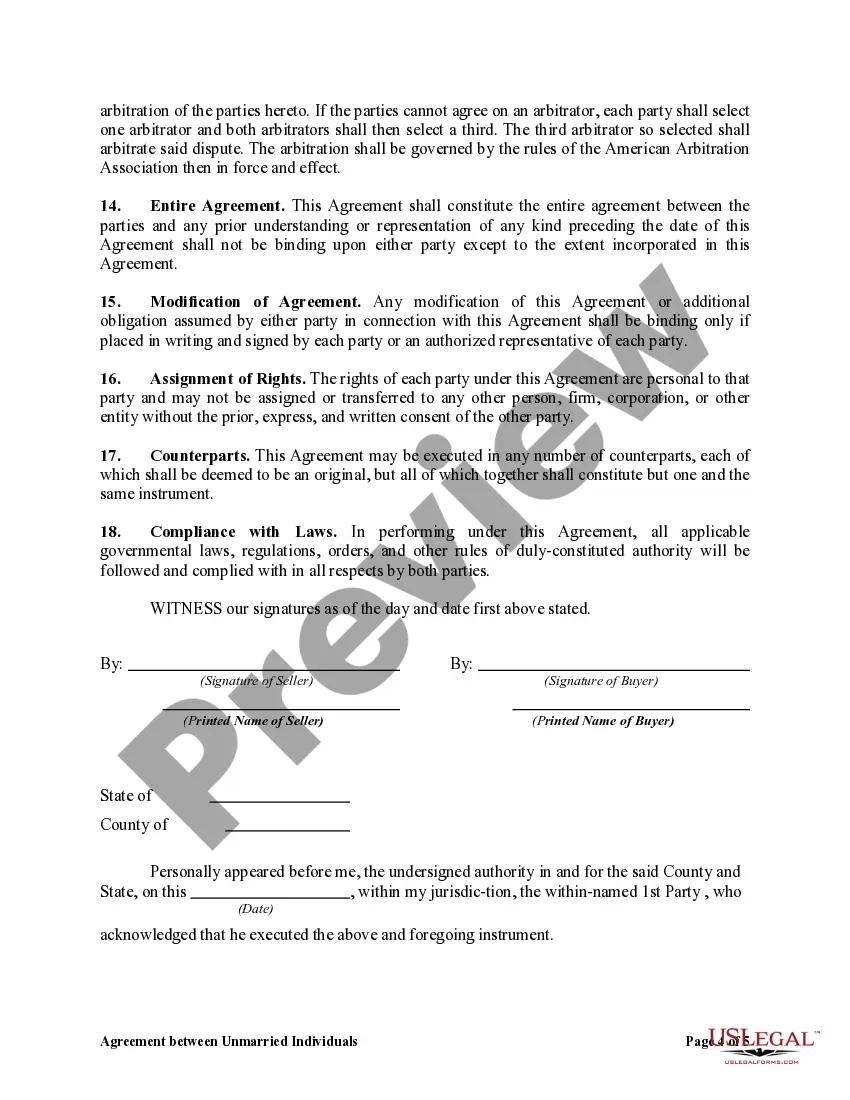
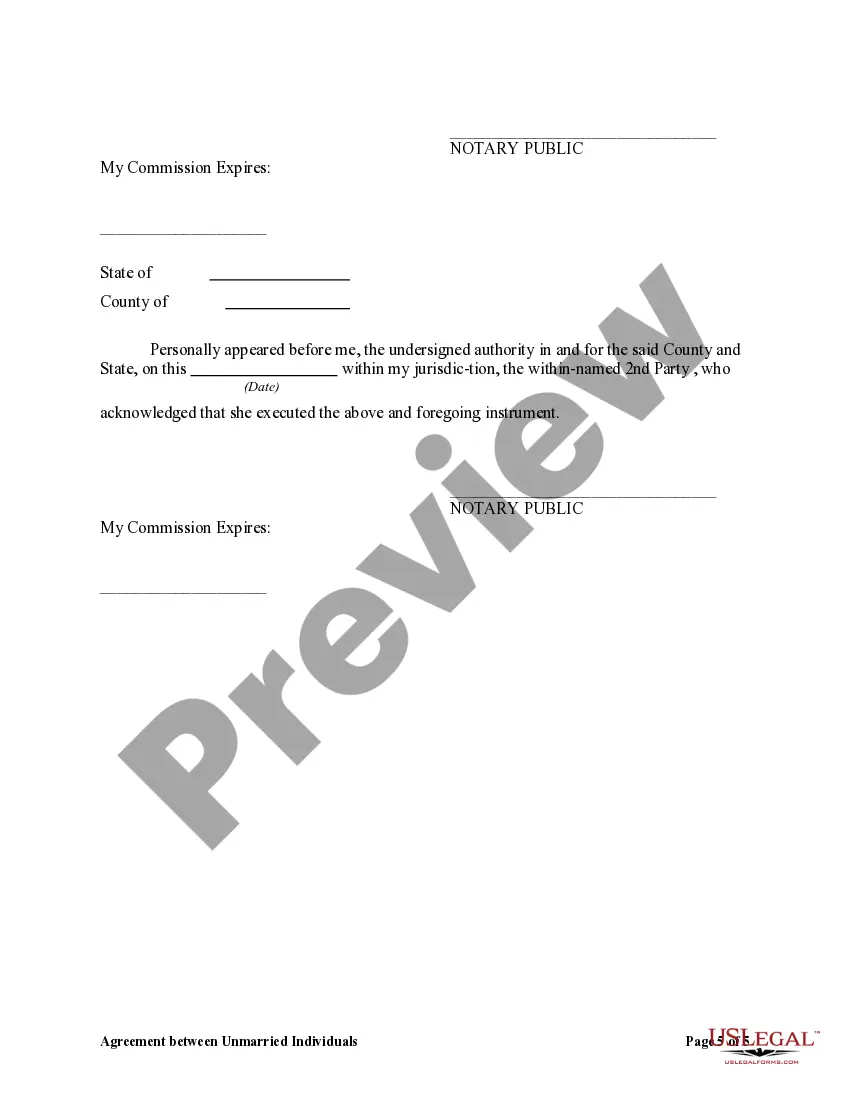
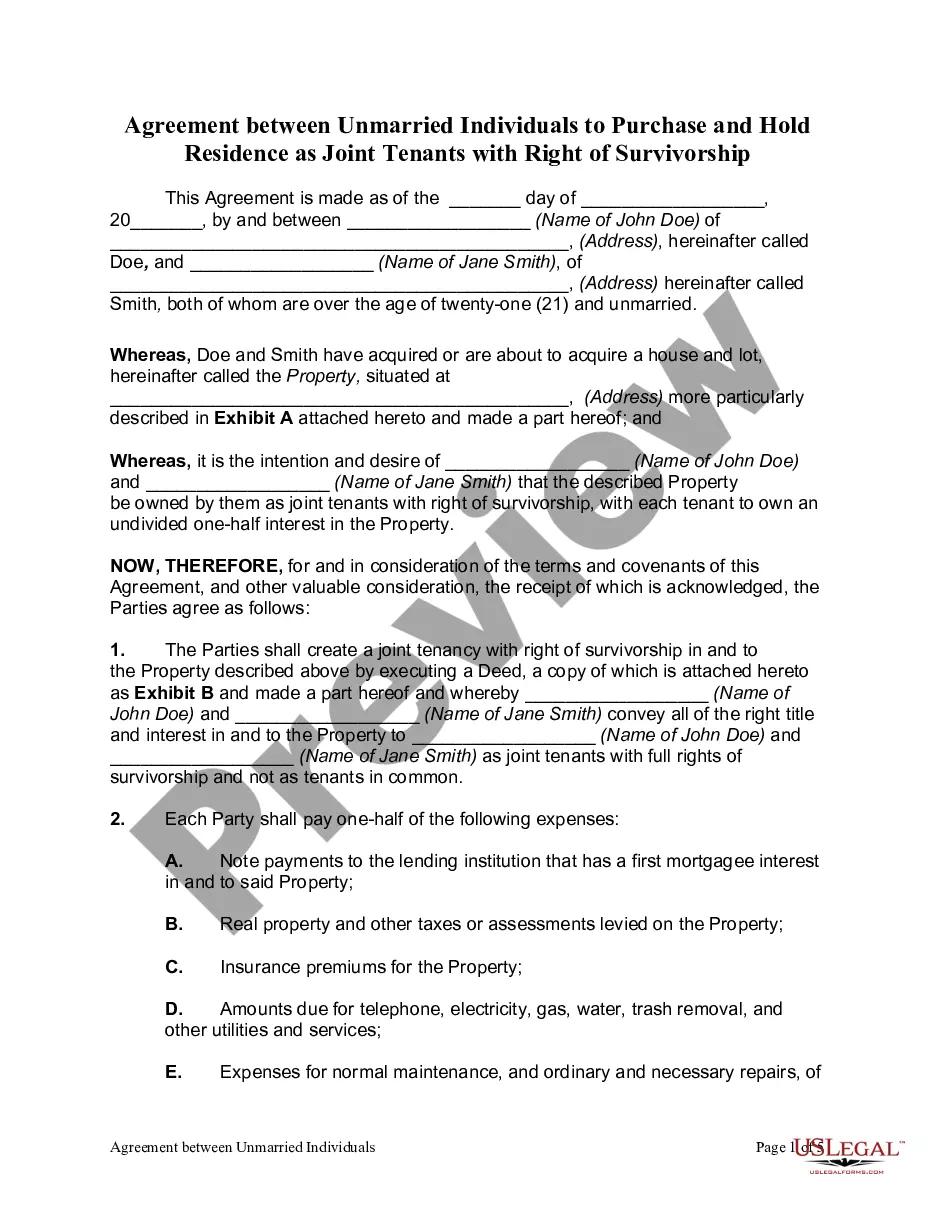
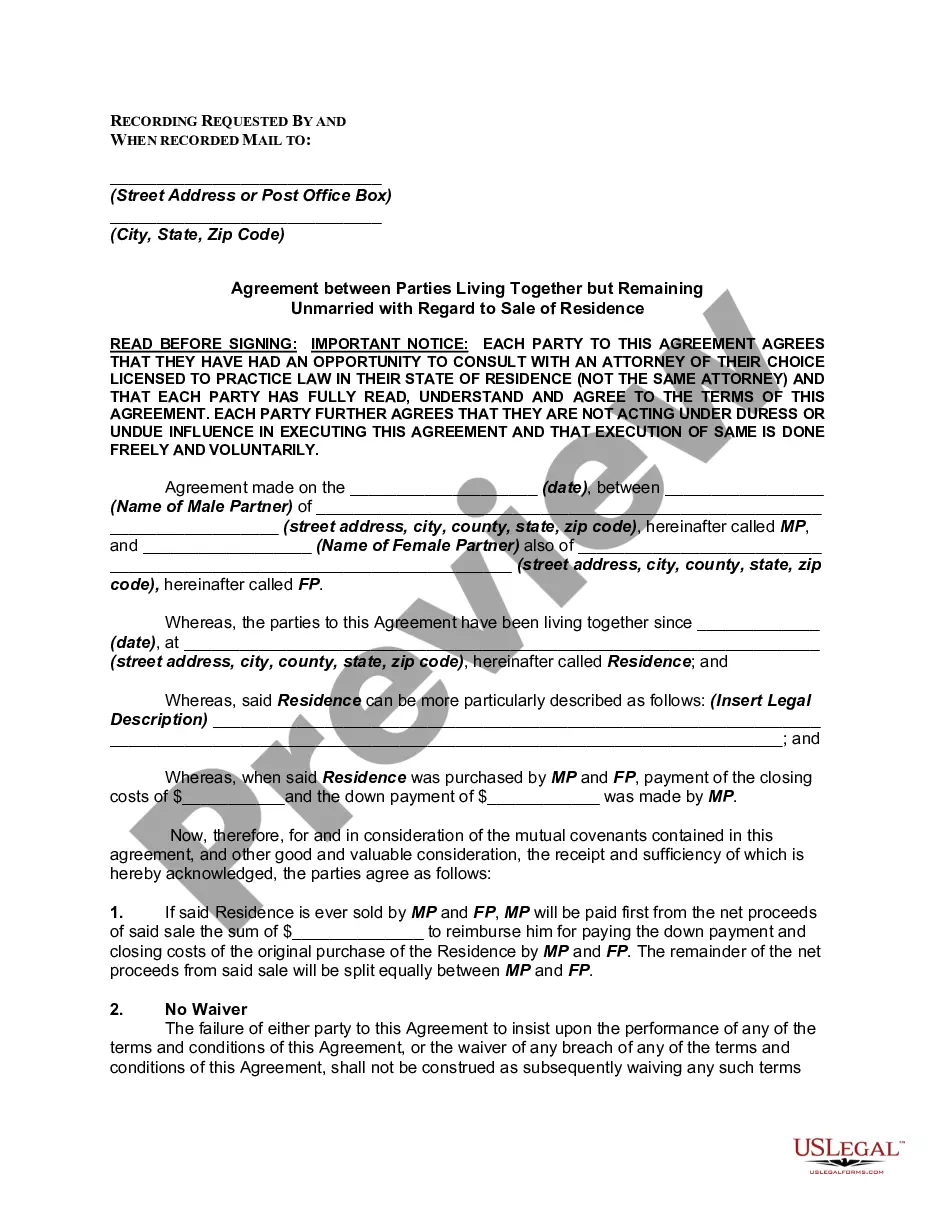
How to fill out Agreement Between Unmarried Individuals To Purchase And Hold Residence As Joint Tenants With Right Of Survivorship?
Whether for professional objectives or for personal concerns, everyone must handle legal matters at some stage in their life.
Completing legal paperwork demands meticulous attention, starting from selecting the proper form template.
With an extensive US Legal Forms catalog available, you do not have to waste time searching for the suitable template online. Utilize the library’s user-friendly navigation to find the correct template for any occasion.
- Locate the template you require using the search bar or catalog browsing.
- Review the form’s details to ensure it correlates with your situation, state, and county.
- Click on the form’s preview to inspect it.
- If it is the incorrect form, return to the search feature to find the Joint Tenants Right To Survivorship example you need.
- Download the template when it fits your specifications.
- If you have a US Legal Forms account, click Log in to access formerly saved documents in My documents.
- If you do not possess an account yet, you can acquire the form by clicking Buy now.
- Choose the appropriate pricing option.
- Fill out the profile registration form.
- Select your payment option: utilize a credit card or PayPal account.
- Choose the file format you desire and download the Joint Tenants Right To Survivorship.
- After it is downloaded, you may complete the form using editing software or print it and finish it by hand.
Form popularity
FAQ
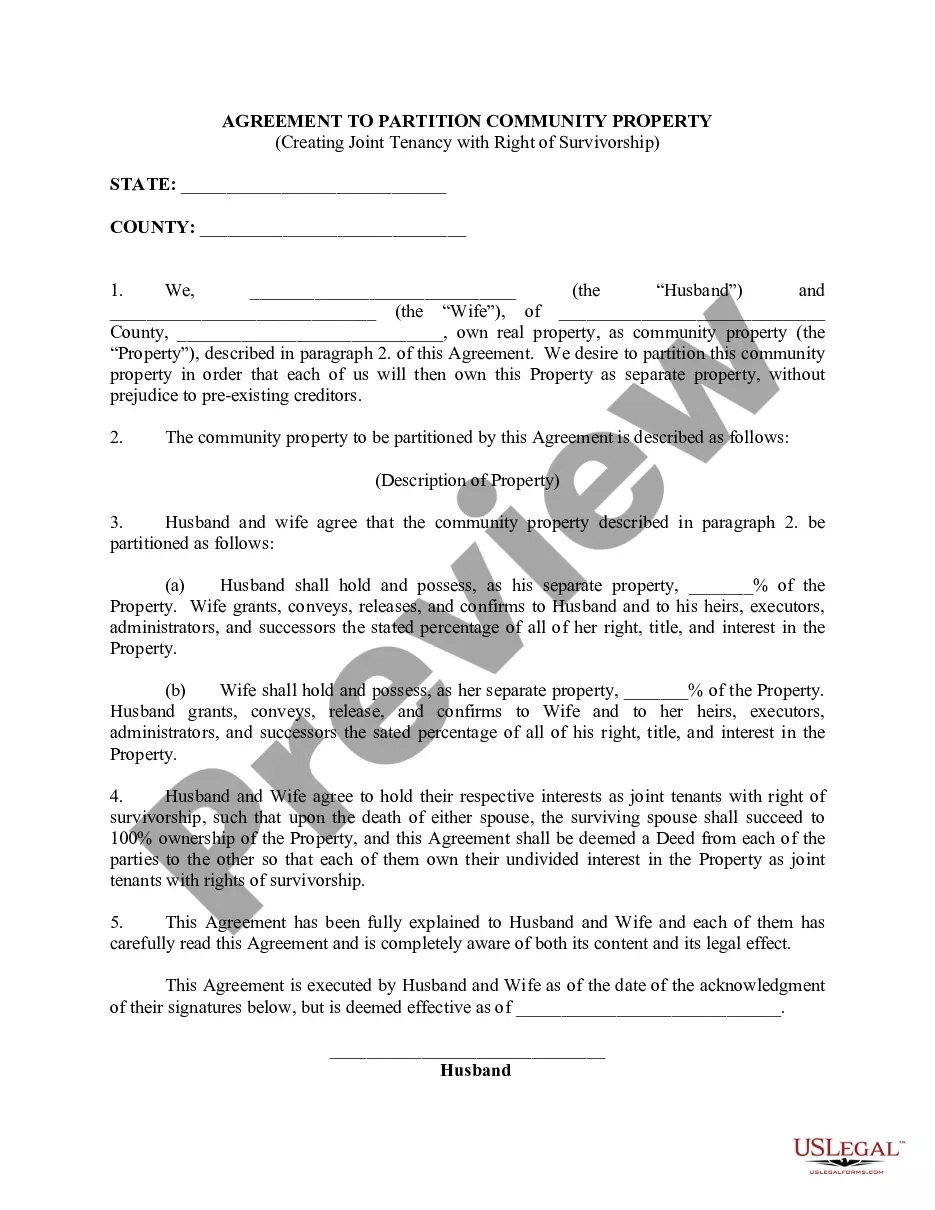
'Jointly with right of survivorship' refers to an ownership arrangement where two or more people hold title to property together. In this setting, if one owner dies, their share automatically transfers to the surviving owners. This concept is a core part of joint tenants right to survivorship, providing a straightforward way to ensure asset transfer without legal complications.
A joint account with right of survivorship is a bank account held by two or more individuals, where each has equal access to the funds. When one account holder passes away, the remaining holders automatically gain full ownership of the account without the need for probate. This arrangement reflects the principles of joint tenants right to survivorship, ensuring a smooth transfer of assets between co-owners.
Since these defects substantially impair the use, value or safety of my vehicle, I am hereby allowing you one final opportunity to repair my vehicle. If these repairs are not completed within 10 calendar days of receipt of this letter, I am entitled to a refund calculated in ance with the Lemon Law.
There isn't a specific lemon law for used cars in Nevada, but the state's existing lemon law does cover used cars as long as the vehicle's express warranty is still in effect. Whether you are the vehicle's first owner or not, as long as the vehicle's warranty is still in effect you are protected by state lemon law.
How Do You Initiate a Case Under Nevada's Lemon Laws? Under Nevada's lemon laws, you initiate a case by notifying your dealer, in writing, of the vehicle defects. Many car manufacturers have programs set up just to handle lemon law complaints.
Yes, private party sales are covered under the federal Lemon Law as well as most states' lemon laws so long as the vehicle was sold with some type of warranty, which may simply be the duration of the original manufacturer's warranty.
The Nevada car return law is Nevada's lemon law. The law says that the manufacturer must replace a vehicle if it has substantial problems that the manufacturer is unable to fix.
Nevada does not have a right of rescission or any "cooling off" period for the buyer. Used vehicles are sold "as is."
The motor vehicle is out of service for repairs for a cumulative total of 30 or more calendar days. The 30 day period is extended by any period of time in which the necessary repairs cannot be made for reasons that are beyond the control of the manufacturer, its agent or authorized dealer.
In most instances to qualify under a lemon law your vehicle must only have an unreasonable repair history under the warranty, including (but not limited to) 3-4 repair attempts for the same problem, 6 repairs total on the vehicle, or 30 days out of service by reason of repair.